Syria Cuts Two Zeros from Its Currency: Smart Move or Dangerous Bet?
“Changing the currency gives a lift and boosts foreign investor confidence.”
With the official launch of Syria’s new currency at the start of 2026, the country is embarking on a shift in monetary policy that goes well beyond design and denomination, touching deeper economic and financial realities.
Experts say that the removal of two zeros from Syria’s banknotes, along with the orderly replacement of the old currency, is far from a routine technical measure. Rather, it sends a clear political and economic signal, aimed at recalibrating the monetary landscape and restoring confidence in the Syrian pound both at home and abroad.
A New Currency
Syria officially rolled out its new currency at the start of 2026, marking a major shift in the country’s monetary landscape that goes far beyond design and denomination.
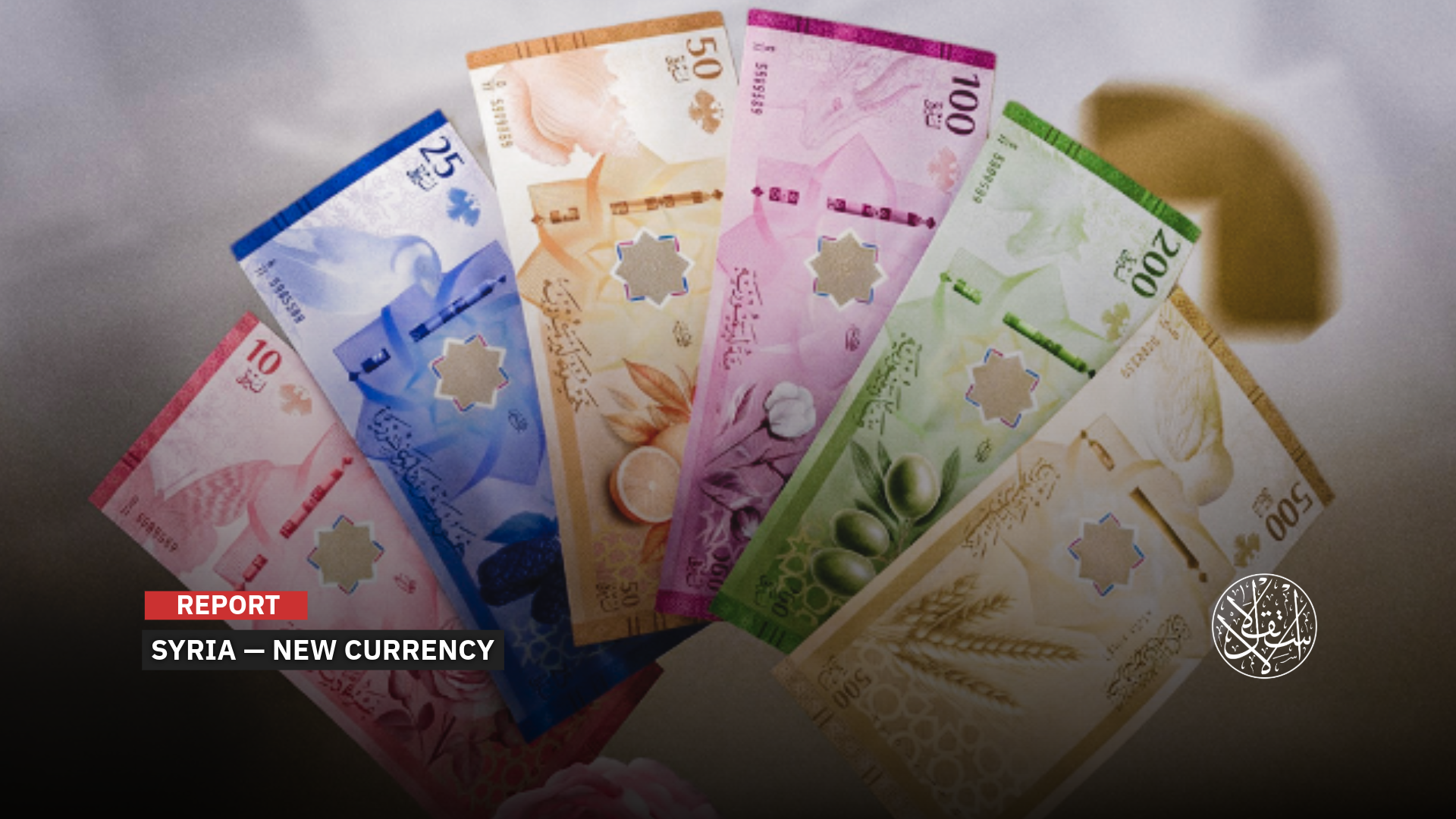
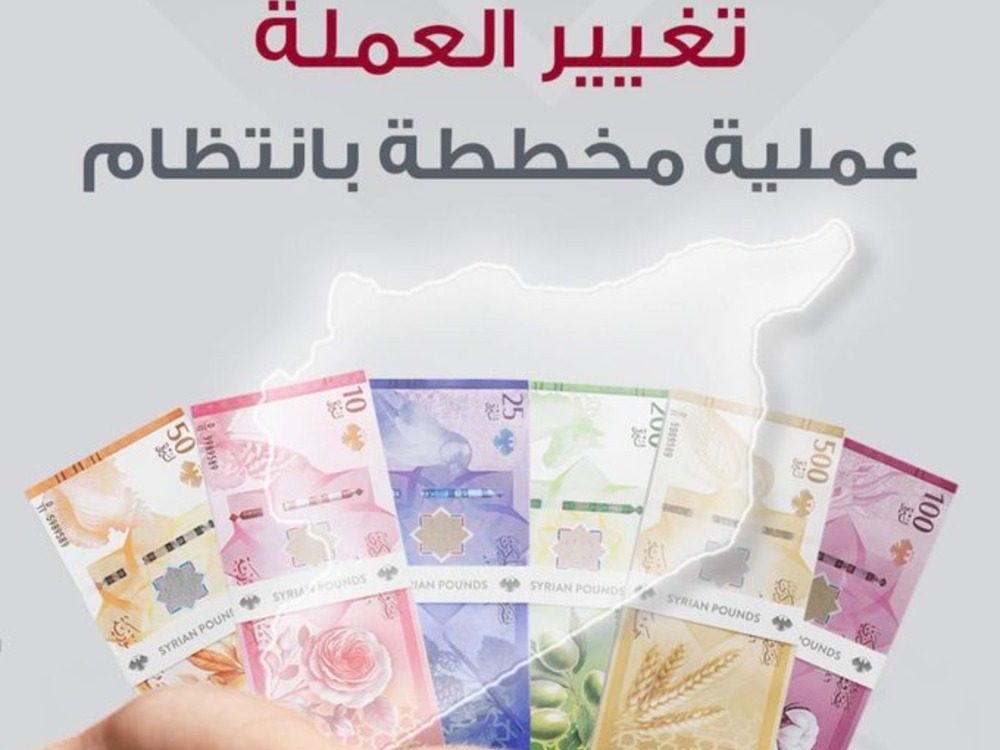
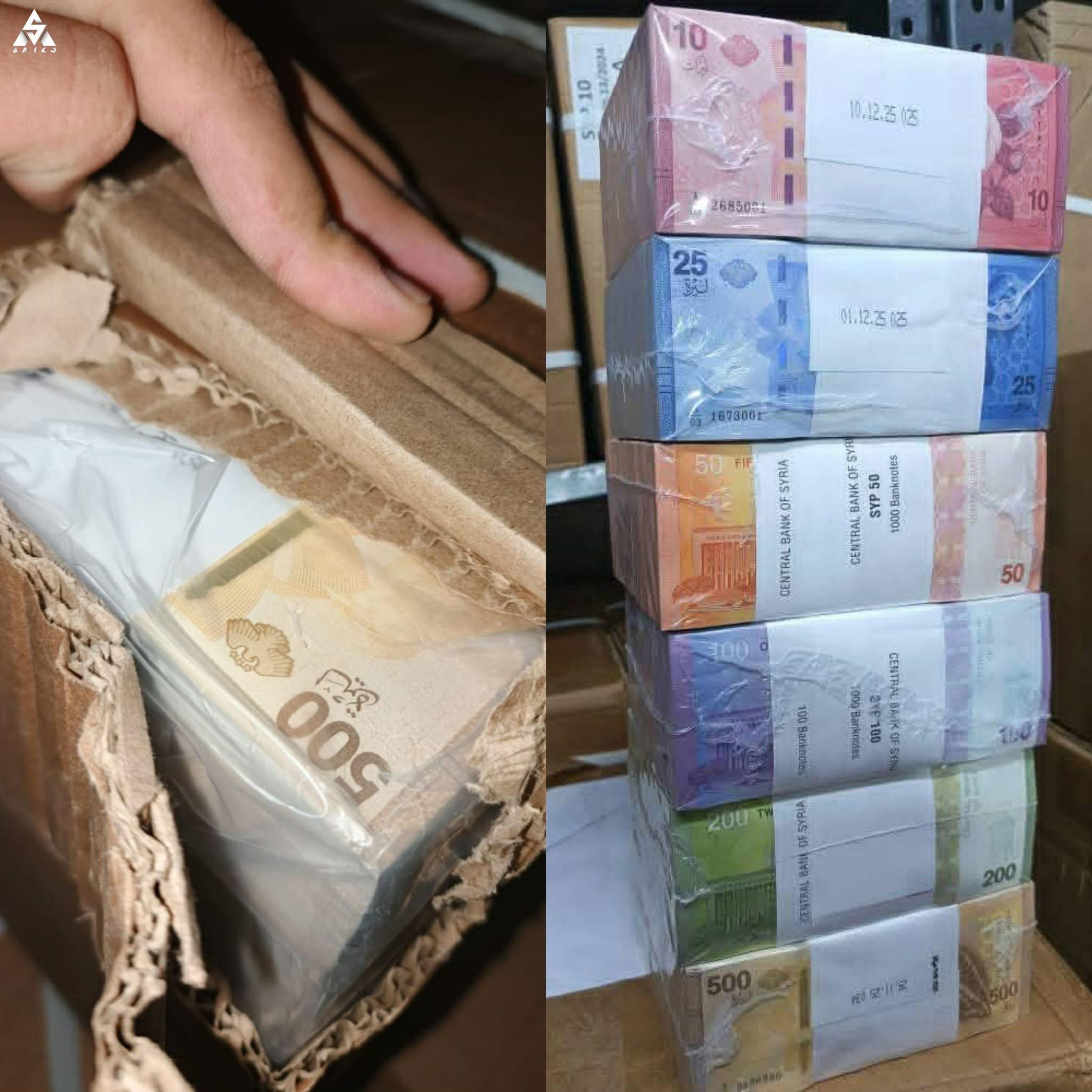
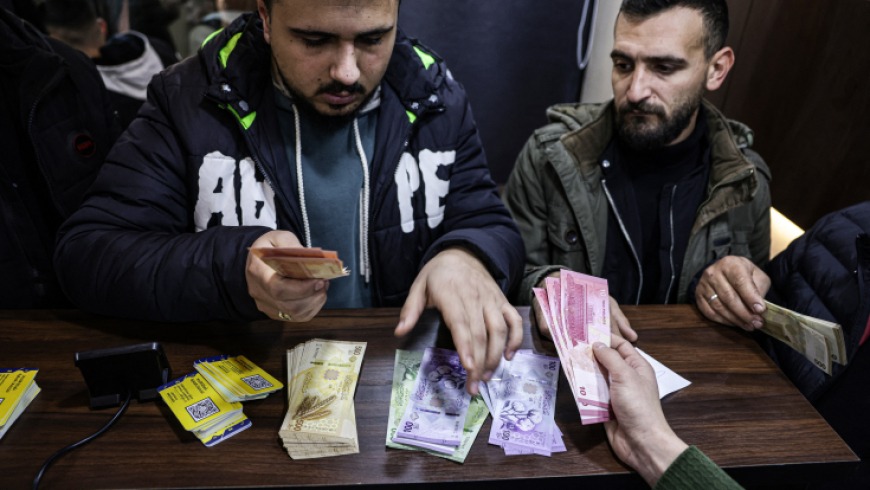
The replacement process began in several exchange centers across the capital, Damascus, where citizens turned out in significant numbers on the first day. The overhaul involves removing two zeros from every denomination, with smaller notes leading the way: the new 10-pound note equals 1,000 old pounds, the 25-pound note equals 2,500, and the 50-pound note equals 5,000. Higher denominations include 100, 200, and 500 pounds.
Each new note features symbols representing Syria’s diverse provinces as part of a redesigned visual identity. From oranges representing the coastal regions to cotton symbolizing the north and northeast and olives and wheat spikes highlighting various areas, including the Syrian Badia, the currency reflects the country’s geographic richness.
On January 4, 2026, Syrian Economy and Industry Minister Nidal al-Shaar and Central Bank Governor Abdulkader Husrieh toured exchange centers in Damascus to monitor operations, assess technical readiness, and ensure procedures were being followed to serve citizens efficiently. Al-Shaar emphasized that the visits are part of broader government efforts to implement economic policies, enhance service quality, and bolster confidence in the banking sector and monetary stability.
The Central Bank had issued implementation instructions for the new currency on December 29, 2025, under Decree No. 293 of 2025. The swap converts 100 old pounds into one new pound and is carried out exclusively through official centers—59 financial institutions and more than 1,500 branches nationwide. The initial exchange period runs for 90 days from January 1, 2026, with the possibility of extension.
President Ahmed al-Sharaa was seen on January 5 in Damascus using the new notes at a local vendor, highlighting the transition’s high visibility. For the next three months, Syria will run a dual currency system, with the old currency gradually phased out—though extensions are possible if the new notes are not widely circulated.
While the swap is a routine procedure, it carries symbolic weight, notably with the removal of portraits of Bashar al-Assad and his father, Hafez. The change involves swapping one set of notes for another without altering the dollar exchange rate or key economic indicators.
Earlier, on October 20, 2025, Central Bank Governor Husrieh revealed plans to modernize the bank and support the new currency, noting that a U.S. mission would oversee the rollout and monitor market distribution. A specialized foreign delegation visited Syria in mid-November 2025 to study payment systems and offer solutions aligned with national ambitions.
Against this backdrop, daily efforts aim to free Syria’s banking sector from restrictions accumulated over the past 50 years due to sanctions and central bank neglect. Authorities stress that the currency replacement does not bring immediate improvement to living standards. Economists, however, see it as a cornerstone step in a broader plan to revalue the national currency, regulate cash circulation, and prepare the banking system for a gradual economic recovery in a new Syria.
Boosting Confidence
Economist Radwan al-Dabbas said the improvement of the new Syrian pound is first and foremost seen in its strengthened value against global currencies.
“Investors, government agencies, foreign ambassadors, and other states are increasingly sensing that Syria’s economy is beginning to recover and reclaim its role. With the Ministry of Finance and the Central Bank resuming their core functions and setting themselves on the right path, fresh momentum is building, instilling confidence among foreign investors that the state is moving in the right direction and encouraging them to invest,” he told Al-Estiklal.
“Most citizens previously had to carry large amounts of cash in bags just to make purchases because of the currency’s low value. This made everyday transactions extremely cumbersome.”
As a result, many people resorted to using U.S. dollars or Turkish lira to price their goods. “Now, the situation should return to normal, with Syrians transacting in their own currency, pricing, and trading in pounds,” he added.
“When the pound replaces the dollar as the main circulating currency,” al-Dabbas explained, “confidence in it grows. Foreign currency liquidity becomes available at the Central Bank, allowing the dollar to flow back into its proper reserves at commercial banks.”
He pointed out another key area: much of northern Syria—including Idlib and its surrounding countryside, as well as northern Aleppo—has been using the Turkish lira for years. Returning to the Syrian pound in these regions, which represent a significant economic force, will draw substantial currency back into circulation and restore dollar reserves to the Central Bank, benefiting the broader economy.
Unveiling the new banknotes on December 29, 2025, President Ahmed al-Sharaa said the currency swap signaled the close of a bygone era and the opening of a new phase long sought by the Syrian people. He emphasized that the new design reflects a renewed national identity, moving away from the glorification of individuals.
“If someone wants to buy something simple, they need to carry bags in order to trade, so people go for dollars,” al-Sharaa said, adding that the currency revamp will boost “the national currency within the country and strengthen trust.”
“Syria deserves a strong economy and a stable currency.”
Syrians had been forced to carry large quantities of old notes in bags or plastic sacks, as the 5,000-pound note—the highest denomination in circulation—was heavily used. Exchange rates have recently hovered between 10,000 and 11,000 pounds to the dollar, down from around 15,000 in the months before the fall of Bashar al-Assad’s regime on December 8, 2024.
Next Steps
With Washington and the European Union announcing the lifting of long-standing sanctions, Syrians are hoping for a turn toward recovery. Yet economists warn that the process will take time and that simply removing sanctions is not enough to drive progress without a supportive investment environment to attract capital.
The recent EU sanctions relief specifically targets the banking sector, which had been isolated from international markets after the freezing of Central Bank assets and prohibitions on dealing with it.
“Replacing the Syrian currency is just the first step on the road to a new Syria. It must be followed by coordinated action from the Ministry of Finance and the Ministry of Economy—legislative reforms, digital transformation, electronic transactions, and updated banking regulations—all working together to drive the country’s economic recovery,” said economist Radwan al-Dabbas.
“It will be harder to counterfeit, making transactions easier in the coming phase and reducing fraud, which offers greater protection for citizens than before.”
Al-Dabbas added that removing large amounts of worn and counterfeit old notes, which the Central Bank will no longer exchange, will improve the pound’s reliability. “These notes have no legal backing at the Central Bank, so withdrawing them from circulation strengthens the currency.”
“Taken together, these measures should improve the value of the Syrian pound and restore confidence in using it in the months ahead,” he said.
The new Syria is also counting on support from friendly and Western countries to launch a reconstruction phase in a nation whose rebuilding costs the United Nations estimates at more than $400 billion.
Economist Benjamin Feve said with sanctions lifted broadly, Syria can expect an accelerated pace of infrastructure reconstruction—roads, hospitals, and schools. Countries like Saudi Arabia, Qatar, and Turkiye, which have ties to the new government, are likely to speed up trade and investment, particularly in rebuilding efforts.
Yet other sectors, notably energy and banking, require major investments and a much longer timeline, potentially taking several additional months, according to Feve.
Reconnecting Syria’s banking system to the global financial network will also require multiple measures. Feve said before European banks, for example, can renew their relationships or correspondent banking links with Syrian banks, they will need to assess Syria’s compliance with anti-money-laundering and counter-terrorism financing standards—a process that will take time, given the country’s underdeveloped systems in this area.
Sources
- Central Bank Says New Pound’s Success Hinges on Management, Not Looks [Arabic]
- Syria Reveals New Post-Assad Banknotes
- Central Bank: Replacing the Old Currency Is Not Linked to Regulating Other Currencies in Syria [Arabic]
- Al-Sharaa Walks Through Damascus, Pays Vendor with New Banknotes [Arabic]
- Central Bank Governor Says U.S. Mission Will Monitor New Currency’s Market Rollout [Arabic]
- Syrians Hope for Recovery of Struggling Economy After Western Sanctions Are Lifted [Arabic]