Will the Recent Spying Scandal End the Strong Relationship Between Trump and Netanyahu?
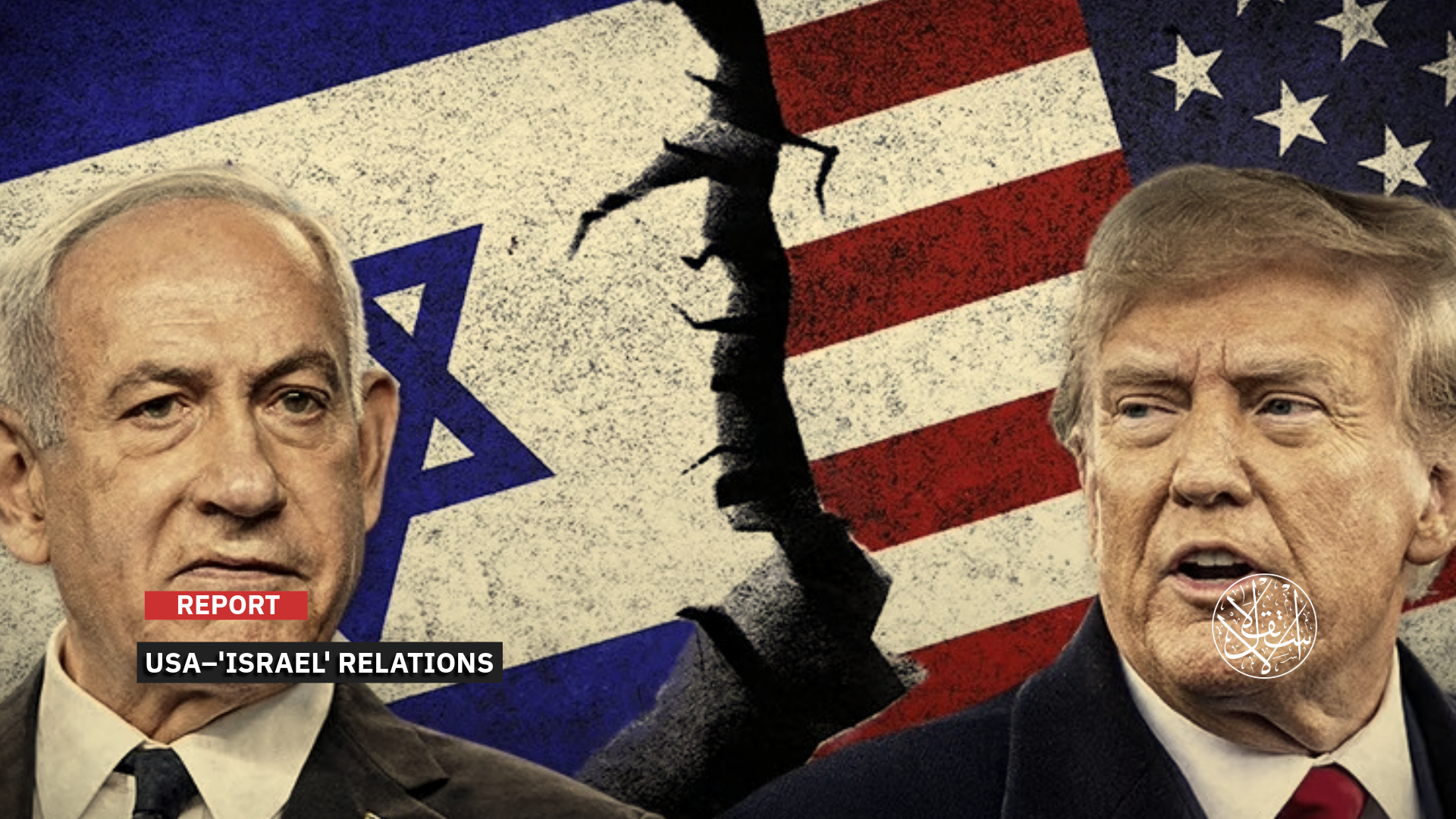
“The Pentagon says the Israeli spy threat has reached critical.”
Relations between the U.S. and "Israel" have entered a critical phase due to accusations of espionage. The U.S. accused Tel Aviv of targeting its officials to obtain information regarding the Trump administration's deliberations on Middle East issues.
Despite official denials from both sides, the issue has sparked controversy in the U.S., given Israel's status as one of its closest partners. Furthermore, it exposes a long-standing problem dating back decades: a mutual distrust of the intelligence activities of this strategic ally.
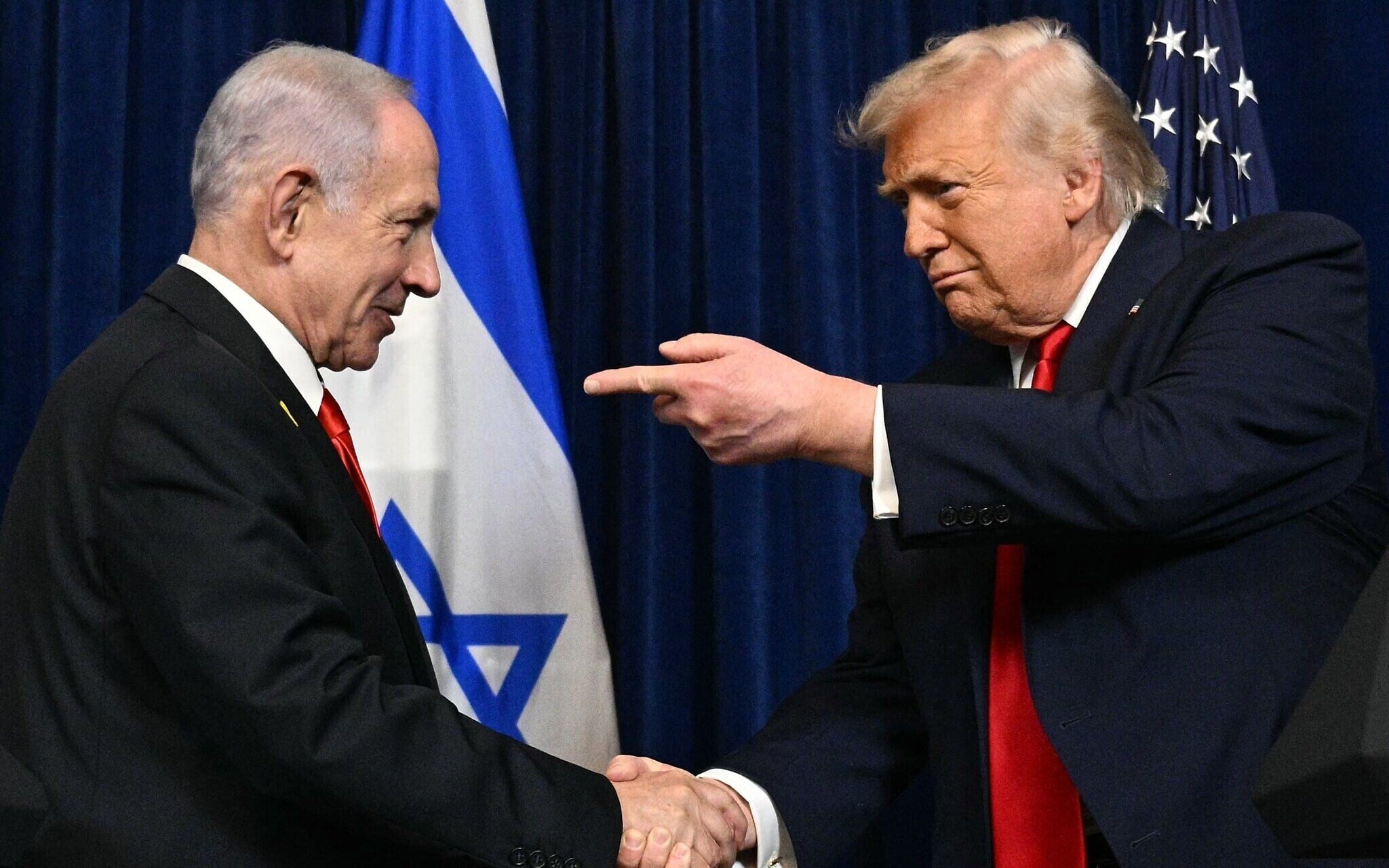
This comes at a time of escalating tensions between US President Donald Trump and Israeli Prime Minister Benjamin Netanyahu over regional issues, particularly those related to Iran, Lebanon, and the management of the Middle East conflict.
Analyses by observers indicate that mutual intelligence concerns between Washington and Tel Aviv persist, despite the significant development in security cooperation between the two sides over the past decades.
Intelligence Concerns
Recent US media reports indicate that the US Department of War has raised its internal assessment of the risks posed by Israeli intelligence activity, amid what informed sources described as growing concerns about espionage operations targeting high-ranking US officials.
Among the names mentioned in the US intelligence assessment are Steve Witkoff, Trump's chief negotiator, Elbridge Colby, the Pentagon's top policy official, and Michael DiMino, the senior official responsible for Middle East affairs within the department.
The Israeli denial came after a report published by The New York Times and highlighted by NBC News, which discussed a new US intelligence assessment indicating growing concern about Israeli activities deemed exceptional compared to what is typical between allied nations.
For its part, the spokesperson for the Israeli embassy in Washington completely denied the allegations, emphasizing that Israeli intelligence agencies do not target American government institutions or officials, and that their intelligence efforts are focused on "enemies, not allies."
The US administration also declined to confirm the details of the leaks, stating that the information circulating does not reflect any publicly announced official assessments.
Senior US officials indicated that "Israel" is seeking information regarding Trump's strategy and his shifting positions on the peace negotiations with Iran.
In a significant development, a report by the US Defense Intelligence Agency (DIA) stated that Pentagon personnel working within "Israel" discovered spyware secretly installed on their mobile phones to monitor their communications.
While Trump is seeking to end the war with Iran and reach a peaceful settlement regarding its nuclear program, despite pressure from Israeli Prime Minister Benjamin Netanyahu to resume the war.
According to various assessments, "Israel" may have crossed a red line by monitoring high-ranking government officials involved in the US-Iranian negotiations.
For his part, a former official in the Mossad and Shin Bet said Israeli Eyal Tsir Cohen stated that any attempt to obtain intelligence from the U.S. is worthless under any circumstances, emphasizing that the strategic relationship between the two countries is far more important than any potential intelligence gain.
He added that conducting preemptive espionage operations against the U.S. is practically illogical, noting that the political and security risks of such actions far outweigh any potential benefit.
He said, "This is not just any country; it's a superpower. The repercussions of discovering such activities would be extremely serious and not worth the risk."
Sources indicated that the new assessment might prompt US officials and military personnel to take additional security measures during visits to "Israel" or meetings with Israeli officials, a move reflecting the seriousness of concerns within some US security circles.
In contrast, intelligence experts who spoke to NBC News believe that intelligence gathering between allied nations is not uncommon in the intelligence world.
However, US officials believe that the activities attributed to "Israel" have recently crossed the traditional boundaries governing relations between friendly countries.
Therefore, the upgrade of Israel's espionage classification reflects a crisis of confidence between the U.S. and "Israel". But the question remains: why did this information reach the public – seemingly against the wishes of the US government?
For his part, political analyst Mustafa Ibrahim explained in a statement to Al-Estiklal that whether or not this information is accurate, its release was coordinated with the U.S. government, especially since Trump is seeking ways to exert diplomatic pressure on Israel.
"Given the upcoming midterm elections in November, Trump cannot afford to provoke the Israeli lobby in the U.S. against him, for example, through simply cutting military aid to Israel," he said.
"But this would be much easier with the perception that Israel is significantly violating US interests through espionage, thus giving Trump an opportunity to pressure Israel to halt the bombing and withdraw its forces from southern Lebanon," according to Mr. Ibrahim.
Espionage Incidents
Despite the depth of the security, political, and military alliance, and the close strategic relationship between the United States and "Israel", the history of the relationship between the two allies has not been free of intelligence tensions.
For decades, the US has repeatedly accused Tel Aviv of overstepping the bounds of security cooperation and attempting to gather classified information from within US government institutions.
American officials and intelligence experts believe that Israeli intelligence activity against the U.S. predates the establishment of the so-called "State of Israel" itself in 1948, when Zionist networks worked to collect funds, information, and resources from within the United States in support of the Zionist project.
In the following decades, these activities developed alongside the expanding military and technological ties between the two countries.
However, the most significant turning point came in the 1980s with the case of Jonathan Pollard, a U.S. Navy intelligence analyst who was arrested in 1985 after leaking thousands of classified documents to "Israel".
These documents included detailed intelligence on Arab weapons, air defense systems, and military movements in the Middle East—information that the U.S. had withheld from "Israel" despite their alliance.
After confessing, he was sentenced to life imprisonment in the United States. Prominent Israeli politicians repeatedly called for Pollard's release. He was finally released from prison in 2015 under certain conditions.
When Pollard was allowed to travel to "Israel" in 2020, he was personally greeted at the airport by Israeli Prime Minister Benjamin Netanyahu.
In 2004, it was revealed that Lawrence Franklin, a policy analyst at the US Department of Defense, had passed classified information about US policy toward Iran to "Israel" through the pro-"Israel" lobby AIPAC.
In the context of the Edward Snowden scandal of 2013, Israeli espionage in the United States was not a prominent topic.
However, The Guardian noted that the National Intelligence Estimate (NIE) had concluded as early as 2008 that Israeli intelligence was the third most aggressive intelligence agency toward the U.S., according to one of the documents leaked by Snowden.
Among the most controversial incidents in recent years was the revelation in 2019 by US media outlets of sophisticated listening devices being detected near the White House and other sensitive government buildings in Washington.
According to US officials who spoke to local media, suspicion has fallen on "Israel" as the most likely party behind the devices designed to intercept cellular communications.
Despite the absence of a direct official accusation, the incident has deepened suspicions within US security institutions and served as a reminder that the issue of Israeli espionage remains a concern despite decades of strategic cooperation between the two countries.
According to testimonies from US officials published by American media outlets over the past few years, "Israel" has consistently been considered by some US national security circles to be among the most active countries in gathering intelligence within the United States, particularly in the military, technological, and industrial sectors.

Direct Threat
What the American media revealed comes as Congress considers Section 224 of the National Defense Authorization Act, which aims to deepen and coordinate defense technology cooperation between the U.S. and "Israel".
This section focuses on shared challenges, primarily military technology, including counter-drone systems, missile defense, artificial intelligence, and cybersecurity.
But the question remains: How can Congress pass legislation that expands information sharing and technological cooperation with a country that is simultaneously classified as a high-risk espionage threat?
Two months ago, Joe Kent, Trump's appointee to the National Counterterrorism Center, resigned and launched an unprecedented attack on "Israel", asserting that Iran does not pose a direct threat.
He also accused Tel Aviv and its supporters in Congress of dragging America into an unnecessary war, and linked his wife's death in Syria to a conflict he claimed "Israel" helped ignite.
Kent's accusations echo the views of Tulsi Gabbard, the former Director of National Intelligence, who strongly opposed any military confrontation with Iran.
Some American newspapers have reported that Gabbard was forced to resign due to these disagreements.
This can be linked to an attempt to limit President Trump's authority, as he fears resuming strikes against Iran under pressure from Netanyahu.
The damage and losses suffered by the United States in general, and President Trump in particular, have revealed significant shortcomings in Washington's decision-making process, which negatively impact its credibility and ability to handle strategic and political issues, especially those concerning allies.
Perhaps the most striking indicator of the magnitude of the transformations brought about by the war on Iran is not only within American institutions, but also in the unprecedented decline in Israel's image among broad segments of global public opinion.
A few days ago, a Pew Research Center poll covering 36 countries revealed increasingly negative views of "Israel" globally, including among key allies, while confidence in Netanyahu plummeted across much of the West.
In reality, there have always been attempts to push "Israel" out of the American orbit. Weeks ago, Netanyahu announced his intention to forgo American aid to "Israel".
This is not the first time. Menachem Begin, the former Israeli prime minister, previously announced his intention to cancel the cooperation agreement with the United States.
David Ben-Gurion also decided, in December 1949, despite the anger of the United States and the world, to move the capital to Jerusalem.
Tel Aviv has often succeeded in withstanding pressure from successive US administrations because it has enjoyed unwavering and unequivocal support from the Jewish community in the U.S., the backing of American public opinion, and ultimately, bipartisan support in Congress.
Despite the escalating tensions, a decisive clash is unlikely, according to observers.