Why ‘Israel’ Backed Down as the US Pushed Through Egypt’s Gas Deal
The gas deal exposes a strategic vulnerability in Cairo’s position.
After months of obstruction and refusal, the Israeli Occupation surprised Cairo by approving a long-frozen gas deal worth an estimated $35 billion through 2040. The agreement had been put on ice by Energy Minister Eli Cohen, acting on instructions from Prime Minister Benjamin Netanyahu, before being revived following what were described as firm American “recommendations.”
“Israel’s” reversal was not cost-free. U.S. pressure was aimed at extracting political dividends from the deal, chief among them restoring normalization with Egypt after ties soured during the war on Gaza, ending a period of diplomatic chill, and using economic leverage as a gateway to broader normalization with other Arab states.
At the same time, the Israeli Occupation secured a domestic win. The deal includes lower gas prices for Israeli consumers from U.S. companies operating the fields, ensuring that gas sold inside “Israel” remains cheaper than what Egypt pays.
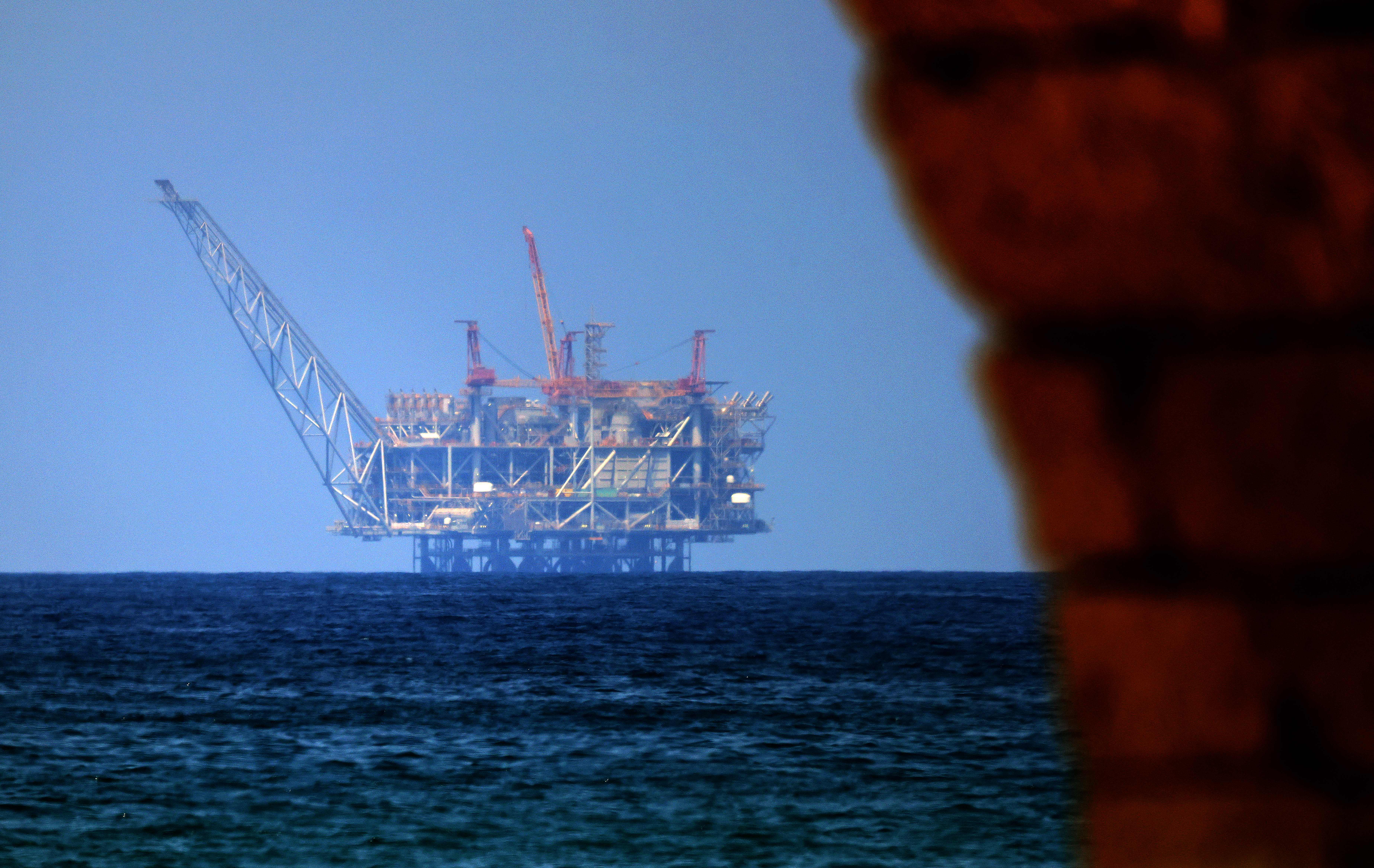
Behind the urgency lies a deeper strategic logic. The agreement helps keep Cairo dependent on Israeli gas for its energy security, discouraging Egypt from seeking alternatives. It also reflects a hard reality for “Israel”: there is no viable route to export its gas competitively to global markets except through Egypt’s infrastructure.
Energy Minister Cohen made that case bluntly in an interview with Yedioth Ahronoth on December 11, 2025, arguing that “the notion of leaving natural gas in the seabed defies economic logic and Israel’s geopolitical needs.”
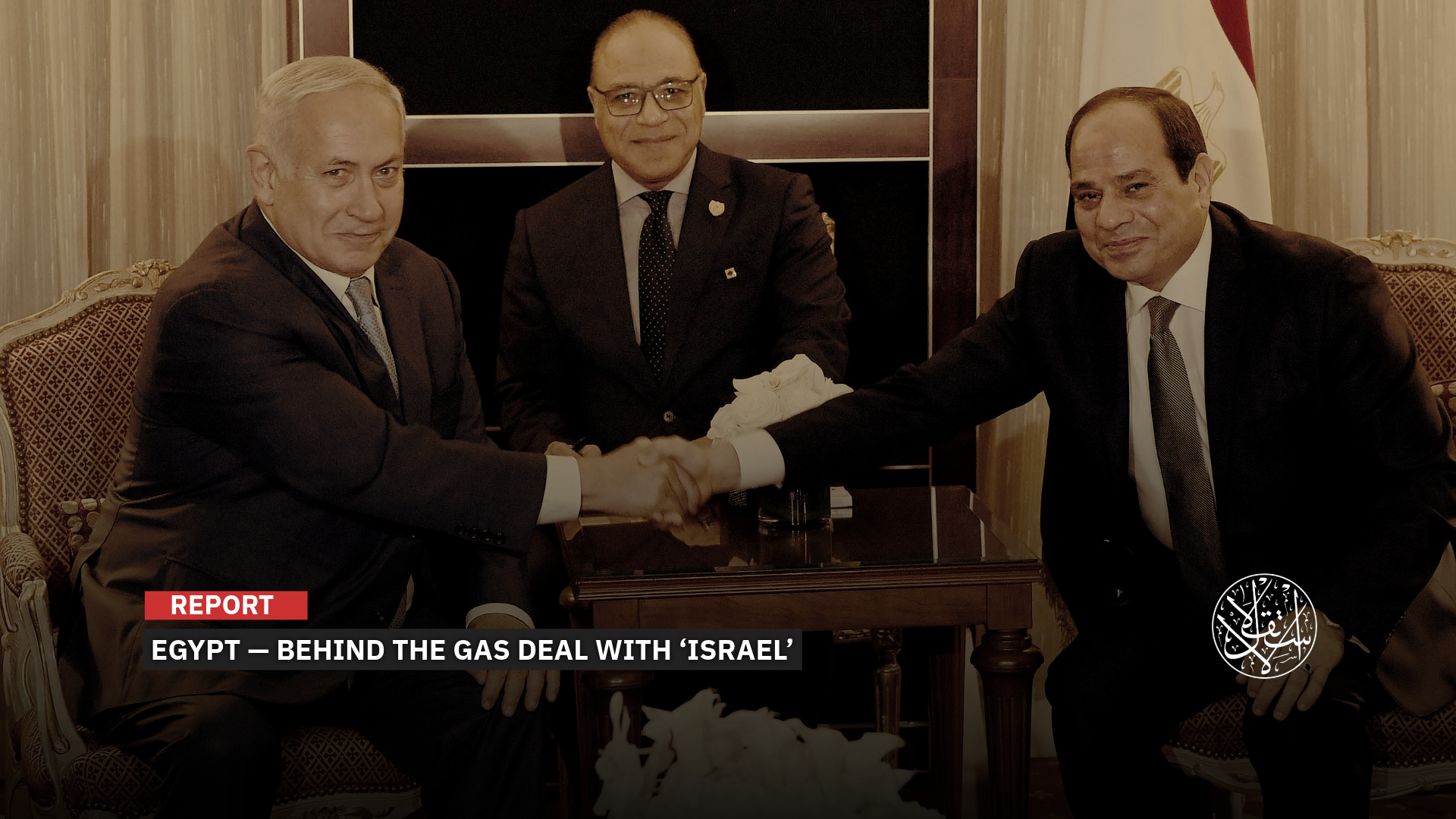
Diplomatic maneuvering is now underway to choreograph the optics of reviving the deal. Proposals reportedly include a U.S.-hosted meeting bringing together the head of the Egyptian regime, Abdel Fattah el-Sisi, Netanyahu, and President Donald Trump, or a Netanyahu visit to Cairo to formally sign the agreement.
Why ‘Israel’ Backed Down
“Israel’s” shift followed U.S. advice to treat gas not just as a tool to reset relations with Egypt after the genocide in Gaza but as a lever to widen normalization across the Arab world. The idea, according to officials and analysts, is to replace political peace with economic peace, allowing shared financial interests to smooth over political and military tensions.
On December 17, 2025, Netanyahu gave final approval to the deal, which had been signed in August but frozen for months as the Israeli Occupation applied pressure on Egypt. That pressure included pushing for lower gas prices for “Israel” through the American companies involved.
In announcing the approval, Netanyahu stressed two points. First, he framed the deal as strengthening “Israel’s” standing as an energy power, underlining its geopolitical significance rather than treating it as a purely commercial arrangement. Second, he insisted that the agreement had been cleared only after all Israeli security interests were safeguarded, without specifying what those interests were.
The comment carried added weight given earlier tensions, when the Israeli Occupation objected to what it described as Egyptian military reinforcements in Sinai and asked Washington to intervene. That backdrop raises questions about the unspoken linkage between security concerns and economic concessions.
Netanyahu also highlighted the financial upside, saying 58 billion shekels, roughly $18 billion, would flow into “Israel’s” state treasury and be used to fund security, education, and infrastructure. The message was clear: this was being sold at home as both an economic and strategic achievement.
Reporting by Israeli American journalist Barak Ravid on Axios on December 7, 2025, confirmed active U.S. mediation to push the $35 billion deal through. Ravid noted Washington’s efforts to broker a meeting between Netanyahu and Sisi after a prolonged rupture following the war on Gaza and “Israel’s” occupation of border areas in violation of the Camp David Accords.
According to the report, the White House is prepared to host a potential summit, noting that the two leaders have not spoken since before the Israeli aggression on Gaza began.
These efforts came amid mounting U.S. pressure and Israeli media reports, including Yedioth Ahronoth, indicating that Cohen was preparing to approve what would be “Israel’s” largest-ever gas export deal to Egypt under American urging.
Under the agreement signed in August 2025, the Israeli Occupation will export around 130 billion cubic meters of gas from the Leviathan field to Egypt over the next 15 years. In return, the partner companies Chevron, NewMed Energy, and Ratio Petroleum committed to supplying gas to “Israel’s” domestic market at discounted prices.
Natural gas analyst JP Lacouture told CNN Business on December 15, 2025, that one reason the deal stalled was “Israel’s” fear that exports to Egypt could drive up domestic electricity prices. As a result, the Israeli Occupation demanded guarantees that gas sold at home would remain cheaper than gas exported to Egypt, leaving open the possibility that Cairo could ultimately face higher prices if Israeli costs rise.
Economic Diplomacy
It was striking that Axios revealed the United States is not only trying to restore warmth to relations between Cairo and “Israel,” but also between “Israel” and the wider Arab world, through what it calls “economic diplomacy.”
According to the outlet, the American mediation is not limited to arranging a potential meeting between Abdel Fattah el-Sisi and Benjamin Netanyahu. It fits into a broader push to revive normalization between “Israel” and Arab states under Donald Trump’s vision and the Abraham Accords.
Axios reported that Trump’s senior adviser and son-in-law, Jared Kushner, focused in his latest meeting with Netanyahu on ideas for leveraging “Israel’s” economic strengths to entice Arab countries back toward normalization.
A U.S. official explained that “Israel” should deploy its assets in technology and artificial intelligence, natural gas resources, and expertise in renewable energy and water as tools of regional diplomacy.
The approach signals Washington’s intent to prioritize economic incentives in technology and energy ties between the Israeli Occupation and Arab states as a way to reinsert “Israel” diplomatically into the region.
In effect, the United States is promoting a new model of engagement, replacing political peace with economic peace, and attempting to bring the Abraham Accords back to the forefront.
Put differently, Washington is seeking to rebuild the collapsed Israeli-Arab alliance after the war on Gaza, this time on economic foundations rather than political alignment.
The Week magazine offered a similar reading in early November 2025, explaining that U.S. Energy Secretary Chris Wright canceled a planned visit to “Israel” after Eli Cohen refused to approve the gas deal with Egypt, citing strategic normalization considerations.
The magazine argued that Washington views the gas agreement as part of a wider web of regional economic cooperation linking “Israel,” Egypt, and Arab states, strengthening certain strategic alliance ties. That context, it said, explains Netanyahu’s eventual reversal and approval of the deal.
In an interview with Yedioth Ahronoth, Cohen predicted the gas agreement with Egypt would be signed within weeks, saying it would generate an additional 50 billion shekels, more than $15 billion, for “Israel’s” treasury.
He claimed that some unspecified security clarifications from Egypt were still needed and close to completion, an apparent reference to Israeli allegations that Cairo had violated the Camp David Accords by deploying forces in Sinai after “Israel” itself breached the agreement by occupying the border zone.
Cohen’s remarks came days after Egyptian and Israeli media reported on a possible Qatari gas deal with Egypt, as the “Israel”-Egypt agreement had been frozen for nearly three months.
Both Washington and Tel Aviv were also unsettled by Cairo’s advanced talks with several countries, led by Qatar, to import liquefied natural gas to meet domestic demand in 2026, reducing reliance on Israeli supplies. Egypt’s turn to Doha was widely seen as a hedge against Israeli manipulation of gas flows.
Egypt’s LNG imports surged to roughly $7.2 billion over the past ten months, up from $3.85 billion in the same period of 2024, an increase of 87 percent, according to the Ministry of Petroleum.
Ignoring Gaza
Egyptian analysts argue that the U.S.-Israeli push to revive gas exports to Egypt, after freezing the deal to pressure Cairo over troop deployments in Sinai, is aimed at sidestepping the war on Gaza that derailed normalization with Egypt and other Arab states.
“Washington is trying to escape the political fallout of the war by reopening different channels, including restoring the gas agreement and political ties between Israel and Cairo, and between Israel and Arab states more broadly,” an Egyptian political analyst told Al-Estiklal.
“U.S. efforts to entice Egypt by unlocking the frozen gas deal and shoring up Cairo’s energy security, which is central to regime stability, along with proposing a Sisi-Netanyahu meeting, are designed to distract from deeper issues tied to the war on Gaza.”
Responsible Statecraft has previously argued that Egypt’s gas deal with “Israel” exposes a strategic vulnerability, trading political independence for energy security.
The Quincy Institute–affiliated outlet warned that Egypt will be unable to meaningfully criticize “Israel” for at least two decades, until the agreement expires in 2040.
In an August 14, 2025, report, the magazine noted that Cairo understands electricity blackouts could trigger internal unrest capable of toppling the regime, making energy supply an overriding priority.
Yet the gas deal, it argued, ultimately undermines Egypt’s energy security by placing the entire system at “Israel’s” mercy, since the Israeli Occupation can halt gas flows at any time, a risk the Egyptian government cannot afford even for a few days.
A separate analysis published by the Jewish News Agency on December 11, 2025, described the agreement as a $35 billion economic lifeline for Egypt while criticizing it for failing to extract Israeli concessions on withdrawing forces from Sinai and labeling it a foreign policy failure.
The report concluded that the driving force behind the rushed deal is Egypt’s acute energy crisis, not “Israel’s” economic needs. The decline of Egypt’s Zohr gas field, plagued by water leakage and mismanagement, has turned the country from a potential energy hub into a desperate importer.
American Objectives
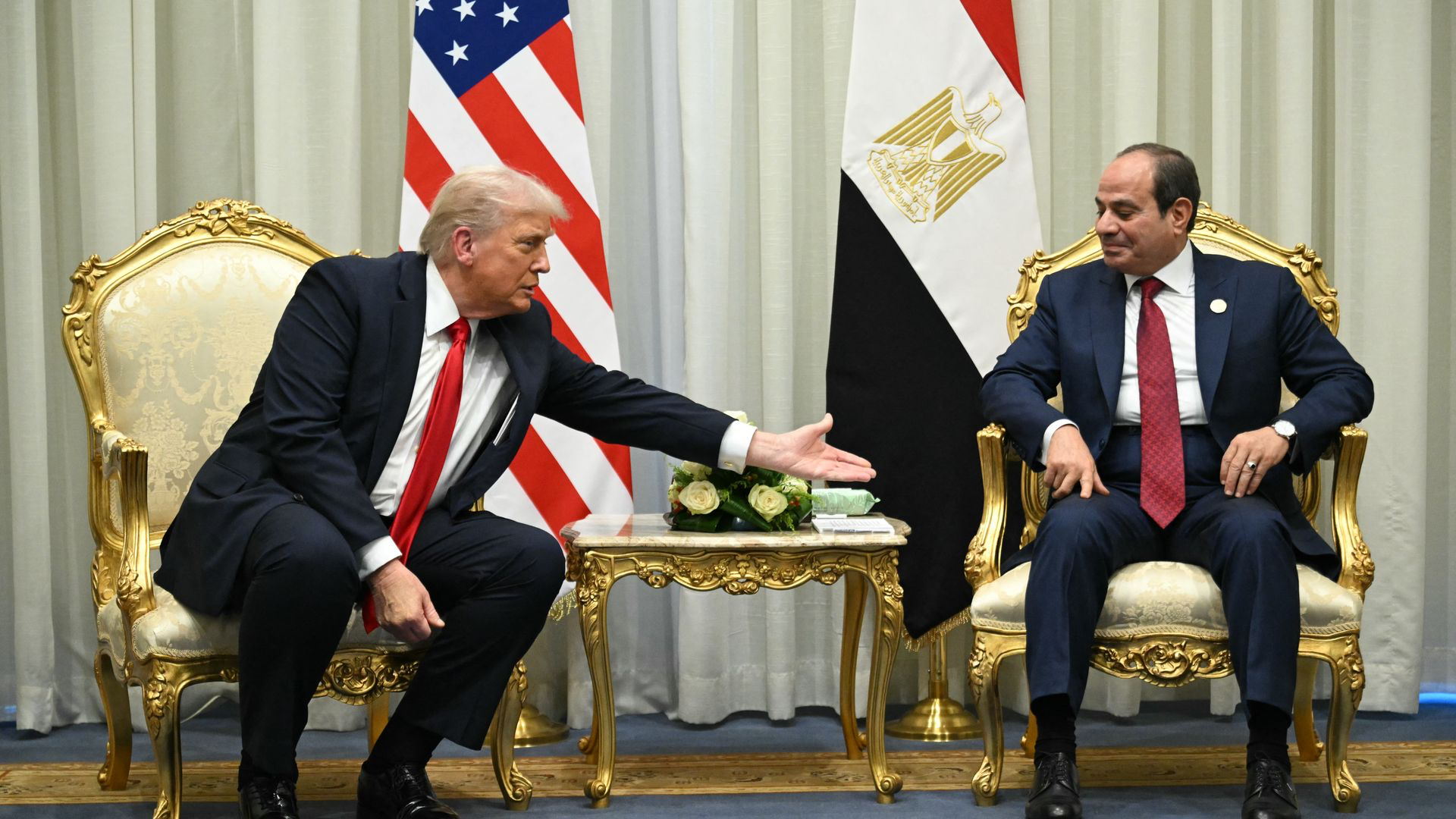
According to foreign media reports and policy analyses, “Israel’s” reversal and Washington’s push to move the gas deal with Egypt forward stem from a mix of political motives and internal Israeli security considerations.
The Israeli Occupation tied its approval to security and political conditions framed as protecting what it calls “Israeli interests.” These included claims that Egypt had violated the decades-old peace agreement regarding troop deployments in Sinai, allegations Cairo has firmly denied, as well as efforts to shift the burden of rising domestic gas prices onto Egypt.
At the same time, “Israel” leveraged the scale of the deal and Egypt’s urgent need to safeguard its energy security, using gas as a political pressure tool. The agreement was turned into a bargaining chip, with its final approval linked to broader political and regional gains, a role that ultimately required U.S. mediation.
As for why Washington applied pressure to see the deal through, several factors were at play. Chief among them was protecting American corporate interests. The U.S. pushed for the agreement in part to shield companies involved in the project, most notably Chevron, which holds a significant stake in the Leviathan gas field. Prolonged delays would have translated into direct economic losses for these firms.
Washington also sees the gas agreement as a gateway to a new normalization formula built on economics rather than politically charged issues. From this perspective, the deal is part of a wider web of regional economic cooperation linking the Israeli Occupation, Egypt, and other Arab states, reinforcing strategic alliances, as noted by The Week.
The U.S. is also wary of Egypt’s efforts to diversify its gas supplies and reduce dependence on a single source by turning to partners such as Qatar and renewable energy options. Such a strategy would weaken “Israel’s” leverage and reduce Egypt’s energy security from being held hostage to Israeli supply decisions.
Ultimately, Washington’s push reflects a broader goal of maintaining influence and managing regional balance. U.S. policymakers view stability in both Egypt and “Israel” as critical to American interests in the Middle East and as a safeguard against the region sliding into wider and more destabilizing conflicts.
Sisi and Netanyahu
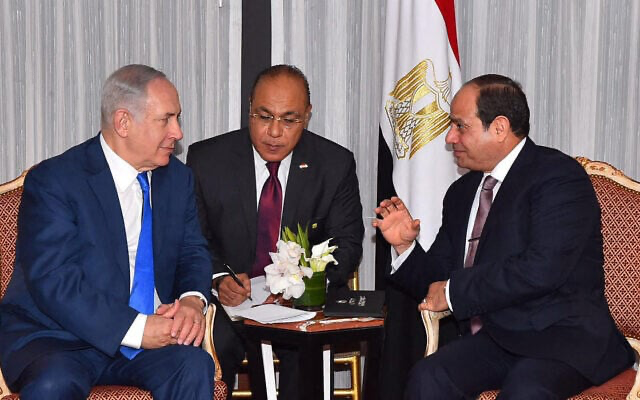
After U.S. and Israeli media reports pointed to American mediation aimed at bringing the head of the Egyptian regime, Abdel Fattah el-Sisi, and Israeli Prime Minister Benjamin Netanyahu together, The Times of Israel published two reports on December 12, 2025, that captured the uncertainty surrounding the effort. One, released in the morning, spoke of plans for Netanyahu to visit Cairo; the other, published later that evening, said Sisi had rejected the idea outright.
In its morning report, the paper quoted a senior U.S. official saying Israeli officials were working closely with their American counterparts to prepare a Netanyahu trip to Cairo to sign a natural gas supply agreement with Egypt. Netanyahu, the report said, hoped to frame the visit as historic, burnishing his diplomatic credentials ahead of “Israel’s” elections and diverting attention from mounting domestic troubles.
By nightfall, however, the tone had shifted. The Times of Israel reported that Sisi had no intention of meeting Netanyahu and would not do so unless “Israel” changed its behavior toward Egypt, according to a government official familiar with the matter. Egypt, the official said, remains angry over several unresolved disputes in recent months, sharply reducing the chances of any meeting in the near future despite clear interest from both “Israel” and Washington.
Israel’s Channel 12 later quoted U.S. officials saying the White House is eager to move beyond the Gaza war and focus on repairing “Israel’s” ties with the Arab world, including expanding the Abraham Accords. That effort, they acknowledged, is running into a deeper problem: Netanyahu’s credibility deficit among regional leaders.
After Netanyahu met with U.S. envoy Tom Barrack on December 15, officials noted that Washington’s push to arrange a Sisi–Netanyahu meeting had been met with firm Egyptian resistance, underscoring the fact that the two leaders have not communicated since the war on Gaza began.
Speaking to Axios the same day, a U.S. official was blunt. Netanyahu, the official said, has become increasingly isolated on the international stage over the past two years and should ask himself why Sisi refuses to meet him and why, five years after the Abraham Accords, he has not been invited to visit the United Arab Emirates.
The Trump administration, the official added, is investing significant effort in repairing the damage. But without concrete steps from Netanyahu to de-escalate, Washington is unwilling to keep pushing for an expansion of the Abraham Accords at any cost.
Taken together, the reports suggest the proposed summit has become part of a much broader political and economic bargain. U.S. officials see “Israel’s” approval of the gas deal as a necessary step to coax Sisi back into engagement and to reopen channels frozen by the Israeli genocide in Gaza.
In Washington’s view, that approach could help lower tensions, lay the groundwork for new regional arrangements after the war, and lock Egypt into Israeli gas supplies, easing tensions between the two sides.
Sources
- Scoop: U.S. discussing potential Sisi-Netanyahu summit
- Energy minister: ‘We are examining the construction of a nuclear power plant in Israel’
- Sissi not planning to meet PM without changes in conduct toward Egypt – official
- Scoop: White House scolded Netanyahu for violating Gaza ceasefire with strike
- The Cairo paradox: Why Israel must re-evaluate the strategic logic of the Leviathan deal
- Why Israel stalled $35 bn gas deal with Egypt and what it means for Middle East
- Is Egypt Paying the Price for Israel’s Electricity? [Arabic]