The Scenario of Division Once Again, How Do the Beja Tribes Threaten the Unity of Sudan?
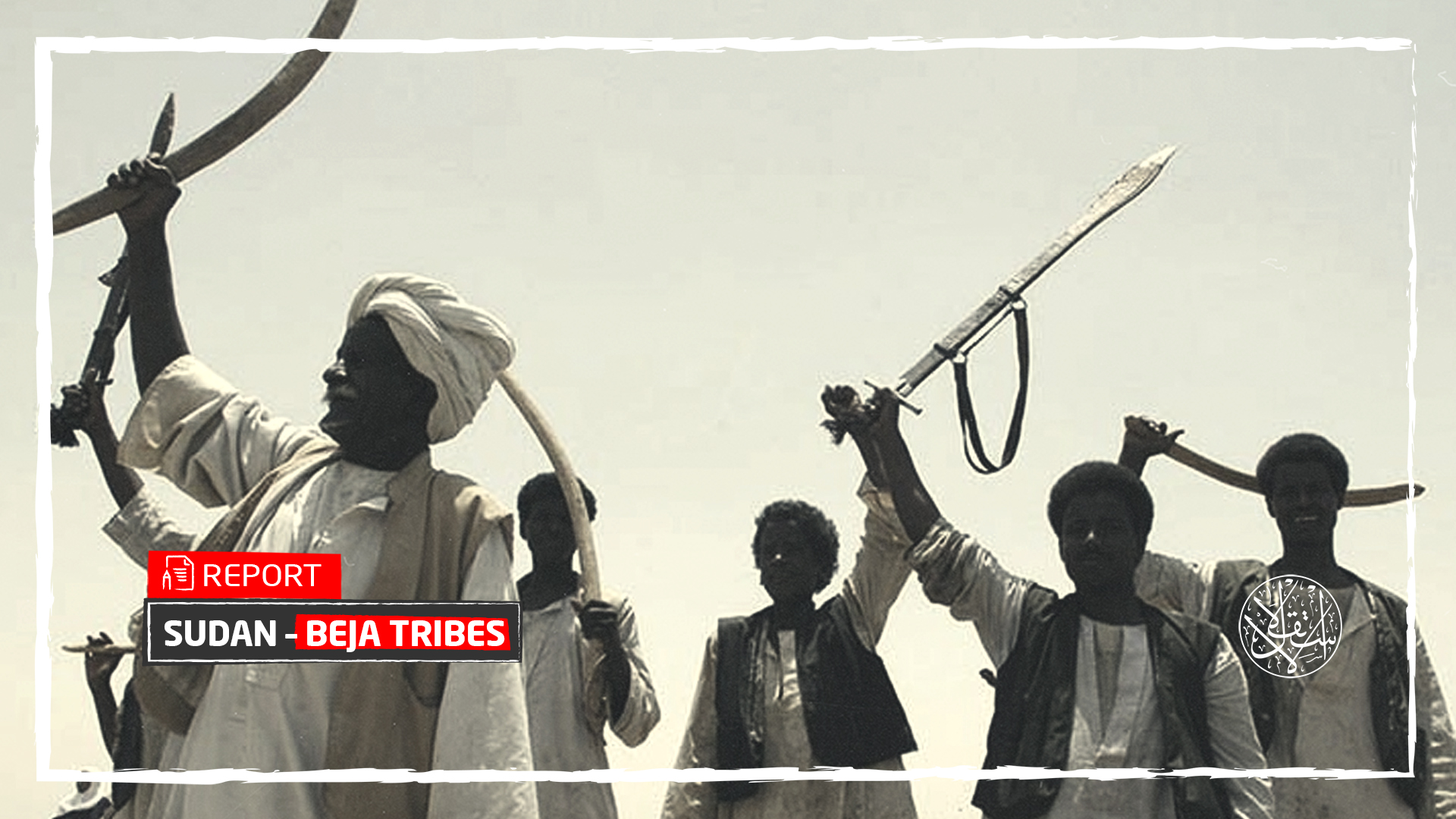
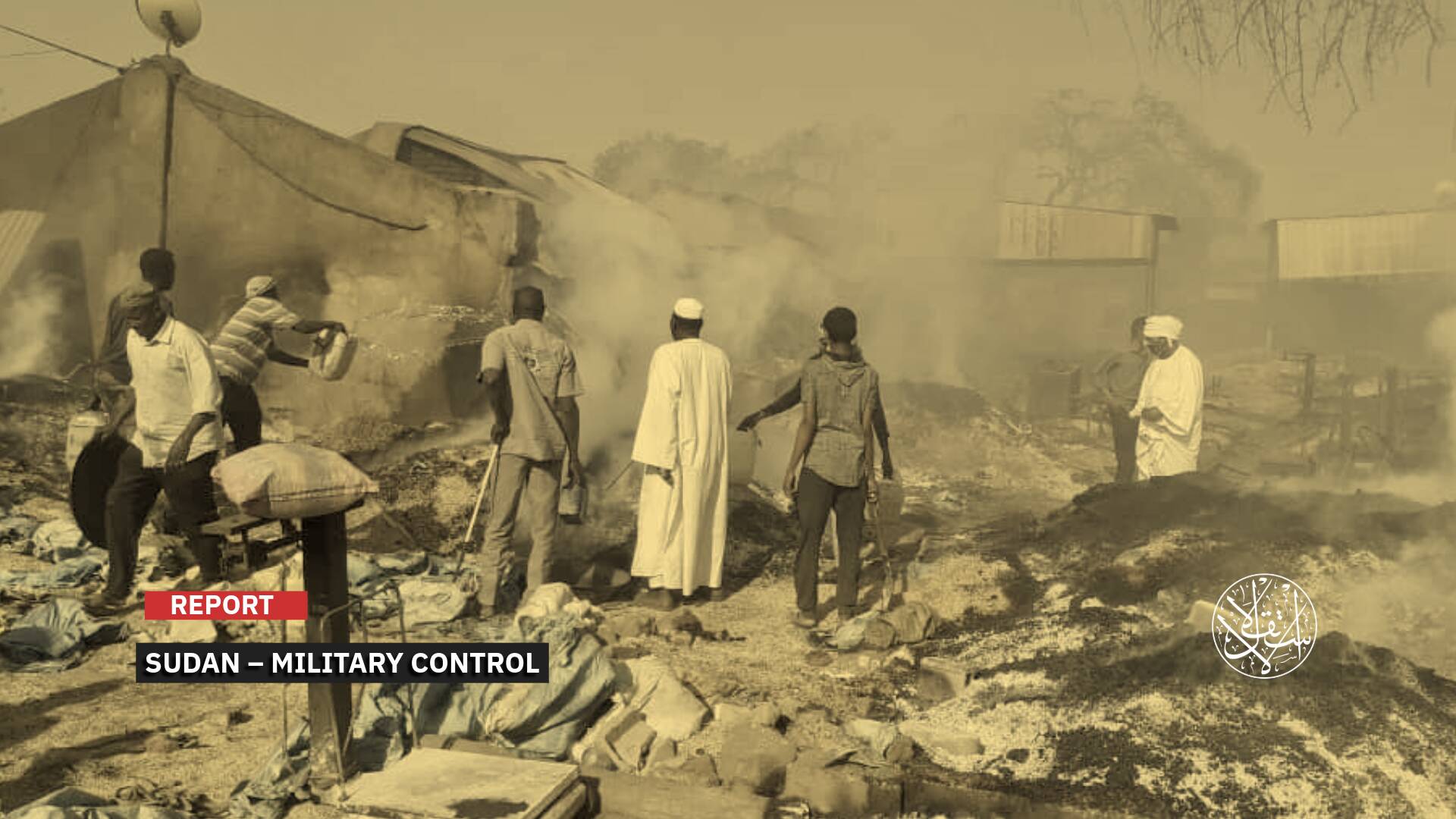
There is a continuous escalation in eastern Sudan, between the central government in Khartoum and the Beja tribes, that threaten to declare a separate state if their demands will not be implemented, while continuing to close the strategic port of Port Sudan, and all the main roads leading to the capital.
The Beja tribes and their leader, Muhammad al-Amin Turk, appear in the scene as a major driver of the demonstrations, which aroused curiosity to learn about the history and roots of this broad armed tribe, which includes dozens of components and controls the "vital" east of the country.
The question has become: will the current movement in eastern Sudan, with its multiple components and sharp polarization, lead to the revival of the authority of the entire Beja, and the declaration of their state, similar to what happened in South Sudan years ago?
‘Beja State’
On October 4, 2021, the leader of the Beja Supreme Council and the Independent Amauds, Major General Othman al-Baquer, vowed that the council was in the process of declaring a "Beja state" independent of Sudan.
In a public speech, he said that any civil escalation in dealing with Khartoum has been bypassed and the transition to revolutionary escalation has been overcome, adding that they are in the process of entering into civil disobedience.
Events developed on October 7, 2021, as the head of the Beja Optical Council and the independent columns in eastern Sudan, Muhammad Turk, said that he did not mind holding a meeting with Prime Minister Abdullah Hamdok, but on the condition that “the government is dissolved first,” and “the formation of a government of national competencies.”
He warned that the region will not be an economic resource on which what he described as "the government of microscopic, small parties" depends on.
Turk indicated his rejection of the intervention of the Revolutionary Front (opposing armed factions) in the issues of eastern Sudan, stressing that the Beja officials and the al-Amoudiya do not need support from the military component, but the civilian component (the government of the forces of freedom and change), wanted the military to exterminate the people of eastern Sudan and Sudan as a whole.

Al-Malasnat comes at a time when the closure of the ports of eastern Sudan continues, by order of the Beja Optical Council with the aim of putting pressure on the central government to achieve a number of political demands, including canceling the eastern Sudan track (within the peace agreement signed in Juba, October 3, 2020), dissolving the government and forming a government of technocrats.
The Troika group (the United States, Britain and Norway) entered the line on October 8, 2021, and demanded an immediate and urgent end to the blockade of Port Sudan and the transportation infrastructure in eastern Sudan.
Since September 17, 2021, protests have taken place in Port Sudan against the historic peace agreement signed by the transitional government in October 2020, in Juba, with a number of movements and tribes that took up arms during the era of Omar al-Bashir’s regime (1989-2019).
The protesters demanded the abolition of the aforementioned agreement, considering that it does not guarantee a fair representation of the eastern Sudan region and its tribes.
Crisis
The crisis in eastern Sudan is not the result of the current moment, but rather extends since the establishment of the republic itself in 1956, when demanding regional rule, then establishing the Beja Conference, which called for armed struggle in 1964, leading to the formation of the Eastern Front during the era of the former regime.
After the overthrow of al-Bashir’s rule in 2019, the transitional phase began, and the path of eastern Sudan, among the five tracks in the peace agreement, which was signed between the government and the Revolutionary Front, in the capital of South Sudan, Juba.

The Juba negotiations were based on 5 tracks: the Darfur region (west), South Kordofan (south) and Blue Nile (southeast), eastern Sudan, northern Sudan, and central Sudan.
On October 4, 2020, protesters closed the South Port Sudan on the Red Sea, in protest against the East Path included in the peace agreement.
The escalation against the agreement began with the closure of the Aqaba area on the national road leading to the main ports of the Red Sea and culminated in the closure of the Suakin and southern Port Sudan ports for transporting and unloading goods in the city of Port Sudan.
Then the chiefs of the Beja tribes announced that the path of the East does not represent the people of eastern Sudan, and they are against subjugation to the foreign agenda.
Strategic Area
The Beja people, who preach their own state and seek autonomy, have lived since ancient times in the region of eastern Sudan, and it includes three states: the Red Sea, Kassala, and Gedaref.
The region also includes 5 rivers, and more than three and a half million hectares of agricultural land.
These resources are important components of Sudan, which suffers from a crumbling economy because of mismanagement and economic sanctions during the era of al-Bashir.
According to a study prepared by Sudanese researcher Idris Nour Muhammad, entitled "Failures of the Past in Eastern Sudan and Future Ambitions," the borders of the eastern region are the Red Sea in the east, Eritrea and Ethiopia in the south, the Nile in the west, up to the borders of the Blue Nile in the southwest, and Egypt in the north.
It extends from the northern slopes of the Ethiopian plateau in the south to the Sudanese-Egyptian border in the north and covers an area of 110,000 square miles.
Historically, the region is distinguished by its embrace of the oldest human civilizations, as it was one of the most important gates through which Arabism and Islam entered Sudan.
The wealth of the bottom under the Red Sea in that region is estimated at billions of dollars, in addition to precious stones minerals, and there are other minerals in the region, such as iron, copper and tungsten, in addition to marble and limestone.
The Beja People
The Beja population in Sudan alone amounts to more than two and a half million, and according to the consensus of historians, they are a people with deep roots, their history in the region goes back 5,000 years, and they are a mixture of various nations, integrated by language, culture and land.
The feature that prevails over the Beja tribes is the Bedouin character, which is characterized by simplicity and generosity.

They were mentioned by the Islamic historian, Taqi al-Din al-Maqrizi, in his book in which he said that after Islam, torrents of Arab, Quraish, Umayyad, Juhaniyah, Rifa'i and Balawi migrations flowed to the Beja coast, but the Bejawi dialect and the Bejawi character is the only thing that has remained until now and was inherited by all the immigrant tribes of the Beja land.
The Beja tribes have long complained of political and development marginalization and led fierce wars against the central government in Khartoum during the nineties of the last century, and at the present time the rebellion begins again, and the possibility of entering into a phase that leads to the disintegration of the entire East from the motherland.
Absent Country
Sudanese politician Amin Abdel Razek said that the crisis in eastern Sudan predicts dire consequences for the country, especially in the light of the government's fragility and the challenges of the faltering transitional phase, so it may lead to a repetition of the Darfur scenario in the east and may reach even further events with the possibilities of repeating the scenario, the catastrophic event that ended with the secession of South Sudan.
He added in an interview with Al-Estiklal that It seems that the origin of the dilemmas is the policy of employing private agendas, to serve the narrow ideological or factional interests of the components of the new government, and it seems that all of them are reading from the same single book of failure.
He continued to clarify that this explains the recurrence of Sudan's continued collapse, and its division into states, then tribes and movements. The national state and the ancient people with its components and spectrums met the scourge of marginalization, and at the same time regional and international forces were scrambling to exercise the role and gain influence and dominate over the bounties of Sudan in the east and west.
Abdel Razek considered that the transitional stages are the major gap and weakness in the life of nations, and a week country like Sudan, burdened with internal and external crises, had to quickly overcome this step and held elections for a government which represents the spectrum of the people, and it has to begin to quickly solve problems such as the Sharq path, and Darfur, in addition to the armed movements.
He stressed that the ignition of the East in this way again, portends a catastrophe that may lead to its separation and the announcement of the Beja State.
Abdel Razek concluded his speech by emphasizing that the existing government will not be able to deal with the current crisis in the East, and it has no political weight or ability to play that complex role, and all national forces must intervene and engage in a new project that will extricate Sudan from its ordeal and restore cohesion among the spectra of its people and prevents civil wars or tribal conflicts.
Sources
- Eastern Sudan: The opposition threatens to secede from Khartoum and announce the ‘Beja State’ [Arabic]
- The Beja Optical Council requires the opening of closed areas in eastern Sudan, and Western countries call for an end to the port siege [Arabic]
- What are the roots of the eastern Sudan crisis and the reasons for its aggravation? [Arabic]