Pledging Future Tax Revenues to Repay Debt: El-Sisi Follows Khedive Ismail’s Path Toward Egypt’s Bankruptcy
The greatest danger lies in creating a new gap in resources and reproducing the need for further borrowing.
As Egypt struggles to reduce the cost of its accumulated debt, its government has turned to an unprecedented financial instrument that opens a new avenue for financing the present with future revenues, similar to what Khedive Ismail of Egypt did in the 1880s, a course that ultimately ended with the country’s British occupation and the Urabi Revolt (1879–1882).
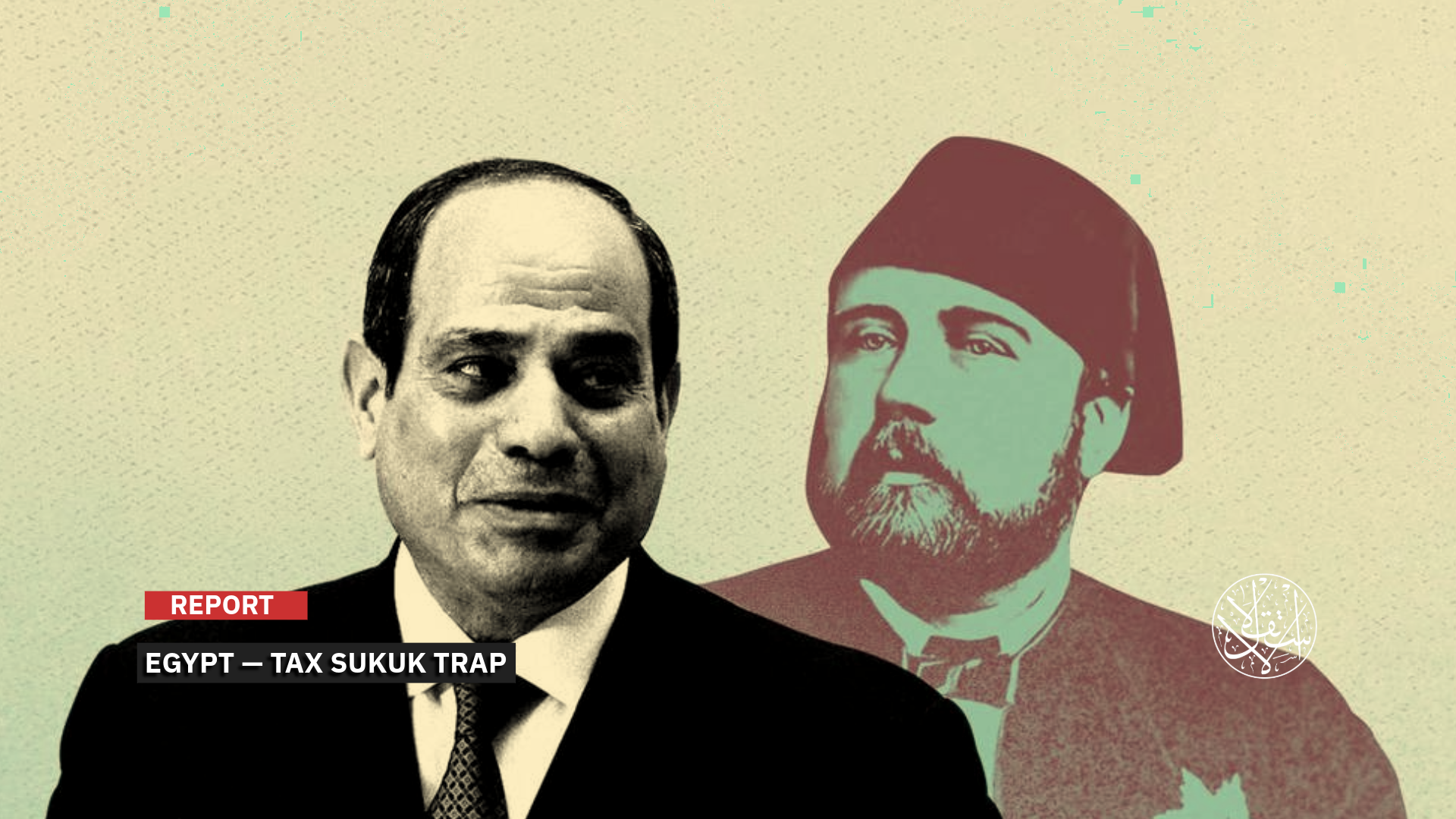
On August 10, 2026, Egyptian head of the regime Abdel Fattah el-Sisi decided to issue “tax sukuk,” allowing future tax revenues to be collected and subsequently discounted, as part of mechanisms to raise funds to reduce the interest costs of the country’s massive debt.
This raises a question that goes beyond merely finding a mechanism to reduce debt-servicing costs: Has the Egyptian state begun pledging future years’ revenues in order to ease the burden of its current debt?
The move brings back into focus the experience of the Khedive, who expanded borrowing to finance his projects and policies before the debt crisis became a gateway to increasing foreign oversight and intervention in Egyptian decision-making. Is history repeating itself?
And could “future tax” financing instruments turn into a crisis and a constraint on the state’s future revenues, leaving it without sufficient funds to meet its revenue needs, especially if they fail to address the root of the problem, the ballooning debt and the cost of servicing it?
Future Taxes
After the interest payments on Egypt’s debt alone reached approximately EGP 2.298 trillion, according to the Egyptian budget for fiscal year 2025/2026, equivalent to roughly $48 billion annually based on the exchange rate used in the International Monetary Fund’s 2026 program assessments, EGP 47.8 to the dollar.
The debt itself has reached $164.8 billion, while Egypt is required to repay $62.8 billion, including principal and interest, over a 12-month period from April 2026 to March 2027, according to the World Bank. This has created an urgent need for dollar liquidity to meet interest and debt repayment obligations.
Against this backdrop, el-Sisi decided to issue “tax sukuk,” which, according to a statement by the spokesperson for the Egyptian presidency, “will be financed by taxpayers and deducted from their future tax liabilities, with returns offered at a good and appropriate rate, thereby helping reduce financing needs and, consequently, the debt-servicing bill.”
These “tax sukuk” will be among the government’s unconventional financing instruments, through which it seeks to obtain part of tax revenues in advance, rather than relying more heavily on conventional borrowing from banks or issuing Treasury bills and bonds.
Economists say resorting to such instruments means that Egypt has reached a difficult economic stage, with the budget facing high financing needs and growing debt-servicing burdens.
The economic newsletter Enterprise reported on August 13, 2026, that the Ministry of Finance will issue four categories of sovereign sukuk backed by tax proceeds, with four nominal denominations: EGP 10,000, EGP 100,000, EGP 1 million, and EGP 10 million, according to official data.
The ministry will determine the maximum total value of the sukuk to be issued, although the data provided no details on the size of this ceiling.
According to the official statement on the tax sukuk, the new instruments will be financed by taxpayers, with their value deducted from their future tax liabilities. The return on the sukuk will be “good and appropriate.”
Taxpayers will receive a tax-exempt return, and will be able to use the sukuk to settle their tax liabilities after one year from the date of subscription.
The subscription will be open to individuals, private-sector companies, and public-sector companies, while the instruments will not be tradable or transferable.
In other words, the sukuk are debt instruments owed by the state, financed through taxes whose value is paid by deducting it from the taxes that the purchasers will owe in the future, in return for a return, or interest, that they receive for holding the sukuk.
Put more simply, the taxpayer pays the value of the sukuk upfront, and at the end of the term, uses the total value of the sukuk, plus the return, to settle the taxes owed.
Through this mechanism, the government receives in advance part of the money it would eventually collect in the form of taxes, rather than waiting until the taxes become due. The taxpayer, meanwhile, benefits from the return on the sukuk, which is ultimately used to reduce the amount of taxes owed.
Thus, in this case, the tax is transformed from merely a future financial obligation into an instrument that enables the state to obtain financing upfront, in exchange for providing the taxpayer with a return that can be used to reduce their future tax liability.
Following the announcement of the tax sukuk, the debate quickly split between supporters who see them as a financial innovation capable of easing the debt crisis, arguing that they do not constitute financing for the budget deficit or repayment of debt, but rather an innovative financial financing instrument, according to Al-Masry Al-Youm on August 12, 2026.
Opponents, however, viewed them as a new form of rolling over the debt problem, and as a tool for selling future revenues that could leave subsequent governments without sufficient revenues, since taxes, which would be paid in advance, account for 80 percent of the state’s revenues.
These experts warned against the government’s new approach, stressing that it amounts to “kicking the problem down the road,” and that the sukuk could negatively affect Egypt’s economic credit rating.
They also argued that the mechanism would result in lower revenues in the following year, send negative signals to international institutions, investors, and financiers, and increase indebtedness through the return granted to the taxpayers who finance the sukuk.
Khedive Ismail’s Policy
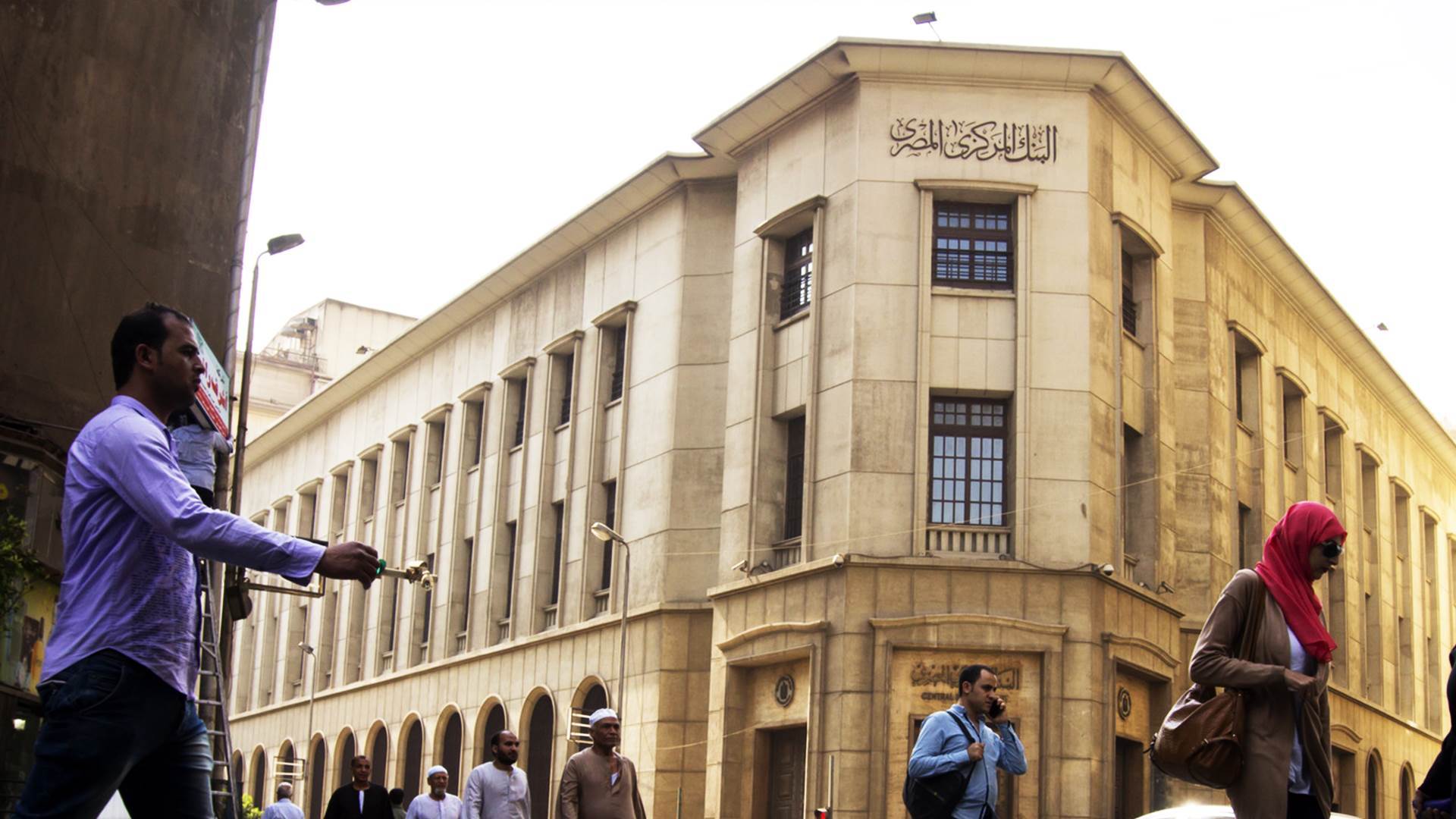
The massive increase in Egypt’s external debt, which has reached approximately $165 billion, according to Central Bank data, has brought to mind the era of Khedive Ismail, who plunged Egypt into debt about 155 years ago.
He was subsequently removed from power, and Egypt was placed under European financial control before being occupied by Britain in 1882, remaining under British occupation for 74 years.
More than a century and a half ago, Egypt had a different system based on an idea similar to the tax sukuk proposed by el-Sisi, namely, paying an amount upfront in exchange for a future tax benefit.
Immediately after el-Sisi’s decision was announced, economists and politicians compared it with the actions of Khedive Ismail, who ruled Egypt for about 16 years, from January 18, 1863, until he was deposed on June 26, 1879. In 1871, he introduced the “Muqabala” system for landowners.
Under the system, landowners paid six times the tax in advance in exchange for a permanent tax exemption. The law was later abolished and the taxes were collected again after his plan to ease the debt burden failed.
Ultimately, the scheme contributed to Egypt’s indebtedness and prompted foreign banks to demand repayment, paving the way for the British occupation of Egypt and the Urabi Revolt.
The Khedive was able to collect huge sums from the population through the law, amounting to millions of pounds, but the financial crisis was not resolved because of the exorbitant interest rates on foreign loans.
During the reign of Khedive Tawfiq, in 1880, the Muqabala Law was abolished under pressure from the European Financial Commission and foreign debt officials seeking control over Egypt’s revenues.
This deprived landowners of the exemptions they had been promised and provoked widespread public anger, which later contributed to the outbreak of the Urabi Revolt.
The story of the law began in August 1871, when the regulations governing the “Muqabala Law” were issued during the reign of Khedive Ismail.
It effectively functioned as a domestic loan from agricultural landowners to the state. Its value was set at six times the annual tax imposed on the land, equivalent to paying six years of taxes in advance.
In return, the government promised those who paid the Muqabala a permanent exemption from half of the tax imposed on their land, while also pledging not to increase the tax on it in the future.
Those who paid the Muqabala received a document proving that they had paid it and granting them certain rights over the land, including the right to gift, inherit, transfer, or bequeath it.
They could also dedicate the land to charitable or community purposes after obtaining the Khedive’s permission.
Payment of the Muqabala was initially voluntary, but this later changed and it became compulsory.
The Muqabala Law was not implemented consistently. It was suspended in May 1876, reinstated in November of the same year, and then abolished again by a decree issued in January 1880.
When Khedive Ismail came to power, Egypt’s debt stood at £11.06 million sterling. During his 18 years of rule, it rose to £127 million sterling.
Whenever the Khedive needed money, he resorted to borrowing at exorbitant rates. The nominal interest rates on the loans ranged between 6 and 7 percent, but the effective rates reached 12, 18, 26, and 27 percent.
The Egyptian government at the time was forced to meet installments on its accumulated debts and their interest by any means available.
It even borrowed through Treasury bonds at extremely high interest rates, until debt interest payments accounted for 70 percent of the state’s public revenues.
Toward the end of the Khedive’s reign, most of the country’s revenues were being transferred to the Debt Commission to repay moneylenders, pay dividends on Suez Canal Company shares to the British government, and pay the annual tribute to the Ottoman government.
The government was left with no more than £1 million to administer the country, out of total revenues of approximately £9.5 million.
Khedive Ismail’s reign was characterized by extravagance and the squandering of public funds on lavish celebrations, as well as the construction and beautification of palaces.
He built around 30 grand palaces, including Abdeen Palace, which he made the seat of government, replacing the Citadel Palace built by Muhammad Ali Pasha, as well as Gezira Palace, Bulaq al-Dakrur Palace, Quba Palace, Helwan Palace, Ismailia Palace, and Zafaran Palace.
Following in Khedive Ismail’s Footsteps
The era of el-Sisi bears similarities to that of Khedive Ismail in the construction of palaces. El-Sisi faced criticism in 2019 over the construction of new presidential palaces in the New Administrative Capital, Alamein, and elsewhere.
Responding defiantly to his critics, el-Sisi said, “Yes, I am building presidential palaces, and I will continue to do so. I am building a new state.”
Human rights lawyer Nasser Amin mocked el-Sisi’s decision regarding the “tax sukuk” to pay debt interest, saying that this was what happened during the era of Khedive Ismail, specifically in 1871, when it was known as the “Muqabala Law.”
When Egypt became mired in debt as a result of borrowing from foreign banks to finance the Khedive’s lavish projects, and as he became unable to repay the debts owed to foreign banks, he introduced a mechanism allowing him to collect six times the future taxes, in exchange for granting the taxpayer a permanent exemption equivalent to 50 percent of the annual tax in the future. This mechanism was enacted under what became known as the Muqabala Law.
After the law had been in effect for several years, it was abolished in 1880, after the government confiscated the money it had previously collected from taxpayers and revoked the exemptions that had been granted to them.
The law had several disastrous consequences, including depriving the state treasury of the annual tax revenues it would otherwise have collected from taxpayers in the years following its implementation, revenues that could have been used to provide public services to citizens.
The law also placed a heavy burden on peasants and the poor, who were forced to borrow money to meet their future tax obligations.
Even after it was abolished, the system contributed to the establishment of what became known as the “Public Debt Fund” in 1887, which was overseen by foreign creditor powers and represented one of the early steps toward the British occupation of Egypt.
Amin noted that implementation of the law was considered one of the major factors that contributed to the outbreak of the Urabi Revolt, as the involvement of creditor powers in the country’s affairs of government expanded in an effort to recover the debts that the Khedive had accumulated through excessive borrowing.
He added, “I believe the current regime is still moving at a terrifying speed backward. We have now returned to the reality and solutions of 1871.”
The Muqabala Law
"During the reign of Khedive Ismail, specifically in 1871, Egypt became deeply mired in debt as a result of borrowing from foreign banks to finance the Khedive’s lavish projects. Faced with his inability to repay the debts owed to foreign banks, he introduced a mechanism allowing him to collect six times the future taxes, in exchange for…"
Nasser Amin (@NasserAmi), August 10, 2026.
Activists said the idea of the sukuk reminded them of the comedy film Ismail Yassin in the Madhouse, in which the character Abu Ta‘ma would eat pastries every day at Hassouna’s, played by Ismail Yassin, on credit, and also borrow money from him, telling him, “Put it on the tab and deduct it from Ta‘ma’s dowry.” They said this was essentially the same idea as citizens paying future taxes in exchange for sukuk.
"This news reminded me of the film Ismail Yassin in the Madhouse.
Abu Ta‘ma used to eat pastries at Hassouna’s on credit and borrow from him as well, telling him, “Put it on the tab and deduct it from Ta‘ma’s dowry.”
“Aren’t you going to pay a dowry too, Hassouna?”
Dear citizen,
“Aren’t you going to pay taxes too?”
“Pay them now and take sukuk.”
I really like thinking outside the box."
AHMAD LOTFI (@AHMADLO13219562) August 10, 2026
The Egyptian Dostour Party (Constitution Party) warned of the consequences of issuing tax sukuk financed by taxpayers, stressing that Egypt’s public debt crisis cannot be addressed simply by inventing new instruments to roll over existing obligations.
It argued that the greatest danger lies in converting part of future tax revenues into a source of present-day financing, which could create a new gap in government resources and reproduce the need for borrowing.
This means Egypt could enter a vicious cycle that begins with repaying current debts through tax sukuk, then leads to a decline in part of its future tax revenues, thereby worsening the deficit and once again creating a need for additional borrowing.
On June 15, 2023, a report by the British magazine The Economist said Egyptians were deeply dissatisfied with el-Sisi over the country’s deteriorating economic conditions, and discussed fears that Egypt could go bankrupt as it did during the era of Khedive Ismail.
The report compared decisions taken by el-Sisi with those made by Khedive Ismail in the late 19th century, which resulted in “ensnaring and bankrupting Egypt” and leaving it vulnerable to occupation by foreign powers because of its debts.

85 Percent 'Taxes'
Egyptian activists warn that el-Sisi’s approval of the issuance of sukuk financed by taxpayers and deducted from their future tax liabilities poses a risk to the Egyptian state, because taxes are the state’s largest source of revenue, accounting for 85 percent of total government revenues.
They point out that debt and its interest payments consume approximately EGP 2.3 trillion, equivalent to 74 percent of all state revenues, meaning there could be insufficient funds available for future spending because the government has effectively already borrowed against the future through taxes collected in advance.
According to Egypt’s Ministry of Finance, the ratio of tax revenues to total revenues is around 85 percent in the 2025/2026 budget.
In the new 2026/2027 budget, tax revenues amount to EGP 3.529 trillion out of total revenues of EGP 4.056 trillion, or approximately 87 percent.
Egypt’s budget figures reveal the extent to which the public treasury relies on taxes as its primary source of financing, raising concerns about how the government will fund future spending after collecting tax revenues for several years in advance.
In the 2025/2026 fiscal-year budget, the Ministry of Finance estimated total revenues at approximately EGP 3.12 trillion, including EGP 2.655 trillion in tax revenues, equivalent to about 85 percent of total revenues.
Taxes have therefore effectively become the main source of the resources the state relies on to finance its expenditures.
This dependence becomes even more pronounced in the 2026/2027 budget, with estimated tax revenues rising to approximately EGP 3.529 trillion out of total revenues of EGP 4.056 trillion, representing nearly 87 percent of total revenues.
This means that any mechanism that brings forward part of future tax collections directly affects one of the treasury’s most important sources of financing.
Even these revenues are being consumed by interest payments and debt principal repayments, as debt servicing takes up a huge share of the budget.
The 2025/2026 budget estimated interest payments at approximately EGP 2.298 trillion, compared with total revenues of EGP 3.120 trillion, equivalent to around 74 percent of budget revenues.
This is the figure that makes the idea of using future revenues, including tax revenues, to finance current needs a source of serious concern.
This is where the sensitivity surrounding the idea of tax sukuk comes from. If the mechanism involves obtaining financing today in exchange for tax revenues that will flow into the treasury in the future, the state is not creating a new source of revenue in economic terms. Rather, it is converting part of its future revenues into current liquidity.
This may ease immediate financing pressures or reduce the cost of certain debt instruments, but, on the other hand, it reduces the room for maneuver available to future budgets.
The more extensively this mechanism is used, meaning the more the government obtains money today in exchange for its right to tax revenues it will collect tomorrow, the greater the share of future revenues that becomes tied to existing obligations.
This raises a fundamental question: If tax revenues themselves have become a source of financing for the present, how much room will remain for the government to finance future expenditures?
This is why the government is seeking to increase tax revenues and broaden the tax base by combating tax evasion and incorporating the informal economy, objectives that the Ministry of Finance has announced as part of the goals of the 2026/2027 budget.
Cause of the Problem
Because of its continued borrowing to undertake costly projects that provide limited benefits to the Egyptian people, who are struggling under rising prices and increasing poverty rates, estimated at 34 percent according to official figures, Egypt has become obligated to repay huge sums every year, including both debt principal and interest.
Government borrowing and bank lending caused Egypt’s external debt to rise by approximately $865 million during the first quarter of this year, reaching $164.7 billion, according to figures from the Central Bank of Egypt.
The latest World Bank data, released on August 12, 2026, revealed that Egypt is required to repay $62.8 billion in external loans over the 12 months from April 2026 through March 2027.
According to the data, this amount includes $7 billion in interest and $55.8 billion in loan principal repayments. The principal repayments include $21.1 billion in deposits and foreign currencies, most of them from Gulf countries that have pledged to renew them and convert most of them into investments.
The repayment schedule includes $24.39 billion in the second quarter of 2026, including $7.1 billion in deposits and foreign currencies held at the Central Bank.
In the third quarter of this year, Egypt is scheduled to repay $13.94 billion, including $4.5 billion in deposits and foreign currencies held at the Central Bank.
Egypt will also repay $13.7 billion in the fourth quarter of 2026, including $5.45 billion in deposits and foreign currencies held at the Central Bank.
In the first quarter of 2027, it is scheduled to repay $10.8 billion, including $4.14 billion in deposits and foreign currencies held at the Central Bank.
According to official figures, Egypt’s annual principal repayments are estimated at approximately EGP 2.085 trillion. This means that total debt servicing, including interest and principal repayments, amounts to around EGP 4.38 trillion, or approximately $58.7 billion, in the budget.
This means that total debt service in 2026/2027, including both interest and principal repayments, amounts to approximately $109.3 billion annually.