Banned in Turkiye and Egypt, Welcomed in Morocco: What’s Behind the Controversy Over the Ship in Tangier?
He said the people have suffered one disaster after another under a government that remains silent and absent.
Morocco’s media, political, and religious circles have been embroiled in a heated debate after a cruise ship carrying thousands of gay passengers docked in Tangier as part of a Mediterranean tour.
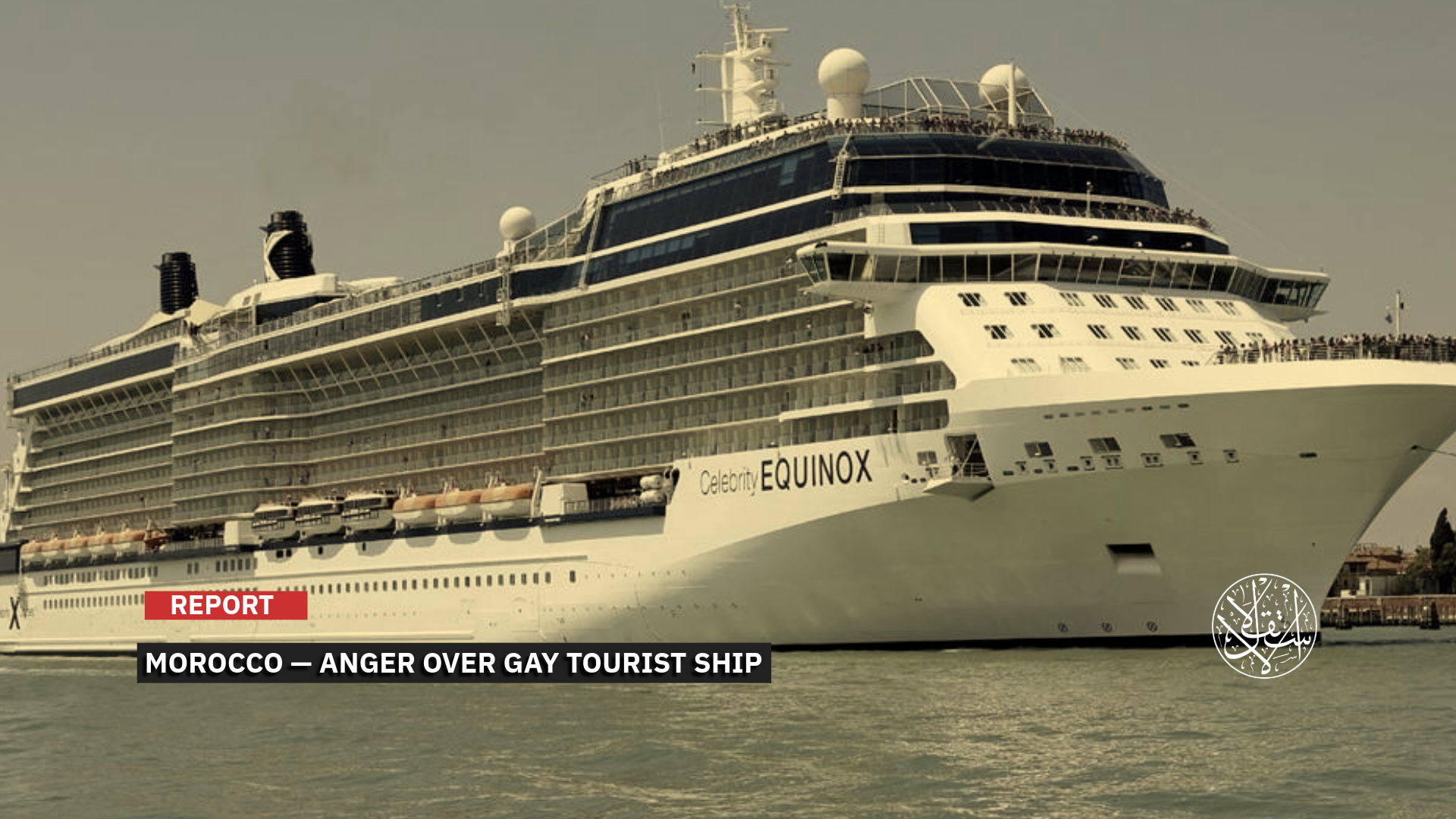
According to the local outlet Tanja7 on August 9, 2026, the Celebrity Equinox docked at the port of Tangier as part of a cruise organized by a company serving the homosexual community, marking its first stop on the Moroccan coast.
The ship arrived at around 7 a.m. on August 9 and departed at about 4 p.m., after its passengers spent several hours in the city.
Widespread Anger
Hundreds of tourists disembarked in Tangier, touring the old city, the Kasbah, and the Grand Socco. They also visited traditional markets, while some ate at local restaurants and cafes.
According to reports, no incidents of harassment or assault were recorded during the tourists’ stay. Some passengers, however, reportedly expressed frustration over the lack of an official reception or special welcome for the ship.
The visit came amid a wave of criticism and anger in Morocco over the cruise itinerary, as the country’s penal code criminalizes same-sex relations under Article 489.
The law provides for prison sentences and fines, yet authorities allowed the ship to dock and its passengers to disembark and tour Tangier.
Tangier’s local authorities issued no statement on the stop. According to observers, the visit unfolded amid a sense of caution on the Moroccan side, creating concerns among the organizers and discouraging any celebratory displays.
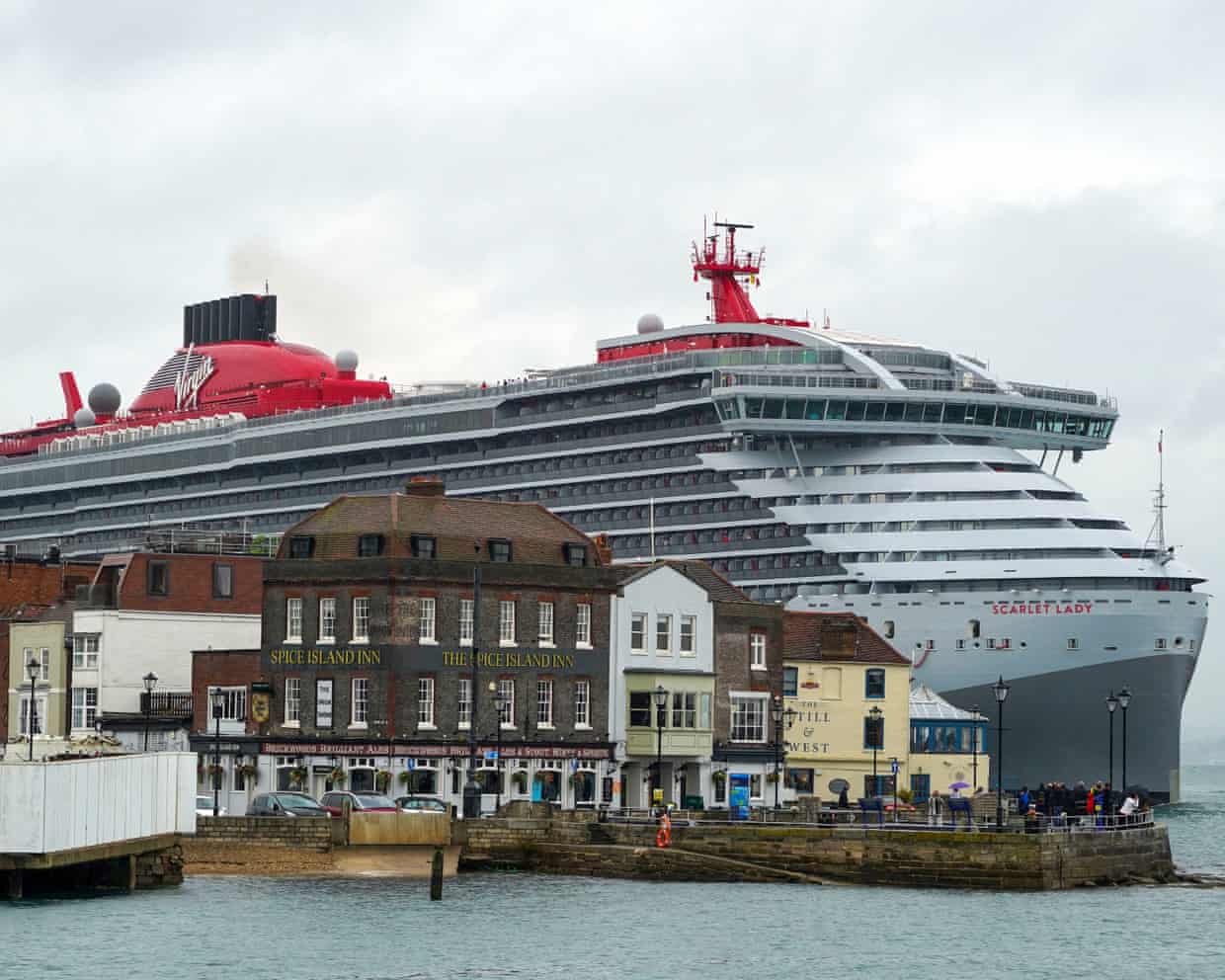
Similar cruises catering to gay travelers have faced restrictions at several ports in the region. In July 2026, the cruise ship Scarlet Lady, operated by Virgin Voyages and chartered by Atlantis Events, was barred from entering ports in Turkiye and Egypt within the span of a week.
In Turkiye, authorities refused to allow the ship to dock in Kusadasi and Istanbul from July 7 to 9. Media reports attributed the decision to what authorities described as moral values and discontent among sections of society.
After the itinerary was redirected toward Egypt, the same ship was barred from entering Alexandria port on July 9, with authorities offering no detailed official explanation.
The Guardian reported on July 9, 2026, that the Scarlet Lady was carrying about 2,000 passengers and that the ban was unprecedented for the ship, which had made a similar trip in 2025 without incident.
Rich Campbell, chief executive of Atlantis Events, said the company was informed early that morning that the Scarlet Lady had been barred from entering Egyptian waters and therefore could not stop in Alexandria that day.
He said he knew how much the visit meant to many passengers and noted that the company had successfully operated a similar itinerary the previous year without any problems. He said the decision came as a surprise.
Campbell added that the stop in Egypt had been a last-minute change to the original itinerary, arranged after the ship was denied entry to Turkiye.
A Growing Concern
Muhammad 'Awwamah, a researcher in Islamic jurisprudence and a civil society activist, described the reported docking of the cruise ship in Tangier and the authorities’ decision to allow it as deeply objectionable.
Speaking to Al-Estiklal, he said such developments were incompatible with Morocco’s religious and historical standing and called for strong condemnation.
He said allowing the ship to dock, even for a few hours, was unacceptable and a serious mistake.
‘Awwamah argued that the episode reinforced his previous warnings that Morocco should not normalize moral corruption, including homosexuality and normalization with the Israeli Occupation, saying such practices conflicted with Islamic law and Morocco’s religious identity.
He expressed hope that officials would take notice and fulfill their responsibility to protect Moroccans’ religious values and morality. He also called on religious scholars to address such issues publicly and clearly and to articulate the appropriate religious position.
“We must stand united against this campaign that the Western world is trying to impose on the entire world, this madness that is being spread across the globe and that must be confronted with all our strength,” ‘Awwamah concluded.
A number of Moroccans also expressed their opposition to the docking of a ship carrying gay passengers at any Moroccan port. In this regard, journalist Brahim Baidoun expressed his opposition to the docking of “the ship of depravity” at Tangier’s high port.
In a Facebook post on August 10, Baidoun added, “Does this not amount to undermining the spiritual, moral, and health security of Moroccans?”
“Will we see a statement of condemnation from the Ministry of Endowments and Islamic Affairs warning of the danger of normalizing this grave corruption and deviation that heralds ruin and punishment?”
Meanwhile, human rights and political activist Azyz Hnawy said that while the Moroccan people were still mourning the tragedy of the mass rush toward Ceuta and awaiting the funerals of dozens of victims, “documented” reports emerged that a large ship carrying a group of gay passengers had docked in Tangier as part of a tourist trip between ports in Spain, Portugal, and Morocco.
“The Moroccan people have suffered one tragedy after another under a government that remains silent and evades its responsibilities over the Ceuta tragedy, just as it did over the al-Haouz earthquake disaster. Today, reports have emerged about the ship carrying gay passengers, not far from the site of the major mass rush toward Ceuta,” Hnawy added.
“O God, Lord of the Mighty Throne, this is a grave wrong. Bear witness that we condemn this compounded crime against us as the Moroccan people.”

Secular Overreach
Islamic preacher Idriss Idrissi said the docking of a ship carrying gay passengers at the port of Tangier and their disembarkation to tour the city and shop amounted to “a blatant provocation of Moroccans’ values and customs,” prompting many citizens to voice their anger while official and religious authorities remained silent.
Writing on the Howiya Press website on August 10, Idrissi said the episode “confirms the suspension of the religious duty to condemn wrongdoing,” highlighting the dangers of political and religious secularism converging.
The preacher said he had repeatedly warned against the suspension of this duty under the Tayssir al-Tabligh project, Morocco’s unified Friday sermon program. His latest warning came in a letter addressed on August 3, 2026, to the country’s religious scholars in the scientific councils and the Ministry of Endowments and Islamic Affairs.
He said the developments were linked to “an attempt to impose secularism on society.” Most Moroccans, he argued, regard homosexuality, nudity, adultery, alcohol, and other acts as grave wrongdoings and shameful obscenities that should be condemned rather than tolerated. Secularism, by contrast, treats such acts as freedoms that should be respected and defended, he said.
“There is therefore nothing surprising about the position of Endowments Minister Ahmed Toufiq in defending the Mawazine International Music Festival, after revealing his ideology and showing his secularism,” Idrissi said.
He added that it had become “self-evident” that Morocco’s official religious discourse was now serving a government policy that viewed gambling, usury, alcohol, and forms of tourism that clash with the country’s identity and customs as sources of revenue.
“The same applies to the ship carrying gay passengers and other forms of wrongdoing,” he said. “They are seen as sources of revenue that support the economy and stimulate the market. In this sense, we can understand the fatwas of some official religious scholars permitting usury, smoking, and the Mawazine festival.”
He argued that the issue had gone beyond merely suspending the religious duty to condemn wrongdoing to “permitting and legitimizing it.”
“What is strange is not the mind of a materialist politician who sees these destructive acts as sources of revenue that stimulate the market and strengthen the economy,” Idrissi said. “What is strange is a mind that is supposed to be guided by revelation yet sees them as solutions to financial and material problems while knowing that they erase blessings, bring God’s wrath, and invite punishment, even if it comes later.”
Idrissi stressed that the danger facing Morocco today was not simply the spread of “obscenities and wrongdoing” among the public but “the harmony and convergence between political and religious secularism in changing our values and identity.”
He said this was happening as politicians moved quickly to authorize such practices, encourage them, and pass laws to protect and legitimize them, making them suitable for World Cup visitors and those like them, as some political officials have said.
Idrissi warned of the consequences, saying the country’s security, prosperity, and development depended on fighting corruption and upholding the religious duty to promote good and condemn wrongdoing. Suspending that duty, he said, and accepting, condoning, and remaining silent about such acts would lead to “ruin and destruction.”