Houthi Expansion in the Horn of Africa: From Arms Smuggling to Building a Cross-Border Network of Influence
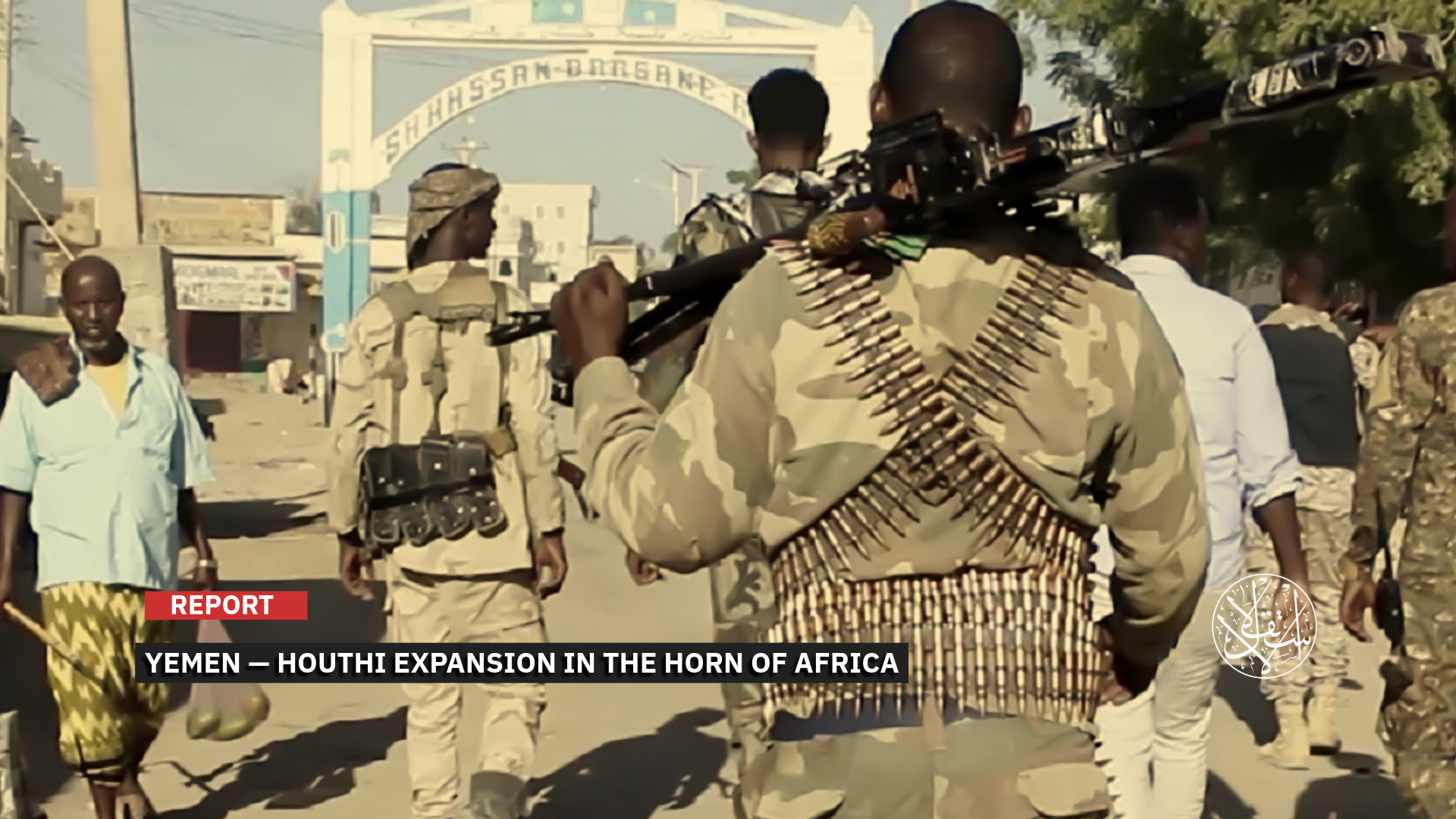
The roots of Houthi engagement with the Horn of Africa date back several years.
Houthi activity in the Horn of Africa is no longer merely a temporary extension of the Yemeni conflict. In recent years, it has evolved into a growing avenue for expanding the group’s military, intelligence, and logistical capabilities beyond Yemen’s borders, with Iranian support and sponsorship providing the expertise, capabilities, and communication networks needed to establish ties with armed groups and local actors in Somalia.
According to United Nations reports, as well as international and Yemeni studies, the Houthi expansion into the Horn of Africa provides the group with geographic, human, logistical, and intelligence depth that can be leveraged to support its maritime operations and diversify its supply networks.
The risks posed by this trajectory extend beyond threats to international shipping. They also include the expansion of terrorist activity and arms-smuggling networks across Yemen and the Horn of Africa, as well as the development of increasingly interconnected links between armed groups operating on both sides of the Red Sea.

The Beginning of the Expansion
The roots of Houthi engagement with the Horn of Africa date back several years. However, the most significant shift began with the expansion of the group’s maritime capabilities and its growing reliance on smuggling networks.
A Carnegie study titled “Boats, Drones, and Money: The Houthis’ Expansion Toward Somalia” indicates that over the past decade, the Houthis have developed relationships with non-state actors in Somalia through intermediaries and arms dealers, while their growing ability to operate at sea has become a key factor in expanding this trajectory.
The 2024 report of the UN Panel of Experts indicates that the Houthis had already been exploring the possibility of launching maritime attacks from the Somali coast, while simultaneously strengthening their ties with al-Shabaab.
In the same context, a Yemeni study by the Platform for Tracking Organized Crime and Money Laundering in Yemen (P.T.O.C.), in an extensive report titled “The Path of External Expansion and the Horn of Africa for Houthi Terrorism,” documented a broader trajectory that began after the Houthis seized control of Sana’a in 2014.
This involved recruiting Africans residing in Yemen, subjecting some of them to military and intelligence training, and using them on front lines or for tasks related to smuggling, communications, and intelligence gathering.
The study reveals the existence of officials and dedicated networks tasked with engaging with African communities and linking them to Houthi activities abroad.
Thus, Houthi outreach to the Horn of Africa has evolved from merely exploiting Yemen’s geographic position into an attempt to build a human, logistical, and intelligence network that can be utilized on both sides of the Red Sea.

How the Houthis Reached al-Shabaab
The development of the relationship with Somalia’s al-Shabaab movement is the clearest indication that Houthi expansion has entered a more organized phase. Reports by the UN Panel of Experts have revealed contacts and meetings between the two sides, with the relationship expanding into practical areas including weapons, training, and smuggling.
The 2025 UN report confirmed that the relationship had “evolved,” citing the seizure of shipments of weapons and explosives bound for al-Shabaab, investigations involving individuals linked to the group, as well as information concerning the training of some of its members in Yemen. The issue is therefore no longer merely one of contact between a Yemeni group and a Somali organization; rather, it has become a form of cooperation with clear material and security dimensions.
A study by the Africa Center for Strategic Studies, titled “Expanding Al Shabaab–Houthi Ties Escalate Security Threats to Red Sea Region,” supports this assessment, arguing that the growing relationship between the Houthis and al-Shabaab enhances the disruptive capabilities of both sides and creates a growing threat on both sides of the Bab el-Mandeb Strait.
A study by Saldhig Institute for Security Studies (Somalia), titled “Strategic Nexus Between al-Shabaab and the Houthis and Its Implications for the Region and Global Security,” places the relationship within a broader context.
It argues that the relationship has become multidimensional, encompassing economic, logistical, intelligence, and military aspects, and that shared interests have become a key factor sustaining it despite the differences in the two sides’ sectarian and ideological backgrounds.
The study explains that al-Shabaab’s shift toward greater pragmatism in its external relations has helped overcome the ideological barriers to cooperation with the Houthis.
The relationship between the Houthis and al-Shabaab does not operate through a declared alliance or an official channel. Instead, it relies on a network of intermediaries, security and business figures, smuggling networks, and diaspora communities.
The Platform for Tracking Organized Crime and Money Laundering in Yemen (P.T.O.C.), in the aforementioned report, revealed documents and data published for the first time concerning the Houthi expansion project in the Horn of Africa.
According to the report, the project is managed by Iran’s Islamic Revolutionary Guard Corps (IRGC), in coordination with and under the supervision of Lebanon’s Hezbollah, and includes a blueprint for expansion, smuggling, and arms transfers, as well as identifying the entities overseeing and implementing the project.
According to confidential minutes of meetings of the Houthi security and intelligence apparatus, the project was assigned to Abdul Wahid Abu Ras, Abdul Hakim al-Khaiwani, Hassan al-Kahlani (Abu Shaheed), al-Hassan al-Marrani, and Abu Haidar al-Qahoum, with the stated objective of implementing Iranian expansion in Africa and gaining control over international maritime routes.
The documents also revealed a role for Houthi leader Hussein al-Ezzi, the former deputy foreign minister in the Houthi authorities, in building intelligence, security, political, and logistical relationships through sources and individuals in Ethiopia, Eritrea, Djibouti, Sudan, and Kenya.
This reportedly included efforts to recruit Yemeni diplomats, establish intelligence stations in the Horn of Africa and countries surrounding Yemen, and train personnel to activate those stations when needed.
According to the documents, the network is intended to conduct activities and movements in the Red Sea and the Horn of Africa in order to support the Houthis and assist them in confronting international political or diplomatic pressure.
The study also points to the establishment of communication channels with Somali, Ethiopian, Eritrean, and other figures, including individuals who could be utilized to gather information or facilitate movement and smuggling.
The importance of these networks lies in their ability to operate outside formal frameworks. Small ports, commercial boats, transportation and smuggling networks, and diaspora communities all provide channels that are difficult to monitor through traditional means. The Houthis therefore do not need to establish a declared military presence in Somalia to achieve their objectives.
A network of intermediaries, facilitators, and informants capable of moving people and equipment, transmitting information, and maintaining contact with local groups may be sufficient.
Houthi expansion in the Horn of Africa cannot be understood in isolation from Iran’s broader strategy in the Red Sea and Gulf of Aden. For years, Iranian support for the Houthis has extended beyond financing and weapons to include training, expertise, and smuggling networks that have helped the group build its military capabilities.
Carnegie notes that Houthi cooperation with Somali actors provides Iran, indirectly, with strategic depth in the Horn of Africa and greater capacity to influence security in the Gulf of Aden and around the Bab el-Mandeb.
Chatham House, in a report titled “How Europe and the GCC Can Respond to Growing Armed-Group Cooperation,” likewise argues that Iran remains a key factor in these networks, particularly given that some of the weapons moving through the Red Sea are of Iranian origin.
The relationship between the Houthis and al-Shabaab does not appear likely, in the near term, to develop into a formal and publicly declared alliance, given the ideological and sectarian differences between the two sides. Nevertheless, their security, military, and economic interests have demonstrated an ability to overcome these barriers.
The most concerning development is the possibility that this cooperation could evolve from scattered tactical arrangements into a more systematic network for supply, training, and intelligence-sharing. Such a development could make the Houthis a more consistent source of weapons and technical support, while enabling al-Shabaab to benefit from additional capabilities in financing, supply, and operations.
Chatham House places this trend within a broader regional phenomenon in which armed groups are developing cross-border relationships based on weapons, expertise, smuggling, and logistical interests, thereby transcending sectarian and ideological divisions.
In this context, the Saldhig Institute for Security Studies study, “Strategic Relations Between al-Shabaab and the Houthi Group and Their Implications for Regional and International Security,” points to the Houthis’ central role in facilitating maritime smuggling routes and the transfer of weapons, equipment, and technical expertise to al-Shabaab, including components for explosives, missiles, drones, and unmanned boats.
The Houthis are able to do so by leveraging their coastal influence, while also facilitating the movement of Iranian support into the Horn of Africa and using informal financial and commercial channels to circumvent international monitoring.
This cooperation is not limited to logistics. It also extends to activities affecting maritime security in the Red Sea, the Gulf of Aden, and the Bab el-Mandeb, providing the Houthis with additional means of exerting pressure on Saudi Arabia and the international community. This, in turn, serves to expand Iran’s indirect influence and strengthen the group’s position as a regional actor.
Accordingly, the greater threat does not lie in the establishment of a declared alliance between the two sides so much as in the emergence of a cross-border network of influence and threats in which smuggling, arms transfers, financing, intelligence-sharing, and maritime activity intersect.
Such a network could threaten the security of international shipping, undermine counterterrorism efforts, and further intertwine the crises of Yemen, the Horn of Africa, and the Red Sea.
Objectives of the Expansion
According to the Yemeni P.T.O.C. platform’s report, “The Path of External Expansion and the Horn of Africa for Houthi Terrorism,” Houthi expansion into the Horn of Africa is part of a broader strategy aimed at strengthening the group’s regional influence and securing its intelligence and military interests across various countries in the region.
The platform states that the Houthi intelligence service’s external operations sector, acting on behalf of Iran, works to compile lists of opponents targeted for assassination, including those residing abroad. According to the platform, among the most important objectives are:
Intelligence Objectives:
The Houthis seek to deploy their cells and local networks to gather information on military and commercial activities in the Red Sea and Gulf of Aden, monitor the movements of countries allied with Saudi Arabia and the United States, and analyze their relationships and alliances in the region.
This activity also serves to strengthen Iranian intelligence capabilities by recruiting African local agents to provide information and logistical support. It also involves using information and interference in the internal affairs of Eritrea, Djibouti, and Somalia to influence their policies and relations with the Gulf states and prevent the formation of a united front against the Houthis.
Military Objectives:
The Houthis focus on securing supply lines and strategic maritime access points, as well as safeguarding shipping routes in the Red Sea and Gulf of Aden, thereby ensuring the continued flow of weapons and supplies.
The expansion also aims to establish a military infrastructure that includes weapons-storage facilities, fighter-training sites, and clandestine personnel capable of rapid intervention and of protecting Iranian interests, as part of a broader Iranian strategy to expand its influence and exert pressure on international interests and maritime routes.
This includes exploiting locations in the Horn of Africa to support attacks on commercial and military vessels and threaten international shipping, as well as supporting and training rebel and separatist groups and building ideological ties with movements opposed to local governments. According to the platform, such activities contribute to instability and disorder while serving Houthi and Iranian objectives.
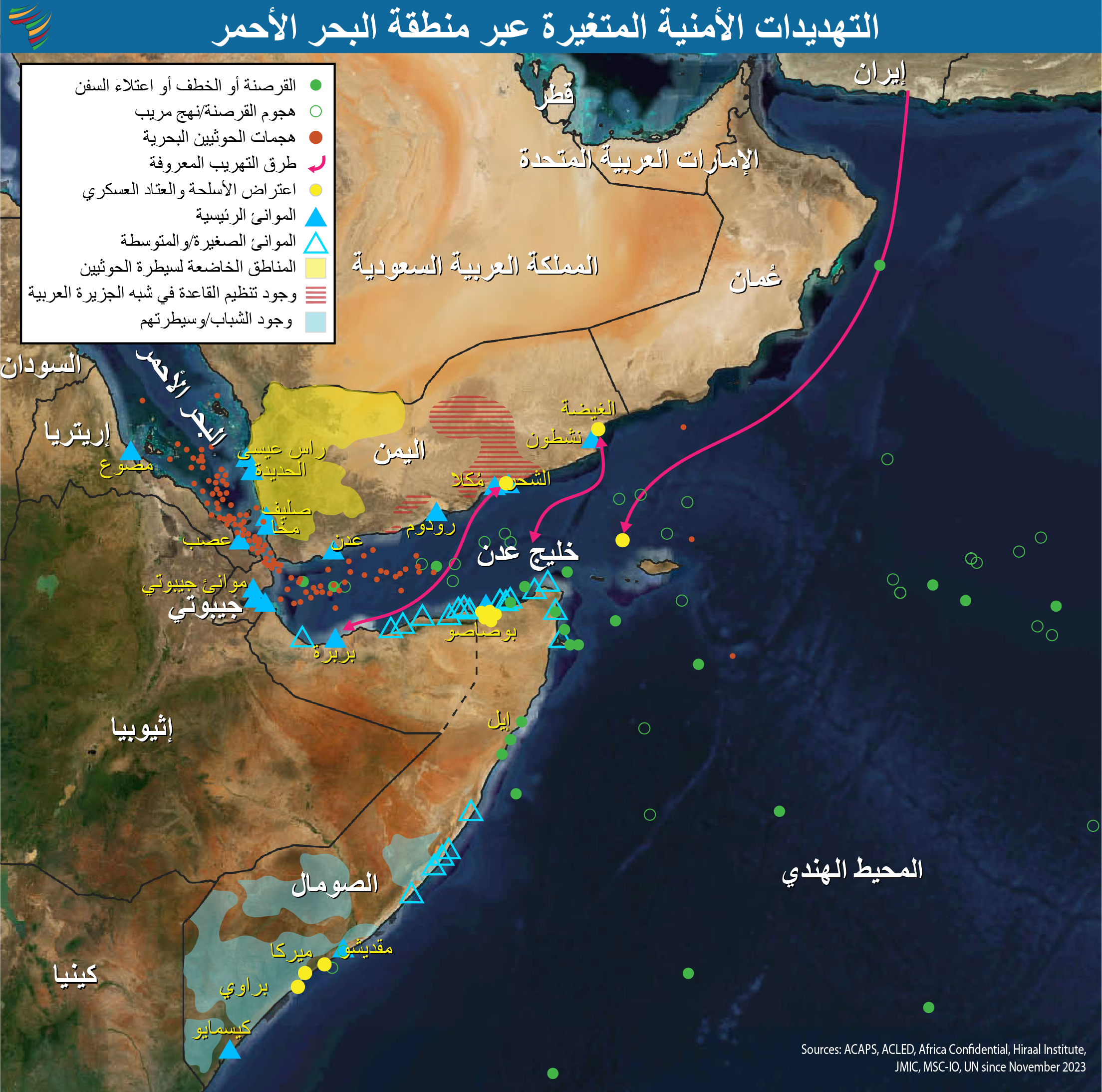
Piracy: The Most Dangerous Link
Piracy represents the most sensitive point of convergence between the Houthi project and Somali maritime activity. The Houthis possess missiles, drones, and maritime expertise, while Somali networks have local knowledge of the coastline and maritime routes, as well as the ability to conduct maritime operations close to shore.
The United Nations indicates that the cooperation has involved weapons transfers and training, alongside the facilitation of piracy and arms smuggling. The Africa Center for Strategic Studies, meanwhile, argues that such cooperation could increase the ability of both sides to threaten shipping in the Gulf of Aden, the Red Sea, and the western Indian Ocean.
Carnegie has pointed to the possibility that the Houthis could benefit from information provided by actors operating on the Somali side, including information related to vessel movements and maritime activity. The significance of such information has grown in light of the Houthis’ expanding ability to target vessels and employ drones and anti-ship missiles.
This intersects with a warning by Africa Defense Forum (ADF) that growing cooperation between Somali pirates and Iran-backed Houthis represents an escalating threat to maritime security in the Horn of Africa.
The publication notes that the expanding relationship between the Houthis and al-Shabaab, the Somali branch of al-Qaeda, has potentially given pirates access to more sophisticated weapons and technologies.
In this context, Mohamed Musa Abdullah, deputy director of intelligence for the Puntland Maritime Police Force, stated that some Somali pirates had obtained Global Positioning System (GPS) devices and advanced weapons from the Houthis or from Houthi-aligned elements in Yemen.
According to him, this could enhance their ability to conduct more organized operations and add a new dimension to the threats facing maritime security in the region.
The danger here is not limited to the possibility of a joint maritime operation. It also lies in the potential emergence of a system of shared information and distributed capabilities on both sides of the Bab el-Mandeb: an armed group on the Yemeni side possessing weapons and technical expertise, and networks on the African side possessing local knowledge and the ability to operate in the area.
If this cooperation develops into a higher level of coordination, the Bab el-Mandeb could cease to be merely a theater for attacks launched from Yemen and instead become an interconnected security environment in which missiles, drones, smuggling, piracy, and maritime intelligence converge.
Houthi expansion into the Horn of Africa therefore poses a threat extending beyond the region itself, given its direct implications for the security of the Red Sea and Gulf of Aden and the intersection of regional and international interests.
It could turn the Horn of Africa into a new extension of the regional conflict involving the Houthis and Iran, further increasing the fragility of states in the region.
The risks include the potential escalation of conflicts and heightened tensions between Horn of Africa states and Gulf countries, as well as threats to international shipping and the stability of trade and energy flows.
They also include the expansion of armed-group activity, particularly by al-Shabaab, amid reports that the group has received weapons and support from the Houthis.
The growth of this influence could also allow the Houthis to use ports, intermediaries, and smuggling networks to secure greater geographic and logistical depth, alternative supply routes, and sources of information and resources, thereby strengthening their ability to withstand pressure and maneuver beyond Yemen.
The threat also extends into the African interior, where interference in the affairs of certain states and the exploitation of smuggling and migration networks could contribute to greater political instability and further complicate humanitarian conditions.
At the same time, an expansion of Houthi activity could prompt the United States, Gulf states, and other international powers to strengthen their military and intelligence presence in the region, turning the Red Sea and Horn of Africa into an increasingly contested and enduring arena of international rivalry.
For Yemen, the most serious potential outcome is the transformation of the conflict from an internal crisis with regional ramifications into part of a cross-border security network in which armed groups, smuggling operations, and Iranian interests intersect with the security of the Bab el-Mandeb and international shipping.
This would give the Houthis additional tools for pressure and maneuvering, but it would also increase the costs of confronting them, intensify international pressure on the group, and contribute to the further internationalization of the Yemeni conflict, making efforts to contain it even more difficult.
Sources
- UN Panel of Experts on Yemen Report, October 11, 2024 [Arabic]
- “Dhows, Drones, and Dollars: Ansar Allah’s Expansion into Somalia” [Arabic]
- “The Secret File: The Path of Houthi External Expansion and Terrorism in the Horn of Africa” — February 27, 2026 [Arabic]
- “Strategic Relations Between al-Shabaab and the Houthi Group and Their Implications for Regional and International Security” [Arabic]
- “How Europe and the Gulf Cooperation Council Can Respond to Growing Armed Group Cooperation” [Arabic]
- “A Dangerous Alliance in the Red Sea: Reports Reveal Houthi Cooperation with Somali Pirates and Extremist Groups” [Arabic]