How 'Israel' and Far-Right Networks Turned the Ceuta Incident into a Global Phobia
“With the outbreak of the Ceuta crisis, Israeli officials were quick to exploit the situation to attack Spain.”
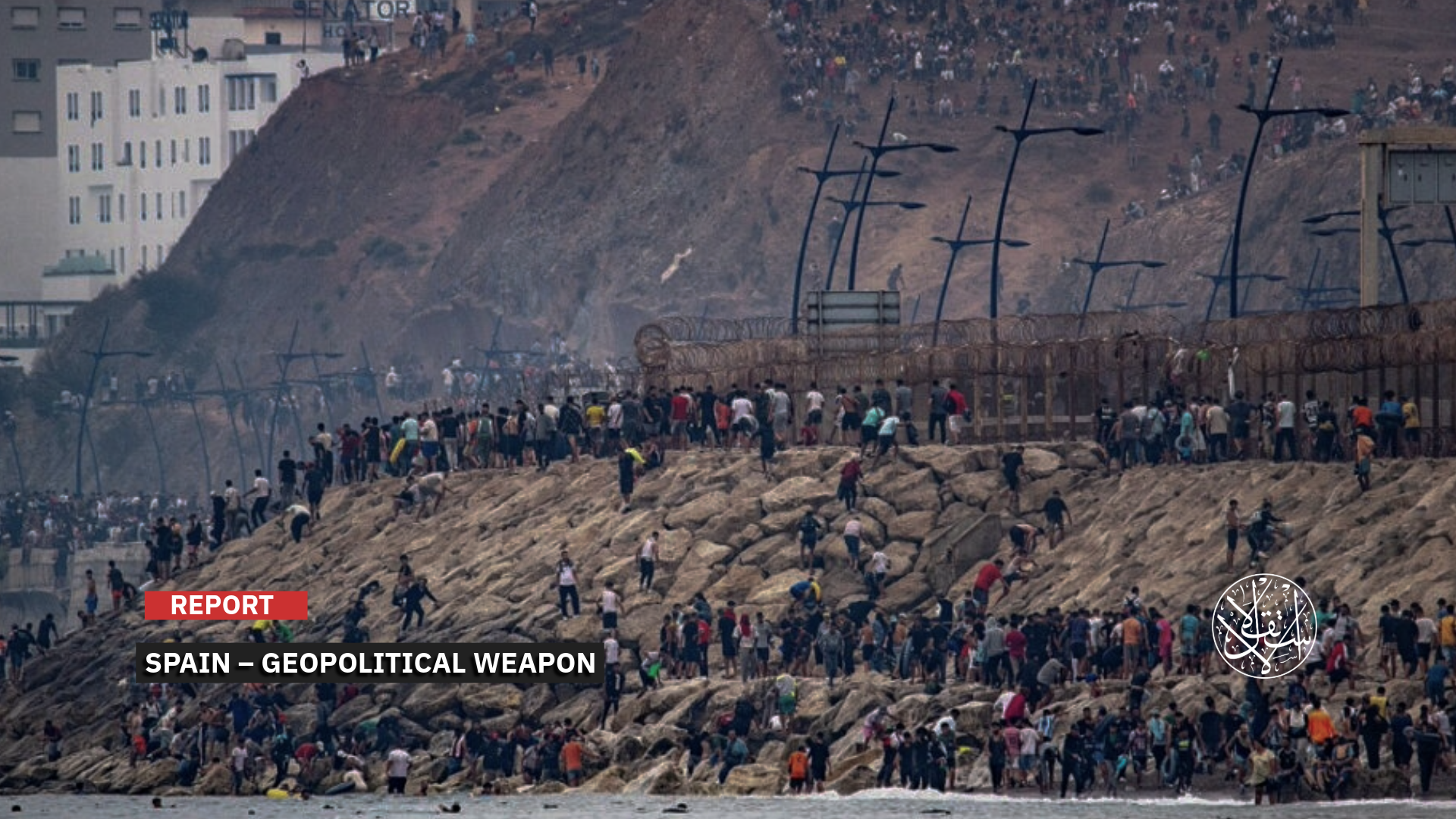
The tragedy involving Moroccan migrants at the border of the Spanish city of Ceuta has evolved into an open political issue that transcends its humanitarian dimension.
Reports indicate that Spanish officials and commentators have accused "Israel" and the United States of exploiting the crisis to pressure Madrid—retaliating against its strong stance on the Israeli war in Gaza and its various disputes with Washington.
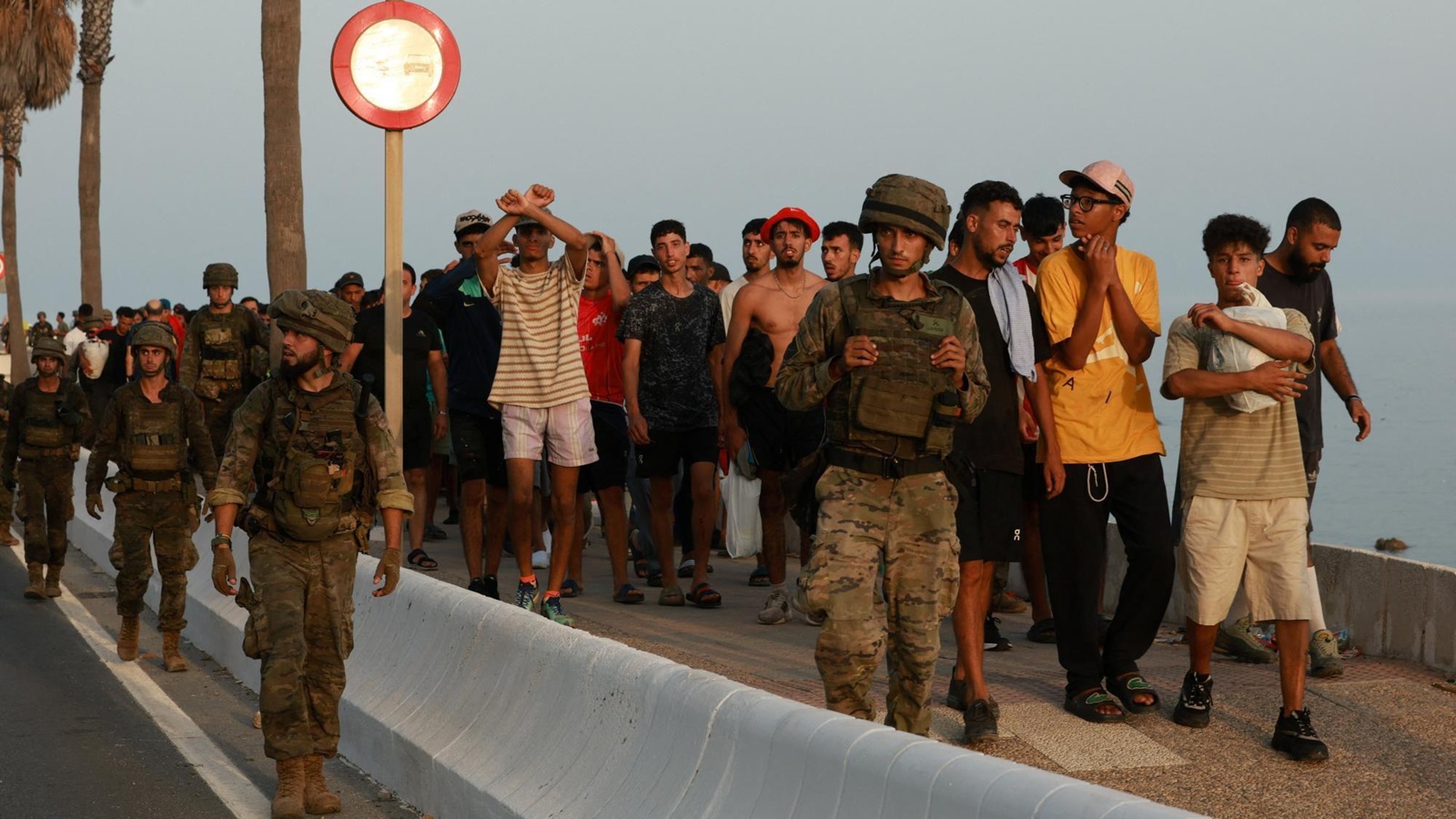
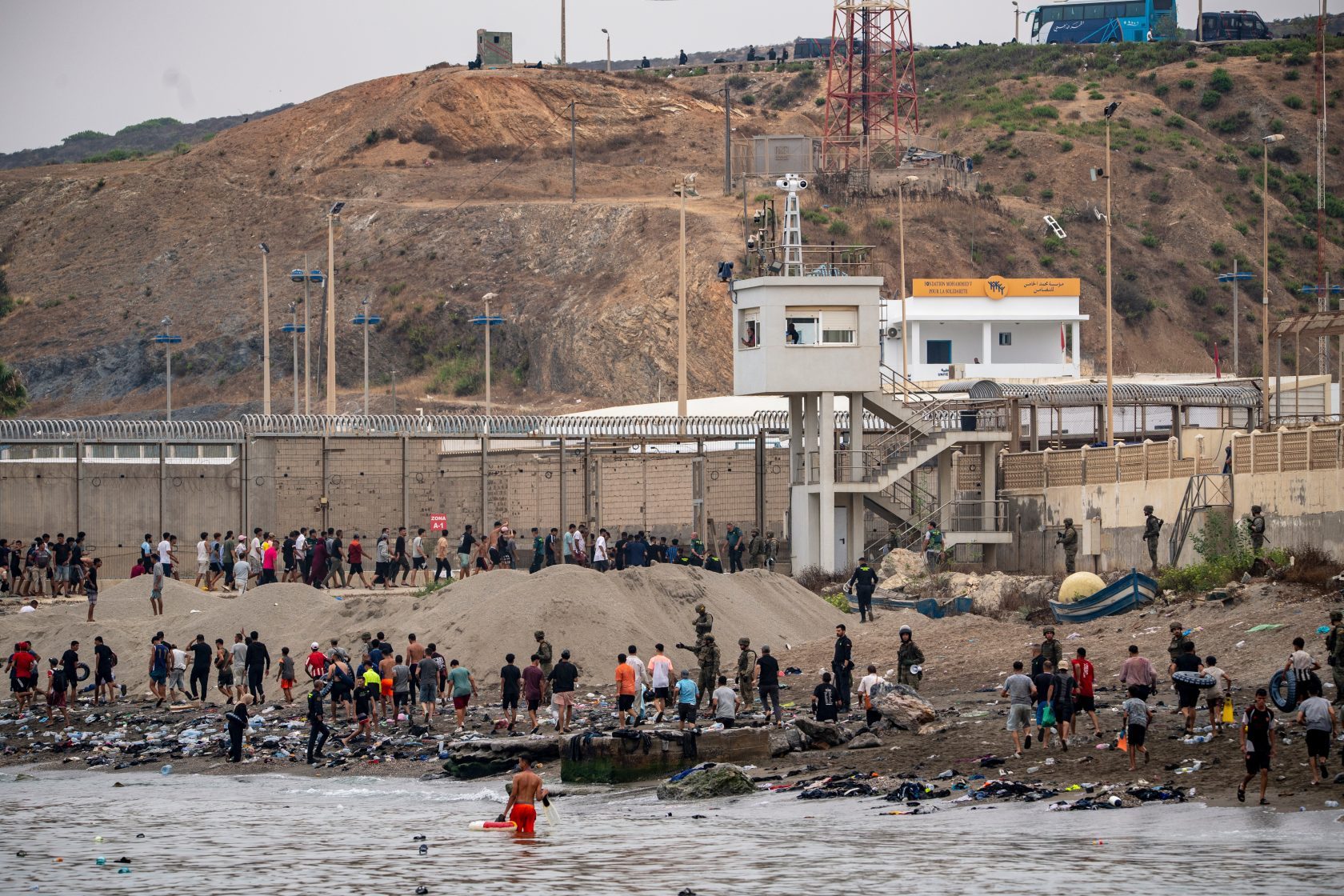
Ceuta witnessed the deaths of at least 72 people—by drowning or trampling—following an unprecedented influx of over 80,000 irregular migrants. This surge prompted Spain to declare a state of emergency and deploy armed forces to bolster security.
To date, there is no documentary evidence proving that Morocco, "Israel", and the U.S. jointly orchestrated the migrant influx toward Ceuta; indeed, Rabat has denied responsibility for the events.
However, some analysts suggest that the coincidence of relaxed Moroccan border surveillance with the political escalation by "Israel" and the U.S. against Pedro Sanchez’s government—coupled with support for Moroccan claims regarding Ceuta and Melilla—raises the possibility that the crisis was exploited as part of a broader political pressure campaign.
Regardless of whether this hypothesis is proven, the developments yielded clear political gains for several parties: Morocco brought the issue of Ceuta and Melilla back to the forefront; "Israel" found a new opportunity to attack Madrid over its stance on the Palestinian cause; and the Donald Trump administration leveraged images of the migrants to launch sharp criticism against the Spanish Left.
Thus, the Ceuta crisis ceased to be merely a border dispute or a sudden wave of migration; instead, it transformed into a pawn in a geopolitical struggle where Israeli, American, and Moroccan interests intersect.
The Ceuta Crisis
According to an analysis published by the American magazine The Nation—and subsequently republished by the Spanish outlet CTXT—Morocco once again resorted to what is known as migration diplomacy.
Meanwhile, Israeli and American voices exploited the crisis to attack Madrid and exert political pressure on Pedro Sanchez’s government.
Questions arose when tens of thousands of people managed to reach Ceuta—either by swimming or on foot—within a short span of time, appearing to coincide with a moment when Moroccan border security forces had reduced their presence or were absent from certain locations.
This coincided with the circulation of messages on social media urging migrants to head toward the border in large numbers, suggesting that the route to Ceuta was now open.
Authorities in Ceuta linked the surge in attempted crossings to a Spanish Supreme Court ruling published in July that barred authorities from immediately returning migrants who arrive by sea.
The ruling does not apply to migrants who enter Spain by land, including by climbing over the border fence.
But several experts have questioned this theory, saying few migrants would have been aware of the court ruling.
Spanish Prime Minister Pedro Sanchez blamed the sudden influx on human trafficking mafias who exaggerated the significance of the court ruling to convince vast numbers of migrants to take part in a mass coordinated surge into Ceuta.
Some believe that Morocco may have had a role in organizing and facilitating the sudden mass border crossing into Ceuta.
The current crisis in Ceuta does not appear isolated from a previous incident in May 2021, when over 8,000 people entered the city following a relaxation of Moroccan border controls.
That event coincided with a diplomatic crisis between Rabat and Madrid sparked by Spain’s decision to host the Sahrawi leader, Brahim Ghali, for medical treatment.
Analysts believed that experience reinforced Rabat's conviction that controlling migration flows could serve as effective leverage to compel Madrid to make political concessions.
That crisis concluded with a remarkable shift in the Sanchez government's stance on the Western Sahara issue; in March 2022, Sanchez sent a letter to King Mohammed VI endorsing Morocco’s autonomy proposal for the territory.
The newspaper added that, a year later, Sanchez facilitated Morocco's inclusion in the joint Spanish-Portuguese bid to host the 2030 World Cup, allowing King Mohammed VI to announce Morocco's participation through his minister, Chakib Benmoussa.
The latest Ceuta crisis unfolds amidst unprecedented tension between Spain and Israel, following the Sanchez government's intensified criticism of the war in the Gaza Strip and its implementation of measures regarding the arms trade and products originating from settlements.
In May 2024, Spain officially recognized the State of Palestine, deeming the move essential to preserving the viability of a two-state solution.
Since then, Madrid has adopted a firmer stance within the European Union regarding Israeli policies, calling for a review of the EU-"Israel" Association Agreement in light of what it described as violations of international humanitarian law.
Spanish authorities refused to allow ships linked to the transport of weapons to "Israel" to use their ports, whereas Moroccan ports received some of those vessels.
The Spanish government suspended arms exports to Israel before enshrining that suspension into permanent law in 2025, thereby becoming one of the first European nations to legally ban future arms exports to Israel.
Meanwhile, the Spanish Parliament called for expanding humanitarian aid to Gaza and strengthening international legal accountability regarding alleged violations of international law.
Spain’s National Court opened an investigation into executives at a Spanish steel company, accusing them of complicity in crimes against humanity through business dealings with an Israeli arms manufacturer.
Spanish officials have called for scaling back Israeli participation in certain sporting and cultural events—moves likened by some to the measures taken against Russia following its invasion of Ukraine—amidst protests and criticism within Spain regarding events involving Israeli entities.
Earlier, Israeli Prime Minister Benjamin Netanyahu accused the Sanchez government of waging a diplomatic war against "Israel", warning that such actions would not go without an immediate price.
Many analysts have drawn a link between these Israeli statements and the unfolding crisis in Ceuta.
Pivotal Battle
With the outbreak of the Ceuta crisis, Israeli officials were quick to exploit the situation to attack Spain and question its sovereignty over the city.
Yair Netanyahu, son of Israeli Prime Minister Benjamin Netanyahu, had previously published a map that included Ceuta and Melilla, calling on Arabs and Muslims to—as he put it—liberate occupied Arab and Islamic lands.
Israeli National Security Minister Itamar Ben-Gvir also weighed in on the crisis with a sarcastic comment, congratulating Sanchez on his deep commitment to welcoming migrants and embracing human diversity.
Addressing the Spanish Prime Minister, Ben-Gvir added: "As someone who shows great concern for Hamas and the residents of Gaza, I call on you to turn words into action: open Spain's doors and grant asylum to the residents of Gaza who seek to emigrate."
The Israeli statements coincided with a digital campaign promoting the hashtag 'Free Ceuta' and disseminating AI-generated images depicting chaos in the city.
Observers note that the campaign relied on three main pillars: borrowing terms such as 'occupation' and 'two-state solution' within a Spanish context; linking the Ceuta crisis to Madrid's stance on the Palestinian cause; and invoking historical events, such as the expulsion of Jews from Spain.
Data indicated that far-right Spanish networks—particularly those linked to the Vox party—were at the forefront of this inflammatory digital activity. These accounts employed hardline nationalist slogans—such as 'Spain Above All'—to link the migrant crisis to threats against national sovereignty and to incite hostility toward the foreign presence.
Engagement expanded to include far-right figures from Britain, France, and the United States—such as Tommy Robinson and Eric Zemmour—with the emergence of hashtags linked to the MAGA movement alongside hardline religious and political slogans.
These networks helped internationalize the crisis, framing it as a decisive battle for the West against what they termed a 'migrant invasion', while disregarding the actual facts on the ground.
Meanwhile, Hananya Naftali—formerly the digital media advisor to Israeli Prime Minister Benjamin Netanyahu—declared his support for a two-state solution in Spain: one sovereign state for Spain, and another for those he described as peaceful migrants.
Israeli researcher Edy Cohen drew a direct link between the Ceuta crisis and an earlier scene from the San Fermin festival in the Spanish town of Pamplona, where Spanish participants held up a large banner calling for the destruction of "Israel".
Cohen used this parallel to frame the events in Ceuta as punishment for Spain’s stance in support of the Palestinian cause, while also invoking the historical expulsion of Jews from Spain during the Inquisition.
According to the analysis, the aforementioned points reflect an influential Israeli approach that aligns with Moroccan claims regarding Ceuta and Melilla—which Morocco considers part of its territory—whereas Madrid insists they are an integral part of Spanish sovereignty.
Moroccan-Israeli relations have strengthened significantly since the normalization agreements signed in 2020, coinciding with the US administration of President Donald Trump recognizing Moroccan sovereignty over Western Sahara.
In 2021, Morocco and Israel signed a defense cooperation agreement; relations subsequently expanded to encompass arms deals, intelligence sharing, cybersecurity, and counter-terrorism, as well as trade, energy, agriculture, and tourism.
Israel also announced its support for Morocco's position on Western Sahara, while Morocco emerged as one of the leading Arab purchasers of Israeli arms and military technology.
The author of the analysis suggests that the intertwining of these political, security, and economic interests has created a clear convergence among Rabat, Tel Aviv, and Washington—particularly regarding pressure on the Sánchez government.
Key US statements following the Ceuta crisis did not focus on Morocco's potential role; instead, they concentrated on attacking the Sanchez government and its migration policies.
US President Donald Trump described the events in Ceuta as a disaster, citing them as an example of the dangers of irregular migration and warning that the United States could face similar situations if it failed to tighten its border policies.
US Vice President JD Vance described the events as a consequence of far-left policies and globalization.
Stephen Miller, a senior advisor to Trump, used the crisis to defend the US administration's strict migration policies, warning that the migration policies adopted by Democrats could lead to larger waves of migration in the future.
Although Miller’s statements were made within the context of US domestic politics, they demonstrated how quickly the Spanish border crisis evolved into part of a broader international political narrative.
These stances emerge amidst escalating tensions between Washington and Madrid—particularly following the Sanchez government's refusal to allow the use of joint military bases in Spain for US operations during a potential conflict with Iran, as well as its refusal to increase defense spending to the levels demanded by the Trump administration.
A report issued by the US House Appropriations Committee on April 30 described Ceuta and Melilla as 'Spanish-controlled cities located within Moroccan territory' and called on the US Secretary of State to push for negotiations regarding their status.

Political Exploitation
Middle East Eye has noted that there is currently no conclusive evidence of direct coordination between "Israel", the United States, and Morocco to instigate the Ceuta crisis.
Nevertheless, public comments by Israeli officials and the extent to which the crisis has been politically exploited have fueled growing suspicion within Spanish circles. Spanish Transport Minister Oscar Puente reposted a statement reading: "Certain parties in Washington, Tel Aviv, and Rabat wanted images of our security forces and army firing at children on the beach."
He added, "It seems everything has become clearer"—a remark interpreted in Spain as an insinuation that Israel was behind the escalating crisis.
Spanish political expert Carolina Alonso suggested that "Israel", backed by far-right forces in Spain and Europe, is seeking to exploit the migration crisis to achieve political objectives.
Spanish actor Javier Bardem also shared a video accusing Israel of orchestrating the wave of mass crossings in an effort to weaken and destabilize Spain.
Portuguese analyst Bruno Macaes opined that Washington and Tel Aviv capitalized on the crisis politically after it had already begun, regardless of whether or not they were involved in its inception.
A 2019 post by Benjamin Netanyahu was also recirculated, in which he claimed that Israel funds separatist movements in Ceuta and Melilla.
In this context, Spanish journalist Jose Wiesner asked: "Is there any doubt left that what is happening today is an act of retaliation against Sanchez?"
Enrique Arias Gil, a Spanish IT specialist, argued that the migrant influx crisis in Ceuta was orchestrated by the United States and Israel, both of which decided to retaliate against Madrid for its support of Palestine.
Gabriel Rufian, parliamentary spokesperson for the Republican Left of Catalonia (ERC), stated that the crisis serves the interests of the U.S. and "Israel".
For his part, political analyst Ahmed Sawwan believes the current European landscape is undergoing a strategic shift driven by the exploitation of crises and the manipulation of public opinion, identifying the migration issue as the most significant vulnerability in European politics.
Speaking to Al-Estiklal, he notes that the migration issue is being repurposed through the sensationalizing of events and the dissemination of narratives stoking fears of 'Islamization' and 'cultural invasion', which are effective tools directly aimed at empowering the far-right and tightening the political vice on incumbent left-wing governments.
He points out that targeting capitals opposed to "Israel"—foremost among them Madrid—is a calculated strategy designed to exact a heavy price from them.
"Pressure on political leaders does not stop at diplomatic wrangling; it extends to embroiling them in security crises and internal divisions that unsettle decision-makers and distract them from their foreign policy stances," he adds.
He explains that shifting the media battle to the heart of Western capitals causes a strategic shift in international attention. Coverage of violations in the Palestinian territories and regional tensions recedes in favor of concerns regarding European internal security, thereby giving Israel room to alleviate the diplomatic pressure exerted upon it.
Mr. Sawan concludes by highlighting the growing narrative alliance between Israeli digital diplomacy and the discourse of the European far-right; the two narratives converge on the portrayal of Israel as a forward line of defense protecting Western civilization against immigration, thereby aligning anti-immigrant incitement within Europe with the political justification for the conflict in the Middle East.
Sources
- The Real Story Behind the Human Wave That Entered Ceuta
- Ceuta conspiracy theories become weapons in Israel-Spain row
- Ceuta’s border crisis is about geopolitics, not just migration
- Why did Ceuta migrant mayhem chill already frosty Israel-Spain relations?
- Israel revels in Spain's migrant crisis while embarrassing ally Morocco