From Voting Bloc to Political Force: Why Are Trump’s Allies Worried About Muslims?
El-Sayed’s success in Michigan challenges the idea that a Muslim candidate cannot win beyond heavily Muslim districts.
The anxiety over the victory of Muslim American candidate Abdulrahman el-Sayed in the Democratic primary for a Senate seat up for election in November 2026, and the possibility that he could become the first Muslim to enter the chamber, has grown into a broader debate in U.S. political circles over the future of Muslim political power in America.
The debate comes amid continued attacks on Muslims by President Donald Trump and Vice President JD Vance, along with prominent figures in the administration and right-wing media, as concerns grow that Muslims could move from being merely an “electoral bloc” that turns out to vote to a more organized “political force,” running candidates capable of winning elections and reaching positions of political power.
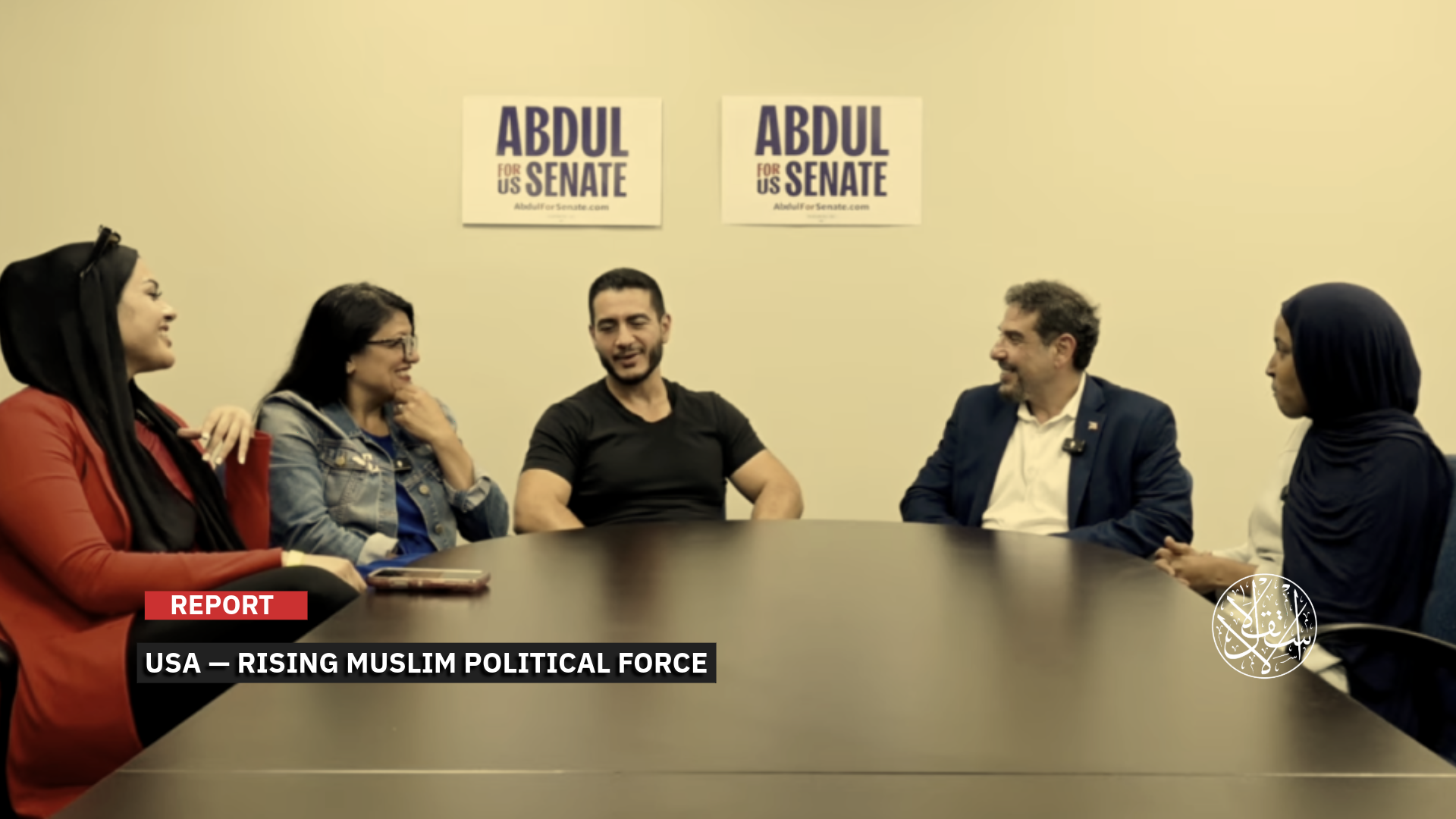
Those concerns were heightened by the gathering of prominent figures representing Muslim political power, particularly in Congress, following el-Sayed’s victory in Michigan. They include el-Sayed, the Senate candidate; Reps. Ilhan Omar and Rashida Tlaib; and Dr. Adam Hamawy, an American physician who volunteered to treat people in Gaza during the Israeli genocide. All four won their respective primaries.
The concern has also been fueled by victories for Muslims and non-Muslims alike who support Palestine and oppose providing military aid to the Israeli Occupation. Operation al-Aqsa Flood has helped drive a shift in American public opinion, particularly among young people and progressives, threatening the traditional strongholds of U.S. politics.
Muslim New York City Mayor Zohran Mamdani defeated the pro “Israel”-lobby AIPAC, while el-Sayed also overcame it in the Senate race despite AIPAC and pro-”Israel” supporters pouring between $60 million and $72 million into efforts to defeat him. Ilhan Omar and Rashida Tlaib were also reelected.
Palestinian candidate Aber Kawas also defeated the lobby in the Democratic primary for the New York State Senate and won, alongside Asmaa Ali, as did other non-Muslim candidates, including Peggy Flanagan in the Minnesota Senate primary. These victories have sent shock waves through evangelical Christian circles and the pro”-Israel” lobby.
The Size of Muslim Political Power
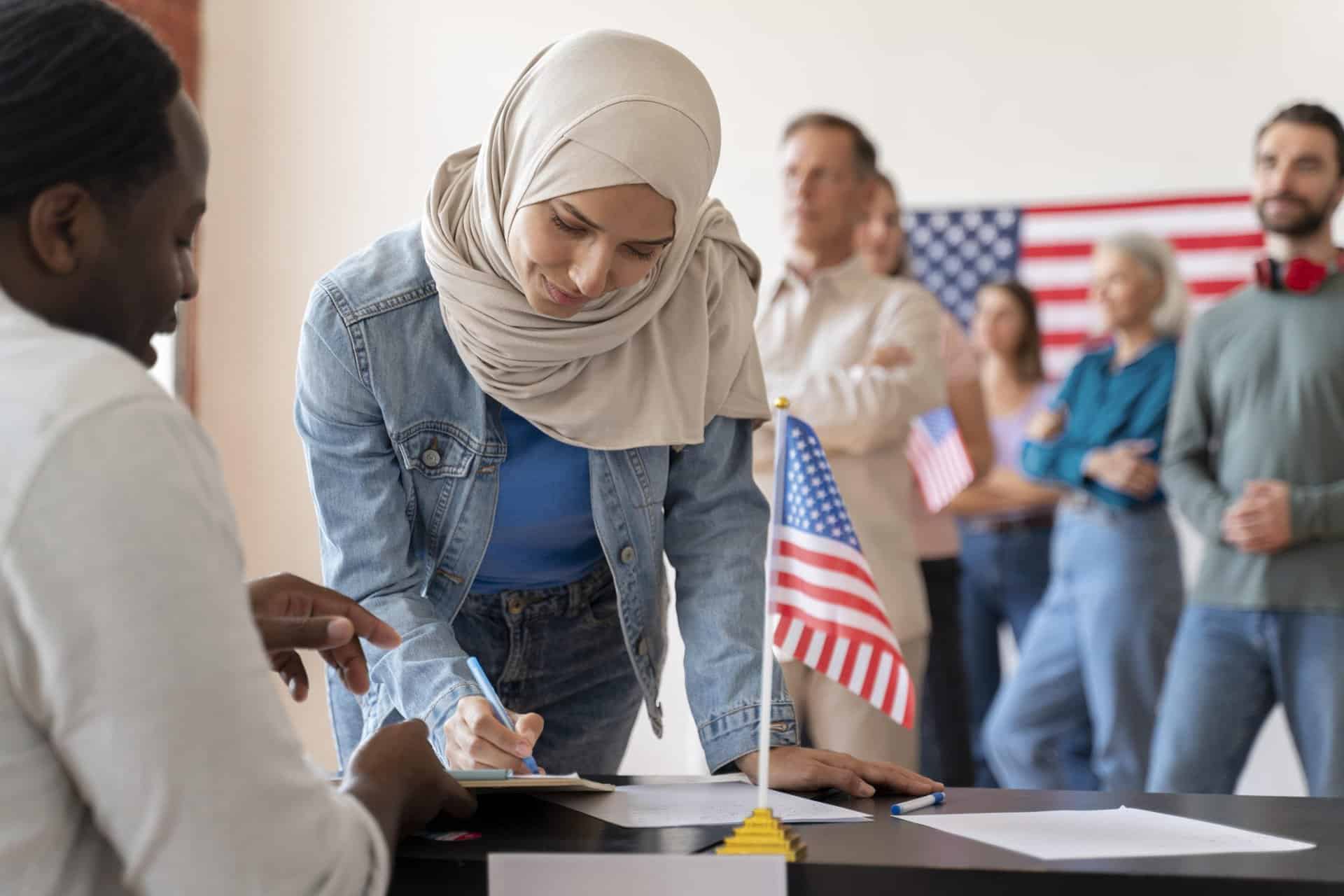
The significance of the shift in the future of Muslim political power in America lies in the fact that the rise of Muslim candidates is not happening in isolation. It is taking place alongside the continued growth of the Muslim community’s political infrastructure.
Since 2019, 200 Muslims have been elected across the United States in various local, congressional, school board, and state elections, among others, according to comments by Rep. Rashida Tlaib.
According to the Islamic Circle of North America (ICNA) on August 5, 2026, 46 Muslims currently hold office in 23 state governments, out of 230 Muslims serving in elected positions across the United States.
There are currently four Muslim Democrats in the U.S. House: Andre Carson, Ilhan Omar, Rashida Tlaib, and Lateefah Simon.
Historically, since the House was established in 1789, only six Muslim lawmakers have served in it: Keith Ellison, Andre Carson, Ilhan Omar, Rashida Tlaib, Jamaal Bowman, and Lateefah Simon.
If Abdulrahman el-Sayed defeats Trump-backed Republican candidate and former congressman Mike Rogers in the November 2026 election, he would become the first Arab American Muslim to win a seat in the U.S. Senate since the founding and declaration of independence of the United States 250 years ago. Rogers is backed by the pro-”Israel” lobby AIPAC.
An academic study published by Cambridge University on March 31, 2026, found a clear increase in the number of Muslim American candidates during the 2018 to 2022 election cycles, with Muslim candidates running for and winning political office at record levels.
The study found that the 2018 to 2022 election cycles saw a rise in the number of Muslim Americans running for and winning political office. During that period, between 50 and 80 Muslim Americans held political office each year.
The election cycles also saw a record number of Muslim Americans appear on ballots.
Emgage PAC, one of the leading U.S. political organizations working to mobilize Muslim voters, says it has supported more than 500 Muslim candidates since its founding. Of the candidates it backed in the 2024 elections, 21 won, representing an 89 percent success rate.
Its activity expanded during the 2026 election cycle to politically important states including Michigan, Texas, Florida, New York, New Jersey, Pennsylvania, and Maryland, while the number of Muslim candidates running in congressional, state, city council, and other elections also increased.
In the 2024 elections, the Million Muslim Votes campaign said it had successfully mobilized more than 1.087 million registered Muslim voters in the previous election cycle, with the goal of increasing political participation among the Muslim community.
What Are They Worried About?
The growing involvement of Muslims in U.S. elections, particularly races that shape political-decision making, has shown that the political presence of Muslim Americans is no longer limited to being an electoral bloc that can be won or lost in swing states.
The most notable development in the 2024, 2025, and 2026 elections has been the growing shift among Muslim Americans from “influential voters” to “decision makers” and candidates capable of winning office.
Mamdani’s election as New York City mayor, Dr. Abdulrahman el-Sayed’s victory in the Democratic Senate primary in Michigan, and the four Muslims already elected to the House have made the prospect of Muslims reaching major political and leadership positions a realistic possibility rather than a distant assumption.
U.S. reports have interpreted President Donald Trump and his vice president’s concern over el-Sayed’s Senate primary victory, as well as Trump’s comparison of himself and his model wife with Abdulrahman and his wife, both doctors, as “two different Americas,” as a sign that Trump fears el-Sayed could eventually compete for the presidency.
There are currently four Muslim Democrats in the House: Andre Carson, Ilhan Omar, Rashida Tlaib, and Lateefah Simon.
There are no Muslims in the Senate, making el-Sayed’s potential victory in the November 2026 midterm elections significant. He would become the first Muslim to enter the Senate since America was founded 250 years ago.
The latest estimates put the Muslim population in the United States at around 4.5 million, including more than 1.7 million registered voters. Their political strength is amplified by their concentration in key electoral states such as Michigan, Georgia, Illinois, and New Jersey.
These figures make Muslims a numerical minority but not an electorally marginal one, particularly when elections in some districts are decided by margins of just a few thousand votes.
Mamdani’s election as New York City mayor in November 2025 was a symbolic and political turning point. He became the first Muslim to lead America’s largest city and one of the country’s most prominent Muslim political figures.
The significance lies not simply in Mamdani’s religion, but in the fact that his campaign demonstrated that a Muslim identity does not prevent a candidate from building a broad electoral coalition around issues such as housing, affordability, social services, and transportation.
That transformed Mamdani from a local candidate into a national symbol of a broader struggle over the future of the Democratic Party and America’s political identity.
Mamdani therefore faced a broad assault from the American right during his campaign, including, in some cases, rhetoric linking his Muslim identity to terrorism or “sharia.” International reports documented the scale of the attacks that followed his victory, estimating that his campaign exposed the continued use of Islamophobia in American politics.
But what makes the 2026 elections particularly sensitive for Republicans is Abdulrahman el-Sayed. He did not merely win a local race in a predominantly Democratic district. He secured the Democratic Senate nomination in the swing state of Michigan, overcoming major campaign spending groups.
More sensitive still for Trump’s camp is that el-Sayed did not present himself simply as a “Muslim” candidate. He combined his Muslim identity with progressive politics, opposition to the influence of political money, and criticism of U.S. military support for the Israeli Occupation.
If he wins in November, he will not simply become the first Muslim in the Senate. He will also serve as a model for a Muslim candidate capable of competing in a swing state on the national stage.
That is where the political problem for Republicans lies. El-Sayed’s success in Michigan challenges the idea that a Muslim candidate cannot move beyond districts with large Muslim or Arab populations.
For Trump’s camp, the bigger concern is not the number of Muslims elected in itself, but the possibility of a more organized and influential Muslim political network capable of shaping swing states and primary elections, turning Muslims from a political periphery into a force that can determine elections.
For years, Muslim Americans were viewed as a relatively small electoral bloc divided politically between the two parties. But the Israeli war on Gaza shifted the priorities of broad segments of the community, prompting many to reconsider their support for candidates who back U.S. policies favorable to the Israeli Occupation and encouraging them to run for office themselves.
The results of the 2024 elections and the 2026 congressional primaries have shown that the Palestinian issue is no longer a distant foreign policy concern for Muslim American voters.
In Michigan, home to one of the largest Arab and Muslim communities in the United States, Trump won notable support from Arab and Muslim voters compared with previous elections, benefiting from their anger over the Biden administration’s policy toward the Israeli aggression on Gaza.
Here lies the paradox: Trump benefited electorally from Muslim anger toward Democrats but at the same time helped demonstrate that the Muslim and Arab vote can alter the outcome in key states. He and his supporters are now criticizing that same political voice and the candidates who emerged from it and won.
The shift causing concern is not the “Islamization” of American politics in the way some extreme evangelical right-wing rhetoric portrays it. Rather, it is the normalization of Muslim political participation at the heart of American institutions.
The presence of Muslims in the House has become relatively familiar. Rashida Tlaib and Ilhan Omar, the first two Muslim women elected to Congress, were reelected in 2024 and went on to win their House primaries again, advancing to the November 2026 elections.
But the move toward the Senate through el-Sayed, as well as into city government and the leadership of a major city such as New York, means the psychological and political barriers are gradually receding. The possibility of Muslims rising to higher executive offices, and perhaps eventually seeking the presidency, is becoming harder to dismiss.
Amid concern over this development and broader shift, Trump and his allies have adopted increasingly harsh rhetoric. In August, he escalated his attacks on Muslim candidates, calling them “jihadists” while discussing the midterm elections and linking “jihadism” with “communism” as electoral threats.
Here, el-Sayed’s significance becomes clear. Within hours of winning the Democratic nomination in Michigan, his campaign was drawn into the national Republican debate, with his name and identity becoming part of a broader battle over the political direction of America, according to The Times on August 4, 2026.
There is a deeper dimension to this as well. For years, Republicans were able to view Muslims as a bloc that could be divided between “social conservatives” and “political liberals,” while Democrats treated them as part of a broader minority coalition.
But a new generation of Muslim politicians is rejecting that categorization. A 2026 poll found that 85 percent of Muslim voters surveyed disapproved of Trump’s performance, including 77 percent who strongly disapproved, according to Muslim Post on May 17, 2026.
Other data indicate that foreign policy, Gaza, and the war in the Middle East have become among the most important factors shaping Muslim voters’ choices.
For a significant part of Trump’s camp, the evangelical movement, and the pro-”Israel” lobby, the real concern is not the number of Muslims alone but the convergence of three shifts.
More Muslims are running for and winning office; issues such as Gaza, discrimination, and immigration have become tools for political mobilization; and, most importantly, Muslims are moving from influencing election outcomes merely as a voting bloc to becoming a political force with leaders capable of reshaping American politics.
El-Sayed's victory in Michigan may matter more for what it represents than for its numbers, as it tests, perhaps for the first time, whether a progressive Muslim politician can overcome the demographic barrier and enter a Senate race in a swing state.
If he succeeds in November, the question will no longer be whether a Muslim can become a senator but how long it will take before more Muslim candidates emerge in Senate races, gubernatorial contests, and perhaps presidential elections.
U.S. reports say this could shift the issue of Muslim Americans from one centered on immigration, identity, or civil rights to one involving the reshaping of the American political map itself.
The Times wrote on August 4, 2026, that el-Sayed’s victory was not simply the rise of a Muslim candidate but part of a broader shift in the Democratic Party’s base and in the kind of candidate capable of winning a primary.
The irony is that his victory could force the Democratic establishment to accommodate a movement it had sought to marginalize, while simultaneously opening the door to broader Muslim representation and stronger political expression of positions opposing or sharply criticizing U.S. policy toward the Israeli Occupation.

A New Era
On August 11, 2026, Muslim Girl, an organization led by Muslim activist Amani, held a discussion with four prominent Muslim American leaders around the question: What happens when Muslim political power stops being exceptional and becomes the new norm?
The discussion brought together some of the most prominent figures representing Muslim political power: Abdulrahman el-Sayed, a Senate candidate; Reps. Ilhan Omar and Rashida Tlaib; and Dr. Adam Hamawy, an American physician who volunteered to treat people in Gaza during the Israeli genocide and won the Democratic primary for the House.
The discussion focused on the future of a new era of Muslim political power, which they said has already arrived.
They discussed the political rise of Muslims as a shift from being “a group of voters to be courted” to becoming a political force seeking to hold seats at the decision-making table and shape the political agenda itself.
They also highlighted the shift from trying to influence elections to running in them, winning seats, and securing office at different levels of government.
They stressed that the significance of this new era of Muslim political power lies not only in the number of Muslims elected but also in their growing ability to organize, build coalitions, and hold politicians electorally accountable.
They argued that the rise of elected Muslim figures reflects the emergence of a generation more confident in its ability to enter institutions of government rather than limit itself to traditional electoral participation.
The new political power, they said, is not based solely on the number of Muslim voters but on their ability to build coalitions with Black Americans, young people, progressives, immigrants, and voters opposed to war policies.
They agreed that the war on Gaza has pushed more Muslims into political activism, particularly as the Palestinian issue has become an influential factor in their electoral choices and highlighted the limits of their ability to exert influence within both parties.
They emphasized that the real transformation lies in building political infrastructure: organizing voters, raising money, running local campaigns, supporting candidates, and creating networks capable of operating between elections.
According to Muslim Post on May 27, 2026, the main issues driving Muslim American voters to participate actively in the 2026 midterm elections, both as voters and candidates, include civil rights and Islamophobia, immigration, the economy, and Gaza.
These issues were identified by 12 Muslim American voters during a discussion about the November 2026 midterm elections at a community center not far from the Ford River Rouge Complex.
Sources
- The New Era of Muslim Political Power Is Already Here
- A History of Muslim Americans' Political Engagement
- Electing Champions for Muslim America
- Islam to the state legislature: an exploratory analysis of Muslim American candidate supply and demand
- Key Issues Driving Muslim American Voters in the 2026 Midterm Elections
- Why victory of a left-wing populist threatens a Democratic civil war