National Security or Business: Why the Egyptian Army Took Over the Digitization of the Maspero Heritage
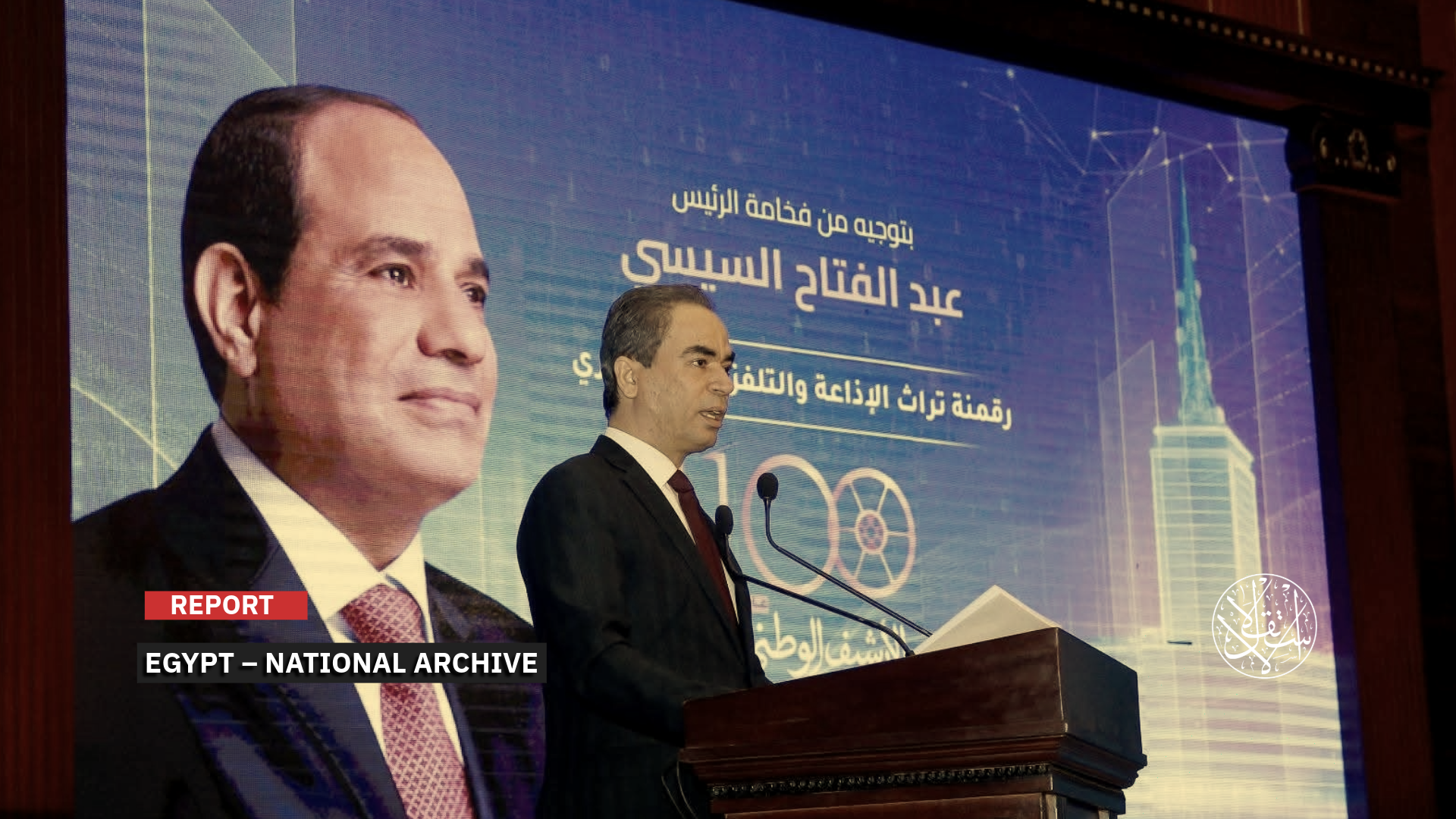
"Assigning the task of digitizing the Maspero archive to the army has political and economic dimensions."
With the announcement by Egypt's National Media Authority of the launch of the national project to digitize Maspero's archives on July 28, 2026, at the request of President Abdel Fattah el-Sisi and in partnership with international companies including Huawei and Orange, a striking question arose: why was the supervision of this project entrusted to the military establishment?
Does the state view the Maspero archives as mere media content that needs to be preserved and from which it can be financially exploited, or as a strategic asset requiring sovereign management for its protection and investment?
Is this an indication of the features of a coming media phase, perhaps part of which will be the return of state television after the failure of private channels, now owned by security agencies through the United Media Services Company, to attract the Egyptian audience?
The Egyptian Radio and Television Union (Maspero) was established in 1971 by a decree from the late President Anwar Sadat and later became the National Media Authority in 2016.
Reasons for Digitization
Historically, the idea of digitization dates back to the beginning of the new millennium, when it was proposed by technicians and archivists within the Radio and Television Union. They warned of the deterioration of magnetic tapes and called for the initiation of a national digitization project before they were lost.
However, these demands remained internal and did not translate into a government project due to high costs, weak technological infrastructure, and a lack of funding.
The first government attempt began before 2011, during the tenure of Minister of Information Anas El-Feqqy, with the development of the Maspero library. This included cataloging parts of the archive, purchasing some digitization equipment, and upgrading the storage facilities. However, it was not completed due to the January 2011 revolution and the subsequent financial crisis.
After a long hiatus between 2011 and 2023, and repeated statements by Maspero officials about the necessity of digitizing the archive before it is lost—statements that also went unfulfilled due to a lack of funding and the absence of a comprehensive national project—the head of the National Media Authority, Ahmed El-Moslemani, revived the idea as a national project.
On July 28, 2026, President El-Sisi declared the digitization of Maspero's heritage a national project undertaken by the state, with a budget of approximately one billion Egyptian pounds.
During the Maspero Digitization Conference, the project's implementation phases were reviewed. The project aims to transform the Maspero Library's archive into a comprehensive digital archive, utilizing artificial intelligence technologies for indexing, searching, content management, and translation into multiple languages.
Media experts say that the authorities view this archive as part of Egypt's soft power and a resource that can be commercially leveraged through digital platforms, broadcasting rights, and documentary production.
Between digital security assessments, restoring Egypt's soft power, and transforming archives into an economic resource, deeper implications emerge for this project that extend beyond digitization to redefining the value of national memory in the digital age.
The project, the largest of its kind in the region, aims to digitize approximately one million audio and video tapes, totaling 800,000 hours of rare media, artistic, cultural, and political content documenting decades of modern Egyptian history, using the latest artificial intelligence and cybersecurity technologies, within two years.
The digitization of up to 41 percent of television content may be completed by April 2027, according to Minister of State for Information, Diaa Rashwan.

Why the Army?
Given that most projects in Egypt are awarded to the military establishment and its various branches, for reasons related to militarization, profit, and control, it was strange that the supervision of the Maspero Digitization project, a cultural and media initiative, was entrusted to the military.
What was even more surprising was assigning the task to the Army's Moral Affairs Department, which in turn enlisted international companies like Huawei and Orange, instead of relying on Maspero's own engineers, who were more experienced with this heritage.
The official explanations and statements for assigning the Maspero digitization project to the military revolved around efficiency, heritage preservation, national security considerations, safeguarding national memory, and accelerating digitization.
However, journalistic and analytical interpretations attributed the move to the expanding role of the military in managing civilian assets, the weakness of civilian institutions, and the desire to control the management of archives in the future.
A number of Egyptian media figures and writers believe that assigning the Maspero heritage digitization project to the military is not merely a technical decision, but also carries political, administrative, and economic dimensions.
Supporters of the decision argued that the military has become the state's primary executive arm in national projects and possesses the technological infrastructure and affiliated companies capable of completing a massive project very quickly.
Some media figures argued that the Maspero archive is not merely a collection of media content, but rather a record of decades of Egyptian history, containing political, military, and security materials, as well as rare documents. Therefore, the state opted to entrust it to the military.
Conversely, some journalists and researchers criticized this move as an extension of the military's expanding role in managing various civilian sectors, such as roads, housing, ports, industry, and digital services.
They believed the project could have been implemented by specialized civilian companies in digital archiving or through a competitive partnership with the private sector, utilizing the expertise of Maspero's historical engineers.
Some writers have raised questions about whether the military's involvement in the project will be limited to the technical aspects (digitization and archiving) or will extend to content management and future access to the archive.
Other media figures suggest that transferring the management of a massive economic asset (Maspero) to a military entity with greater executive and investment capabilities than traditional media institutions may indicate a decline in the National Media Authority's executive role.
Although the National Media Authority remains the legal owner of the archive, assigning the project's implementation to an agency linked to the military reflects the Authority's diminished capacity to manage a project of this scale independently, whether due to financial or bureaucratic challenges.
Media figures, including Hafez al-Mirazi, who previously worked for Egyptian television, have asked: "Why is Maspero entrusting the electronic digitization of its library to the Egyptian Armed Forces' Information Systems Department, which, in turn, contracted with the Chinese company Huawei to complete the Maspero project?"
He questioned why the extensive experience of sound and video engineers in a dedicated Broadcasting Engineering department wasn't utilized, especially since state security and sovereign agencies relied on Maspero's experts for technical expertise.
He argued that relying on the Armed Forces' Information Systems Department to digitize the Maspero archives, without allowing its experts to deal directly with the Chinese company, is related to the militarization of all sectors of the Egyptian state.

The Army is a Red Line
In early August 2026, coinciding with officials' talk of expanding freedom of expression, Al-Wafd newspaper, supposedly a liberal and independent publication representing the Wafd Party, was prevented from publishing an article by its former editor-in-chief, Magdi Helmy.
The article addressed the challenges of the Maspero digitization project due to his concerns about the project and his discussion of the army's role.
Journalists told Al-Estiklal that the Al-Ahram newspaper's printing press, where Al-Wafd is printed, refused to print the eight-page edition, citing low demand for print newspapers, without explanation, until the article was removed. This sparked speculation about censorship. On the printing press.
It emerged that the reason for censoring the article was its implicit criticism of the military's decision to entrust the digitization of Maspero to foreign entities, and the reluctance to direct any criticism at its oversight of the project, according to journalists.
Helmy stated in a post on his Facebook page, "My weekly article was banned at a time when the state and its Minister of Information claim to support freedom of the press and freedom of opinion and expression... but these appear to be mere slogans. Because of the article, the newspaper's printing was halted until midnight."
Helmy said he contacted the editorial management to inquire about the reason for the non-publication, and was informed that the decision to ban it came from the Al-Ahram newspaper's printing press, without explanation.
He pointed out that this was the first time an article had been banned from publication by the printing press. Previously, articles were either banned or censored by a decision of the editor-in-chief, and the matter was discussed, either by writing an alternative article or by the newspaper issuing an apology.
Helmy published the full article in the same post under the title ‘Ahmed El-Moslemani and the Digitization of the Radio and Television Archive’.
The article addressed four challenges, which Helmy stated were the national project to digitize Maspero, implemented by the National Media Authority headed by El-Moslemani, faces several challenges, most notably the recovery of media materials, including films, songs, and programs produced by Egyptian television. He wrote that these materials were stolen or sold without authorization to Arab channels during periods of lax oversight.
The second challenge facing the project is determining who will be responsible for converting this vast number of tapes into digital files. He criticized what he described as the failure of previous government digitization attempts, perhaps implicitly criticizing the military's involvement in this task.
The third challenge relates to restoring the damaged sections of the old tapes before digitization, a task requiring meticulous care and precision from experts within the Maspero building and retired personnel in the fields of editing and restoration.
Helmy considered the financial cost to be the fourth challenge facing the project, given what he described as billions of Egyptian pounds in debt owed by the National Media Authority.
He called on the government to either officially write off these debts or announce an independent budget for the project.

Compensating for Losses
Experts link the digitization and development of Maspero's heritage to the losses incurred by Egyptian state television.
The aim is to utilize the proceeds from the exploitation of Maspero's heritage to offset some of the losses suffered by the historic building, whose retired employees are struggling to receive their dues and pensions.
Digitalization allows for the sale of broadcasting and production rights, the creation of paid digital platforms, the use of artificial intelligence in indexing and searching, the marketing of historical content to universities and international platforms, and the production of documentaries and new works based on the archive.
Therefore, the project aims to transform media heritage from an administrative burden into a sustainable economic resource, according to media experts. This is one of the reasons for entrusting the project to the military establishment, in addition to security considerations.
According to official figures cited by the head of the National Media Authority on April 21, 2026, accumulated debts include taxes and payments to foreign entities such as the Arab States Broadcasting Union.
The European Broadcasting Unions and foreign agencies are also owed substantial sums, denominated in both Egyptian pounds and US dollars.
He pointed out that the principal of these debts, and the largest portion of the total debt (42.6 billion Egyptian pounds owed to the Investment Bank), stems from financing national assets (Nilesat and Media Production City), which have historically been charged to Maspero's budget.
He further noted that the government pays the National Media Authority approximately 1.1 billion Egyptian pounds, a fixed amount since 1992, representing only 15 percent of the actual value owed for the services Maspero provides to the government.
Annual losses in the 2024/2025 fiscal year reached approximately EGP 14.68 billion, while cumulative losses up to 2024/2025 amounted to EGP 119.9 billion, representing 44.9% of the total accumulated losses of economic entities in Egypt.
According to the official assessment of Maspero's debt, it amounts to approximately EGP 42.6 billion, most of which is owed to the National Investment Bank, as stated by El-Moslemani.
Interest accrued on this debt between 2016/2017 and 2023/2024 reached approximately EGP 48.3 billion, representing 72.3% of the organization's total losses during that period.
An analysis by the Egyptian Observatory for Press and Media, published on February 6, 2026, indicates billions in debt and accumulated losses that have negatively impacted the lives of its employees, including delayed salaries, frozen bonuses, and end-of-service bonuses that have not been paid for years.
The current financial crisis is attributed to nearly 25 years of developments, beginning with the turn of the millennium. Advertising revenues witnessed a significant decline due to the emergence of private satellite channels and the resulting drop in viewership, which directly impacted revenue.
Another reason for the crisis is the large number of employees at the Radio and Television Union, which, according to statements made by Hussein Zein, the former head of the National Media Authority, in October 2022, is approximately 31,000. This has led to a substantial increase in operating expenses, in addition to the wage bill, which has placed an additional burden on the Authority's budget.
According to Osama Heikal, the former Minister of State for Information, speaking before Parliament on January 19, 2021, the monthly financial allocation from the Ministry of Finance has remained unchanged since 2013 at 220 million Egyptian pounds. This allocation is used solely for salaries and basic expenses, without covering increases in social security contributions, pensions, or allowances.
With staff reductions and complaints about unpaid wages, employee wage allocations in the financial statements declined as a percentage of total costs and expenses.
While they reached EGP 2.187 billion in 2016/2017, representing 29.6% of total expenses of EGP 7.4 billion that year, the percentage decreased to 22.6% in the 2024/2025 fiscal year.
Wage allocations amounted to EGP 3.8 billion out of total expenses estimated at EGP 16.8 billion, according to the National Media Authority's final accounts. This percentage is projected to reach 21.2% in the 2025/2026 fiscal year budget.
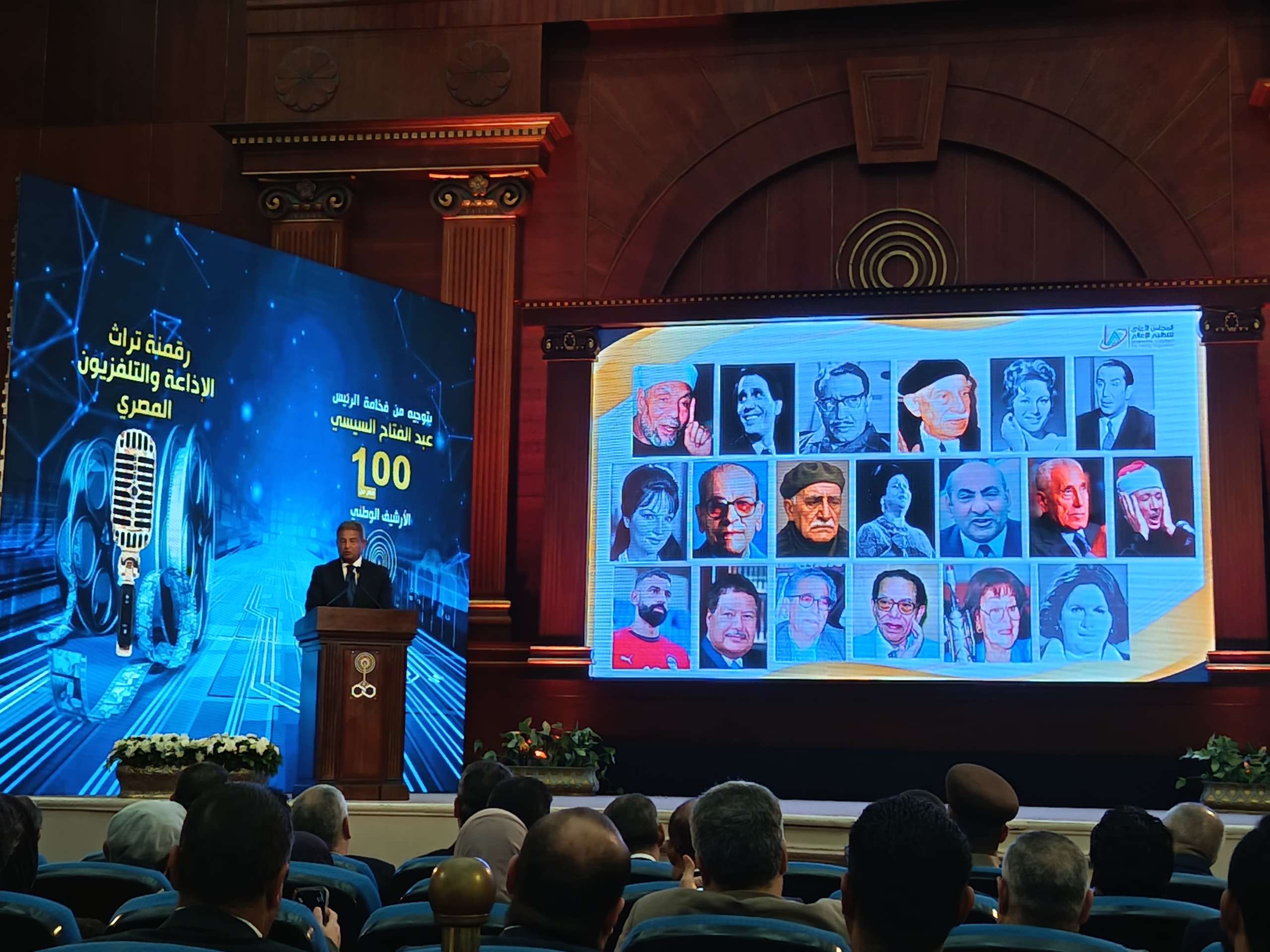
The debt crisis has impacted key areas within Maspero (the Egyptian Radio and Television Union), most notably the issue of wages, which represents one of the most chronic problems in the structure of public media in Egypt.
Besides the extremely low salaries, ranging between 4,000 and 5,000 Egyptian pounds (approximately $100) for the majority of Maspero employees, a more serious crisis has emerged: the delay in paying end-of-service bonuses for several years.
The Freedom of Thought and Expression Organization revealed in a report that the suffering of pensioners since 2018 includes paradoxes such as the deduction of 5% from their end-of-service bonuses for the benefit of a social purposes fund, in an attempt by the National Media Authority to provide salaries for current employees using pensioners' funds.
Sources
- In accordance with El-Sisi's directives... Details of the national project to digitize Maspero's heritage [Arabic]
- Ahmed El-Moslemani, reviewing the National Media Authority's financial debts: in Egyptian pounds and US dollars, reaching enormous figures [Arabic]
- Maspero: Billions in debt and outstanding rights [Arabic]
- Complaints from Maspero employees and visitors never cease; "Don't Believe It" monitors the deteriorating financial performance of the National Media [Arabic]