Sudan Caught in the Crossfire: What Does the Spread of the Ethiopia–Tigray War Mean?
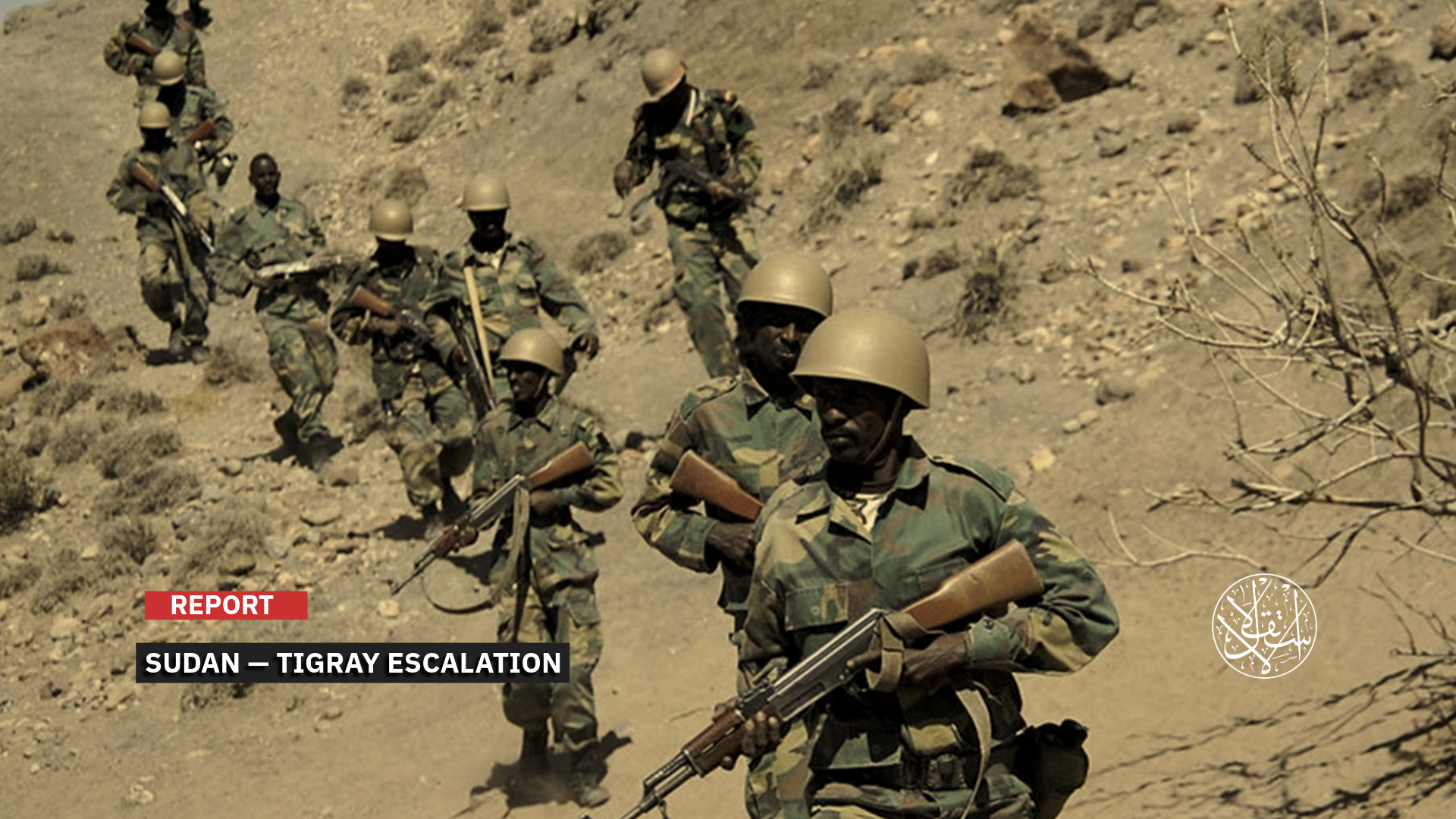
Any attempt to pursue fighters across the porous border could escalate into a confrontation between the Sudanese and Ethiopian armies.
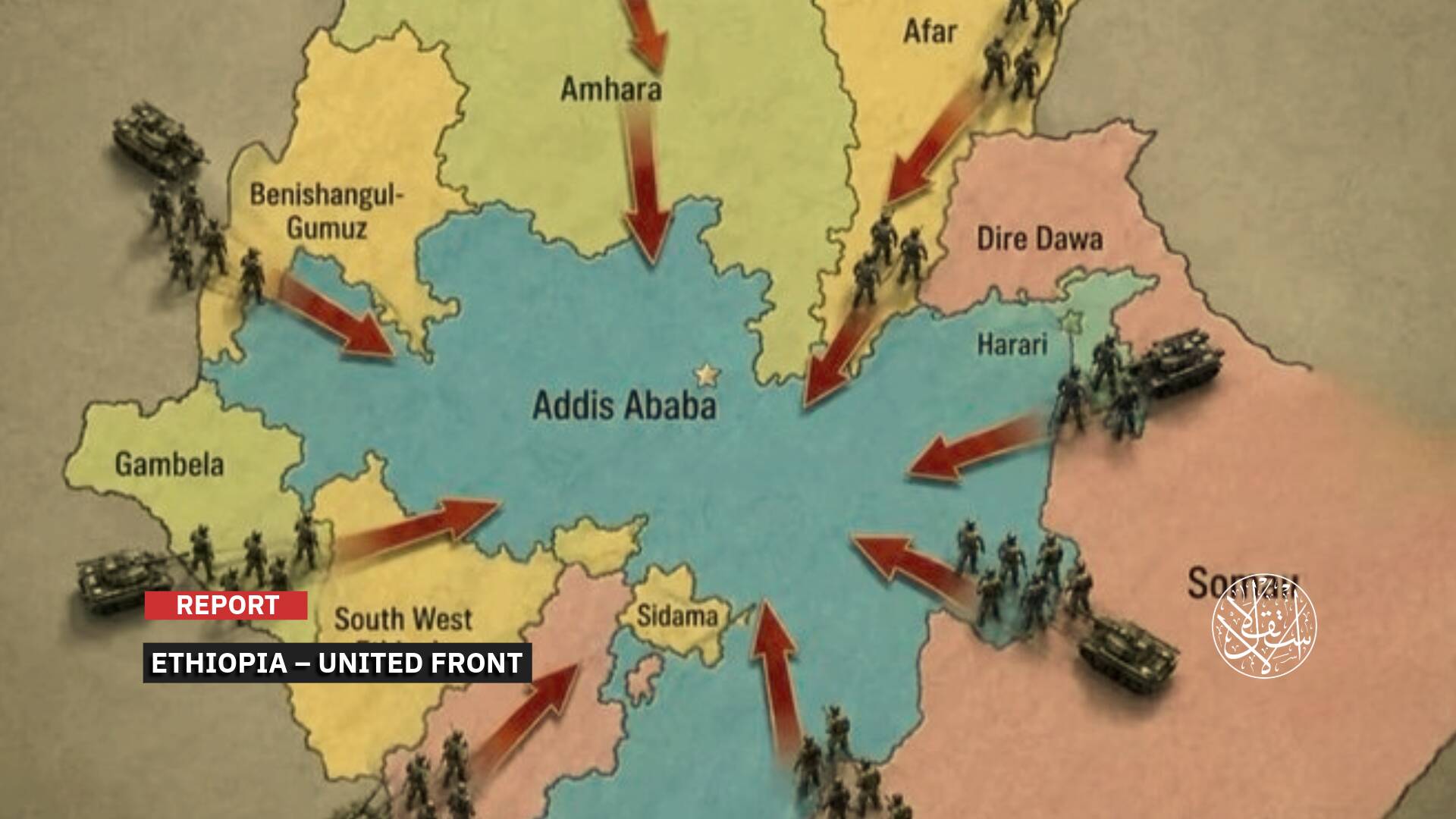
Confrontation between the Ethiopian army and the Tigray Defense Forces has returned to the forefront at widely separated points across northern Ethiopia, with more than 1,000 kilometers separating the two ends of the conflict, from the Eritrean border to the Sudanese frontier.
On August 1, 2026, fighting erupted in northwestern Tigray, near the Sudanese border. The crisis was no longer a limited border clash, as it had become entangled with the issue of disputed territories, the stalled disarmament of Tigrayan forces, the existence of dual authorities within the region, and the presence of Eritrean forces, alongside mutual accusations over the use of Sudanese territory for supplying forces and launching attacks.
So, how did the two sides return to fighting, and will the conflict remain confined to Ethiopia, or could it turn into a regional war?
Fighting Spreads Between Two Borders
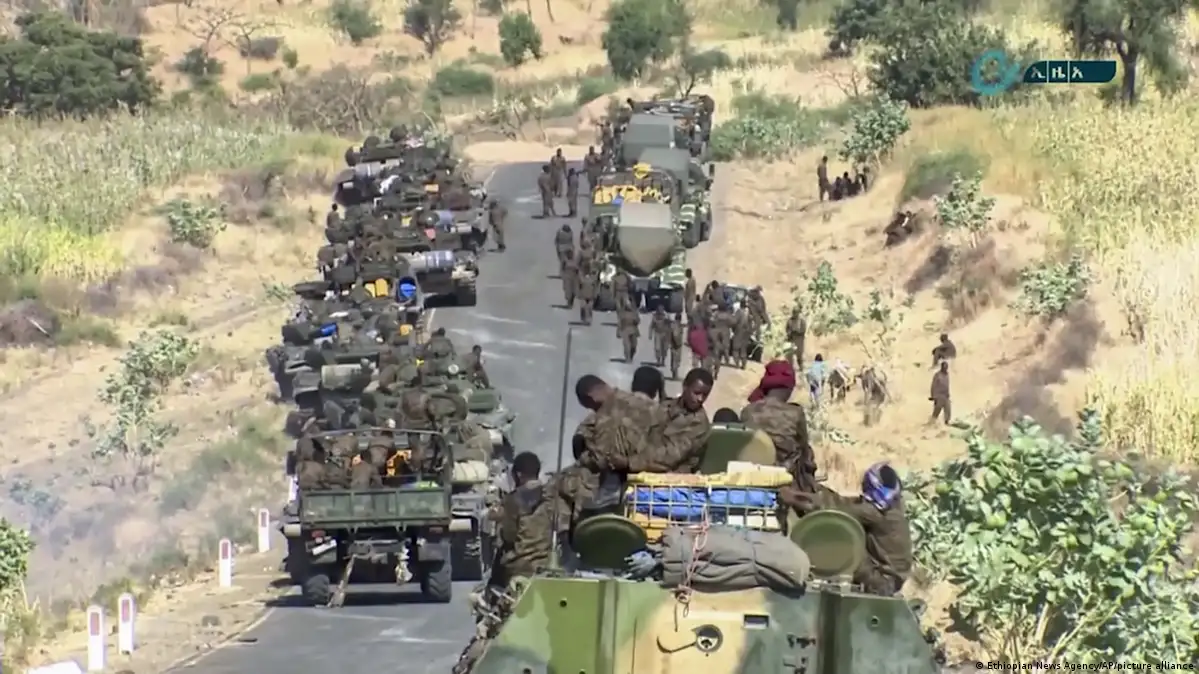
The latest escalation began when clashes broke out between the Ethiopian army and the Tigray Defense Forces around Sheraro, near Sudan.
The fighting then spread to Mearwa, in the south of the region, close to the Amhara border, highlighting the conflict’s ability to shift between widely separated fronts.
The Tigray People’s Liberation Front (TPLF) said the Ethiopian army had launched a major offensive against its forces around Sheraro, using ground troops backed by air support.
The Ethiopian government, meanwhile, said TPLF fighters had attacked federal forces after crossing from Sudanese territory and had received support from Eritrean troops.
Agence France-Presse quoted a TPLF member as saying that the fighting involved heavy artillery and drones.
On August 11, TPLF Vice President Amanuel Assefa accused the federal government of carrying out a drone strike in Merewa. He said the strike targeted Tigrayan forces as well as a secondary school, causing casualties.
In the north, Eritrean forces remain deployed in parts of Erob and Zalambessa, despite the Pretoria Agreement’s provision for the withdrawal of all forces not belonging to the Ethiopian army.
In the south, the fighting is linked to the Amhara border and areas where control shifted during the previous war. In the west, meanwhile, the conflict combines a territorial dispute with attempts to gain access to Sudan.
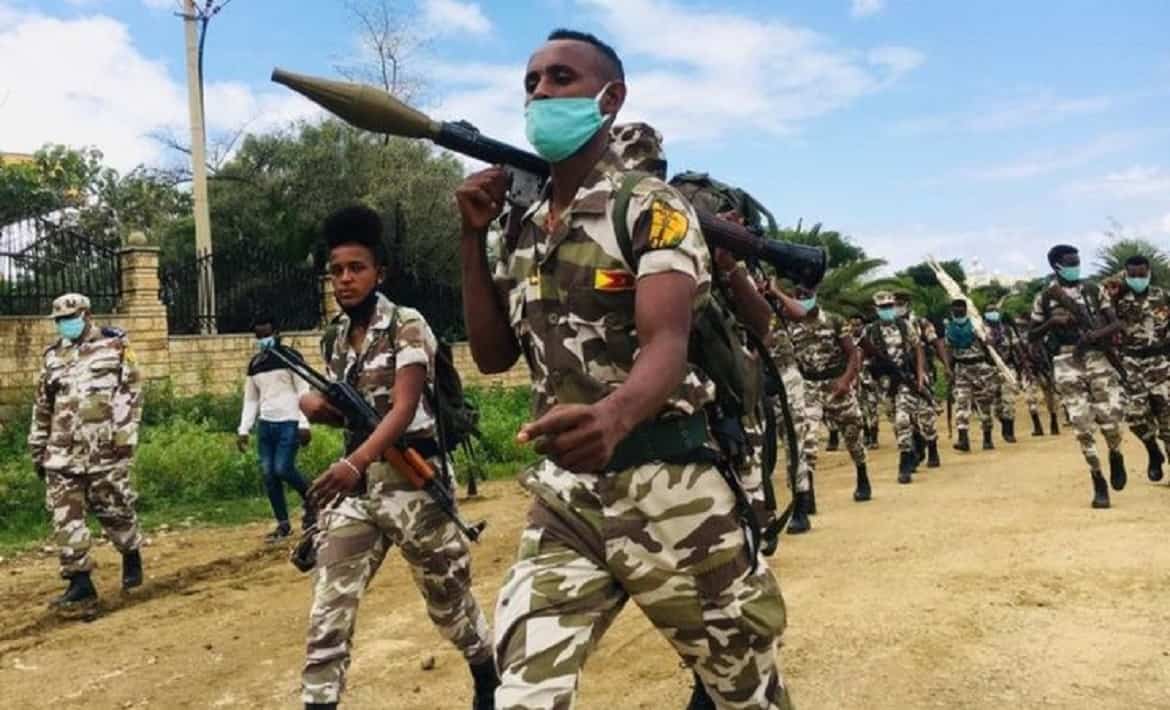
Unresolved Issues That Have Rekindled the War
The Pretoria Agreement, signed on November 2, 2022, under the auspices of the African Union, brought an end to the large-scale military operations that had begun two years earlier between the Ethiopian government and the Tigray People’s Liberation Front (TPLF).
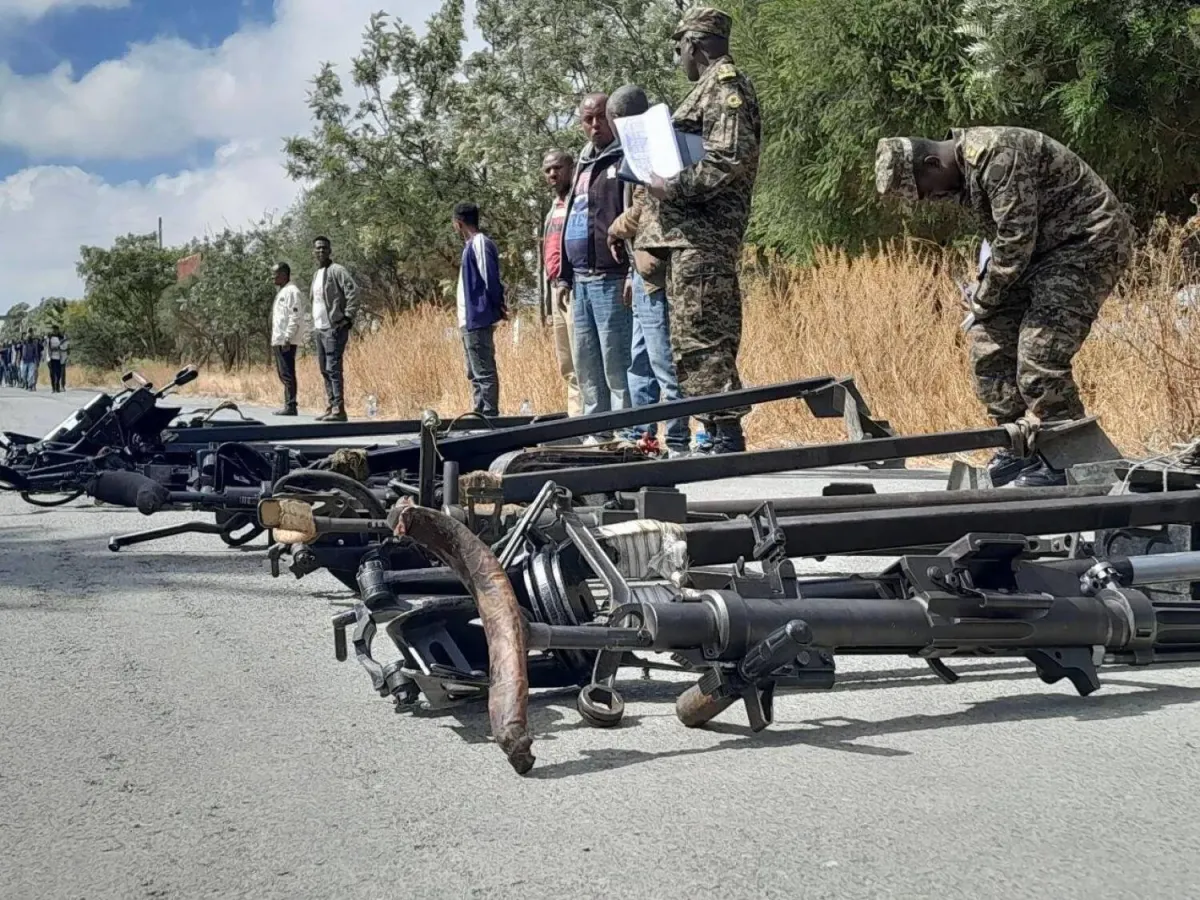
The agreement paved the way for the lifting of the region’s economic blockade and the restoration of electricity, telecommunications, and banking services. Tigrayan forces also handed over their heavy weapons under African supervision.
The agreement addressed the ceasefire more quickly than it addressed the underlying causes of the conflict. The status of western and southern Tigray remained the most prominent unresolved issue.
During the war, Amhara forces and federal troops took control of areas that had been administered by Tigray before 2020, while Amhara authorities say those areas were taken from them after the TPLF came to power in 1991.
The Pretoria Agreement referred the dispute to constitutional procedures, but those procedures never got underway, leaving western Tigray under an administration aligned with Amhara.
The area’s importance extends beyond the identity-based dispute: it contains agricultural land producing sesame and cotton and provides Tigray with access to Sudan.
Addis Ababa fears that restoring the territory to the TPLF could allow it to reopen external supply routes, while Tigrayan leaders consider the return of the area essential to restoring the region’s territorial unity and enabling displaced people to return. This is tied to the crisis of around 740,000 displaced people, most of them from western Tigray, who remain unable to return home.
The disarmament, demobilization, and reintegration (DDR) process, meanwhile, stalled after making only limited progress.
According to a study by the German Institute for International and Security Affairs (SWP), around 274,000 people were registered for the program, but only about 63,000 had gone through its various stages before the process became stalled in 2025.
On top of these unresolved issues, a crisis of legitimacy emerged within Tigray. In April 2026, the federal government extended the term of the transitional administration, headed by General Tadesse Werede, for another year.
The TPLF rejected the decision and unilaterally reactivated the elected regional council that had been established in 2020.
On May 5, 2026, the council reinstated Debretsion Gebremichael as head of the region, a move rejected by Addis Ababa and described by observers as a direct challenge to the arrangements established under the Pretoria Agreement.
The region thus came to be governed by two competing claims to legitimacy: a transitional administration recognized by the Ethiopian government, and an authority led by the TPLF that retained effective influence on the ground.
When Tigray was excluded from Ethiopia’s elections in June 2026, the elements of the rupture were complete: disputed territory, displaced people unable to return, weapons that had not been fully dismantled, and two authorities that refused to recognize each other.
Tigray Defense Forces (TDF)
Nevertheless, a distinction must be made between the Tigray People’s Liberation Front (TPLF) as a political organization and the Tigray Defense Forces (TDF) as the military formation that emerged during the 2020 war.
Although the two remain closely linked, the TDF included not only TPLF members but also former Ethiopian army officers, regional special forces, local militias, and volunteers, making its structure broader than the conventional military wing of a political party.
Debretsion Gebremichael leads the TPLF politically and draws on influence within the region’s institutions and among part of the military leadership.
General Tadesse Werede, who commanded the Tigray Defense Forces during the war and now heads the transitional administration, occupies a more complicated position. He is one of the leading commanders of the force that fought Addis Ababa, yet he now heads an administration recognized by the federal government, whose extension of its mandate the TPLF rejects.
These divisions have given the federal government local partners and greater insight into the structure and movements of Tigrayan forces, but they have not eliminated the main force’s ability to fight.
The Tigray forces emerged from the 2020 war with extensive experience in mountain warfare, guerrilla warfare, and conventional military operations, and demonstrated an ability to reorganize after losing control of major cities.
In June 2021, for example, they recaptured Mekelle and then advanced southward, reaching, in alliance with the Oromo Liberation Army, to within roughly 200 kilometers of Addis Ababa before withdrawing.
Their commanders are also familiar with the doctrine and structure of the federal army, as some of them served in its leadership after the TPLF came to power in 1991.
Tigray’s mountainous terrain, narrow passes, and local support networks give them the ability to slow ground forces and conceal units and supply depots.
Since April 2026, Tigrayan authorities have begun recalling former fighters and recruiting new ones. In June, the TPLF issued a declaration making military service compulsory and imposing broad penalties for evasion and criticism. The mobilization indicates that the Tigray forces still have the capacity to generate manpower.
The Tigray forces can therefore likely prevent the federal army from achieving a quick victory, but they lack the superiority needed to decisively win a conventional war against a larger army with air power.
This uneven balance makes a potential war more likely to become a prolonged war of attrition than a short confrontation, and it could spill over into external fronts.
How the Conflict Could Spill Beyond Ethiopia
Against this backdrop, Eritrea was the Ethiopian government’s most important military ally during the 2020 war, with Eritrean forces taking part in operations against the Tigray People’s Liberation Front.
But Eritrea’s exclusion from the Pretoria negotiations, followed by Prime Minister Abiy Ahmed’s increasingly explicit calls for landlocked Ethiopia to secure access to the Red Sea, led to a rapid deterioration in relations between the two countries.
Eritrea fears that Ethiopia’s demands could develop into pressure over the port of Assab or even a direct military threat. In February 2025, reports emerged of Eritrean mobilization, while Ethiopia deployed forces toward the border the following month.
Diplomatic sources and Tigrayan officials told Reuters at the time that the risk of a confrontation between the two countries had become real.
At the heart of this potential confrontation lies Tigray. The federal government has accused Debretsion’s faction of moving closer to Asmara.
The two sides, in particular, have incentives for tactical cooperation: Eritrea wants to wear down Abiy Ahmed and prevent him from exerting military pressure over the Red Sea issue, while Tigrayan forces need supplies and a way to break their isolation.
Addis Ababa’s concerns have also grown amid signs of rapprochement between the TPLF and some factions of the anti-government Fano forces, despite the dispute over western Tigray having been a major source of deep hostility between them.
ACLED believes that tactical cooperation could enable simultaneous attacks aimed at stretching Ethiopian army deployments and potentially encourage the Oromo Liberation Army to intensify its operations.
Sudan Caught in the Crossfire
On the other hand, the arrival of fighting at the western border has drawn Sudan directly into the crisis. Sudanese military sources reported that projectiles landed in the al-Fashaga and Barakat areas, injuring civilians.
Sudan’s Commission for Refugees, under the Ministry of the Interior, also said that shelling hit camps housing Ethiopian refugees in Gedaref State, causing deaths and injuries.
Sudan hosts around 63,000 Ethiopian refugees and asylum seekers, most of them in the states of Gedaref and Kassala, including approximately 19,700 in Tunaydbah camp and 14,700 in Um Rakuba.
Both camps are located near crossing routes used by people fleeing the Tigray war since 2020, leaving them vulnerable to any large-scale resumption of fighting.
Agence France-Presse quoted a Sudanese security source as saying that some of those arriving in the border town of Hamdayet were fighters wounded in the clashes.
A medical source said the wounded were taken to al-Hashaba, about 15 kilometers inside Sudan, where thousands of people who fled the previous war are staying.
The danger, however, is not limited to displacement and cross-border shelling. The Ethiopian government has accused Tigrayan forces of launching attacks from Sudanese territory, while Khartoum has previously been accused of supporting forces hostile to Addis Ababa.
In May 2026, Ethiopia responded to accusations that it was involved in drone attacks inside Sudan by accusing the Sudanese army of providing financial support and weapons to Tigrayan fighters.
The International Crisis Group quoted a Sudanese official as warning that any pursuit of fighters or movement of weapons across the porous border area could turn into a confrontation between the Sudanese and Ethiopian armies.
The opening of a western corridor into Tigray could also cause the Ethiopian war to become intertwined with Sudan’s conflict, particularly amid mutual accusations that the two sides are supporting either the Rapid Support Forces (RSF) militia or forces opposed to Addis Ababa.