With the Captive Issue Resolved, Why Is Israeli Occupation Still Holding 1,700 Palestinian Bodies?
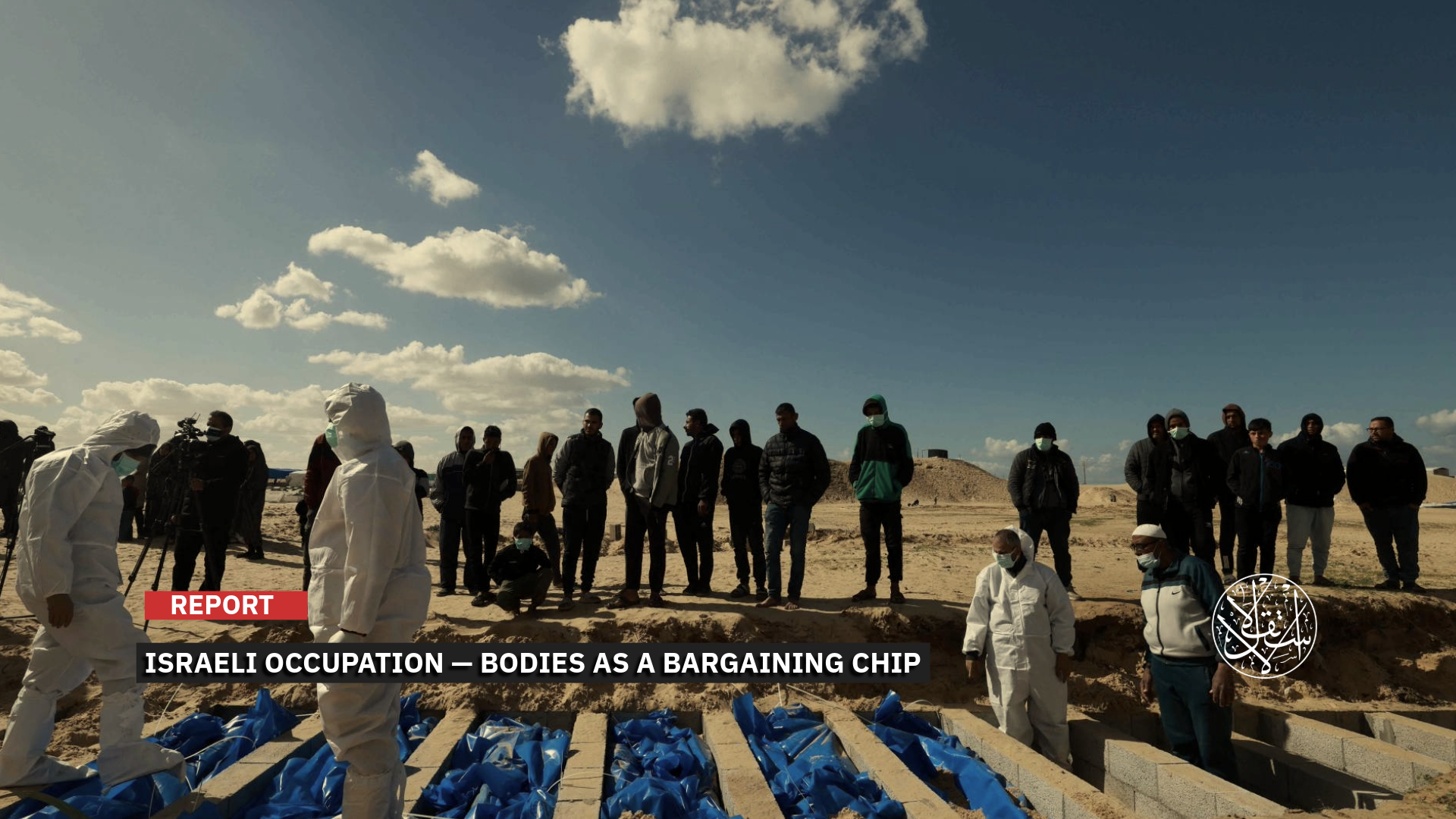
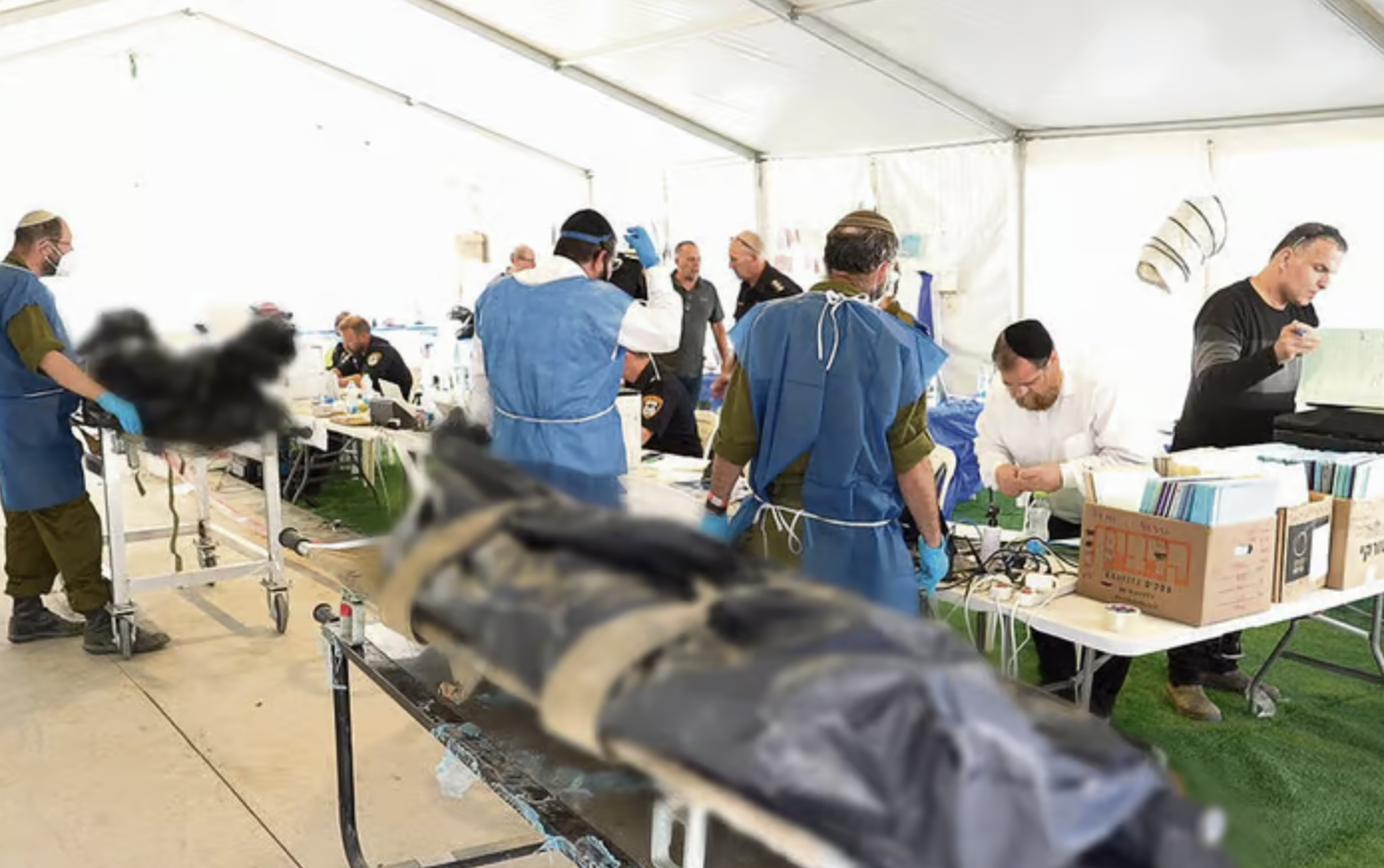
Sde Teiman camp in the Negev is the most prominent documented site for the collection of remains following Operation al-Aqsa Flood.
Over the years, Israeli Occupation authorities have accumulated a large number of Palestinian bodies and remains, initially as part of a policy that tied their detention to cases involving captives, missing people, and captive exchange deals. The practice expanded after Operation al-Aqsa Flood on October 7, 2023, with hundreds of new cases added.
By August 2026, estimates circulating within “Israel’s” security establishment put the number at around 1,700 bodies, held across military refrigeration facilities and closed cemeteries, while the identities of many of the martyred and the locations where their remains were being held remained undisclosed.
The Story Behind the Bodies
Haaretz reported on August 10 that “Israel” is holding around 1,700 Palestinian bodies and remains, as Shin Bet chief David Zini leads an effort to keep them in Israeli custody as a bargaining chip in future captive operations, a position backed by the Israeli Occupation military.
This comes despite the Israeli captive file in Gaza being closed on January 26, 2026, when the Israeli Occupation military announced that it had recovered the remains of Ran Gvili, the last Israeli hostage still in the enclave.
Haaretz reported that “Israel’s” security establishment classifies the “vast majority” of those whose bodies are being held as participants in Operation al-Aqsa Flood or in subsequent fighting. The group also includes an unspecified number of Palestinians who did not take part in attacks.
The group includes 13 Palestinians from the Palestinian territories occupied in 1948. The full names, geographic distribution, and number of people in each category have not been disclosed.
In an investigation published in early February 2026, Haaretz identified 776 bodies by name, including 766 Palestinians and 10 foreigners. Of those, 373 have been held by the Israeli Occupation since October 7, 2023, while the remaining cases date back to earlier years.
The list included 77 children under 18 and 10 women, as well as 88 people who were martyred while being held in Israeli Occupation prisons and detention camps, including 53 from Gaza, 32 from the West Bank, and three Palestinians from the territories occupied by “Israel” in 1948.
The same investigation noted that other unidentified remains were not included in the list of 776, some dating back decades to earlier clashes and incidents. The bodies held by the Israeli Occupation also include Palestinians who have been martyred inside Israeli prisons and military facilities.
In November 2023, Haaretz reported the martyrdom of two workers from Gaza while they were being held at military facilities in the West Bank after the Israeli Occupation military detained thousands of Gazan workers who had been in “Israel” with work permits when the Israeli war on Gaza began.
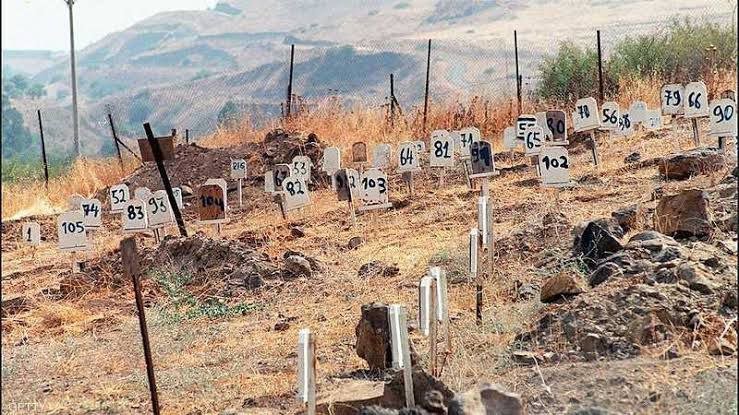
February data showed that 520 identified bodies were being kept in refrigerators at military facilities, while 256 had been buried in four closed military cemeteries known to Palestinians as “cemeteries of numbers.” Each grave is identified by a number in Israeli authorities’ records rather than the person’s name on the marker.
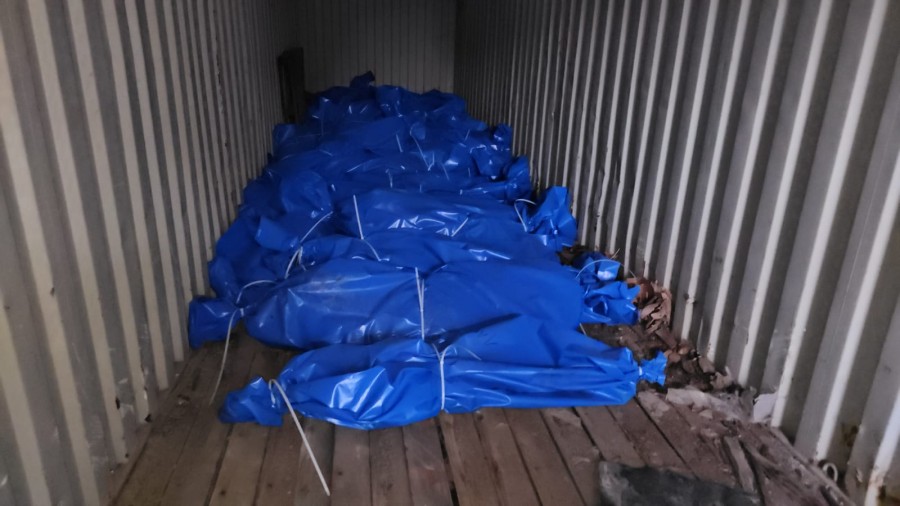
Sde Teiman camp in the Negev has emerged as the most prominent documented site for collecting remains since Operation al-Aqsa Flood. In April 2025, Yedioth Ahronoth reported that the Israeli military rabbinate had reexamined 1,660 bags of remains that had been classified as belonging to Operation al-Aqsa Flood fighters after concerns that some contained Israeli remains, which subsequent testing confirmed.
In September, retired Col. Avner Cohen, the former commander of the identification center at Camp Shura, described Sde Teiman as “a collection station for enemy dead,” saying some bodies were buried while others remained frozen.
A reserve soldier, in testimony published by the site in June 2026, also said that around 1,600 bodies had been stored in containers at the site during the initial period after Operation al-Aqsa Flood.
Public Israeli records identify two military cemeteries by name. In May 2016, the Israeli Occupation government informed HaMoked, an Israeli human rights organization that follows Palestinian cases in the courts, that a cemetery for “enemy dead” existed near the “Adam Bridge” in the Jordan Valley and another at Camp Amiad in northern “Israel.”
In September 2017, Yedioth Ahronoth reported, citing testimony submitted by “Israel” to the Supreme Court, that four Palestinians had been buried at the site near “Adam Bridge.”
The National Campaign for the Recovery of Martyrs’ Bodies and Disclosure of the Fate of the Missing documents four historic “cemeteries of numbers,” including the sites near “Adam Bridge” and the Bnot Ya’akov Bridge, as well as two other locations in northern “Israel” and the Jordan Valley.
Haaretz’s February 2026 investigation, meanwhile, counted 256 identified bodies in four cemeteries, without publishing their full names or detailing how the bodies were distributed among the sites.
The Abu Kabir Forensic Institute, run by “Israel’s” Health Ministry in southern “Tel Aviv,” and Camp Shura near “Ramla” play roles in examining bodies, conducting autopsies, and establishing identities.
Under an official Israeli police procedure, bodies are transferred to Abu Kabir for processing before being handed over to the Israeli Occupation military. After Operation al-Aqsa Flood, Camp Shura became a major center for examining remains and identifying them through DNA, fingerprints, and dental records.
Once examination and identification procedures are complete, the bodies are transferred to military facilities, where they are either kept in military refrigerators or buried in closed cemeteries.
Legalizing the Detention of Bodies
Israeli Occupation authorities base their detention of Palestinian bodies on Article 133(3) of the 1945 Emergency War Regulations, issued during the British Mandate. The provision gives the Israeli Occupation military commander authority to determine where a body is buried.
In 2004, then Attorney General Menachem Mazuz adopted a position limiting the retention of bodies to cases with clear bargaining value or a specific security rationale.
In January 2017, “Israel’s” security cabinet, known as the Cabinet, adopted a unified policy for dealing with the bodies of people accused of carrying out attacks. The policy tied their return to conditions imposed by the Israeli Occupation on burials and funerals, while exempting cases linked to the Palestinian Resistance Movement (Hamas) and operations classified as “exceptional.”
The policy was intended to increase pressure over Israeli soldiers and settlers held by Hamas in Gaza.
The issue reached “Israel’s” Supreme Court in December 2017 through petitions filed by families of Palestinians whose bodies were being held by Israeli Occupation authorities, including the family of Bahaa Alyan.
The court’s majority ruled that the Mandate-era provision did not provide clear authority to use bodies as bargaining chips and gave the government six months to enact explicit legislation if it wished to continue the policy.
After the Israeli government requested a review, an expanded panel of seven judges issued a new ruling on September 9, 2019. By a 4-3 majority, the court allowed the military commander to carry out the “temporary burial” of bodies of people Israeli authorities classified as “attackers” or “enemy dead” on security grounds.
This included using the Palestinian bodies in negotiations to recover Israeli soldiers and the bodies of soldiers and settlers held by Palestinian factions.
The ruling required the continued detention of bodies to be reviewed periodically. Supreme Court Justice Neil Hendel linked continued detention to the existence of negotiations, or a genuine possibility of negotiations, and to the body’s potential value in those talks.
The Israeli Occupation state had presented the court with security assessments arguing that holding the bodies could help secure the return of Israelis, an argument accepted by the majority at a time when a case involving captives and missing Israelis was still active.
In September 2020, the Cabinet expanded the policy, allowing the bodies of Palestinians accused of attacks by different organizations to be held based on the nature of the operation and security assessments.
The Supreme Court upheld the expanded policy in August 2021. At that stage, the rulings remained tied to people Israeli authorities classified as attackers or “enemy dead.”
The policy was later extended to Palestinian citizens from the territories occupied in 1948 after Operation al-Aqsa Flood. In June 2024, the Cabinet decided to retain the bodies of seven of them, including Palestinian detainee Walid Daqqa, who died in Israeli custody in April of that year.
On September 30, the Supreme Court upheld the continued detention of Daqqa’s body after the government argued that it carried symbolic value that could be used in negotiations over captives and missing people.
On January 5, 2025, the court rejected petitions filed by the families of six Palestinian citizens from the territories occupied in 1948. Justice David Mintz noted that around 100 Israelis were still being held in Gaza at the time, describing the situation as part of a “bodies for bodies” equation.
The Israeli captive issue remained part of the arguments presented by Israeli authorities to the courts until early 2026. On January 26, the Israeli Occupation military announced that it had recovered the remains of Israeli police officer Ran Gvili, the last deceased Israeli captive still held in Gaza.
After the Israeli captive file was closed, Haaretz reported that Zini and the Israeli military supported keeping the bodies in anticipation of future captive operations. The Shin Bet’s legal adviser, however, argued that continuing to hold the body of someone proven not to have taken part in fighting lacked a legal basis.
Bodies and Captive Exchange Deals
Bodies have been part of captive exchange deals for decades. In September 1991, the Israeli Occupation released 51 Lebanese detainees and returned Democratic Front for the Liberation of Palestine commander Ali Abdullah Abu Hilal to the West Bank in exchange for the body of Israeli soldier Samir Assad, who had gone missing in Lebanon in 1983.
In July 1996, the Israeli Occupation recovered the bodies of soldiers Yossi Fink and Rahamin Alsheikh from Hezbollah in exchange for 105 bodies.
In June 1998, “Israel” recovered the remains of Itamar Ilya, a naval commando killed in the 1997 Ansariya Ambush, in exchange for 40 bodies and 60 Lebanese detainees.
In January 2004, “Israel” recovered Elhanan Tannenbaum, who had been held alive by Hezbollah, along with the bodies of three soldiers, Benny Avraham, Adi Avitan, and Omar Sawaid, in a wide-ranging deal that included the release of hundreds of detainees.
The July-2008 deal with Hezbollah became one of the clearest precedents for using a large stockpile of bodies as bargaining leverage. “Israel” recovered the bodies of soldiers Ehud Goldwasser and Eldad Regev while releasing Lebanese detainee Samir Kuntar and four Hezbollah members and handing over remains it had been holding.
The Hebrew news site Walla and an assessment by “Israel’s” Institute for National Security Studies put the number of bodies involved at 199. Remains were also exhumed from a cemetery near “Kibbutz Amiad” in the Upper Galilee before being transferred to Lebanon.
With Hamas holding the bodies of soldiers Hadar Goldin and Oron Shaul since 2014, along with Israeli Occupation settlers in Gaza, the retention of bodies became part of a more systematic government policy.
The Cabinet’s 2017 decision formally linked the detention of bodies to the issue of captives and missing Israelis. That same year, Yoav Mordechai, then coordinator of Israeli government activities in the Palestinian territories, said Hamas and Islamic Jihad would be allowed to recover the bodies of their members from a tunnel bombed by the Israeli military near Gaza only if progress was made on the issue of Israelis being held there.
During the fragile Gaza ceasefire agreement in October 2025, bodies became part of an explicit numerical formula, with the arrangements calling for 15 Palestinian bodies to be returned for every Israeli body recovered from the enclave.
On January 29, 2026, Yedioth Ahronoth reported that “Israel” had returned 15 Palestinian bodies to Gaza as part of the agreement. The August revelations, however, placed the remaining stockpile in a different context, as the policy led by Zini shifted toward retaining the bodies in anticipation of a future Israeli captive operation.
Israeli security authorities had taken a more selective approach in previous years. In April 2022, the military and Shin Bet supported returning five bodies after assessing their security value, while police opposed the move over concerns surrounding the funerals. The Supreme Court also stressed in its 2019 ruling that the bargaining value of each case should be reassessed.
Across the exchange deals of the 1990s and early 2000s, bodies entered negotiations when a specific agreement was taking shape. Since 2017, however, they have increasingly been treated as a stockpile to be held while Israeli captives and missing people remain unaccounted for.
In August 2026, the policy expanded again, with Shin Bet and military leaders pushing to retain nearly 1,700 bodies even after the existing captive file had been closed, in preparation for any future negotiations arising from new captive operations.
Sources
- Around 1,700 Palestinian Bodies Held by Israel as Security Establishment Backs Keeping Them for Future Negotiations [Hebrew]
- Israel Holds 776 Identified Palestinian and Foreign Bodies [Hebrew]
- Revealed: Two Containers of Unidentified October 7 Remains Still Held at Camp Shura [Hebrew]
- “One of My Men Died by Suicide, Several Were Hospitalized and Many Were Traumatized”: 7/10 Victim Identification Center Commander Speaks Out [Hebrew]
- Following Freedom of Information Petition: Israel Reveals Some Procedures for Handling and Burying Palestinian Bodies, but Refuses Access to 1999 Arditi Committee Documents [Hebrew]
- Strategic Assessment for Israel [Hebrew]