Abyei: How the Strike on the "Ostrich Market" Confronted South Sudan With the Calculus of War
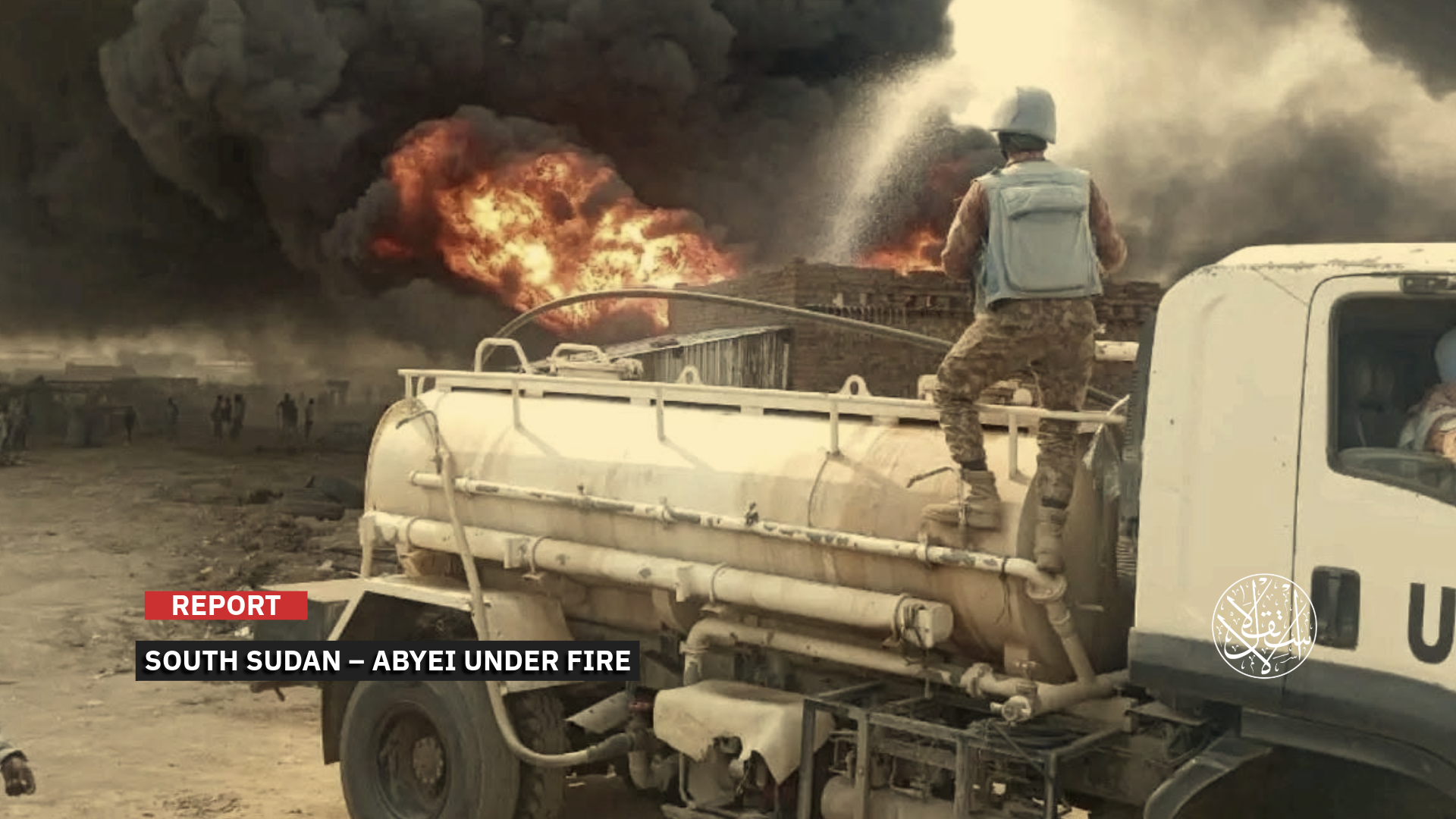
The attack was described as one of the deadliest incidents in Abyei's history.
Awad Osham al-Amin fled the hell of the war in Sudan in search of safety and work. But the war followed him to the Amiet market in the disputed Abyei region, where shrapnel from a drone strike wounded him in the hand and leg.
The strike on the market was no passing incident. It revealed how the fire of Sudan's war now threatens to drag South Sudan into the heart of the conflict, after spreading to a region where border disputes, tribal calculations and oil interests are tightly intertwined.
Juba finds itself forced to deal with both sides of the war to protect its oil facilities and keep its exports flowing. Meanwhile, the mutual accusations over the bombing of Abyei confront it with a highly complex equation: how can it protect its borders and interests without sliding into a wider military confrontation?
Who Protects the Ostrich Market?
Three weeks before the strike, representatives of the Misseriya and the Ngok Dinka sat down to agree on reopening the Amiet market, known as the al-Naam (Ostrich) Market.
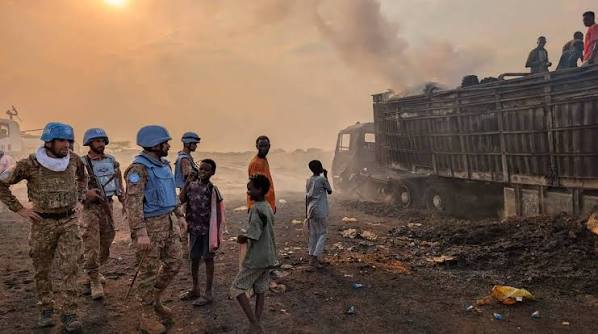
Fighting at the market in mid-September 2026 had left people dead and wounded. The two sides agreed that it would be protected by community police and young men from both communities, together with the United Nations Interim Security Force for Abyei (UNISFA).
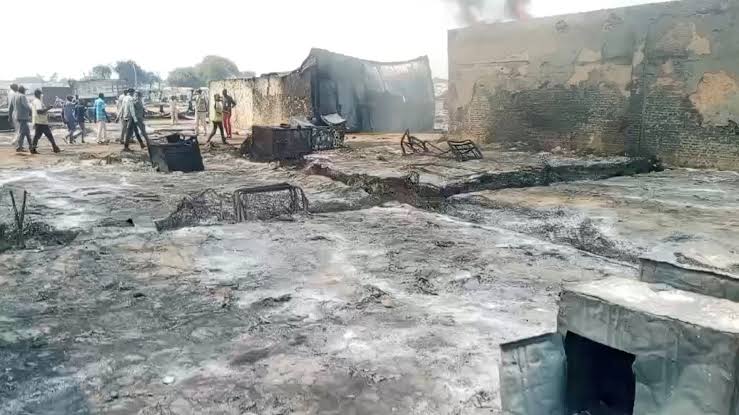
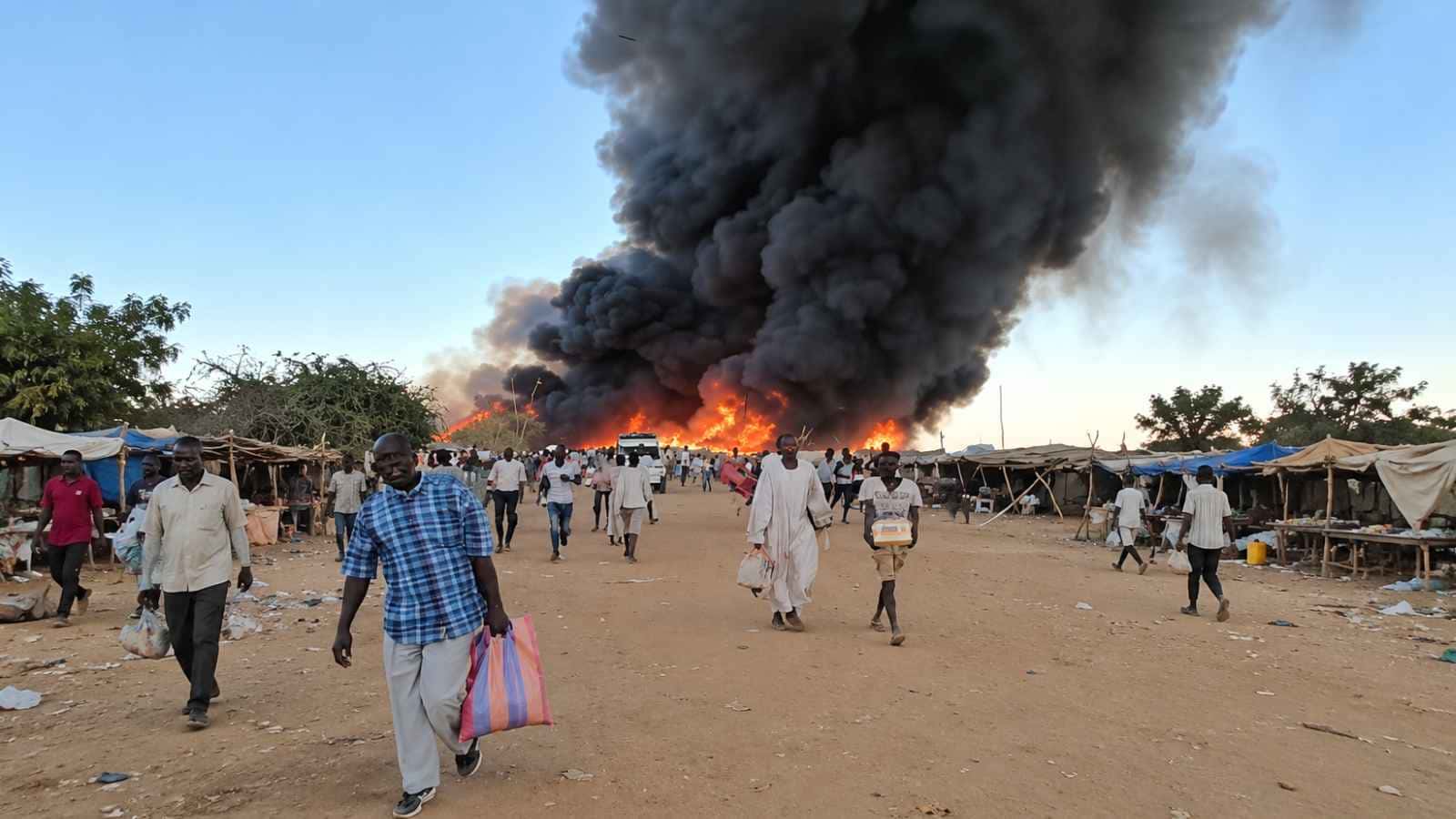
The agreement set October 10 as the date from which weapons and military vehicles would be banned from the market. Nine days after the ban took effect, the fuel market went up in flames.
The UN force quoted one of its field officers as saying he first thought the initial explosion was a tanker catching fire in the fuel market, before it became clear that the area was being hit by drones. The market was established in 2016 under an agreement that allowed members of two communities disputing the land to trade goods there.
When war broke out between the Sudanese army and the Rapid Support Forces (RSF) militia in April 2023, people fleeing the fighting came to the market looking for work, and demand for fuel rose. A 2025 UN review estimated that the population of the market and its surroundings had grown from about 10,000 before the war to nearly 50,000.
Diplomatic and humanitarian sources told Reuters that the strike hit a fuel depot, and the agency's sources said the RSF militia was likely benefiting from the fuel trade at the market. South Sudan's government accused the Sudanese army of carrying out the strike, and Sudan's Foreign Ministry denied that its forces were involved.
Days later, the spokeswoman for South Sudan's Foreign Ministry said the circumstances of the attack and its connection to the presence of RSF militia elements were still being verified. Dozens of civilians, including women and children, were killed in the strikes.
Before the Security Council on November 5, UN Special Envoy for the Horn of Africa Guang Cong called for an independent investigation to establish responsibility for an attack he described as one of the deadliest incidents in Abyei's history.
Who Does Abyei Belong To?
About 15 kilometers separate the strike sites near Amiet and Todach from the town of Abyei, the administrative center of the disputed region and the headquarters of UNISFA.
The region covers more than 10,000 square kilometers. Misseriya herders cross it in search of water and pasture in the dry season, and it is home to the Ngok Dinka, whose families combine farming and cattle-raising.
The dispute over who owns this land dates back to 1905, when the colonial administration transferred the nine Ngok Dinka chiefdoms from Bahr el-Ghazal to Kordofan.
When the Sudanese government and the Sudan People's Liberation Movement negotiated an end to the war between north and south, they signed the Abyei Protocol in 2004, which was incorporated into the Comprehensive Peace Agreement in 2005.
The protocol recognized the land's link to those chiefdoms and preserved the traditional right of the Misseriya and other herders to move and graze in the area. It also allowed its residents to choose in a referendum between remaining with the north and joining the south.
When southerners voted for independence in 2011, the Abyei referendum remained suspended because the two sides disagreed over who met the residency requirement and was entitled to vote.
In May 2011, the Sudanese army took control of the town of Abyei, and by June 7 the UN estimated that about 100,000 people had fled the area.
That same month, the Security Council created the peacekeeping force after a demilitarization agreement was reached. Two years later, the Ngok Dinka held a local referendum in which participants chose to join South Sudan, a unilateral step the African Union condemned.
The administration of the area, the residency requirement, and political representation have remained in dispute between Khartoum and Juba, even when local leaders managed to agree on schedules for cattle crossings. Under-Secretary-General for Peace Operations Jean-Pierre Lacroix told the Council that the migration season had ended without any related deaths.
Where Do Those Fleeing Go?
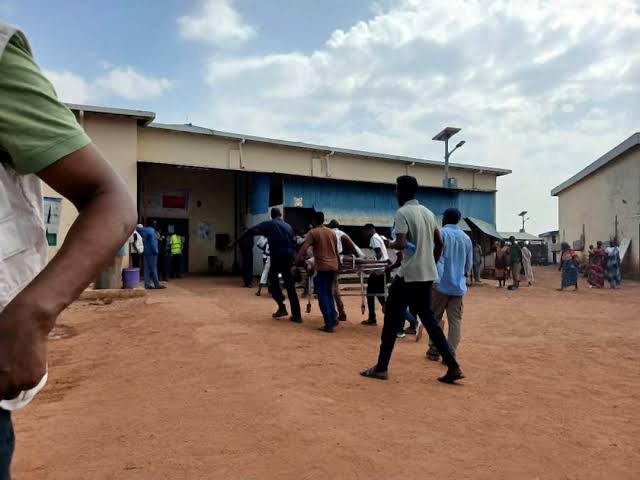
At Ameth Bek Hospital in the town of Abyei, doctors from the Health Ministry and Doctors Without Borders received more than 20 wounded after the October strikes, including people with burns. The hospital also has a connection to an earlier displacement that predates Sudan's war.
In 2022, violence drove residents of the town of Agok, about 65 kilometers south of Abyei town, to seek refuge in Abyei, while others headed to Twic County in South Sudan's Warrap State.
At the time, the organization moved part of its work from Agok to Abyei, where it supported the surgery, obstetrics and blood transfusion departments. After the Amiet attack, peacekeepers gave first aid to the wounded in Todach and transported others for treatment.
On November 10, the UN Office for the Coordination of Humanitarian Affairs published an estimate that more than 3,700 people had been displaced from Amiet to Dokura after the strikes.
The Abyei administration's information official had earlier spoken of families who took refuge in the town and its surroundings, some of them sheltering under trees.
On the road to South Sudan, the UN counted more than 50,000 people crossing through Abyei as of November 5, among them South Sudanese returning from Sudan, Sudanese refugees and other asylum seekers.
The count of those crossing goes back to before the strike on the market. Some of those who have fled the war since it began found shelter with families in northern and southern Abyei.
They are being hosted by communities that have lost part of their crops and livestock to drought, at a time when funding shortfalls have limited aid groups' ability to provide shelter, food and treatment.
South Sudan itself lacks the resources needed to help its own population and receive those arriving across its borders. The head of the UN mission in South Sudan told the Security Council that about 10 million people in the country need humanitarian assistance.
Why Did Juba Send Its Troops?
When the RSF militia took control of Heglig in December 2025, Juba announced it was sending troops to guard the oil facilities. South Sudan's crude is processed in Heglig before being transported across Sudanese territory to Port Sudan on the Red Sea.
Heglig lies outside the Abyei boundaries drawn by international arbitration in 2009, while the Diffra field remained inside them. In Juba, army chief of staff General Paul Nang explained that President Salva Kiir had agreed with Abdel Fattah al-Burhan, head of the Sovereignty Council and commander of the Sudanese army, and with RSF militia leader Mohamed Hamdan Dagalo to protect the facilities. This came after Sudanese forces and workers withdrew from the site for fear that the fighting would damage it.
Nang announced at the time that South Sudanese forces had taken over guarding the site, while some crude continued to flow through it in smaller quantities. After leaving the processing facility, the crude still has a long way to travel before it reaches the sea.
In September 2026, drone attacks hit a pipeline in South Kordofan State carrying South Sudan's oil. In his briefing on Abyei, Cong confirmed that the tripartite arrangements in Heglig were continuing.
He pointed to the strike on the pipeline as an example of the threats to exports beyond the facilities guarded by troops.
Juba has recent experience of export disruptions. In March 2025, the World Bank estimated lost export revenue at about $7 million a day during an earlier crisis that halted the pumping of crude, and documented its impact in delayed salaries and cuts to spending on health and education.
By January 2026, arrears in civil servants' salaries ranged from eight to 13 months, amid a liquidity crisis worsened by government spending decisions. Khartoum also has a financial interest in keeping its southern neighbor's oil exports flowing, since it collects fees for the crude passing through its territory on its way to the export terminals on the coast.
What Are the Limits of Involvement?
The presence of South Sudanese forces inside the Abyei region itself sparked a dispute before the Security Council over Juba's right to deploy troops south of the Kiir River.
UNISFA observed RSF militia elements in northern Abyei and South Sudanese forces in its south, and considered both a violation of the security arrangements.
At the November 5 session, Juba's representative objected to the description of his country's forces deployed south of the river. He said their limited presence had helped protect residents after the events of 2022.
Another dispute arose over South Sudan's electoral commission's decision to include Abyei among the constituencies for the general elections scheduled for December 22.
Khartoum objected to the decision, considering it an infringement on the region's legal status, while Juba stood by the Ngok Dinka's right to representation.
Cong noted that the dispute over constituencies had increased tensions between the Ngok Dinka and the Twic Dinka. The UN mission in South Sudan, meanwhile, warned that security arrangements and the organization of the vote need time that is running out as the date approaches.
Even so, the two governments have kept the door to negotiations open. In August, they resumed meetings of the Joint Political and Security Mechanism in Juba after a break that began in 2023.
The Abyei Joint Oversight Committee, however, has been stalled since 2017. The dispute over who represents the Sudanese side on it has deepened since the RSF appointed its own co-chair, a step the envoy said falls outside the signed agreements.
With UNISFA's mandate due to expire on November 15, Cong called on the two governments to preserve dialogue and maintain Abyei's demilitarized status.
So far, Juba's response to the bombing of the market has taken the form of a diplomatic protest and a demand for an investigation, while its forces in Heglig continue the guard mission it agreed on with both sides of Sudan's war.