Israeli Occupation’s Gains and Iran’s Losses from Washington’s Ouster of Venezuela’s President
“Israel” welcomed the move openly, linking it directly to Iran.
The sudden U.S. aggression on Venezuela and the kidnapping of its president, Nicolas Maduro, in early January 2026, sent shockwaves across the region, revealing sharply contrasting reactions from Iran and the Israeli Occupation. While “Israel” welcomed the move openly, linking it directly to Iran, the development dealt a heavy blow to Tehran, which lost one of its most prominent strategic allies in Latin America.
Israeli Gains
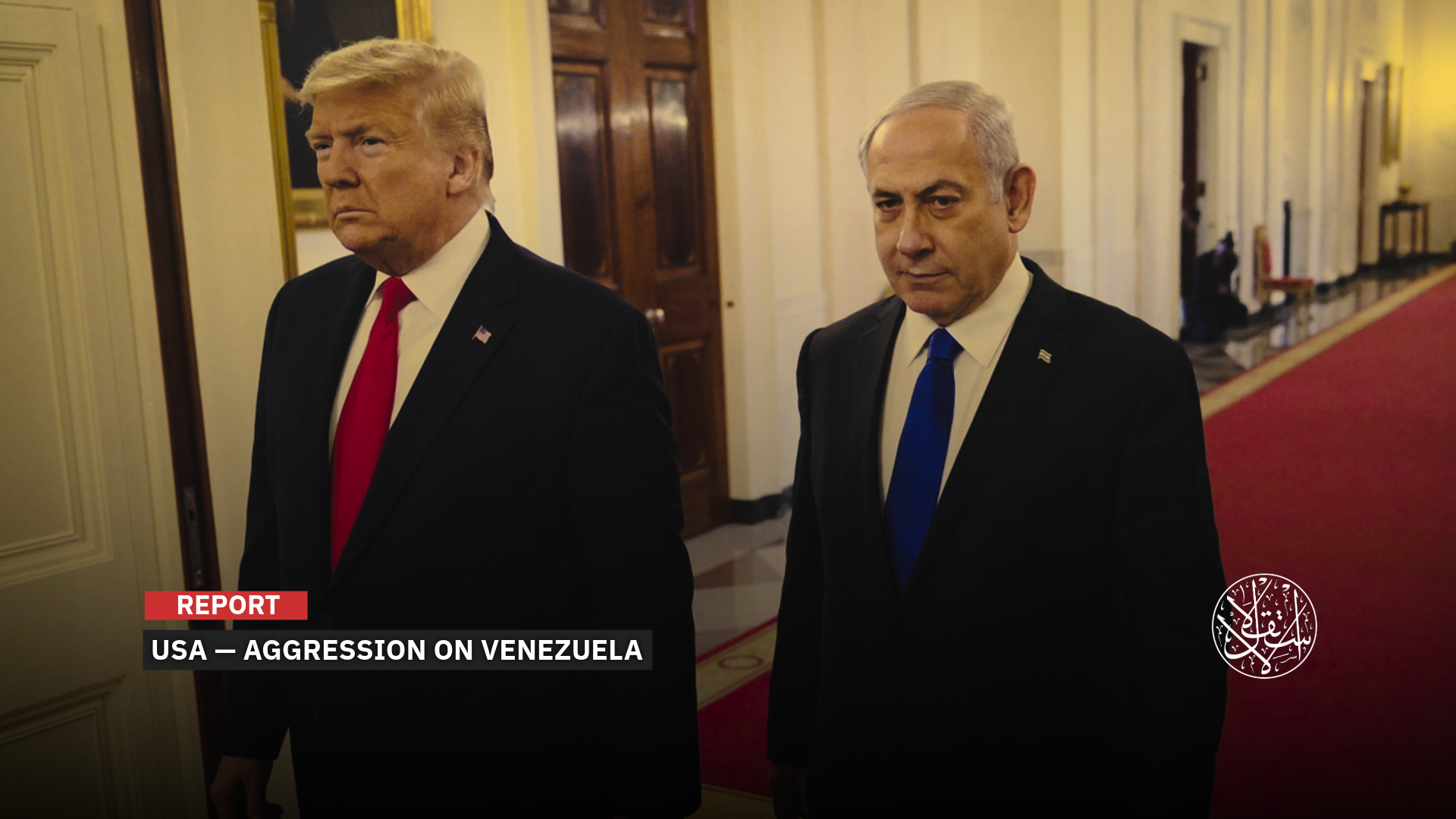
The Israeli Occupation was quick to voice its public approval of the U.S. aggression on Venezuela and the kidnapping of President Nicolas Maduro. Prime Minister Benjamin Netanyahu congratulated President Donald Trump for what he called his “bold and historic leadership” in defense of freedom and justice, signaling “Tel Aviv’s” full alignment with U.S. use of force beyond any international mandate.
Foreign Minister Gideon Sa’ar described Maduro’s removal as the end of a “dictator” who led a network of drugs and terrorism, expressing hope for a “new dawn” in “Israel”-Venezuela relations, reflecting “Israel’s” effort to reassert influence in Latin America. Diaspora Minister Amichai Chikli went further, calling Maduro’s kidnapping a direct strike against the “global axis of evil” and a pointed message to Iran’s Supreme Leader Ali Khamenei, claiming “the Venezuelan regime” was not “a state” but a “criminal empire” funding Hezbollah and Iran.
Opposition leader Yair Lapid also weighed in, suggesting that what happened in Venezuela should be closely noted in Tehran, implying the scenario could be repeated against Iran. The praise was not limited to officials; Hebrew media framed the U.S. aggression as a reinforcement of “hard deterrence” outside international legal frameworks, consistent with “Israel’s” security doctrine of pre-emptive attacks and imposing realities by force.
Military analyst Ron Ben-Yishai in Yedioth Ahronoth said what happened gave U.S. deterrence a massive boost, directly benefiting “Israel” as Washington’s “closest ally,” and sent a clear signal to Iran that Trump’s threats were serious, not just political rhetoric. According to Ben-Yishai, Tehran has to curb its nuclear stance or risk a direct U.S. strike, potentially with Israeli involvement, leading some officials to openly hope Iran could be “the next target,” coinciding with Netanyahu’s visit to Washington.
Israel Hayom reported that “Tel Aviv” decision-makers viewed the U.S. aggression on Venezuela as a deterrent model applicable to Iran and its allies, chiefly Hezbollah. Hebrew media noted that U.S. use of force outside international oversight serves “Israel’s” interests, implicitly greenlighting expanded military freedom without serious fear of legal prosecution or diplomatic pressure.
This sense of Israeli relief is further bolstered by the removal of a Venezuelan regime long seen as hostile. Caracas severed ties with “Tel Aviv” in 2009 in solidarity with the Palestinians under Hugo Chavez, a posture that persisted under Nicolas Maduro, who openly assailed “Israel” in international forums and welcomed Palestinian delegations.
Iran’s Losses
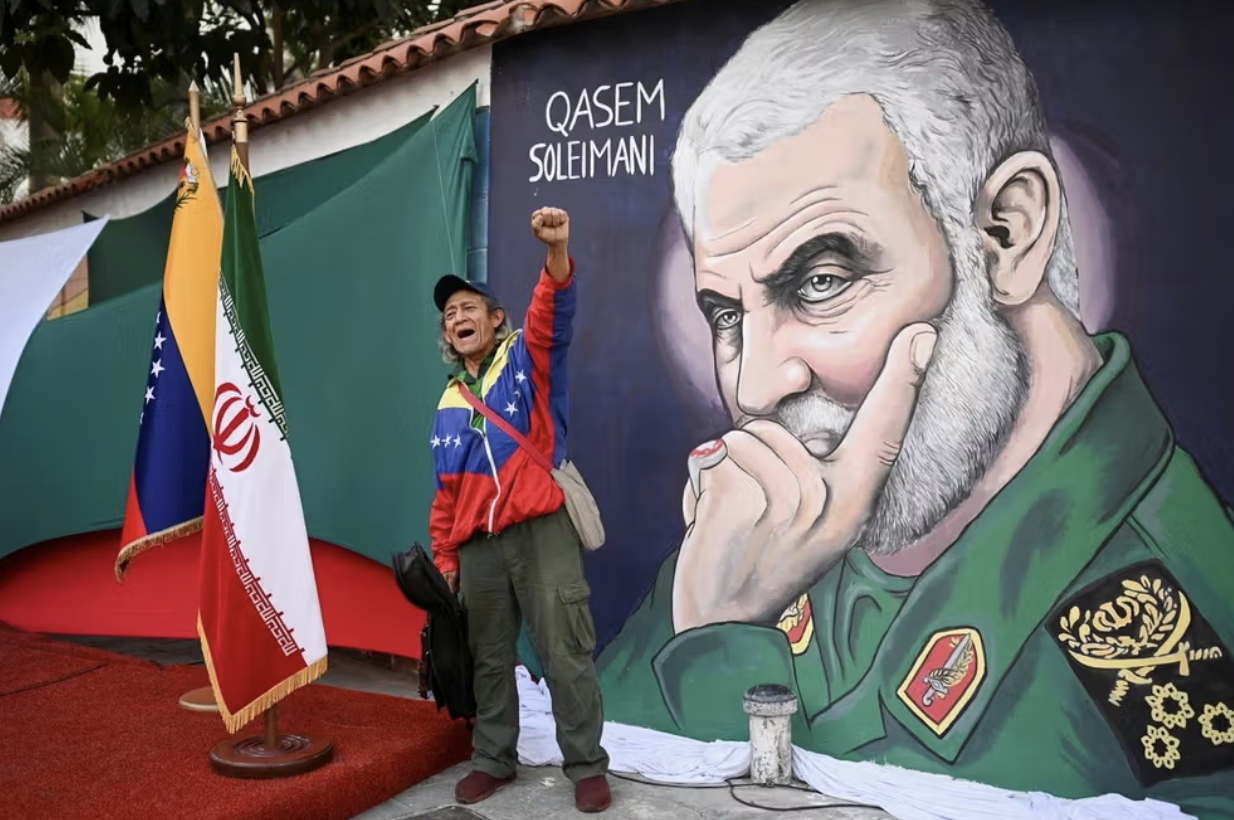
Iran’s Foreign Ministry strongly condemned what it called the “U.S. aggression” against Venezuela, denouncing it as a blatant violation of sovereignty and a dangerous precedent in international relations. Tehran stressed that Venezuela was a long-standing strategic ally that, like Iran, had endured U.S. sanctions, and described President Donald Trump’s threats as “incitement to terrorism” and a continuation of maximum pressure policies.
For Iran, the kidnapping of Nicolas Maduro was a severe strategic blow, eliminating its last stronghold in the Western Hemisphere. Over two decades, Tehran and Caracas had built a close partnership aimed at challenging U.S. dominance and circumventing Western sanctions, collaborating in key sectors such as energy, with Iran supplying fuel and technical expertise to revive Venezuela’s oil facilities, alongside joint housing and industrial projects and barter arrangements exchanging oil for gold and goods.
Venezuela also served as a diplomatic and logistical platform for Iran within Washington’s backyard, aligning its international posture with Tehran and providing Iran a foothold to counter U.S. power in Latin America. According to The Times of Israel, “the fall of the Maduro regime, if Trump pursues such a goal, would rob the Iranian axis of its base in the Americas.”
“Such a development would reinforce perceptions of the gradual erosion of the Iran-Hezbollah axis’s global reach,” Daniel Wajner, an international relations lecturer and scholar at Hebrew University, told the Israeli newspaper.
Beyond politics, Iran faces economic losses. Reports, including from Iran International, estimate Tehran invested around $2 billion in Venezuelan development projects over the years, including a car assembly plant launched in 2007, housing programs exceeding 23,000 units, joint banks, and oil-logistics cooperation. Venezuela had effectively become an economic laboratory for Tehran to test methods of bypassing Western sanctions, some of which reportedly funded Iran’s regional activities. Outstanding Venezuelan debts to Iran, also estimated at $2 billion, now risk being lost amid the political chaos.
Intelligence losses compound Iran’s setback. Venezuela had served as an advanced base for Iranian security operations in the Western Hemisphere, according to The Times of Israel.
The outlet claimed that Iranian agencies, in coordination with Hezbollah, used Venezuelan territory to monitor U.S. and Israeli movements, leveraging a large pro-Hezbollah Lebanese community, direct flights, and front companies established under Maduro. The networks were also alleged to have facilitated drug and arms trafficking, a key funding source for Hezbollah, making the fall of Maduro’s regime a double blow for Tehran—politically and in intelligence terms.
Next Target
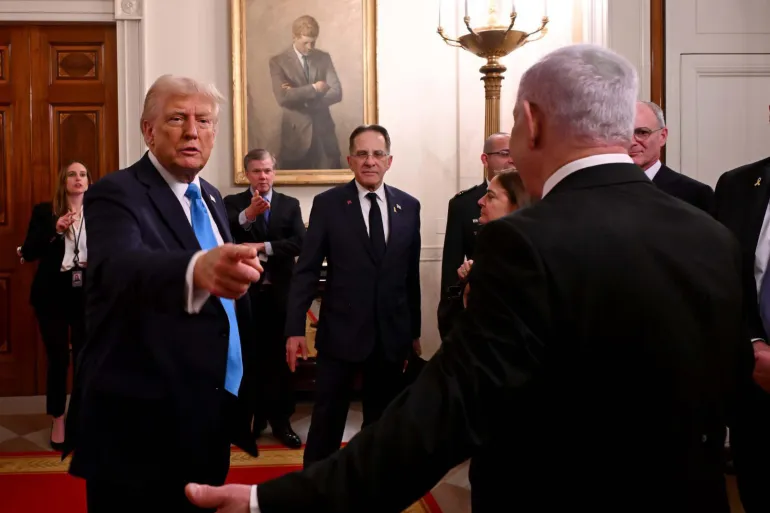
While “Israel” celebrates what it sees as “a sudden diplomatic and security victory,” Iran faces a pivotal moment, forced to reassess its external engagements and repair mounting losses before it too risks a “Venezuela scenario” on its own soil. In late December 2025, following a meeting between U.S. President Donald Trump and Israeli Occupation Prime Minister Benjamin Netanyahu in Florida, Trump made a striking statement indicating openness to backing a new swift Israeli aggression against Iran if Tehran continued advancing its nuclear and missile programs.
He said he hopes Iran is “not trying to build up again, because if they are, we're going to have no choice but very quickly to eradicate that buildup.”
Days after the U.S. aggression on Venezuela, Trump escalated his rhetoric, warning that Iran would get “hit very hard” by the United States if more protesters die during demonstrations that have been ongoing for more than two weeks, amid the sharp deterioration in living conditions.
According to Al-Monitor, Iran lost a long-standing ally with Maduro’s fall—one that had consistently challenged Washington and provided Tehran with political backing at the UN and other international forums.
Sources cited by the outlet said Tehran’s efforts to suppress anti-government protests have become more complicated under Trump’s public threats, whose credibility was reinforced by Washington’s kidnapping of Maduro.
Iranian officials reportedly fear their country could be “the next target,” amid mounting concern over a repeat of the aggression scenario Iran faced in June 2025.
Tehran’s room to maneuver has been narrowed by two converging pressures: Trump’s escalating threats and a chronic economic crisis worsened by the Israeli and American strikes on sensitive nuclear sites in June 2025, a 12-day war that destroyed key facilities.
“These twin pressures have narrowed Tehran’s room for maneuver, leaving leaders caught between public anger on the streets and hardening demands and threats from Washington, with few viable options and high risks on every path,” an Iranian official told Reuters.
Meanwhile, Iran’s economy continues to plummet under long-standing U.S. sanctions, with the rial collapsing further after the recent aggression, deepening public anger, and broadening protests.
The unrest strikes at the top priority of Supreme Leader Ali Khamenei, the government’s most entrenched concern for decades: ensuring the survival of the Islamic Republic at any cost. In a clear sign of leadership anxiety, Khamenei accused “enemies of the Islamic Republic” of stirring the protests, warning that “troublemakers must be put in their place,” reflecting a growing awareness that internal and external pressures are converging at a critical moment.
Sources
- Iran's leaders struggle to end protests, US action in Venezuela stokes fears
- Trump says he'd ‘absolutely’ back possible Israeli strikes on Iran
- What the fall of Maduro means for Venezuela's vast debt to Iran
- Lapid, Chikli: US arrest of Maduro a message to Iranian regime
- Iran's leaders struggle to end protests, US action in Venezuela stokes fears
- With Venezuela raid, Trump fires a message to Iran and Hamas. Will they listen?
- Russia, China, Iran, Israel: Trump’s 'Easy Prey' in the Backyard and the Global Implications [Hebrew]