Iran at a Crossroads: Unprecedented Internal Turmoil and Mounting External Pressure

“Pahlavi is attempting to position himself to step in as a transitional leader if the regime falls.”
The ongoing protests in Iranian cities are no longer a purely internal matter. They have become a focal point in a broader regional and international conflict, intertwined with the stakes of toppling the Khamenei regime, fears of regional conflagration, and US-Israeli deterrence calculations.
With Washington warning its citizens to leave Iran immediately and US President Donald Trump escalating his public threats, the crisis is entering a more dangerous phase. The Iranian street has become a bargaining chip, and perhaps a pretext, in an open conflict over the region's future.
These developments come amid the largest wave of anti-regime protests in years, coinciding with internet blackouts. Protesters view censorship as a direct threat to the security and quality of life of Iranians at a pivotal moment for the country's future.
In this context, any miscalculation could transform the crisis into an open regional confrontation, the price of which Iran will pay first, but whose repercussions will affect the entire region.
Deep Crisis
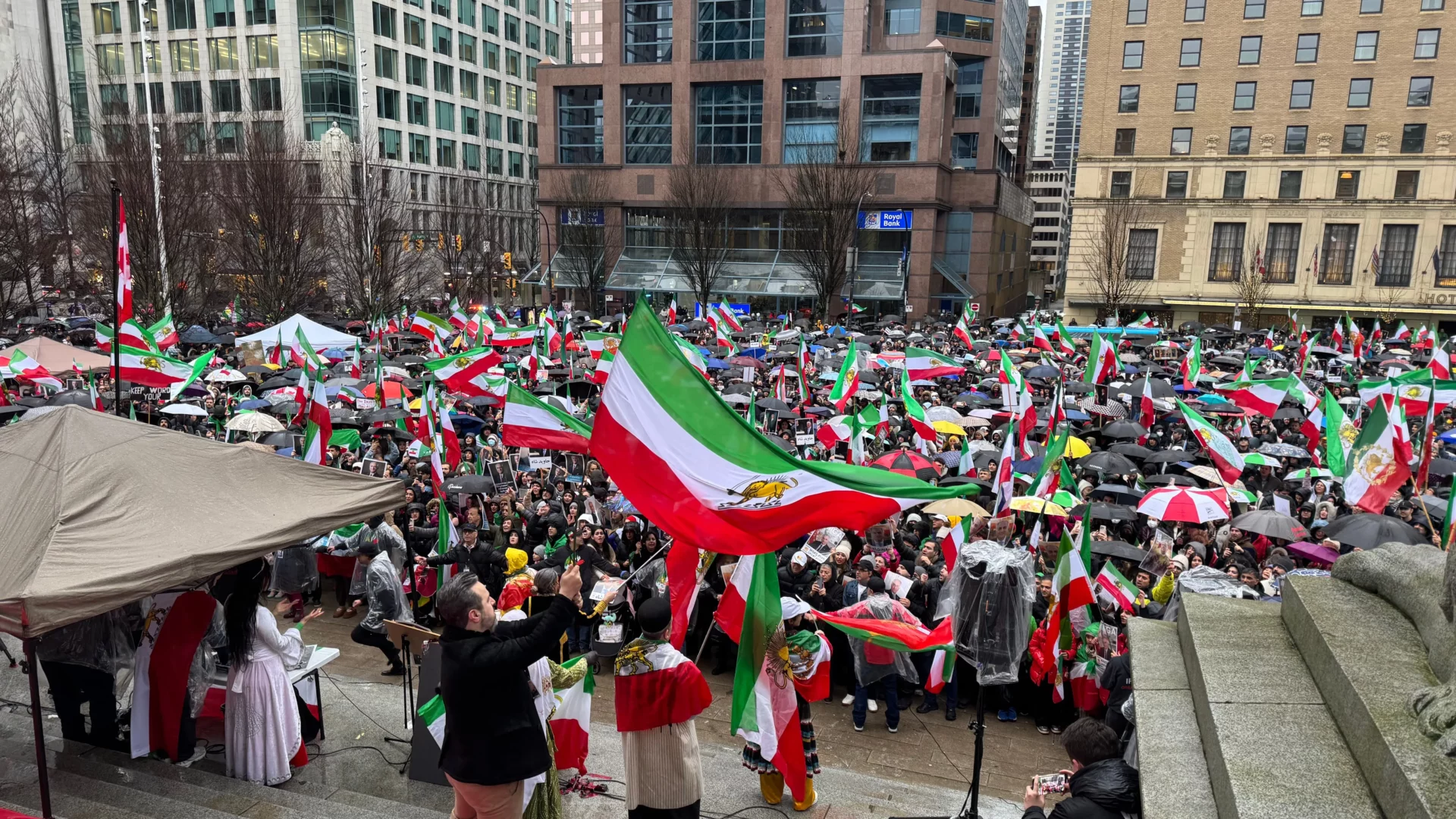
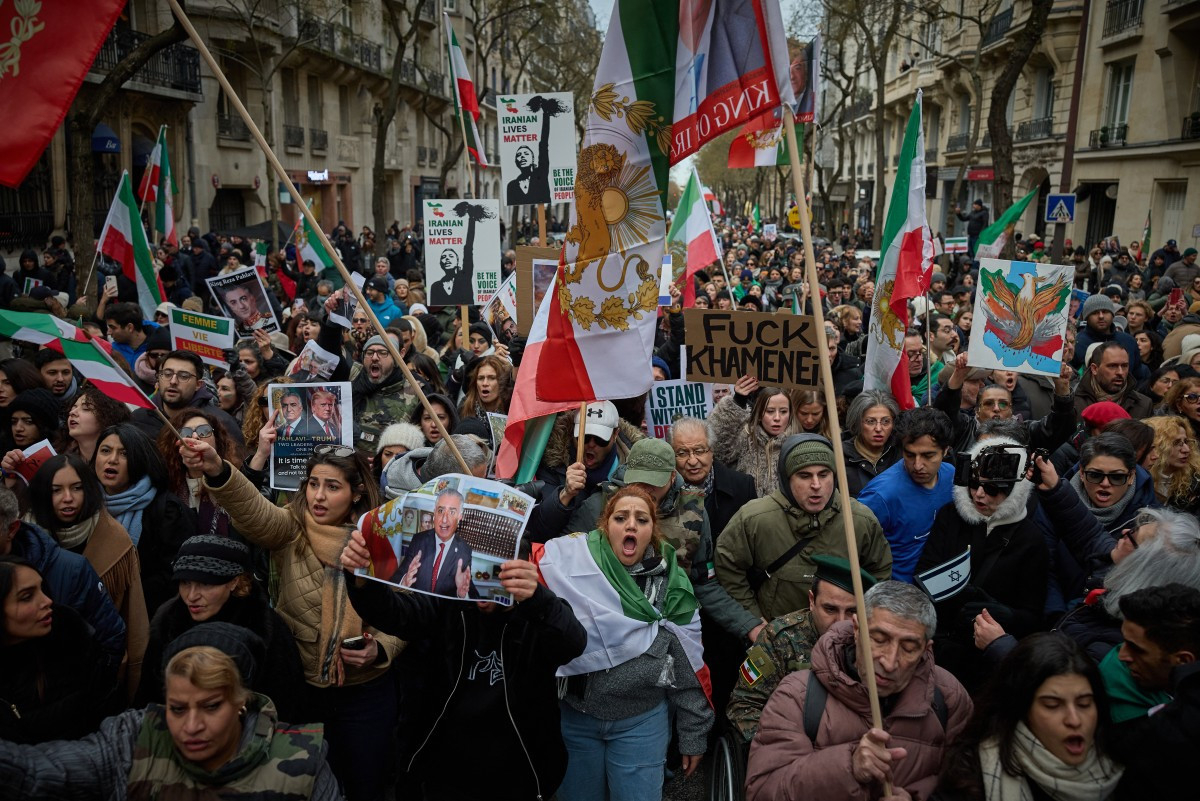
Iran is witnessing a new wave of popular protests in several cities, reflecting the depth of the economic, social, and political crisis gripping the country and revealing the continuing trust deficit between the public and the authorities.
These movements began with immediate demands for improved living conditions, but quickly transformed into an open space for expressing broader demands related to civil rights and public freedoms—a scene that has become all too familiar in the history of Iranian protests in recent years.
The sharp rise in food prices and the cost of living, coupled with widespread unemployment and declining purchasing power, has exacerbated the suffering of large segments of society, particularly young people.
The economic crisis has been accompanied by severe social and cultural restrictions, strict control over lifestyles, and a continuous curtailment of civil liberties.
This reality has driven thousands of citizens to the streets, expressing a growing sense of helplessness and hopelessness.
Protesters say they can no longer meet their basic needs and see no clear prospect for a better future for themselves or their children under economic policies they deem unfair and ineffective.
These protests reveal that the demands of the Iranian street are no longer limited to improving living conditions, but extend to fundamental changes in the style of governance, respect for civil rights, and an end to repression.
Human rights organizations indicate that at least 3,428 protesters have been killed and approximately 10,000 arrested, amid fears that the true number is much higher given the near-total internet blackout.
In response to this situation, the Iranian authorities resorted to organizing massive pro-regime demonstrations, attended by thousands in Tehran and other cities, including President Masoud Pezeshkian.
Supreme Leader Ali Khamenei praised these demonstrations, claiming they thwarted the enemies' plans and issuing a direct warning to the United States.
In another context, the French newspaper Le Monde pointed out that the fragility of the Iranian regime is no longer confined to the domestic sphere, but is now directly linked to its regional and international behavior, as the escalating repression in Iran increases the likelihood of external escalation.
It explained that the ongoing Iranian protests are not a passing phenomenon or a foreign conspiracy, as the authorities claim, but rather an internal social expression of chronic failures in governance.
It warned that this approach could push the protests toward more radical paths, instead of containing them.
Le Monde outlined three options for the Iranian regime, noting that the first is radical political, economic, and social reform, but this could open the door to sharp divisions within the institutions of power.
The second option is maintaining the status quo by exhausting the protesters and buying time with limited economic promises, a scenario the newspaper considers unlikely.
The third option, which is currently in place, is escalating repression in Iran as the only means of survival.
External Pressure
The relationship between the U.S. and Iran is entering a highly dangerous phase, where economic and military pressures intersect with unprecedented internal protests.
In parallel with the economic escalation, leaks from the Pentagon confirm that President Trump has been briefed on a wide range of military and covert options for dealing with Iran.
These options include long-range missile strikes, the use of air power, as well as cyber operations and psychological campaigns targeting the command and communication structures within the Iranian regime.
American press reports indicate that a number of senior officials, including Vice President JD Vance, urge giving diplomacy one last chance before sliding into direct military action.
In contrast, other reports indicate that the US military has warned of the need to recalibrate troop deployments and prepare defensive systems before any strikes, fearing a potential Iranian response that could further complicate the situation.
The New York Times emphasized that any military action must be carefully considered to avoid bolstering popular support for the regime in Tehran, while also taking into account the possibility of an Iranian response involving missile launches or attacks on Western and Israeli interests in the region.
Most dangerous in this context was Trump's public appeal to Iranian protesters on January 13, urging them to storm government institutions and continue their protests, with a vague promise that aid was on the way.
This rhetoric goes beyond political support or human rights condemnation; it constitutes direct incitement, further emboldening Iranian security forces in their crackdown on protesters.
In a related context, the Trump administration imposed tariffs of 25% on any country that continues to trade with Iran, in a move aimed at tightening the economic isolation of Tehran and putting pressure on its allies and trading partners.
According to a senior US official, a recent meeting between Trump administration officials and Iranian opposition figures marked the first high-level contact since the protests began.
This meeting, according to the US perspective, reflects an attempt by Reza Pahlavi, the son of the last Shah of Iran, to position himself as a potential transitional option should the Khamenei regime collapse.
In turn, the Israeli army announced that it had conducted comprehensive security assessments to monitor the protests in Iran and their regional repercussions, affirming its full readiness to deal with all eventualities.
In this context, Prime Minister Benjamin Netanyahu stated that Israel supports the Iranian protesters, expressing his hope for Iran's liberation from authoritarian rule and the opening of a new chapter of positive relations in the future.
Netanyahu emphasized that the fall of the Khamenei regime could pave the way for potential cooperation with the Iranian people to achieve stability in the region.
The Wall Street Journal reported that the Gulf states, led by Saudi Arabia, are pressuring the Trump administration not to launch an attack on Iran following its recent series of threats.
Gulf officials said that Saudi Arabia, Oman, and Qatar informed the White House that any attempt to overthrow the Iranian regime would destabilize oil markets and ultimately harm the US economy.
The Arab states fear that airstrikes on Iran could disrupt oil tanker traffic through the Strait of Hormuz.
In this context, Reuters quoted a senior Iranian official as saying that Tehran warned countries in the region that it would bomb US military bases in those countries if it were attacked by the United States.
Radical Transformation
Iran is experiencing one of the most sensitive periods in its modern political history, amid escalating discussions within Western and regional think tanks about the future of the ruling regime and the repercussions of any potential radical transformation on neighboring countries.
According to a report published by The National Interest on January 9, the assumption of the end of the Islamic Republic is not limited to an internal change in the structure of government, but opens the door to a series of security and political challenges whose effects could extend to the entire region, from Central Asia to the Persian Gulf.
The report began with the premise that the Iranian regime is facing mounting pressures due to crippling economic crises, declining political legitimacy, and persistent social tensions, making the scenario of collapse or radical transformation a possibility within strategic analysis circles.
It raised concerns about the potential for internal disintegration, especially given that Iran is a multi-ethnic and multi-religious country, encompassing Kurds, Baloch, Arabs, and Azeris, in addition to Persians.
If the current regime falls, Iran’s complex demographic communities may seize the moment to demand autonomy, or even independence.
A weakened Iran could embolden Kurdish demands across borders, raising tensions in Turkiye’s southeast and along its frontier with Iran.
The Baluch population spans both Iran and Pakistan, and regime change in Tehran could energize Baluch nationalism.
The potential repercussions are not limited to the security dimension alone, but extend to political and economic considerations.
According to another report published by Iran International on June 23, the post-regime era—if it occurs—could be characterized by a complex political vacuum, given the lack of a clear consensus among Iranian opposition forces regarding an alternative form of government.
“This vacuum could open the door to internal power struggles or external interventions seeking to protect their interests within Iran, particularly in vital sectors such as energy and infrastructure,” the report stated.
It is worth noting that any major shift in Tehran could redraw the map of influence in the Middle East, especially since Iran has played a prominent regional role over the past decades, from Iraq and Syria to Lebanon and Yemen.
The Gulf states are heavily involved in this debate. While some Gulf policymakers may see a weakened Iran as an opportunity to reduce security threats, a National Interest report warned that potential chaos could be more costly than maintaining a weak but stable regime.
Unrest could lead to waves of refugees, threaten navigation in the Strait of Hormuz, or escalate the activities of undisciplined armed groups on the Gulf's shores.
In a related context, the National Interest report pointed out that Russia and China will not stand idly by if Iran is destabilized. Both countries have strategic investments and long-term agreements with Tehran.
Moscow and Beijing view Iran as a crucial bulwark against Western influence. Consequently, any scenario involving the collapse of the regime could prompt Moscow and Beijing to reposition themselves politically, economically, and militarily to protect their interests.
Iran has been central to Beijing’s Belt and Road strategy and its broader effort to secure energy routes and regional leverage.
These reports indicated that the question of the future of the Islamic Republic is not only a concern for Iranians, but also a regional and international issue par excellence.
Any radical transformation of its political regime, whether through a sudden collapse or a complex transfer of power, will have repercussions that extend beyond its borders, forcing neighboring countries to carefully analyze the situation, given its pivotal role in the balance of power in the Middle East.
Political analyst Iyad Sukarie told Al-Estiklal that developments in Iran suggest the protests are being exploited as a testing ground for foreign intervention.
“The United States and Israel are closely monitoring the situation to assess the possibility of launching a military strike against the Iranian regime,” he noted.
“Any such move could transform the internal protests into a pretext for military escalation, threatening Iran's stability and increasing the risk of the region sliding into a wider confrontation. It could also open the door to repercussions that might exacerbate existing conflicts in the Middle East,” he added.
He believed that the scenario of overthrowing Khamenei’s regime through direct military intervention was unlikely, but he suggested that any pressure or strikes might push Iran to change its behavior and make concessions.
Sources
- Trump's envoy secretly met Iran's exiled crown prince
- Common misconceptions about Iran. A power on its last legs?
- Iran’s Gulf Rivals Warn U.S. Against Strike on Tehran
- How the End of the Islamic Republic of Iran Would Challenge Its Neighbors
- White House Weighs Iran’s Nuclear-Talks Offer as Trump Leans Toward Strikes