Inside the Syria-’Israel’ Deal in Paris: Border Security or Normalization?
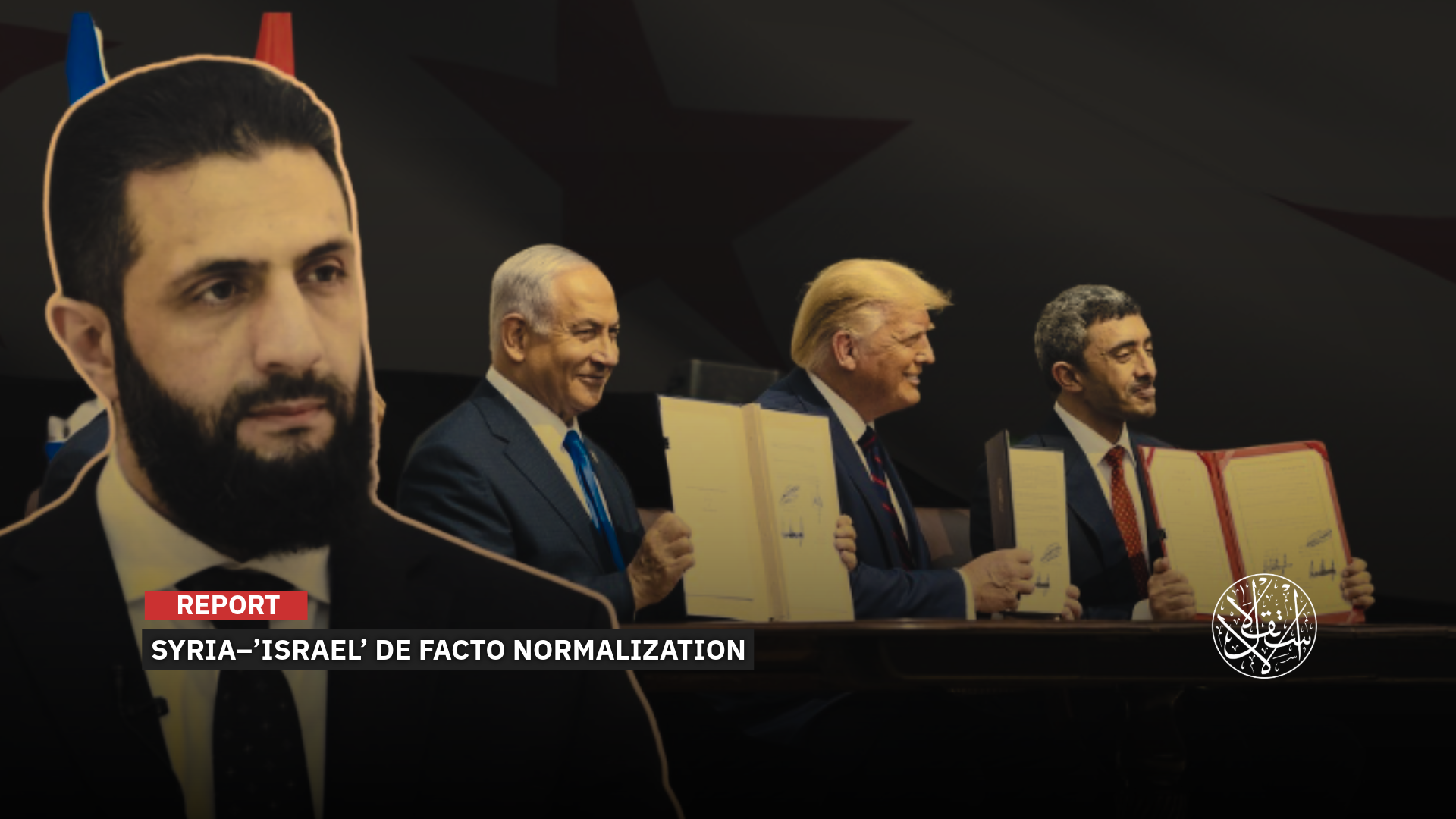
“But it seems the Trump administration and the Syrian government are after something more intimate.”
For the first time since the October 1973 war, Syria, the United States and “Israel” announced in a joint statement on January 6, 2026, that they had reached an agreement to establish a “joint coordination mechanism,” a move some observers described as normalization, while others insisted it was merely a security cell.
According to the joint statement published by the U.S. State Department, the mechanism is a “permanent liaison cell for exchanging intelligence, reducing military escalation, enhancing diplomatic communication, and discussing commercial issues, under U.S. supervision.”
Since the start of talks with the United States and “Israel,” Syrian statements have stressed that the objective is to halt ongoing Israeli attacks and to reactivate the 1974 Disengagement of Forces Agreement, which “Israel” has continued to violate since the fall of the regime in December 2024.
However, the statement’s reference to issues beyond what it described as “permanent arrangements for security and stability for both countries,” including “commercial opportunities,” along with reports in Israeli newspapers detailing cooperation in areas such as medicine, energy, and agriculture, have raised questions about whether the agreement is purely security-related or amounts to a step toward normalizing relations.

Any Hidden Provisions?
According to the statement, “the parties decided to establish a joint integration mechanism, a dedicated liaison cell, to facilitate immediate and continuous coordination regarding the exchange of intelligence information, military de-escalation, diplomatic engagement, and commercial opportunities, under the supervision of the United States.”
The mechanism is intended to serve as a platform to address any disputes swiftly and to work to prevent misunderstandings.
The United States will oversee the new mechanism and will be responsible for addressing any disagreements immediately to prevent escalation.
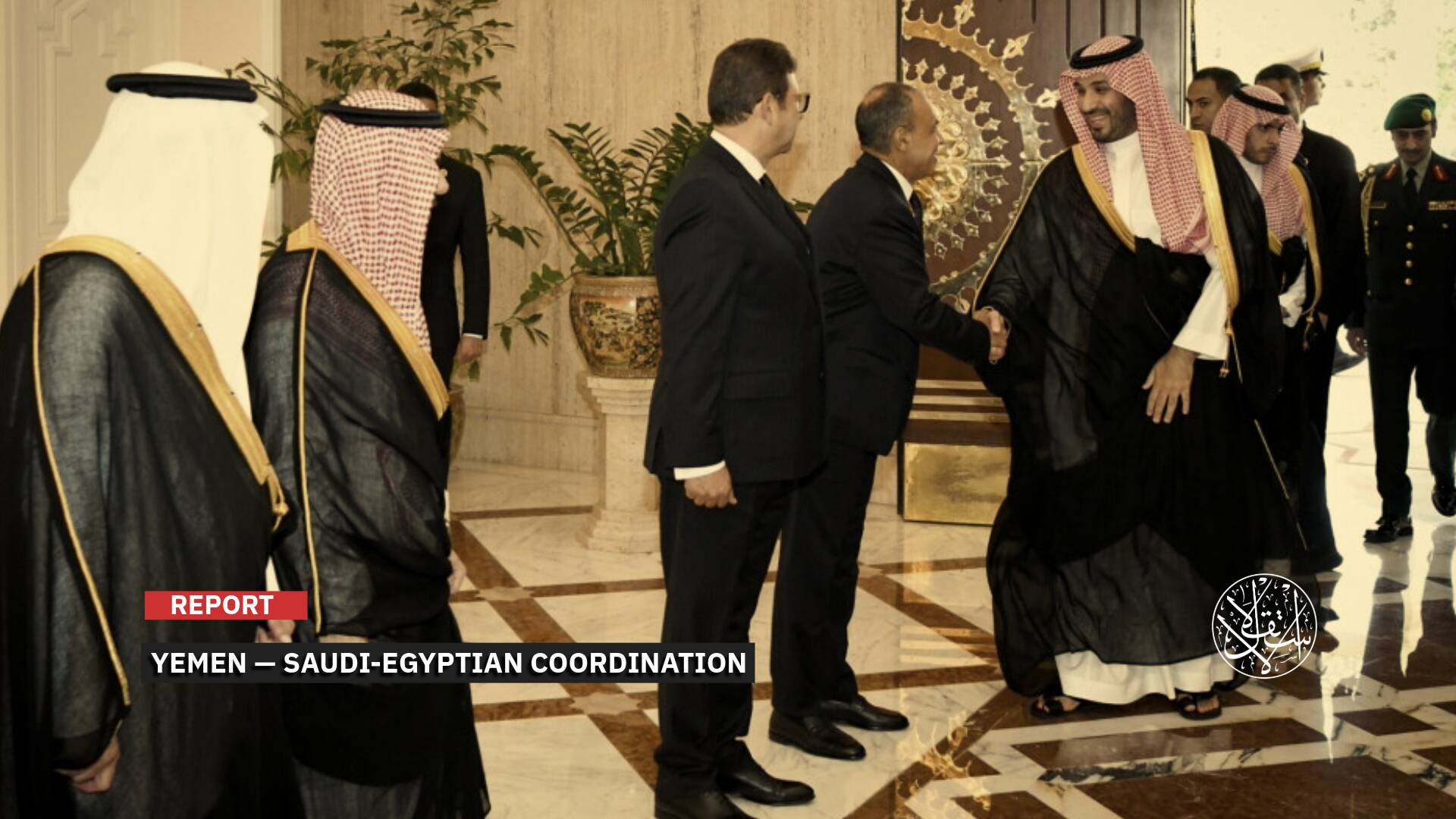
According to the statement, the Israeli delegation included its ambassador to Washington, Yechiel Leiter, the prime minister’s military secretary, Roman Gofman, and the acting head of the National Security Council, Gil Reich. Syria was represented by Foreign Minister Asaad al-Shaibani and intelligence chief Hussein Salama.
The American team included envoy Steve Witkoff, Jared Kushner, and Tom Barrack, the U.S. envoy to Syria.
However, Hebrew-language newspapers reported on provisions that were not included in the text of the statement, while Syria published no details about the agreement, raising questions about whether there are secret clauses or whether these are Israeli claims intended to impose a particular narrative.
The Jerusalem Post claimed on January 6 that, in addition to the “integration mechanism,” the Israeli and Syrian sides had agreed to launch talks in civilian fields, including medicine, energy, and agriculture, without specifying a timeline for implementation.
Channel 12 correspondent Amit Segal also said the discussions revolved around what he described as a “U.S. proposal to achieve economic peace between Israel and Syria,” in other words, economic normalization.
He spoke of discussing “a new plan for economic cooperation with Syria,” namely a vast joint economic zone along the current demilitarized strip, including energy projects and pharmaceutical factories, and, most notably, a ski resort.
Segal claimed that, “According to the American-Syrian proposal, the zone would host a wind power plant, a crude oil pipeline, data centers, and pharmaceutical facilities—” adding that “and best of all, the area would remain demilitarized.”
The Israeli military correspondent wrote, “One would think that after Israel conducted thousands of strikes, and currently sitting on Syrian territory, security would remain the only topic worth negotiating,” claiming that “But it seems the Trump administration and the Syrian government are after something more intimate.”
He referred to “independent tax rules, relaxed visa requirements, arbitration mechanisms for financial disputes, maybe even a shared currency framework.”
“The plan offers quite a bit for Syria: roughly $4 billion in GDP growth—a 20 percent increase on its current output—along with an 800-megawatt boost in power capacity, 15,000 new jobs, and a 40 percent reduction in pharmaceutical dependency,” he added.
“Israel, for its part, gains the chance to transform an arid buffer zone into a “dynamic economic corridor,” while enjoying “reduced military spending” to protect its northern border.”
Segal posed the question, “will this whole deal really go through without Syria joining a certain Abrahamic accords?” meaning full normalization, and answered, “Unfortunately, yes.”
“From what I’ve seen, none of the draft documents make peace a formal condition of the plan. It may make peace more likely, but by no means guaranteed,” he added.
What Is Behind Syria’s Silence?
The Syrian government did not immediately issue a statement welcoming or rejecting the trilateral declaration in its full text, according to official Syrian statements available to the international press.
What has been reported so far has come from unofficial Syrian sources or from fragmented remarks by officials carried in the media, raising questions about the reason for the official silence on an issue of such importance and sensitivity.
Syrian state media said the discussions in Paris focused on reviving the 1974 Disengagement of Forces Agreement, which established a U.N.-supervised buffer zone between “Israel” and Syria following the 1973 Middle East war.
Informed Syrian sources told news agencies that the Paris talks also centered on halting Israeli military operations inside Syrian territory.
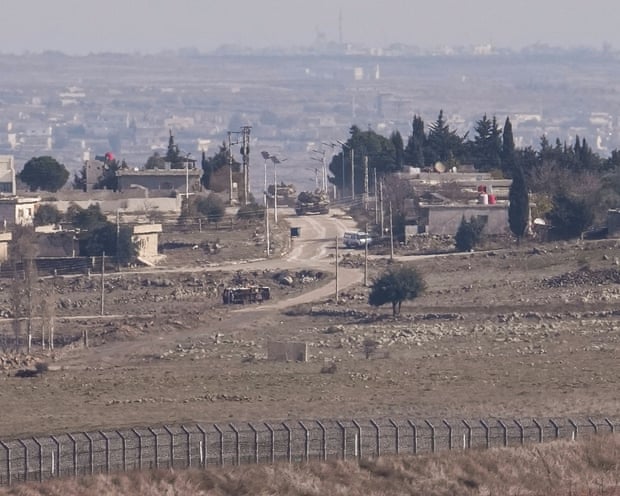
According to Reuters, “The Syrian official, speaking on condition of anonymity, said the latest round of talks with Israel in Paris, which took place on Monday and Tuesday, concluded with an initiative to suspend all Israeli military activities against Syria.”
“Israel” did not confirm its agreement to suspend military operations in Syria, and moved into southern Syria the day after the agreement was signed.
Netanyahu’s office said the discussions had focused on security issues and economic cooperation between “Israel” and Syria.
The Syrian official said it “would not be possible to move forward on strategic files in talks with Israel without a clear and binding timetable for the withdrawal of Israeli Occupation Forces from Syrian territory seized after the ouster of Bashar al-Assad in late 2024.”
Arab media outlets, including Al Jazeera English, quoted Syrian officials as stressing the need for a “clear timetable” for the withdrawal of Israeli Occupation Forces from occupied territory, particularly the Golan Heights, before moving toward broader political understandings. This position underscores Damascus’ insistence on linking any progress to tangible Israeli concessions.
Other sources say the Syrian government remains cautious and continues to adhere to its traditional position, rejecting any recognition of normal relations without the full restoration of Syrian sovereignty over its territory.
Analysts such as Yaseen Izeddeen argue that the most plausible justification for the agreement between Syria and “Israel” is that “the regime is trying to buy time and does not intend to implement the agreement, and the wording of the deal helps sustain that justification.”
Camp David 2
Syrian activist Maysa Kabbani, based in the United States, stated that the agreement reached in Paris, under Turkish and U.S. sponsorship, was for the establishment of a joint operations room based in Amman.
She said it would work over a three-month period to return Sweida to state authority in line with previous agreements between the governor and local community representatives.
She also referred to the creation of a “buffer zone to be economically invested,” meaning “the prevention of any military presence on both sides of the border, no forces, no heavy weapons, and no combat or security activity inside the zone.”
According to Kabbani, the area would be designated solely for trade, investment, industry, agriculture, transport, and infrastructure projects, without Israeli or Syrian army involvement, alongside Israeli security guarantees not to interfere in Syria’s internal affairs.
“This experience closely resembles what was agreed in the Camp David Accords regarding Sinai as a demilitarized zone, where military presence was and remains severely restricted to this day. In return, the path was opened to stability, tourism, and investment,” she added.
Kabbani, who is a member of the group “Make Syria Great Again,” said “Israel” had provided assurances that it would not intervene at all east of the Euphrates should the government attempt to reunify the country, pending what she described as the elimination of remnants along the coast and “the zero hour.”
This contrasts with a statement by Prime Minister Benjamin Netanyahu, who said that it had been agreed to “maintain the security of the Druze minority in Syria,” a point that did not appear in the U.S. State Department’s statement and that would grant “Israel” a basis for intervening in Syrian affairs.
Analyst Yasser al-Zaatreh argues that the U.S.-Syrian-Israeli statement is “catastrophic in every sense,” saying that judging it through the lens of politics does not point to “cleverness” so much as it reflects a “repetition of failed experiments” and a continuation of the path taken by the Oslo Authority and those who follow its model.
“The fundamental political question is always the same, how to balance interests and harms, and here no rational person can doubt that we are facing a catastrophic statement,” he said, adding that it will not put an end to what he described as Zionist and American recklessness, neither in Syria nor across the wider region.
He added that Israelis “shout day and night” that they will not withdraw their forces to the positions they held on the eve of the fall of Bashar al-Assad’s regime, insisting on supporting Druze separatists, maintaining contacts with some Alawites along the coast, and openly backing separatist tendencies within the Syrian Democratic Forces, a position he said the United States implicitly supports.
Economic Normalization
The outlines of the “integration mechanism” referenced in the statement between “Israel” and Syria suggest that it aligns with a plan previously revealed by U.S. newspapers and embraced by the Trump administration in the Middle East.
The plan is based on replacing tension and traditional peace agreements, or what is described as “political peace,” with what it calls “economic peace” in the region.
The U.S. news site Axios pointed to this plan early on, on December 7, when it reported, in the context of approving a gas deal with Egypt, that Washington was not only seeking to restore warmth to relations between Cairo and “Tel Aviv”, but also between “Israel” and Arab countries more broadly, through what it termed “economic diplomacy.”
The site said U.S. mediation between the head of the regime Abdel Fattah el-Sisi, and the Israeli Occupation's Prime Minister Benjamin Netanyahu was not aimed solely at arranging a private meeting between the two leaders, but was part of a broader normalization track between “Israel” and Arab states under the Trump plan and the Abraham Accords.
It added that Trump’s senior adviser and son-in-law, Jared Kushner, had focused during his recent meetings with Netanyahu on ideas for leveraging Israel’s economic expertise to entice Arab countries toward normalization.
Axios quoted a U.S. official as explaining that “Israel” should invest its technology and artificial intelligence sector, its natural gas resources, and its expertise in renewable energy and water as tools of its regional diplomacy.
This indicates that the United States is seeking to prioritize “economic incentives” in the fields of technology and energy between “Israel” and Arab states as a means of reintegrating “Israel” diplomatically into the region.
In effect, it amounts to advancing a new model of “economic diplomacy” for “Israel’s” engagement with the Arab world, with the aim of gradually and indirectly returning the Abraham Accords to the forefront.
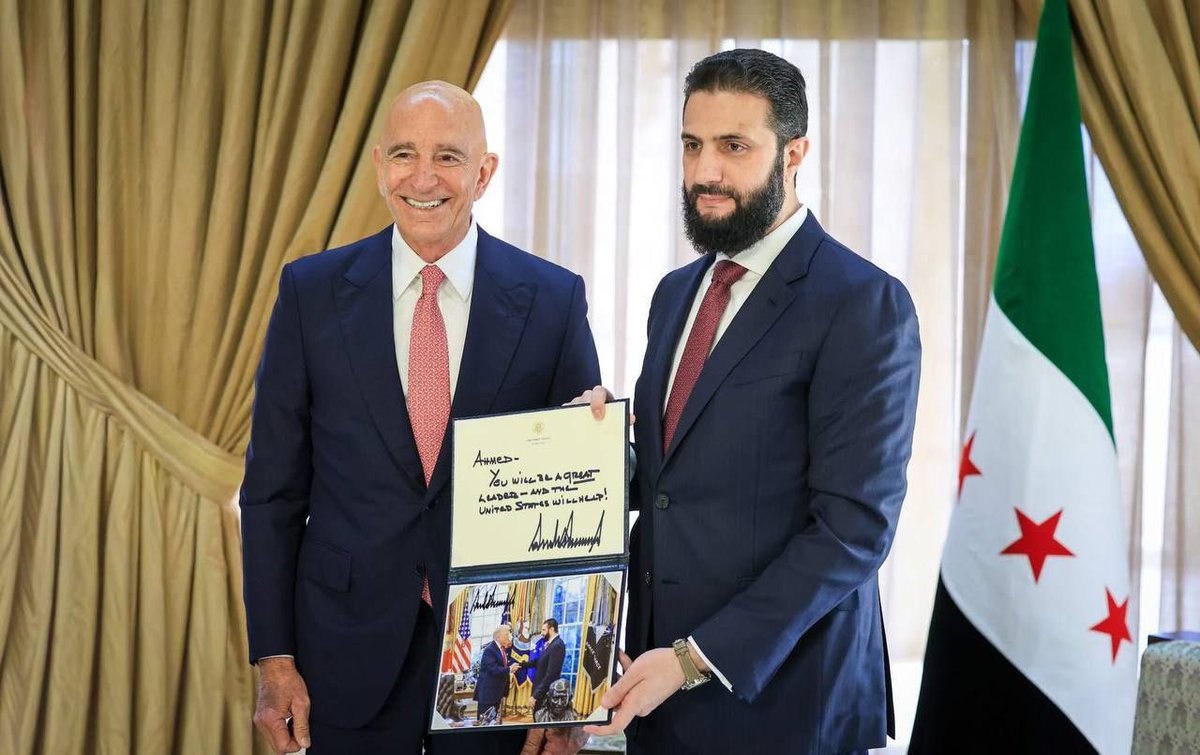
In other words, Washington is seeking to replace “political peace” in the region with “economic peace,” and to rebuild the Israeli-Arab alliance that collapsed as a result of the Gaza war, this time on economic foundations.
This amounts to providing a service to “Israel” by redrawing the map of alliances in the Middle East on the basis of economic and security interests with Arab states, after previous alliances unraveled under the impact of the Gaza war.
The Week magazine said in early November 2025 that Washington views the gas deal between Egypt and “Israel” as “part of a broader network of regional economic cooperation between Israel, Egypt, and Arab states,” describing it as a reinforcement of certain strategic alliance ties.
A report by the Middle East Institute, based in Washington, published on November 17, 2025, said the aim of U.S.-backed normalization with Arab countries is to create economic and commercial relationships between “Israel” and states in the region.
These agreements were expanded during Trump’s second term and included steps toward the inclusion of new countries, such as Kazakhstan, accompanied by large-scale economic deals worth billions of dollars as incentives for joining.
This reflects a shift from the principle of “land for political peace” to one of “peace for economic gain,” in which economic interests are presented as the primary incentive for Arab states to move closer to normalization with “Israel”.
At the same time, research centers, including the U.K.-based Chatham House, criticized Trump’s plan on October 17, 2025, arguing that focusing on ending the war and expanding economic ties does not achieve full political peace without addressing the roots of the conflict and engaging in effective political negotiations.
They added that economic peace alone, without tangible political steps, would not lead to a comprehensive settlement or permanently alter the political reality of the Israeli-Palestinian
Sources
- Joint Statement on the Trilateral Meeting Between the Governments of the United States, Israel, and the Syrian Arab Republic [Arabic]
- Israel, Syria to set up communication mechanism after US-mediated talks
- Israel and Syria agree to US-supervised communication cell for military de-escalation
- The Abraham Accords
- Scoop: U.S. discussing potential Sisi-Netanyahu summit
- Why Israel stalled $35 bn gas deal with Egypt and what it means for Middle East
- Trump’s Gaza plan is still not a complete peace settlement