How the Democrats Dealt a Blow to Trump in the Last Election
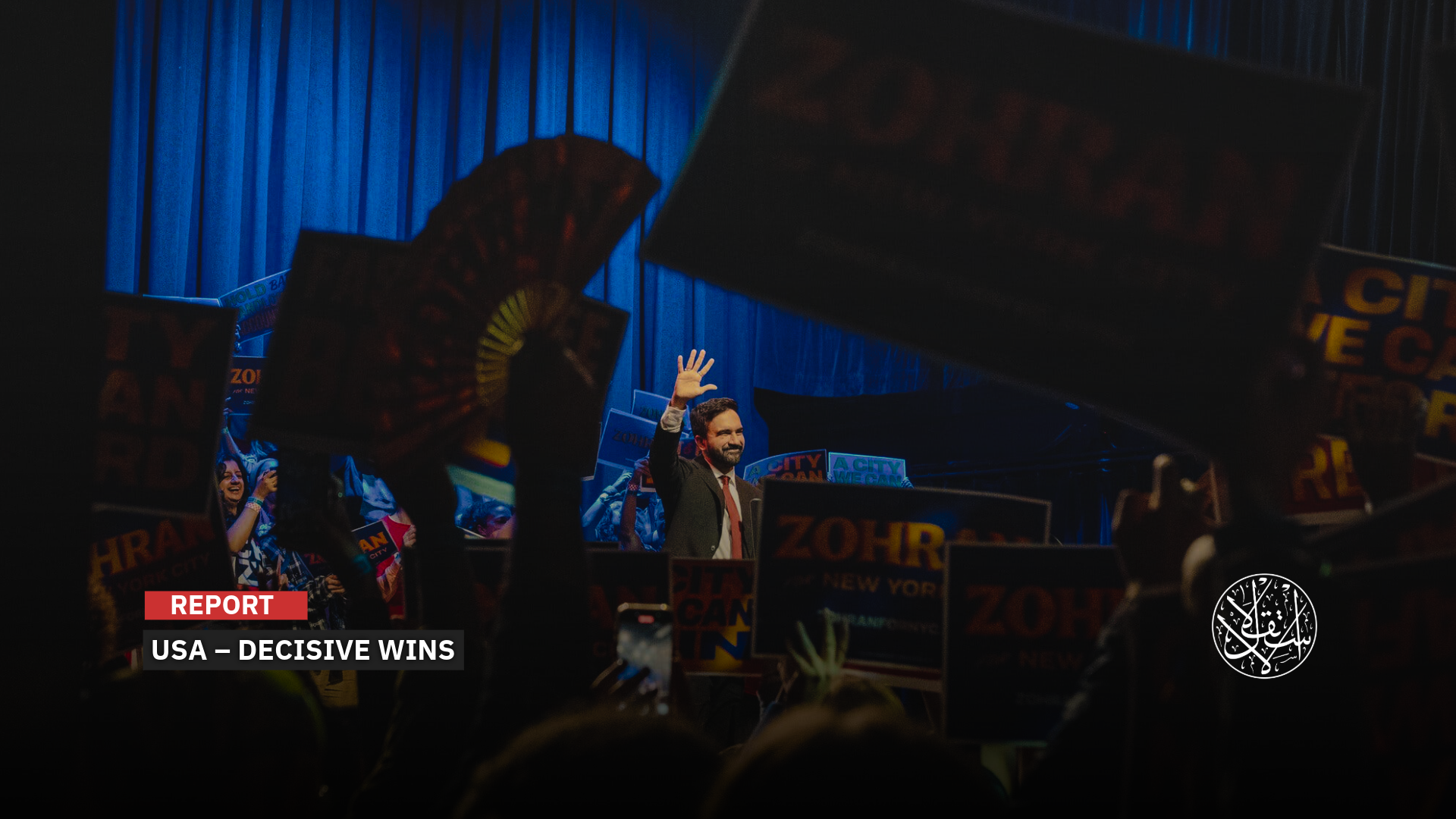
“Democrats notched key victories as they swept the first major elections of Trump's second term.”
The Washington Post highlighted the results of the November 4, 2025, elections, noting a resounding victory for the Democratic Party and a series of significant achievements.
Most notably, Zohran Mamdani won the mayoral race in New York City, becoming the first South Asian Muslim born in Africa to hold that office.
Democrats also recently won governorships in two key states, while Republicans failed to make any significant gains, despite Trump's direct support for their candidates.
These results have given the struggling party a significant boost as it looks ahead to next year's midterm congressional elections. Still out of power in Washington, the party is trying to find a way out of the political deadlock.
Observers confirmed that the Democrats, who focused their campaigns on linking their opponents to the Republican president, succeeded in turning the local elections into a referendum on the first year of President Donald Trump's second term.
Democratic Triumph
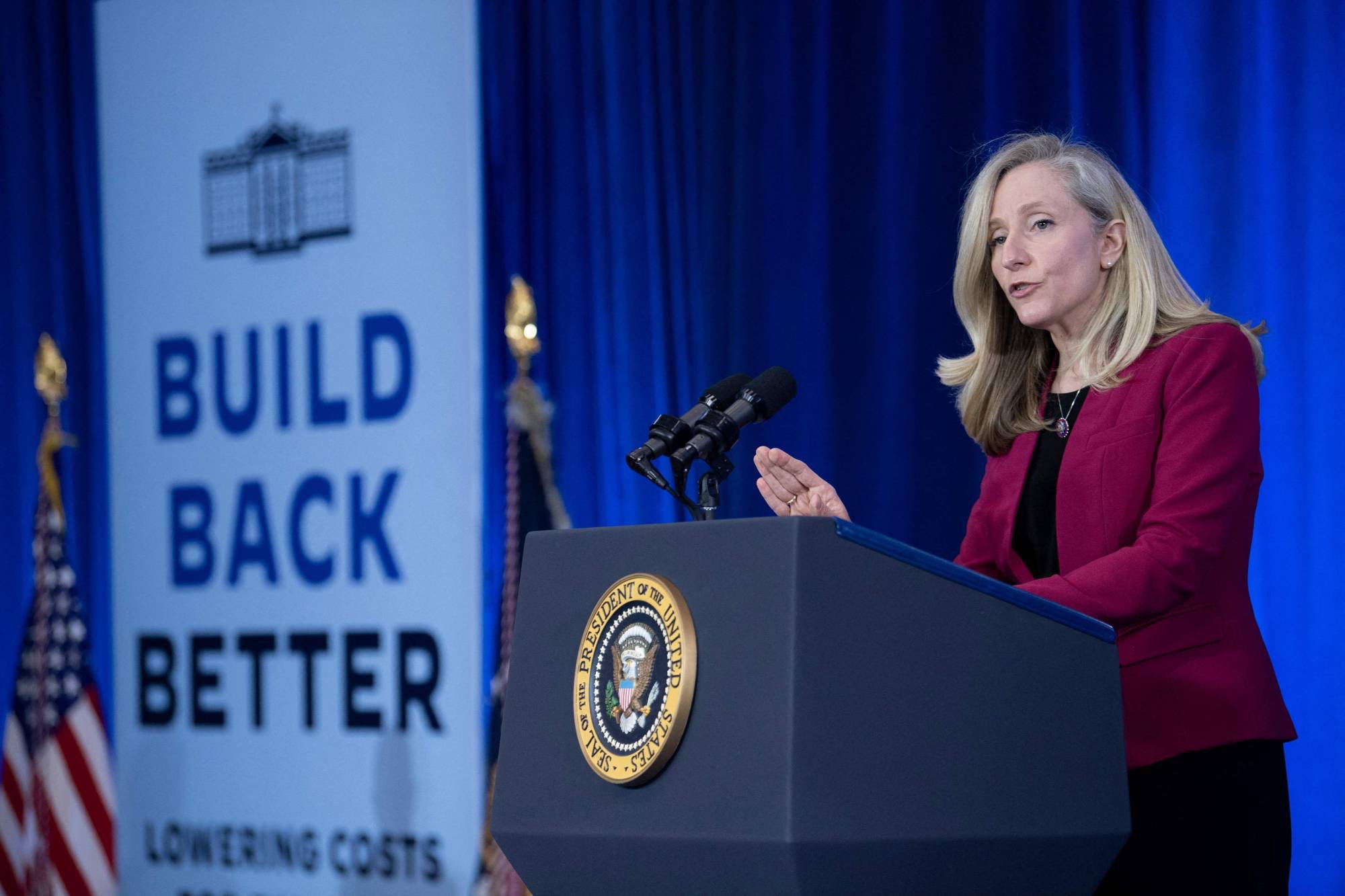
In Virginia, often considered an early indicator of public opinion trends a year after a presidential election, moderate Democrat Abigail Spanberger won the governorship by 15 points, becoming the state's first female governor.
Spanberger, who presented herself as a bulwark against Trump's aggressive federal workforce reduction policies, pledged to be a governor who would defend the thousands of federal workers laid off by Elon Musk's Department of Government Efficiency months earlier.
In the lieutenant governorship race, Democratic Sen. Ghazala Hashmi won, becoming the first Muslim woman elected to a statewide position anywhere in the country.
She told The Washington Post last month that her initial motivation for running was Trump's travel ban on several Muslim-majority countries during his first term.
Jay Jones, 36, was elected Virginia’s first Black attorney general, overcoming a scandal involving leaked text messages he sent in 2022 that incited violence against a political opponent.
He had previously vowed to use his position to prosecute Trump on issues such as tariffs on agricultural products and federal workforce cuts.
In New Jersey, former Democratic Rep. Mikie Sherrill, a former U.S. Navy officer, won a comfortable victory over Republican Jack Chittarelli, who had adopted Trump’s rhetoric, after a close race.
The election results revealed a significant shift in the electoral landscape, with Democrats regaining their lead among young and minority voters after a decline in support in the 2024 presidential election.
Support for Democrats among Latinos rose by 9 points in New Jersey and 5 points in Virginia, while more than 90% of Black voters cast their ballots for the party’s candidates.
Meanwhile, the suburbs of major cities—particularly in Loudoun and Fairfax counties in Virginia—have regained their Democratic support after leaning relatively toward the Republicans last year.
Experts believe that Trump is no longer an electoral asset in moderate areas, but rather a liability for his candidates, noting that opposition to him in major cities and their suburbs has increased.
Conversely, Republican candidates have failed to build an identity independent of him, nor have they been able to mobilize their traditional voter base with the same enthusiasm that Trump previously generated.
Some Republicans acknowledge that losing Virginia and New Jersey by such a wide margin means the party needs a strategic repositioning, moving away from Trump's confrontational and isolationist rhetoric, especially on economic and social issues.
In California, about 64% of voters supported ‘Proposition 50’, which allows for redrawing electoral districts in a way that strengthens the Democrats' chances of regaining a majority in the House of Representatives in the upcoming midterm elections.
The election results came as a direct challenge to Trump, who in turn sought to bolster Republican representation in conservative states through similar moves.
They also served as an early warning to Republicans who were counting on local successes to reaffirm the strength of the coalition that brought Trump to the White House for a second term.
They are also a major victory for Democratic Governor Gavin Newsom, who is solidifying his position as a leader of the Democratic Party by preparing to confront Trump and positioning himself for the 2028 presidential election.
Socialist Promises
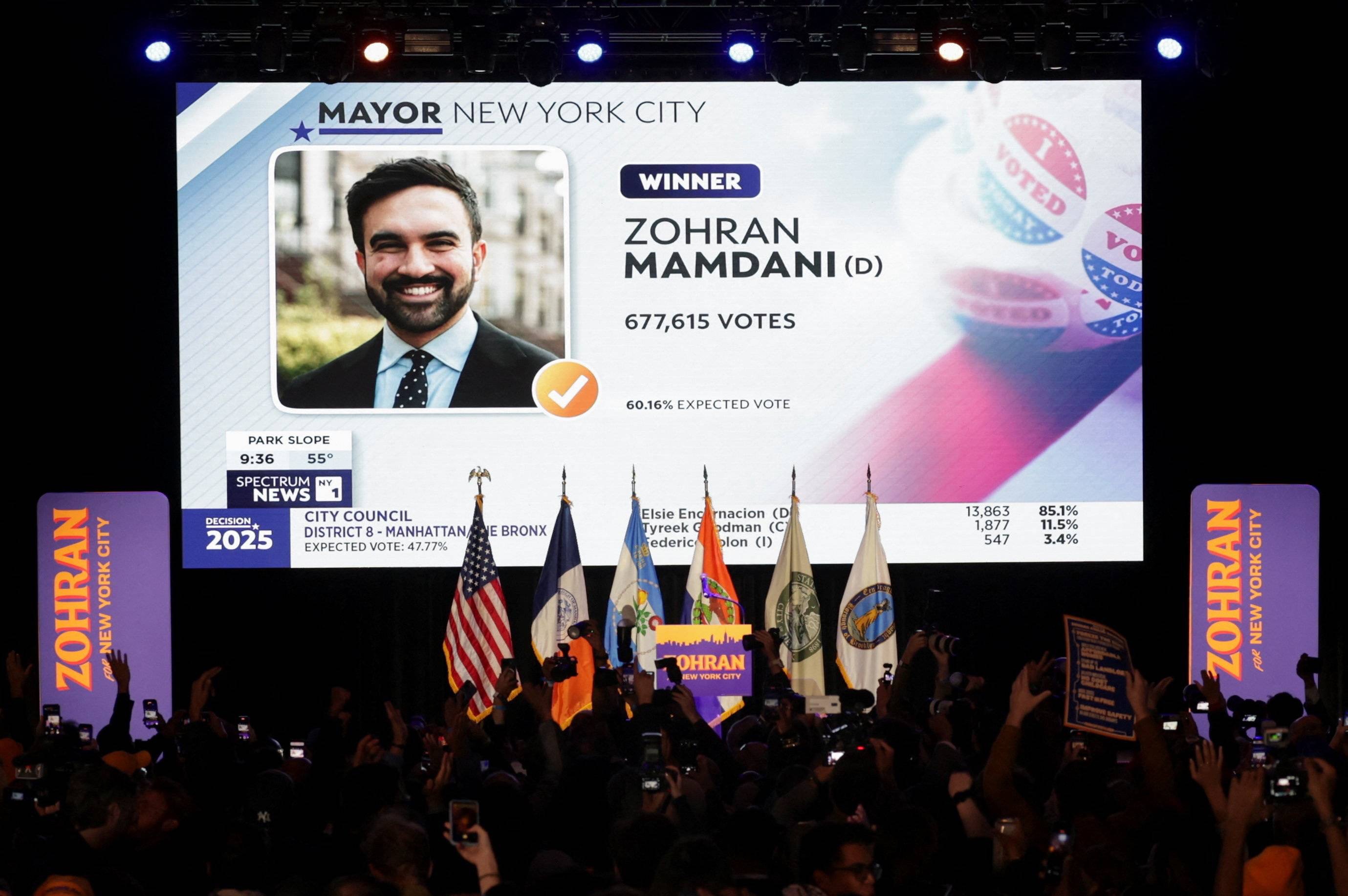
In New York City, Zohran Mamdani, a 34-year-old democratic socialist, won the mayoral race, capping a remarkable rise from an unknown state representative to one of the most prominent Democrats in the country.
The Guardian noted that Mamdani's election embodies a generational and ideological shift within the Democratic Party, making him the first Muslim and South Asian mayor in New York's history, at a time when America is teetering between rising white nationalism and a pressing need for change.
Mamdani's religious background was a recurring theme throughout his campaign.
Last month, he spoke about the Islamophobia he and other Muslim New Yorkers have faced, following the resurfacing of a previous comment he made about the September 11, 2001 attacks.
During his campaign, Mamdani made many bold promises, primarily including taxing the wealthy to fund large-scale new social programs.
Among his most prominent programs were a rent freeze for nearly two million low-income residents, free public transportation and childcare, and addressing the rising cost of living in one of the world's most expensive cities.
Fulfilling these promises will be Mamdani's biggest challenge in the coming period, especially given New York's system, which tends to favor the wealthy over those with limited incomes.
Trump had urged New Yorkers to vote for former independent governor Andrew Cuomo, threatening to cut funding to the city in response to Mamdani's rise, and labeling him a communist and anti-Semite.
Mamdani had previously faced intense criticism for his pro-Palestinian stances in the largest Jewish-populated city outside of Israel.
He has consistently denied being anti-Semitic and has even reached out to the Jewish community, pledging to protect New York's Jews if elected.
Mamdani’s past criticisms of the New York Police Department and the Israeli genocide in Gaza have alarmed some moderates who see her as a potential setback to their efforts to broaden the party’s national appeal.
The Democratic Socialists of America touted municipal wins for members in Detroit, Atlanta and Cambridge, Mass., among others.
In Georgia, Peter Hubbard and Alicia Johnson will be the newest members of the state's five-person public utility regulator after earning roughly 60% of the vote.
Democrats retained three crucial seats on the Pennsylvania supreme court.
They also won special elections for a seat on Pennsylvania's Superior Court and a seat on its Commonwealth Court.
At the state legislative level, Mississippi Democrats have broken a GOP supermajority in the state Senate after flipping two seats in that chamber plus another pickup in the state House.
Democrats have also vastly expanded their control of the Virginia House of Delegates and in New Jersey's General Assembly, the party gained a supermajority.
Real Setback
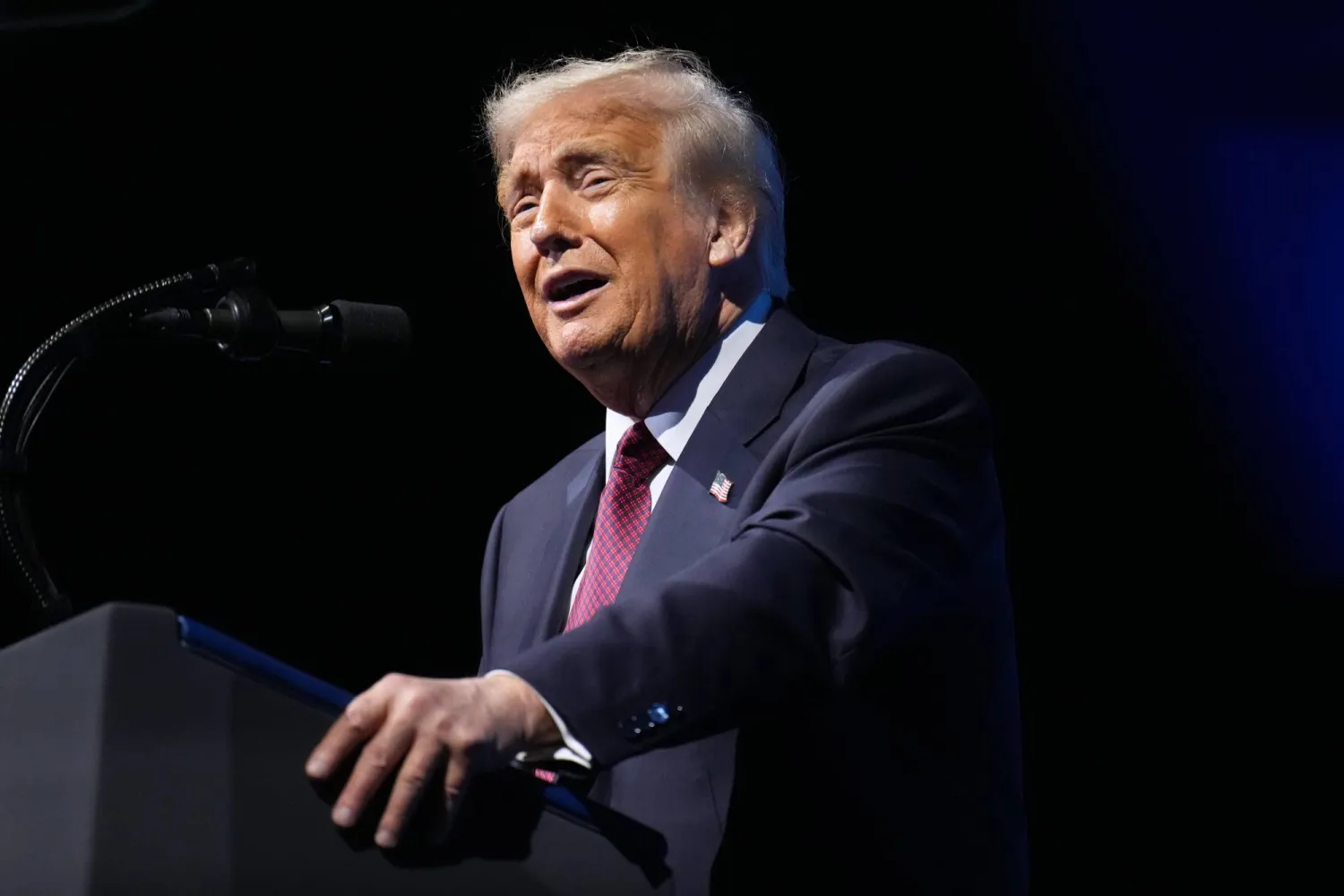
President Trump did not accept defeat quietly. He quickly questioned the integrity of the election, accusing California of widespread voter fraud in the referendum on ‘Proposition 50’ and attacking Jewish voters who voted for Mamdani, calling them stupid—remarks some considered racially charged.
While continuing his attacks on Democrats, he argued that the fact that Trump’s name was not on the ballot, along with the government shutdown, contributed to the Republicans’ loss.
He called on Congress to abolish mail-in voting and save the Supreme Court from leftist encroachment.
But observers believe Trump's angry reaction reflects the deep frustration within the White House, especially since this election represents the first real test of his domestic policies since his return to the White House last January.
According to his former advisor, Marc Short, the results indicate a genuine decline in public sentiment toward the Trump administration's performance, particularly on economic issues, which were once his strength.
As for the Democrats, these results have restored confidence in their ability to regain control of either house of Congress in the upcoming midterm elections.
Republicans currently hold a slim majority in the House of Representatives (219 seats compared to 213 for the Democrats), meaning that even a slight shift in public sentiment could overturn the political equation.
The Democrats are counting on their success in California to add five new seats thanks to redistricting, which would offset the new Republican seats gained through redistricting, particularly in Texas.
Meanwhile, Republicans are trying to absorb the shock and emphasize that the 2026 midterm elections will take place under different circumstances, especially if the effects of Trump's tax cuts and economic policies begin to surface.
However, many within the Republican Party acknowledge that the continued internal division between those who cling to Trump and those who advocate moving beyond him could weaken their chances of maintaining their majority.
Undoubtedly, the recent votes have revealed a shift in voters' priorities and a renewal of their partisan alignments.
The competition is no longer solely about candidates' promises, but rather about the country's identity and future direction.
While Trump seeks to consolidate his power using confrontational and divisive rhetoric, the Democrats are attempting to capitalize on the moment to rebuild trust and redefine American centrism.
Republicans believe that Mamdani, with his leftist promises, represents the true face of the Democratic Party today, indicating that they will use his image in their upcoming campaigns to portray the Democrats as a radical socialist party.
Democratic leaders, most notably House Minority Leader Hakeem Jeffries, are pushing for moderate figures like Spanberger and Sherrill as the most effective way to connect with independent voters and win upcoming battles.
Washington-based activist Omar Taha explained to Al-Estiklal that the Democrats' recent electoral victories demonstrate their ability to orchestrate a blue wave in the 2026 midterm elections.
Although that race is still far off and full of surprises, the message from voters this week was clear: Trump is no longer electorally invincible. He noted that despite their divisions, the Democrats have managed to establish a new balance of power in preparation for the next phase.
Sources
- How Democrats swept Tuesday’s key elections
- Democrats hit back and a winning message - four election night takeaways
- How Zohran Mamdani Beat Back New York’s Elite and Was Elected Mayor
- Democrats have racked up election wins across America – but they would do well not to misread the results
- Democrats' 2025 election wins go beyond big races to places like Georgia, Pennsylvania