A Parallel Government and Army: How Is Hemedti Moving Toward Entrenching Sudan’s Division?
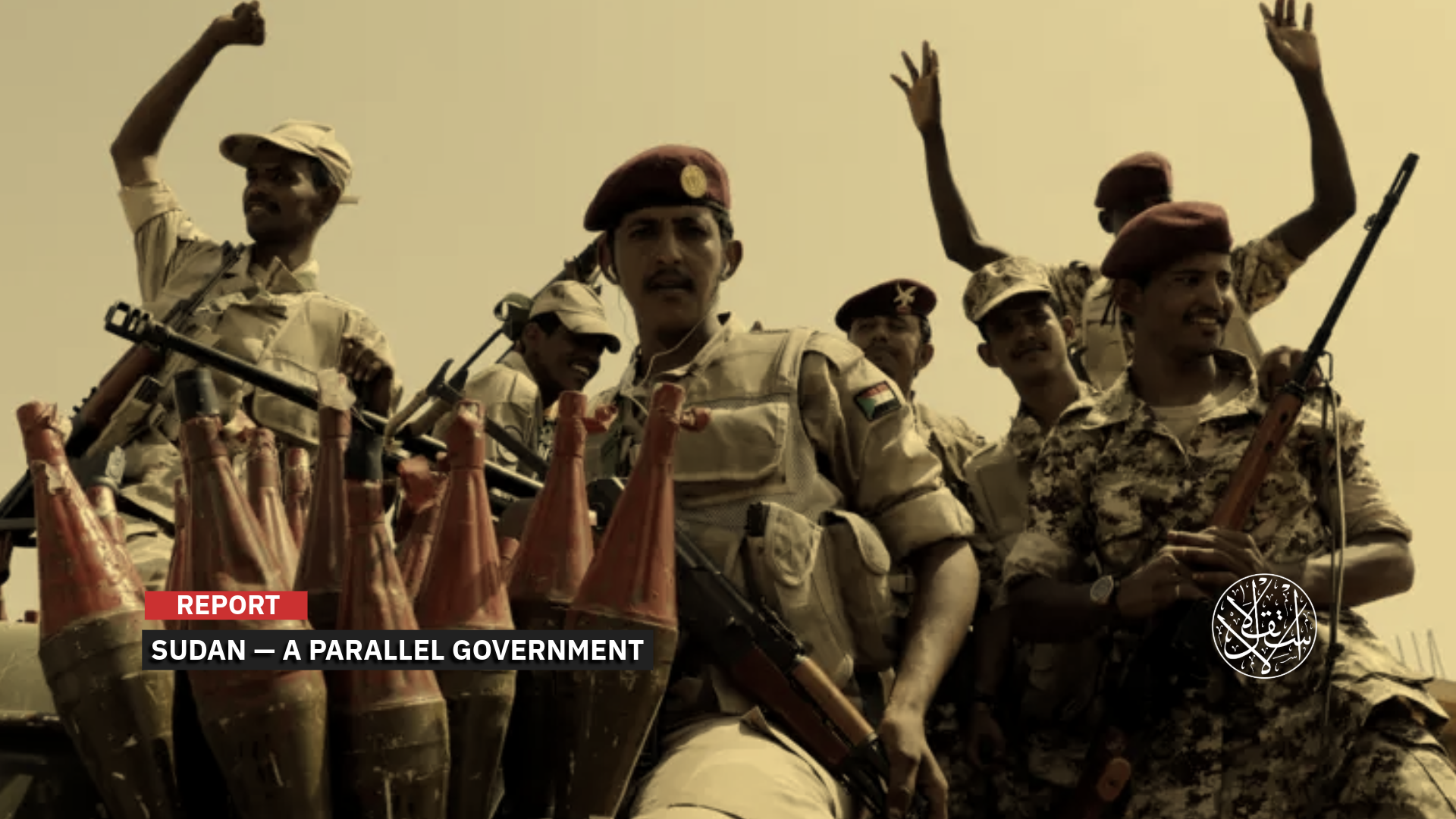
The Rapid Support Forces militia and their allies control large areas of Sudanese territory.
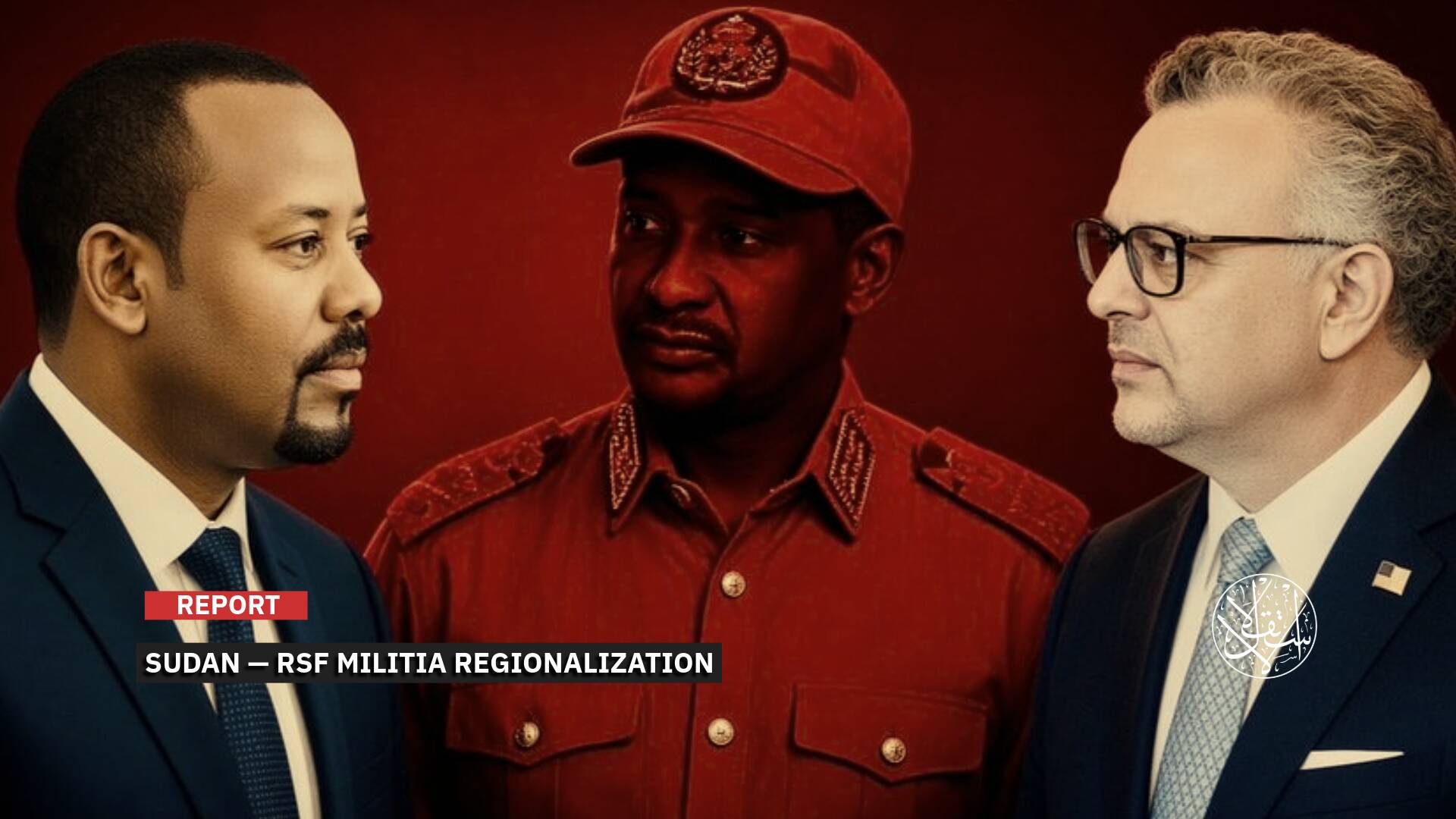
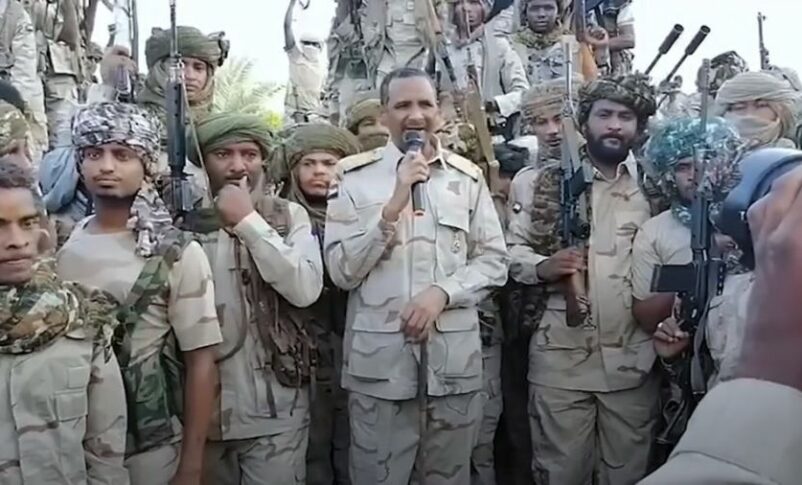
As part of his ongoing efforts, together with his allies, to impose a new political and military reality in Sudan and strengthen the project of a parallel government in areas under his control, Rapid Support Forces (RSF) militia commander Mohamed Hamdan Dagalo (Hemedti) announced the formation of a "Security and Defense Council."
Observers view this move as a step toward establishing a new military force parallel to the Sudanese Armed Forces, raising concerns about deepening internal divisions and pushing the country toward a scenario of de facto partition.
Hemedti explained that the new council would be responsible for approving plans to create what he described as a "new national army," relying on armed movements and militias allied with the RSF militia in territories under their control.
The RSF militia and its allies control vast areas of Sudan, including most of the Darfur region in the west and West Kordofan State, as well as parts of South and North Kordofan and sections of the Blue Nile region.
Since the announcement of the "Ta'sees (Foundation) Alliance" in July 2025, Hemedti has been working to build institutions parallel to those of the Sudanese state.
These efforts began with the formation of a presidential council, which he heads, and a council of ministers, followed by other institutions, including a currency council, culminating in steps toward establishing a new army with the RSF militia as its core component.
The announcement of the Security and Defense Council and the pursuit of a new military force come after a series of military setbacks suffered by the RSF militia, as well as the defection of several senior commanders who subsequently joined the Sudanese Army.
Observers believe the move is intended to compensate for the loss of leaders and fighters by recruiting members of armed groups and militias allied with Hemedti, at a time when accusations of external support aimed at entrenching the RSF militia’s influence in Sudan continue to grow.
Sudanese analysts link Hemedti's drive to establish a new army to what they describe as continued support from the United Arab Emirates for the RSF militia.
They argue that a military project of this scale faces significant financial and logistical challenges that would be difficult to overcome without external backing.
According to these analysts, securing the resources necessary to form a parallel military force may be one of the factors encouraging the RSF militia leadership to move forward with this initiative, amid what they describe as Abu Dhabi's efforts to maintain a significant foothold in Sudan's ongoing crisis.

Why a New Army?
The announcement by Mohamed Hamdan Dagalo (Hemedti) on May 31, 2026, in his capacity as head of the Presidential Council of the parallel "Government of Peace," of the formation of a 14-member Security and Defense Council under his leadership, tasked with establishing a new national army with a new military doctrine, has raised numerous questions.
This move appears noteworthy because Hemedti already commands an organized military force known as the Rapid Support Forces (RSF) militia.
This has prompted questions as to why he has not simply integrated the militias allied with him into the RSF militia and instead chosen to establish a "new army" based on a different military doctrine.
Sudanese assessments have suggested that one objective of this step may be to move the RSF militia name out of the spotlight after it became associated with widespread abuses, allegations of war crimes, and acts of rape, in addition to being subject to international sanctions.
It is also believed that the move is intended to encourage allied armed movements and militias to unite under a single military umbrella by presenting the project as a "new army" that includes all parties, rather than a force belonging exclusively to Hemedti. This comes amid competition over influence and positions, and the desire of each faction to maintain its independent leadership.
Despite the new labels, the core of this army is expected to consist of the RSF militia, the Sudan People's Liberation Army (SPLA) affiliated with the Sudan People's Liberation Movement–North (SPLM-N) led by Abdelaziz al-Hilu, as well as the armed movements that signed the Founding Charter of Sudan, from which the parallel government emerged.
The Ta'sees (Foundation) Alliance, announced on July 5, 2025, under the leadership of Hemedti and his deputy al-Hilu, stated that it sought to build a "united, secular, democratic Sudan," according to its official spokesperson, Alaa Naqd, as part of a political project that has generated widespread debate regarding its implications for Sudan's unity and future.
Hemedti paved the way for the announcement of the new army through remarks made during Eid al-Adha, in which he claimed that the Sudanese Army was under the dominance of the Islamic Movement, which he linked to the Muslim Brotherhood, and called for the military institution to be re-established on new professional foundations.
He stated that his government is engaged in an open confrontation with what he described as the "Islamic Movement project," repeating accusations that the Muslim Brotherhood was responsible for igniting the conflict that has continued since April 15, 2023, and for influencing the decisions of the armed forces.
He also renewed his call for the creation of a new army based on national affiliation rather than tribal or regional considerations, stressing the need to rebuild the military institution on national and professional foundations.
He argued that Islamist dominance over the institution for decades had politicized it and turned it into a tool of exclusion and repression.
Through the announcement of the "new army" project, the RSF militia leadership is moving further along a path that deepens Sudan's political and military divisions, despite the rejection of the parallel government by the United Nations Security Council, the African Union, and several Arab and African countries, all of which have reaffirmed their recognition of Sudan's sovereignty and the authority of the Sudanese state under the leadership of Abdel Fattah al-Burhan and the Sudanese Armed Forces.
The institutions established by the RSF militia face a fundamental challenge: the lack of international recognition, despite their relations with certain regional actors, including Kenya, the United Arab Emirates, Chad, and the authorities in eastern Libya.
Hemedti is seeking to complete the construction of institutions parallel to the Sudanese state. He announced that the responsibilities of the Security and Defense Council include approving general plans for the establishment of police forces and an intelligence and security service, as well as making binding decisions for the various state bodies affiliated with his government.
On February 22, 2025, political groups and armed movements allied with the RSF militia under what is known as the Sudan Founding Alliance (Ta'sees) signed a political charter in Nairobi, Kenya, to establish a government in areas under RSF militia control.
On July 26, 2026, the alliance announced from the city of Nyala the formation of the parallel government, consisting of a 15-member Presidential Council headed by Hemedti, while Abdelaziz al-Hilu assumed the position of Vice President.

Are Defections the Reason?
Sudanese sources speaking to Al-Estiklal suggest that Hemedti's decision to establish a Security and Defense Council and announce the formation of a new army came in the wake of a series of defections that have affected the ranks of the Rapid Support Forces (RSF) militia, as well as his desire to replace departing commanders with figures drawn from factions and political currents allied with him.
The sources also link this move to what they describe as a desire by the United Arab Emirates to entrench division in Sudan by consolidating the existence of two parallel governments and two parallel armies, in a manner they argue serves political, economic, and regional interests within the country.
According to the sources, the circle of trust surrounding RSF militia commander Mohamed Hamdan Dagalo (Hemedti) has become increasingly narrow amid a growing wave of military, tribal, and political defections.
They claim that only a limited number of individuals remain within his inner circle, most notably his brother Abdel Rahim Dagalo, along with Abu Lulu, Gedo Hamdan, Tijani Musa, and Hamdan Musa.
Abu Lulu is considered one of the most controversial figures within the RSF militia. His name has been linked to allegations of widespread abuses during fighting in the city of el Fashir.
The RSF militia reportedly detained him in late October 2025 after videos circulated showing executions of civilians. In addition, Reuters, citing nine sources, referred to him as the "Butcher of el Fashir."
However, subsequent developments on the battlefield reportedly led the RSF militia leadership to bring him back into service. According to Reuters, Abdel Rahim Dagalo ordered his release following the defection of several militia commanders, after which he returned to combat fronts in the Kordofan region. Reuters reported this development on May 18, 2026.
In recent months, the RSF militia has experienced a broad wave of defections involving prominent military figures, including Keikal, al-Qubba, al-Safana, and al-Huwaira, as well as tribal and political leaders who announced their alignment with the Sudanese Armed Forces. Among the most notable were Musa Hilal, Ismail al-Daw, Abdel Qader Ibrahim, and Prince Ismail.
In controversial remarks, former RSF militia commander Ali Abdullah Rizqallah, who defected from the group, claimed that external actors supporting the RSF militia might move to eliminate Hemedti if he were to decide to end the war.
Rizqallah further stated that during a meeting between the two approximately one month earlier, Hemedti had told him that the decision to stop the war was no longer in his hands. He alleged that developments on the ground had come under the direct management of external actors.
There are no precise or well-documented statistics regarding the number of fighters affiliated with the armed movements and groups allied with the Rapid Support Forces (RSF) militia.
These include several factions, most notably the Sudan People's Liberation Movement–North (SPLM-N) led by Abdelaziz al-Hilu, the Sudan Liberation Movement–Transitional Council led by al-Hadi Idris, the Sudan Liberation Forces Gathering led by al-Tahir Hajar, the Justice and Equality Movement led by Suleiman Sandal, as well as the Third Front Tamazuj Movement.
These formations also include fighters from groups locally known as "Diaspora Arabs" (Arab al-Shatat), individuals who have come from neighboring African countries, as well as fighters from Chad, locally recruited personnel, and members of Arab tribal militias loyal to the RSF militia.
In an interview with Al Jazeera Mubasher on May 20, 2026, al-Safana stated that the human composition of the militias allied with the RSF militia had become so extensive and complex that it was difficult to determine their exact numbers or components.
He noted that the size of these formations and the diversity of their loyalties make it difficult even for the RSF militia leadership itself to maintain a complete understanding of their details and organizational structure.

Foreign Mercenaries
Observers suggest that one of Hemedti's motivations for announcing the creation of a new army is an attempt to distance himself from the growing accusations directed at the Rapid Support Forces (RSF) militia regarding their reliance on foreign fighters and mercenaries from several countries, including Colombia, Russia, and various African states.
The RSF militia has also faced allegations of receiving external support for the operation of advanced military systems, particularly drones.
On May 26, 2026, a documented investigation published by Human Rights Watch alleged that the United Arab Emirates was involved in providing support to the RSF militia and recruiting Colombian fighters to fight alongside it, despite repeated Emirati denials of such allegations.
The report, titled "From Bogotá to el Fasher: The UAE's Role in the Deployment of Colombian Fighters and Other Backing to the Rapid Support Forces in Sudan," stated that Colombian fighters were recruited through a private Emirati company before being transferred to conflict zones in Sudan.
According to the investigation, the Global Security Services Group (GSSG), a company based in Abu Dhabi, recruited hundreds of Colombian fighters beginning in 2024. The report alleges that they passed through Emirati military facilities before being sent to Sudan to participate alongside the RSF militia.
The report further stated that the transfers were carried out through the military wing of al Kufra Airport in southeastern Libya, which it described as an important logistical hub for support operations directed toward the RSF militia and as a site containing facilities for storing weapons and military equipment.
In the same context, the Conflict Insights Group reported that a network of Colombian fighters supported by the UAE had provided significant military assistance to the RSF militia and contributed to strengthening its battlefield capabilities during the fighting that took place in el Fashir in 2025.
The group also stated that the city of Nyala had become a principal center for the activities of Colombian fighters and RSF militia drone operations, claiming to have observed extensive drone activity and documented the presence of dozens of devices operating in the Spanish language.
In addition, a report published by The Sentry in November 2025 alleged that Emirati businessman Ahmed Mohammed al-Humairi, who founded GSSG in 2016, played a central role in providing logistical and human support to the RSF militia.
In February 2026, Hemedti acknowledged the presence of Colombian personnel within his forces. However, he stated that their role was limited to operating drones. In a widely circulated remark, he said, "We brought 10 Colombian drone technicians... what's wrong with that?!"
In October 2025, the President of Colombia announced that forty Colombian fighters had been killed in Sudan, describing their recruitment as a form of human trafficking and referring to them as "ghosts of death."
American Africa analyst Cameron Hudson argued that the Sudanese Armed Forces would be capable of achieving a military victory in the war if external support to the Rapid Support Forces (RSF) militia were to cease.
He explained that the RSF militia is facing growing challenges as a result of defections involving a number of its prominent commanders, in addition to a declining ability to seize new territories that could provide it with additional sources of funding.
Hudson also argued that the continued establishment of parallel governmental and military institutions serves only to deepen divisions within Sudan.
He attributed this, in part, to what he described as the international community's and the United States' reluctance to deal more forcefully with the RSF militia and to their failure to designate it as a terrorist organization.
A Parallel Government
Sudanese and Western analysts believe that Rapid Support Forces (RSF) militia commander Mohamed Hamdan Dagalo (Hemedti) is seeking, with the backing of his regional allies, to replicate the model of parallel authority seen in Libya.
This involves establishing political, military, and administrative institutions that run parallel to the Sudanese state, despite the difficulties such experiments have faced in achieving international recognition or establishing stable political legitimacy.
According to these assessments, the aim of creating a parallel government, army, and institutions is not limited to administering RSF-controlled militia areas.
It also extends to an attempt to entrench a new political reality that deepens internal divisions and strengthens the presence of a parallel authority in opposition to the central government in Khartoum.
However, observers rule out the possibility that the so-called "new army" announced by Hemedti will bring about a fundamental shift in the military balance against the Sudanese Armed Forces.
They argue that the new project does not represent an independent force, but rather an attempt to reassemble the factions and armed groups allied with the RSF militia under a new organizational framework, and to repackage them politically and militarily in a different form from the formation that has, over recent years, been associated with widespread allegations of abuses and war crimes.
In recent months, Hemedti has worked to build a series of parallel institutions in areas under RSF militia control, beginning with the establishment of the "Sudan Founding Alliance" (Ta'sees) in February 2025, followed by the announcement of a parallel government in July of the same year.
Later, a 15-member Presidential Council was announced under Hemedti's leadership, with Abdelaziz al-Hilu appointed as his deputy. This was accompanied by the issuance of a so-called "transitional constitution", consisting of 43 articles, which defines Sudan as a "decentralized, secular, democratic state."
Additional steps included the appointment of officials to parallel judicial and administrative institutions and the adoption of measures related to financial and monetary affairs in areas under RSF militia control.
However, these institutions still lack international recognition, and their practical influence remains largely confined to territories under RSF militia control.
In this context, a report published by The Africa Report in early June 2026 noted that many armed movements in Africa face structural difficulties that prevent them from transforming into governing authorities capable of controlling and managing states in a stable manner.
The report explained that the success of some armed movements in reaching power in certain exceptional cases has depended on specific factors, including unified political and military leadership, a cohesive organizational structure, and a degree of political legitimacy and capacity to manage state institutions.
In contrast, the report argues that a large number of African armed movements, including those involved in the Sudanese conflict, suffer from internal divisions, tribal and ethnic divergences, and historical tensions, as well as multiple centers of decision-making within their structures.
According to the report, these factors make it difficult for such groups to transition from armed movements into a centralized authority capable of governing a large and complex state like Sudan, or of fully replacing existing official institutions.
Therefore, several analysts believe that the “new army” project may provide the RSF militia with an additional organizational and political cover, but it will not, on its own, be sufficient to alter the military balance or secure broad international recognition for the parallel government the movement is seeking to entrench.