Gaza Tribal Official: Suspicious Agendas Behind Occupation-Backed Militias, Door to Return Remains Open (Exclusive)
“This path will lead only to your downfall.”
Armed militias in Gaza are receiving full support from the Israeli occupation army through military, intelligence, and logistical assistance, including advanced vehicles, fuel, and food supplies. This poses a serious threat to Palestinian society in the Strip, which has endured genocide for two consecutive years.
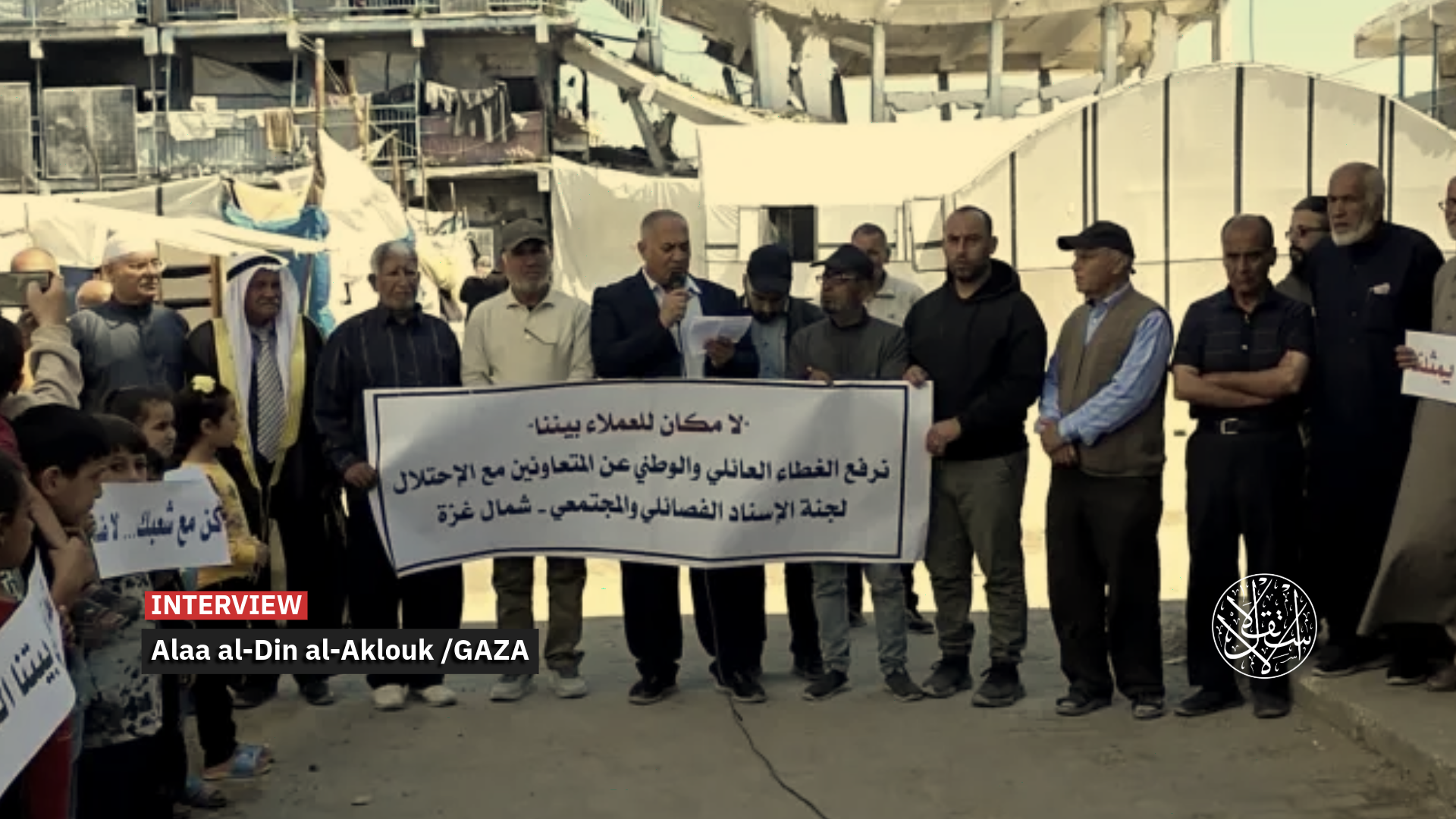
In response, Palestinian tribes and clans have played a prominent role in confronting these militias both ideologically and practically by communicating with their members and families and working to facilitate their return to their communities in coordination with security authorities in Gaza.
This phenomenon is considered a threat to social unity and civil peace, contributing to further chaos and deepening internal divisions at a time when the harsh conditions of war demand greater national cohesion.
Among the most notable of these militias is the group established east of the southern Gaza city of Rafah near the border with “Israel”, led by Yasser Abu Shabab, who was killed in December 2025 under mysterious circumstances.
In Khan Younis, Hossam al-Astal leads another armed group that has carried out several killings, including the assassination of Mahmoud al-Astal, director of the General Investigations Service in the governorate, in January 2026.
In Gaza City in the northern part of the Strip, another militia operates under the leadership of Rami Helles, an officer in the Palestinian Authority’s security apparatus.
Ashraf al-Mansi also heads what is known as the “Popular Army” in Beit Lahia and Beit Hanoun, a group formed in September 2025.
Tribal leaders have succeeded in returning a number of militia members to their families and settling their security cases with Gaza’s Ministry of Interior, a development viewed as an initial step toward dismantling these groups.
To shed light on the role of Palestinian tribes in confronting these militias and efforts to reintegrate as many Palestinian youths as possible, Al-Estiklal newspaper conducted an interview with Dr. Alaa al-Din al-Aklouk, a member of the National Gathering of Palestinian Tribes, Clans, and Families.
The Phenomenon of Militias
How do you describe the phenomenon of militias inside Gaza today?
We describe this phenomenon as foreign and dangerous, representing a clear deviation from the unified national path. These groups do not represent our people or their struggle; rather, they create chaos and undermine the unity of society at a moment when we are in greatest need of cohesion. It is a rejected and closely monitored phenomenon that cannot be justified under any circumstances.
What role can the tribes play regarding these militias?
The tribes bear a clear national and moral responsibility, and we have taken a firm position by completely withdrawing all cover from any group or individual involved in these militias.
Our role is not limited to rejection alone; it also extends to field efforts aimed at bringing our sons back and preventing the spread of this phenomenon through social pressure and firm positions.
Is there communication between the National Gathering of Tribes and the official authorities to address this phenomenon?
Yes, there is ongoing communication, and we affirm that this phenomenon cannot be addressed except through the integration of official and societal efforts. We are pushing for firm measures that restore internal order and prevent any manifestations of lawlessness outside the framework of the law.
What message would you like to send to the youth involved in these militias?
Our message is clear: return to your families and your people. You are not tools for suspicious agendas or narrow interests. This path will lead only to your downfall and the loss of your society. The door remains open for anyone who wishes to return, but continuing down this path will place you in confrontation with your own community before anyone else.
How can families and tribes prevent being used as social cover for militias?
Through a clear and public stance rejecting the protection of any individual operating outside the law, and by refusing to conceal or defend them. We have stated unequivocally that tribal cover has been completely withdrawn from these groups, and we will not allow family or tribal names to be used to justify chaos.
Do you believe the existence of these groups poses a threat to civil peace?
Absolutely. They represent a direct threat to civil peace and open the door to internal fighting and social fragmentation, which is among the most dangerous challenges a people living under occupation can face.
Means of Confrontation
Do you believe that regional conditions and the ongoing war have contributed to the growth of this phenomenon?
Yes, the difficult conditions and the war have created an unstable environment, but this does not justify the emergence of these militias. Crises may explain the phenomenon, but they do not grant it legitimacy.
To what extent can community elders and mukhtars persuade young people not to join militias?
Community elders and mukhtars still hold significant influence, and we have already succeeded in convincing a number of young men to withdraw and return to their families. This confirms that when the tribal voice is united, it can have a real impact.
Do you believe that tribes still possess enough social influence to impose solutions?
Yes, tribes possess genuine social weight and have proven capable of positive intervention, but they operate within a framework that supports public order rather than replacing it.
What message would you like to send to families whose sons belong to armed groups?
We tell them: your responsibility today is doubled, and you must be part of the solution rather than part of the problem. Take the initiative to pull your sons away from these paths, because the future cannot be built on chaos.
In your opinion, what is the most realistic solution to contain the phenomenon of militias in Gaza?
The solution begins with a unified national stance that rejects this phenomenon, accompanied by firm measures to bring weapons back under a legitimate framework, address the social and economic causes behind the issue, and raise awareness about the dangers of being drawn into these groups.
Have there been successful attempts to convince young men who worked with these militias to return through your efforts?
Yes, we have tangible successful experiences. Through tribal efforts and direct dialogue, we were able to bring back a number of young men and reunite them with their families. This confirms that the door to return remains open and that society is capable of embracing its children if the will exists.