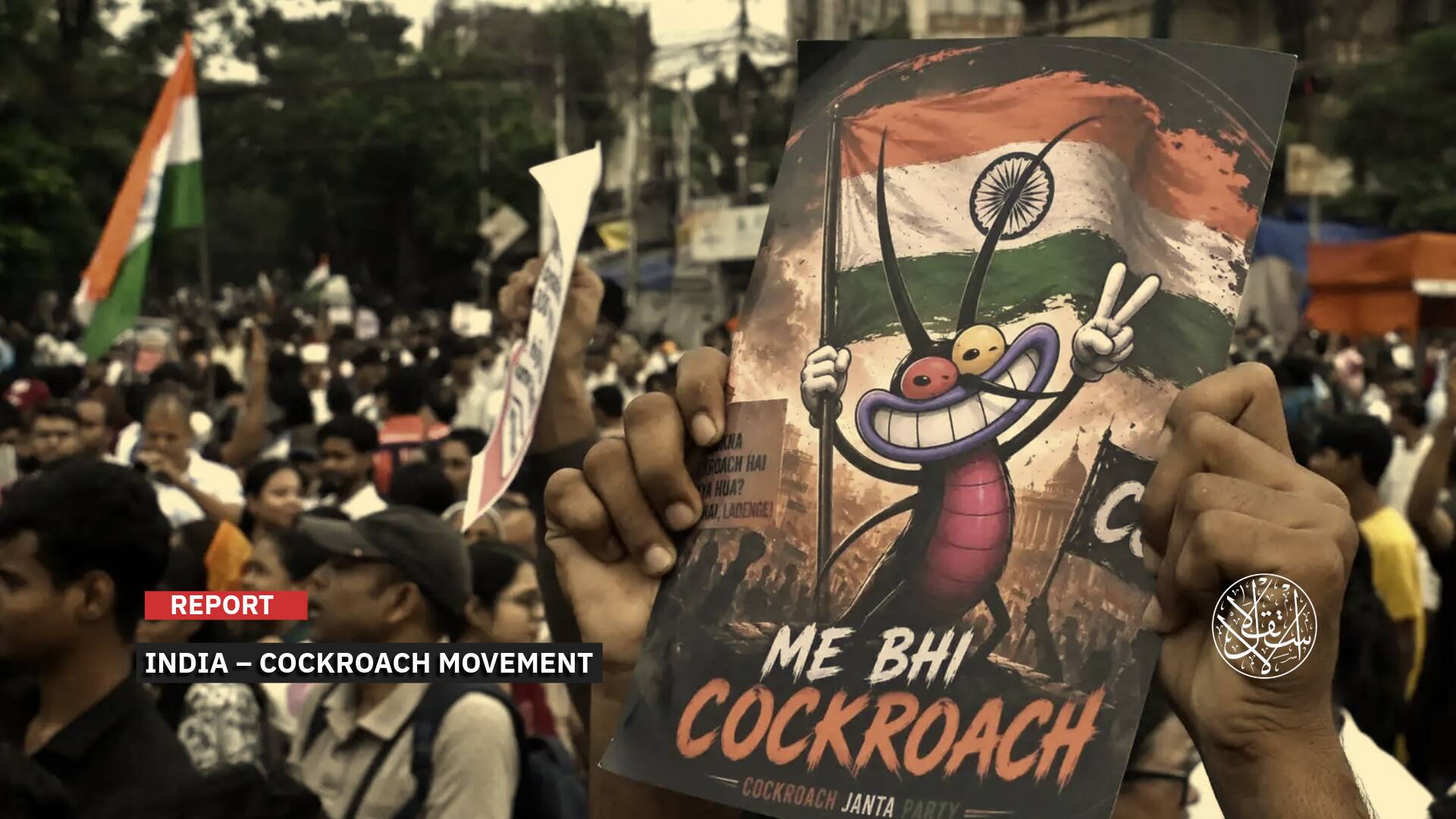
Yemen’s General People’s Congress Party: Regaining Its Role or Becoming an Arena for Regional Conflict?
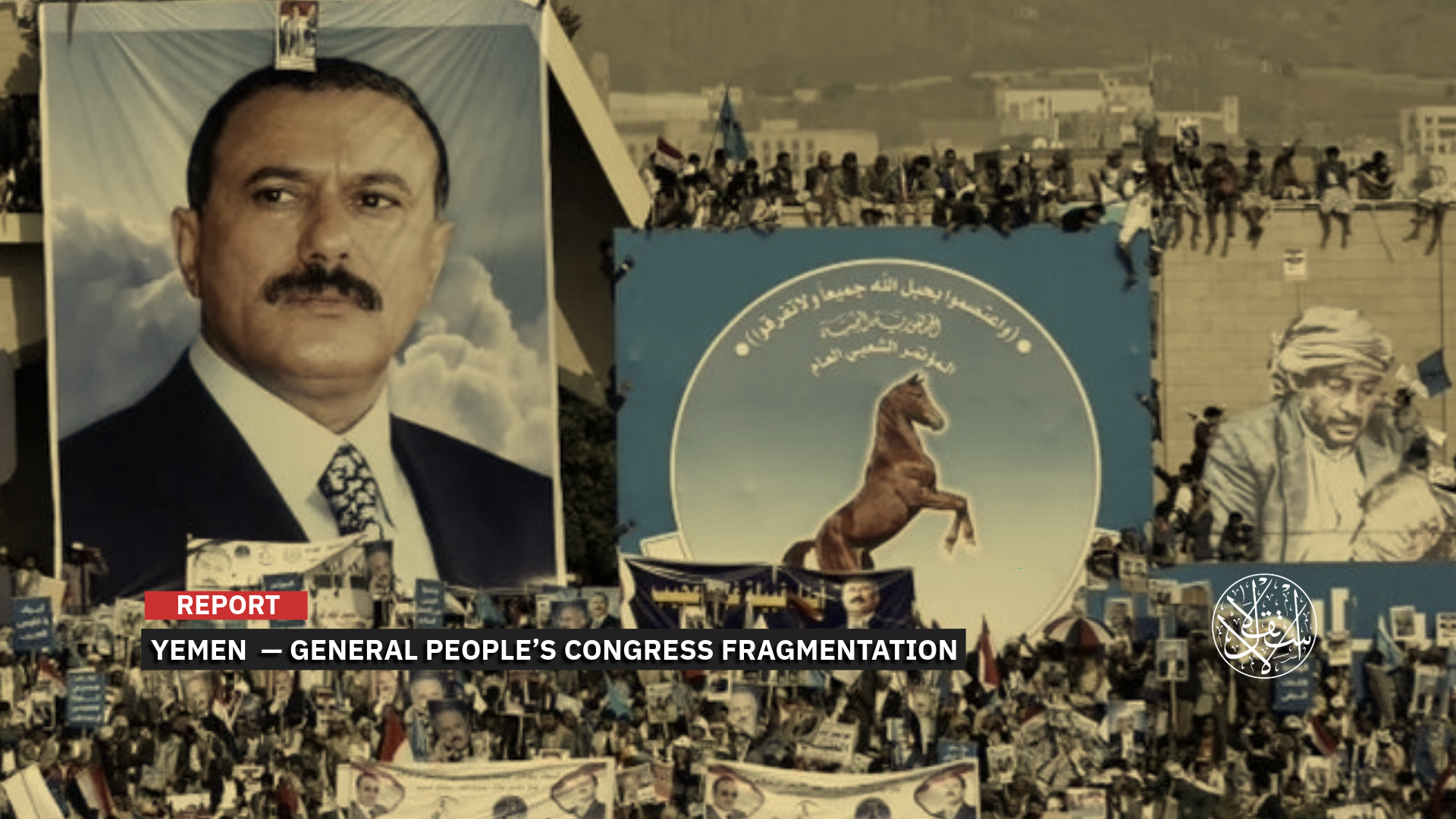
Moammar al-Eryani emerged as the main driving force behind the initiative.
The debate surrounding Yemen’s General People's Congress is no longer confined to the crisis of a political party that has lost its internal unity.
It has evolved into a key gateway for redrawing maps of influence within the internationally recognized government camp and an integral part of the regional struggle over the shape of Yemen’s future authority.
The party, which ruled Yemen for decades and formed the backbone of the state since its establishment in 1982, now finds itself facing one of the most complicated phases in its history since the killing of its founder, former President Ali Abdullah Saleh, in December 2017.
While its factions compete over centers of influence and organizational legitimacy, regional powers are moving to reshape the party’s political role in line with the new balances imposed by the war.
This makes the “Restoring the Role of the Congress” initiative, led by Information Minister Moammar al-Eryani, more than just an internal party movement.
It is an attempt to capitalize on the political vacuum and reproduce a form of legitimacy capable of competing with the dominance of armed groups.
From a Broad Umbrella to a Fragmented Party
The General People's Congress was founded in August 1982 in North Yemen as a broad political umbrella that brought together diverse and competing currents at a time when political pluralism did not exist.
Over the following decades, it transformed into the ruling party and the country’s dominant political force, benefiting from its close association with Ali Abdullah Saleh, who led both the party and the state simultaneously.
However, years of monopolizing power and authoritarian rule weakened the party organizationally and politically, as loyalties within it became tied more to Saleh personally than to the party institution itself, leaving it vulnerable to major political shifts.
The 2011 protests marked the first real shock within the Congress after senior leaders and large segments of its base defected.
The killing of Saleh by the Houthis in 2017 later became the most dangerous fragmentation point in the party’s history.
Since then, the Congress has effectively split into three main factions: one aligned with the Houthis and led by Sadeq Amin Abu Ras, another linked to the Saleh family that includes Tareq Saleh and Ahmed Ali Saleh, and a third faction aligned with the internationally recognized government, prominently featuring Rashad al-Alimi, Ahmed Obaid bin Dagher, and Moammar al-Eryani.
This division was not merely organizational, but also carried political, military, and regional dimensions, as each faction became tied to different centers of influence and alliances inside and outside Yemen, stripping the party of its traditional role as a unifying force.

‘Restoring the Role of the Congress’: Why Now?
On April 30, 2026, a group of leaders and members of the General People's Congress, headed by Moammar al-Eryani, announced the launch of the “Restoring the Role of the Congress” movement.
In its founding statement, the initiative said it aimed to strengthen unity within the party ranks, restore the Congress party’s national role, and reactivate its institutions in line with the demands of the current stage, stressing that the Congress “is not merely a political entity, but a national experience that for decades constituted one of the pillars of the state.”
The movement called for unifying the Congress ranks, selecting a temporary leadership, reactivating organizational institutions, drafting a unified political vision, and strengthening partnership with national forces in confronting the Houthis.
Despite the conciliatory language adopted by the movement and its emphasis in a second statement that it was not a parallel entity to the party leadership, but rather a “responsible Congress movement” aimed at breaking organizational stagnation, the timing of the initiative and the nature of the figures supporting it reflect an attempt to rearrange the balance of power within the internationally recognized government camp, alongside Saudi efforts to politically and militarily restructure the legitimacy camp.
This movement gains additional significance because it comes at an extremely sensitive political and regional moment, in which settlement arrangements, efforts to unify military formations, and attempts to redefine centers of power within the anti-Houthi camp all intersect, making the future of the Congress closely tied to the future of regional balances themselves.
Al-Eryani: The Face of the New Movement

Moammar al-Eryani emerged as the main driving force behind the initiative through an intensive political and media campaign aimed at presenting the movement as an attempt to save the General People's Congress from erosion and division.
Al-Eryani stressed that the initiative “is not a pursuit of a position or an alternative leadership,” but rather a movement “from within the Congress and for its sake,” calling for the restoration of its historic role as a broad national political umbrella.
However, the role played by al-Eryani appears to extend beyond mere media activism. According to political assessments, it is linked to attempts to revive the Congress file within new regional arrangements backed by undeclared Saudi support, giving the initiative a strategic dimension that goes beyond internal party rhetoric.
Supporters and Opponents
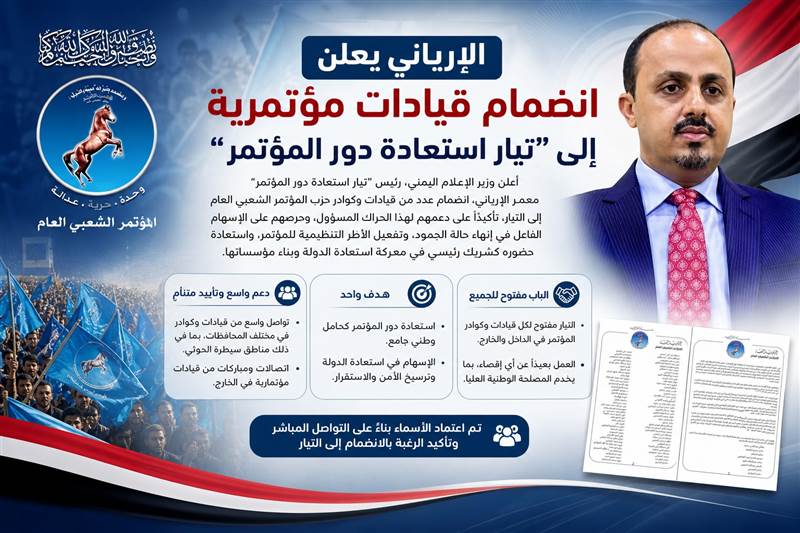
The new movement has exposed the depth of division within the General People's Congress. While supporters view the initiative as an attempt to save the party from erosion and restore its political role by ending organizational stagnation, reactivating party institutions, restoring the Congress’s political presence, and unifying ranks against the Houthis, opponents see it as a project aimed at redesigning the party according to new regional arrangements.
Critics focus on concerns that the initiative could be used to sideline certain factions, impose a Saudi-aligned leadership, reduce the influence of groups linked to the UAE, and transform the party into a tool within future settlement arrangements.
This debate reflects the reality that the struggle inside the Congress is no longer merely an organizational dispute, but a battle over political and military representation within the internationally recognized government camp itself.
The initiative also triggered mixed reactions within the Saleh family faction, which viewed it as an attempt to bypass the centers of influence that emerged after 2017.
The faction led by Tareq Saleh appears to be the most opposed to the initiative, viewing it as a threat to the political and military influence he has built in recent years through the “National Resistance” and the “Political Bureau of the National Resistance.”
Figures close to this faction believe that any process aimed at reunifying the Congress under a new leadership could redirect organizational and political loyalties within the party toward a center closer to Riyadh, thereby reducing UAE-backed influence.
Meanwhile, the faction associated with Ahmed Ali Saleh appears less confrontational, as it may see the reunification of the party as an opportunity to reposition itself politically within any future settlement, reflecting differences in vision even within the same faction.
The Saudi–Emirati Rivalry
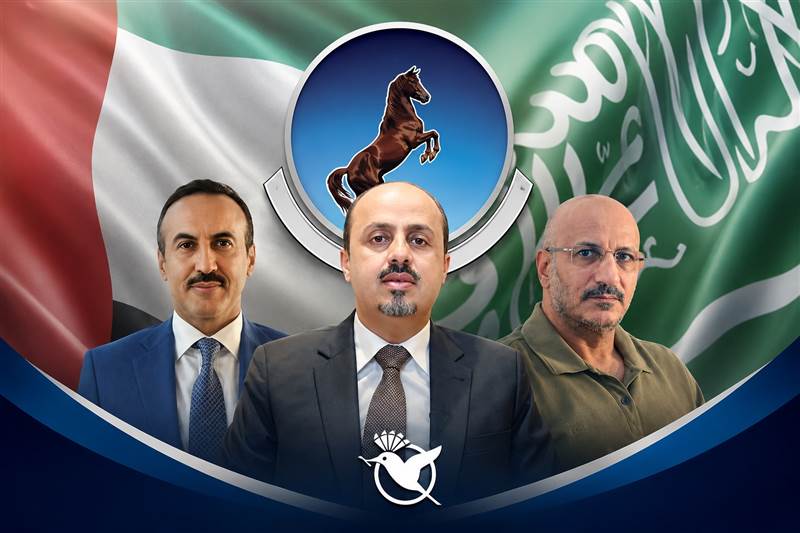
The recent developments within the General People's Congress cannot be separated from the broader Saudi–Emirati competition within the internationally recognized government camp, where regional visions diverge over the future of the party and its role in any forthcoming political settlement.
From Riyadh’s perspective, the Congress remains an indispensable political and social reservoir, particularly in northern Yemen, which drives Saudi efforts to reshape it within a more cohesive framework aligned with its broader project of restructuring the legitimate government and unifying political and military decision-making under a single umbrella.
In contrast, Abu Dhabi is wary that any attempt to reunify the party could reduce the influence it has built within various factions, particularly through its close ties with Tareq Saleh and the military formations associated with him.
This makes the “Restoring the Role of the Congress” initiative part of a wider regional struggle for influence within the legitimacy camp, rather than merely an internal organizational dispute.
Within the same context, efforts to reactivate the Congress intersect with growing political discussions, both in official circles and on social media, about a possible Saudi push for changes in the leadership of the Presidential Leadership Council, including speculation about alternatives to President Rashad al-Alimi.
Although there are no official indications confirming these reports, their circulation reflects the intensity of debate within the legitimacy camp and the coalition over the future structure of authority, and the extent to which the current Presidential Leadership Council can manage the complexities of the coming phase, especially amid stalled military resolution efforts and deepening internal divisions.
Talk of a “post-al-Alimi phase” or a “downsized council,” as described in political circles, places the Congress leadership’s moves, particularly those led by Information Minister Moammar al-Eryani, in a race against time to reposition the party as an effective political force capable of steering the trajectory, taking advantage of the failure of the current pluralistic arrangement to achieve stability in government-controlled areas.
Al-Eryani’s initiative to restore the role of the Congress also appears as an attempt to fill a civilian leadership vacuum and the erosion of state institutions, aiming to reconstruct a political legitimacy capable of unifying the components of the “legitimate camp” and offering a civilian alternative to the dominance of armed formations over decision-making.
Saudi calculations play a central role in shaping this landscape, as Riyadh seeks a stable and functional framework for managing the Yemen file, potentially using the revival of the Congress as a tool to unify the legitimate forces and strengthen internal cohesion.
However, realities on the ground continue to be dominated by military logic, meaning that any political engineering, whether through restructuring the council or reviving the Congress, remains largely theoretical unless translated into actual balances of power.
The underlying reality is that Yemen does not merely need a reshuffling of positions or replacement of figures, but a new social contract that brings Yemenis together around a national project based on peace, justice, and partnership, a historic test that has yet to be successfully met.

The Houthis and the General People's Congress
The Ansar Allah (the houthis) views the General People's Congress as one of the most significant latent political challenges within areas under its control, despite the partnership that brought the two sides together in the years preceding the killing of former President Ali Abdullah Saleh.
The party still maintains extensive tribal and administrative networks across northern governorates, and a significant segment of the traditional bureaucracy and former state institutions remains politically or functionally linked to it. This gives the Congress a latent capacity for reconfiguration whenever suitable conditions emerge.
Since the collapse of the alliance between the two sides in late 2017, the Houthis have managed the Congress faction in Sanaa through a delicate equation of containment and control, ensuring the party remains in a limited, symbolic form of presence without allowing it to evolve into an independent political center or a real competitor within areas under their authority.
In this context, the group appears more inclined to maintain the fragmentation and division within the General People's Congress, as its internal disunity reduces the likelihood of the party regaining its traditional role as a broad-based political force capable of reshaping the balance of power in Yemen.

The Future of the General People’s Congress
The future of the General People's Congress appears open to three main trajectories, shaped by the ability of its various factions to reach a compromise formula and by the nature of regional understandings that continue to reshape Yemen’s political landscape.
First scenario: This envisions the “Restoring the Role of the Congress” movement succeeding in generating political and organizational momentum that leads to the reactivation of the party’s institutions and the formation of a consensual leadership capable of accommodating most factions not aligned with the Houthis.
This possibility is reinforced by perceived Saudi interest in rebuilding the party as a more cohesive political force within the internationally recognized government camp, as well as growing sentiment within the party’s grassroots over its prolonged fragmentation and marginalization.
Second scenario: This assumes the failure of reunification efforts due to the insistence of influential factions, particularly those linked to the family of Ali Abdullah Saleh, on preserving the political and military power bases they accumulated during the war.
In this case, the Congress would continue to exist as parallel factions under different alignments: one within Houthi-controlled areas, another linked to the UAE, and a third operating under the Saudi-backed internationally recognized government, effectively turning the party from a unified structure into a nominal umbrella for fragmented actors.
Third scenario: This is tied to the possibility of a comprehensive political settlement that would reshape the balance of power in Yemen, including the restructuring of the General People's Congress within new regional arrangements that regulate influence among key actors, particularly Saudi Arabia and the UAE.
In this case, a new party leadership could emerge that consolidates some factions while excluding the most resistant or confrontational ones.
In all cases, the events have demonstrated that the future of the Congress is no longer determined solely by its internal decisions, but increasingly by the balance of regional agreements, especially between Saudi Arabia and the UAE, and by the nature of any future political settlement in Yemen.
Within this context, the struggle over “restoring the role of the Congress” is not merely an organizational attempt to revive a stagnant party, but rather a battle over the form of political power that will fill the vacuum within the anti-Houthi camp, and over which regional actor will be able to control this influential political card.
Saudi Arabia is seen as pushing toward rebuilding the party within a framework aligned with its broader project of restructuring legitimacy, while UAE-aligned forces seek to preserve the influence they have accumulated within the party’s military and political wings.
Meanwhile, the Houthis observe these developments cautiously, aware that any successful reunification of the Congress could recreate a powerful political center with deep roots in northern Yemen.
Ultimately, the crisis of the Congress reflects the broader crisis of the Yemeni state itself. The core issue is no longer the absence of parties or the rotation of leaderships, but the absence of a national project capable of producing a stable political balance beyond fragmentation, armed power, and external influence.
The fundamental question remains whether a political party can truly be revived in a collapsed state. The answer does not lie in intentions or rhetoric, but in the ability to transform into a genuinely inclusive national force with a coherent vision for post-war Yemen.
Otherwise, its political activity will remain a recycling of a deeper crisis within a party that has lost its historical context.
Sources
- From Power to Opposition, Coup, and War: Forty Years of Transformations of the General People's Congress [Arabic]
- Announcement of the “Restoring the Role of the Congress” Movement, Minister Moammar Al-Eryani’s X Account Page [Arabic]
- After the Launch of the “Restoring the Congress” Movement: Ahmed and Tareq Face a Saudi Effort to End the Emirati Role [Arabic]
- The Congress Is Fragmented Between Sanaa, Riyadh, and Cairo… Can It Be Reunified? [Arabic]
- Emirati–Saudi Efforts to “Reunify” Yemen’s General People’s Congress: Causes and Implications [Arabic]
- Has Houthi Escalation Against the Congress Been Driven by Fears of an Imminent Republican Alliance? [Arabic]
- The General People’s Congress in Sana’a Is Yielding to New Houthi Dictates [Arabic]
- Renewed Debate Over the Future of Yemen’s Presidential Leadership Council [Arabic]