How Did Ukraine’s War Bring the Yemeni Crisis Back to the Fore
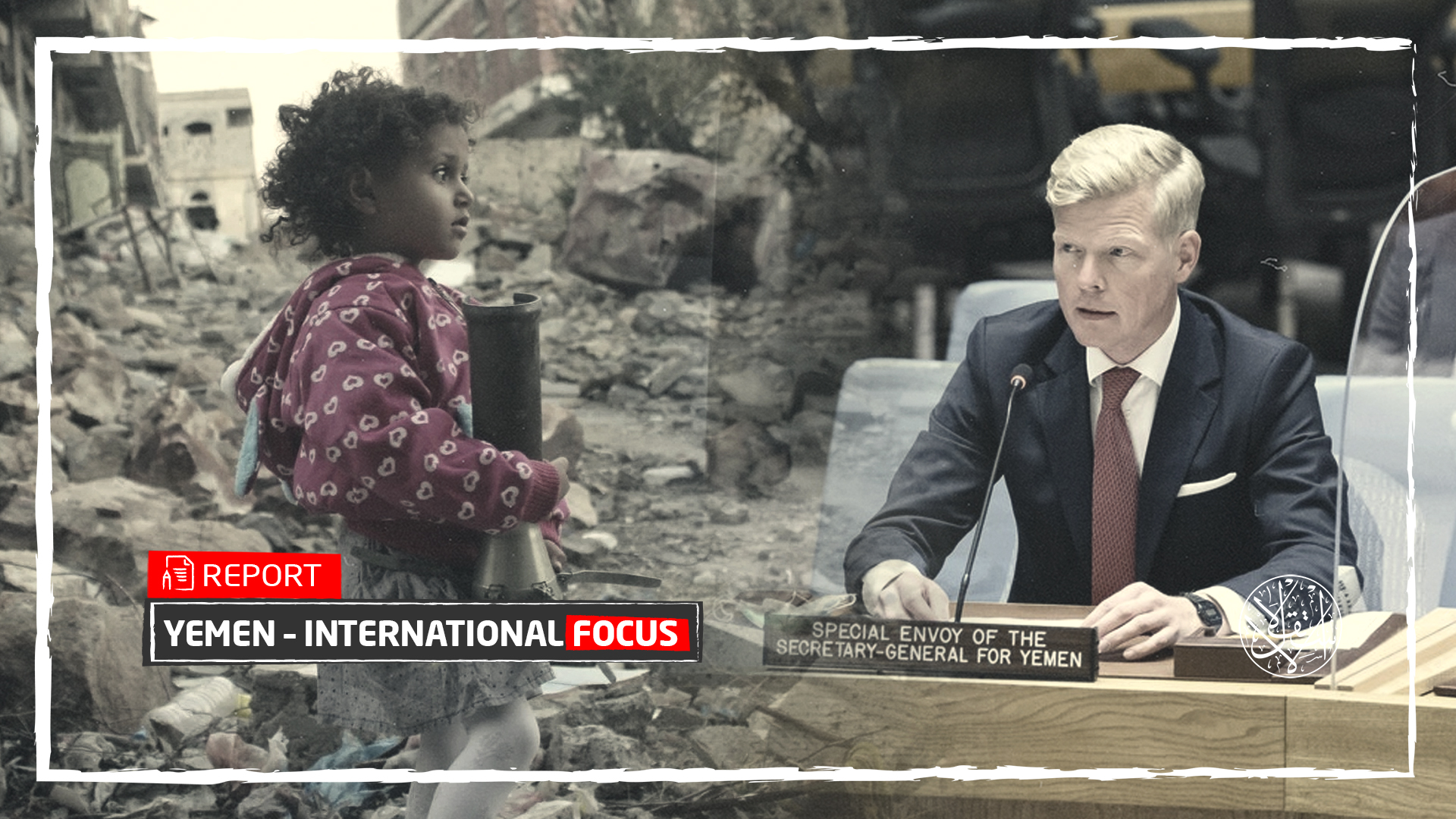
After more than seven years of war in Yemen, with unsuccessful international attempts to stop it, international attention to the Yemeni file has remarkably returned.
Recently, there have been noticeable movements, visits and meetings of the UN envoy to Yemen, along with other visits of the US diplomats in the region, including Yemen, Jordan and Gulf countries.
This simultaneous diplomatic movement with the Russian invasion of Ukraine, which has continued since February 24, 2022, reflects the international attention in Yemen, which may suggest the international community's seriousness this time to end the war.
It also comes within the framework of expanding American and European influence in Yemen, which overlooks Bab al-Mandab Strait, one of the most important strategic straits in the world, especially with regard to the oil and liquefied gas trade.
It is estimated that the number of ships and giant oil tankers passing through the strait is more than 21,000 vessels annually (57 per day), at a rate of about 3.8 million barrels of oil per day.
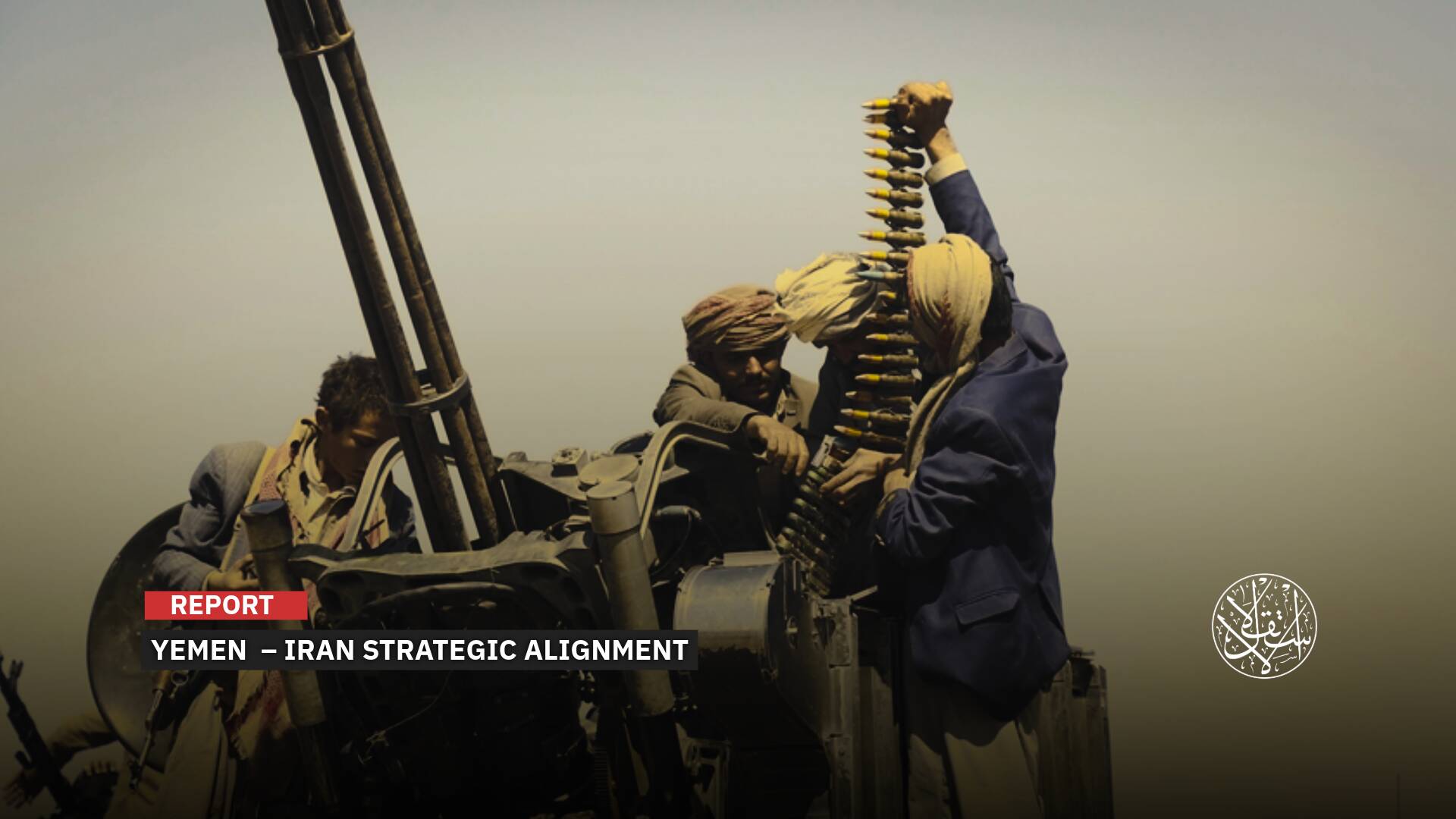
Yemen is witnessing an ongoing war between pro-government forces backed by a Saudi-Emirati military alliance, and the Iranian-backed Houthis, who control several governorates, including the capital, Sanaa, in addition to separatist attempts in the south backed by Abu Dhabi.
Until the end of 2021, the war killed 377,000 people directly and indirectly, and most of the population, numbering about 30 million, became dependent on aid, in one of the worst humanitarian crises in the world, according to the United Nations.
Surprise Visits
As part of these moves, a high-ranking US delegation made a surprise visit to the governorates of Shabwa, the center of liquefied gas export, on March 3, 2022, and Hadramawt, which is rich in oil in southeast Yemen, in addition to Al-Mahra governorate on the border with the Sultanate of Oman.
The delegation, headed by the US envoy to Yemen, Timothy Lenderking, and the acting US ambassador to Yemen, Cathy Westley, held meetings with the governor of Shabwa, Awad Muhammad al-Awlaki, and the governor of Hadhramaut, Faraj al-Bahsani.
The US State Department said in a statement, "The visit showed that Yemenis across the country - even those far from the front lines - have been suffering from years of political and economic instability."
"This visit to Yemen highlighted the continuing challenges posed by terrorism and smuggling, which fuel instability," the ministry added.
The visit of the US delegation coincided with the visit of a delegation from the European Union to Yemen, which included the Deputy Head of the European Union Mission in Yemen, Marion Lallis, in addition to the French ambassador, the German and Dutch ambassadors, and the Swedish envoy.
The European Union mission to Yemen said, in a statement: "Development advisors from the European Union delegation, Germany, France, the Netherlands, Ireland and Sweden, made a technical follow-up visit to Sanaa, during the period from 5-9 March."
The visit of the European delegation is the first of its kind since the start of the war in the country seven years ago, which erupted due to the Houthi control of the country by force of arms, including the capital, Sanaa, in September 2014.
Diplomats from the European Union, France, Germany and Norway met with the UN Special Envoy for Yemen, Hans Grundberg, and welcomed his launch of consultations with the Yemeni parties and regional and international actors, and affirmed their support for the UN-led peace efforts.
Growing Interest
The repercussions of the Russian war in Ukraine on the energy sector brought the oil and liquefied gas file in Yemen back to the fore, after several indications of American and European interest in reviving the country's exports, which had been suspended for nearly eight years due to the war.
Observers saw that there is an American desire to restart the Balhaf facility to export liquefied gas, which has been suspended since the start of the war, in order to face any potential crises in the energy market against the backdrop of the crisis caused by the Russian invasion of Ukraine.
Others considered that the remarkable interest in the Yemeni issue is to ensure the arrival of oil supplies and to protect international corridors in the Gulf of Aden and the Red Sea.
In this context, the director of the Yemeni Abaad Center for Studies and Research, Abdul-Salam Mohamad, said that the foreign delegations heading to the eastern regions of Yemen and Socotra confirm that the West is rushing to prevent any Chinese or Russian presence in Yemen.
He added to Al-Estiklal, that "the West considers it important to activate oil and gas production in order to reduce its revenues from the Yemeni crisis as a result of the war, and to benefit from the production to supply oil and gas to the European market."
For his part, economic researcher Abdul-Wahed al-Aubali said that Yemen was greatly affected by the war in Ukraine due to the increase in oil prices and its dependence on imports from abroad due to the suspension of Yemeni facilities.
He added to Al-Estiklal, that Yemeni oil and gas, in light of these conditions, does not constitute a large proportion of the global energy market.
In the governorates of Hadramawt and Shabwa, there are about 35 oil fields, the most important of which are al-Masila in Hadramout, and al-Uqla in Shabwa.
While the total number of fields in the concession areas in Yemen is about 105 fields, 13 of which are subject to exploratory work, 12 producing fields, and about 81 fields are open sectors for exploration and exploration.
Informed sources said that the Yemeni authorities had received messages and signals from European and American officials, companies, and economic and trade bodies, in order to help them expedite the resumption of oil and gas exports.
Yemen's oil production has collapsed since 2015, when the Saudi-UAE coalition intervened in the war to try to restore the government of Abd Rabbo Mansour Hadi to power after he was overthrown by the Houthis.
Yemen was producing about 127,000 barrels per day before the conflict, and the US Energy Information Administration estimates that it had proven oil reserves of about three billion barrels.
Peace Indicators
The US delegation that visited Yemen had stressed its support for a comprehensive UN-led peace process that includes various Yemeni groups, including the communities of Hadramawt, Mahra and Shabwa, as well as women, civil society leaders, and representatives of other traditionally marginalized groups.
The visit to Yemen stressed, according to the US State Department's statement, the importance of the international community continuing to support economic stability and humanitarian relief efforts.
As part of these efforts by a number of regional and international parties to search for a political solution that leads to stopping the war, the UN envoy to Yemen, Hans Grundberg, began on March 7, 2022, a series of consultations in the Jordanian capital, Amman.
With leaders from the Congress parties, the Yemeni Congregation for Reform, the Socialist Party, and the Nasserite Organization, to discuss the peace process.
More than 100 Yemenis from political parties, the security sectors, the economy and civil society organizations will participate in the meetings, to discuss the immediate and long-term priorities for the political, security and economic tracks.
The office of the UN envoy indicated that Grundberg will continue his consultations with the Yemeni government and the Houthis, as well as with regional and international stakeholders.
The United States welcomed the launch of the consultations, and a statement issued by the US embassy in Yemen stated, "We welcome the launch of consultations in Amman, regarding the framework of a comprehensive peace process that includes a wide range of important political and social figures in Yemen."
The US envoy had made a Gulf tour on February 28, 2022, urging the parties to stop hostilities, fully participate in a comprehensive peace process led by the United Nations, and take rapid measures to alleviate the humanitarian crisis in Yemen.
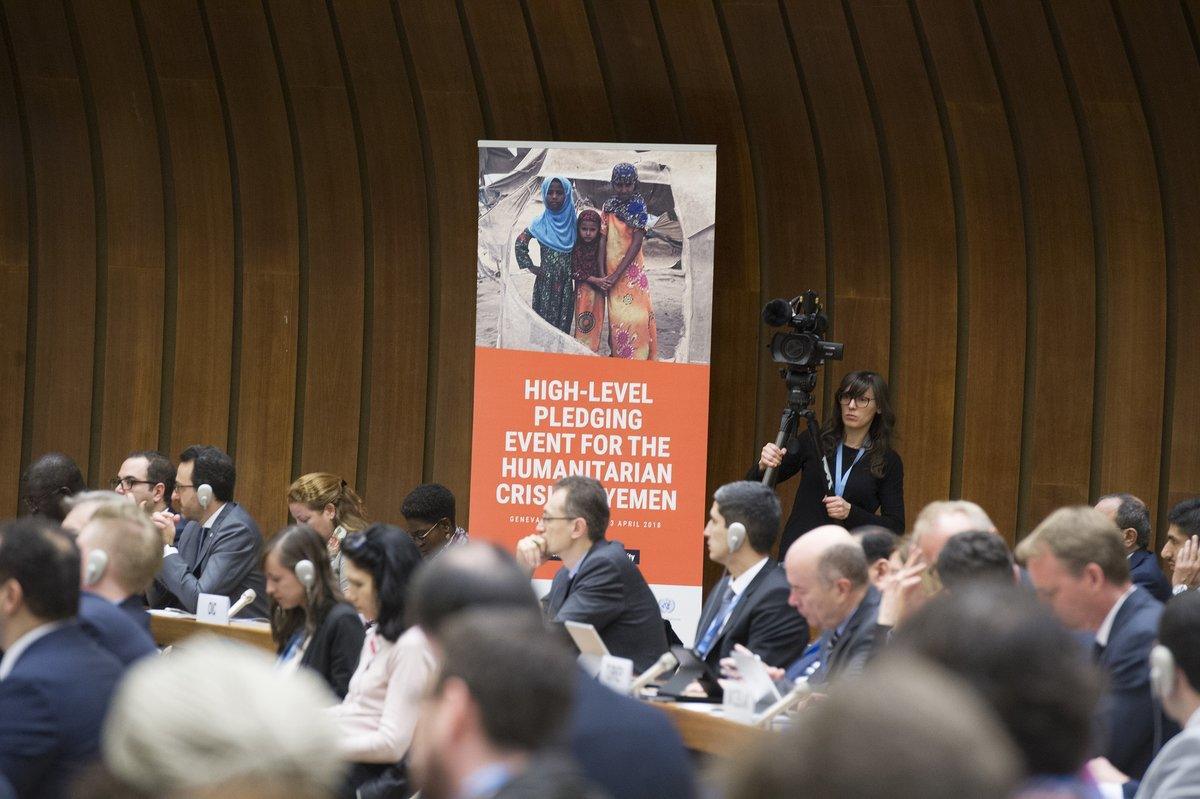
Meanwhile, on March 16, 2022, the United Nations hosted, together with Sweden and Switzerland, the Conference of Pledges for Yemen.
36 donors have pledged nearly $1.3 billion for the humanitarian action in Yemen, out of the $4.3 billion needed for the humanitarian crisis.
The United States topped the list of the highest pledges, and announced the provision of 584.60 million dollars, while Saudi Arabia and the UAE did not announce any support for Yemen during the conference.
Sources
- A European delegation concludes its first visit to Sanaa since the start of the war [Arabic]
- UN envoy Hans Grundberg begins consultations on the framework for action [Arabic]
- 36 donors pledge about $1.3 billion to Yemen out of $4.3 billion needed for the humanitarian response [Arabic]
- US Special Envoy for Yemen Lenderking Travels to the Gulf [Arabic]