From Dialogue to Imposed Reality: What Follows the SDF’s Expulsion from Aleppo?
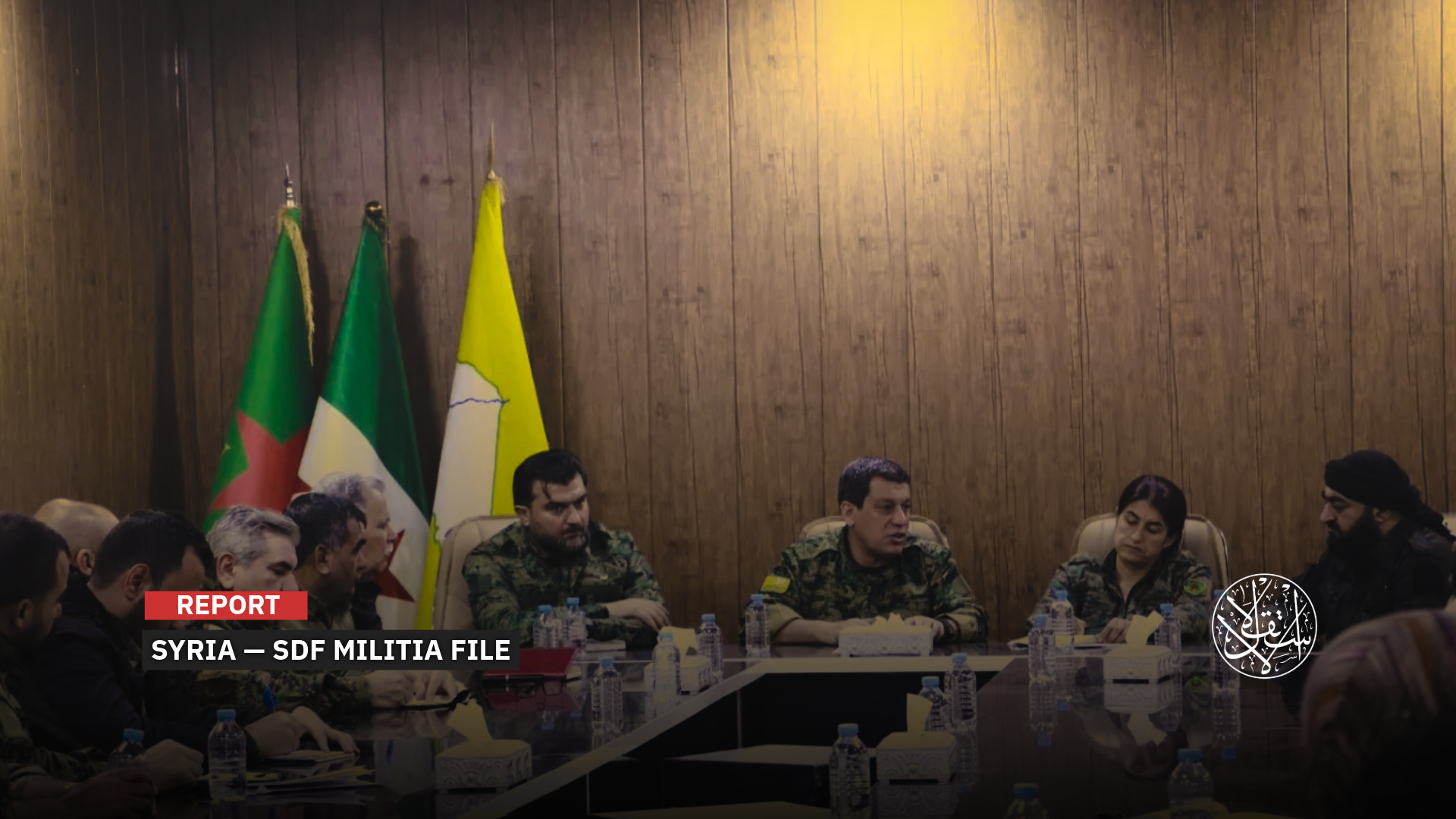
Developments in Aleppo are closely linked to a regional and international position backing the reassertion of Syria’s unity.
The Syrian state has put forward an unexpected model in handling the file of dismantling the Syrian Democratic Force (SDF), which continues to stall the integration process by holding on to pressure cards against Damascus.
Military developments on the ground in the city of Aleppo have reshuffled the cards on which the SDF militia relied as a player in political talks with the Syrian government over the future of the country’s northeastern regions.

SDF Expelled
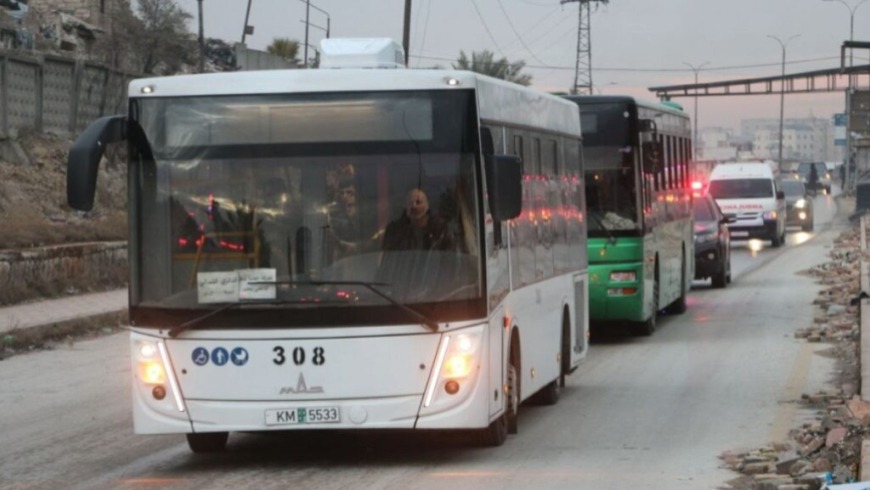
On January 11, 2026, Syria’s Ministry of Defense tightened its control over the entire city of Aleppo after retaking the last neighborhoods held by the SDF militia. Its fighters were allowed to leave for northeastern Syria, following days of intense fighting between the two sides.
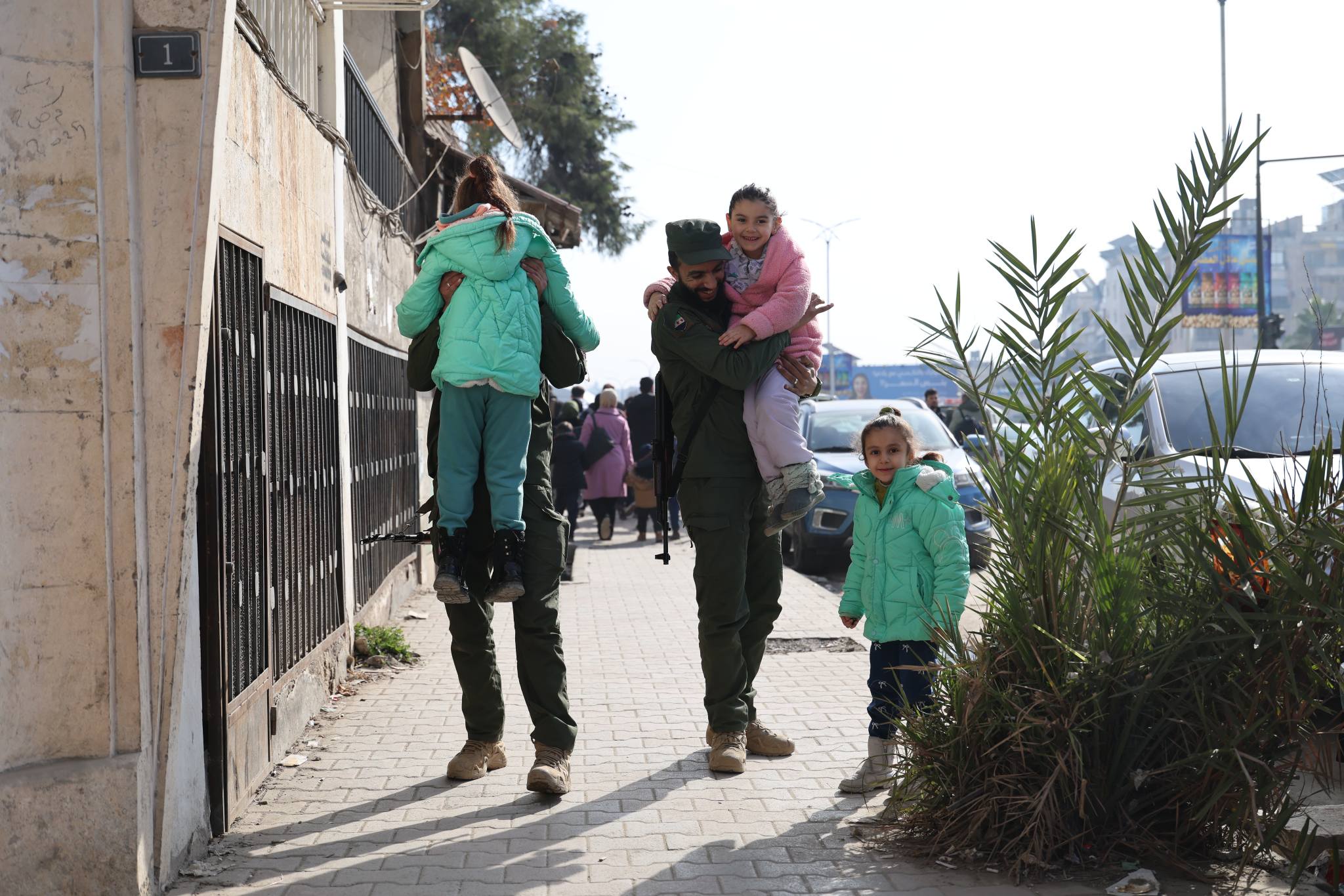
Residents began returning to the Ashrafieh, Sheikh Maqsoud, and Bani Zeid neighborhoods after Aleppo’s governorate had asked them to evacuate for their safety when clashes erupted. Authorities estimate the number of displaced residents at around 155,000.
The Ministry of Defense allowed roughly 400 SDF fighters to depart for al-Hasakah province, where the militia’s influence is strongest, while more than 300 others were arrested, according to Syria’s Interior Ministry.
The fighting left 24 people dead and 129 wounded, the state news agency SANA reported, citing Aleppo’s health director.
Shortly before the withdrawal of SDF commanders, fighters, and their families from the Sheikh Maqsoud neighborhood was announced, the U.S. envoy to Syria, Tom Barrack, called on both sides to resume dialogue and exercise restraint following a meeting with Syrian President Ahmed al-Sharaa.
SDF commander Mazloum Abdi said on January 10, 2026, that the withdrawal of his fighters took place through international mediation after an understanding led to a ceasefire and secured their exit from the Ashrafieh and Sheikh Maqsoud neighborhoods to northern and eastern Syria.
SDF fighters who had been entrenched in their final stronghold inside a hospital in Sheikh Maqsoud withdrew at dawn on January 11, 2026, under an evacuation agreement, leaving their weapons behind, according to Syrian state television.
The SDF militia still controls wide areas across three provinces: Deir ez-Zor, al-Hasakah, and ar-Raqqah, which together contain approximately 90 percent of the country’s oil and gas fields. Meanwhile, the Syrian government is working to restore control over all these regions.
The Sheikh Maqsoud and Ashrafieh neighborhoods, which have a Kurdish majority, had been under the influence of the so-called People’s Protection Units (YPG) and Women’s Protection Units (YPJ) since 2012 and were run by the Kurdish Asayish security force before being folded into the SDF after its formation in 2015 with U.S. backing.
Observers note that this Kurdish force supported the now-ousted Bashar al-Assad regime in 2016 during the siege of Aleppo by cutting supply lines to opposition factions trapped in the city’s east.
As the SDF dragged its feet on implementing the integration agreement signed by Mazloum Abdi and President Ahmed al-Sharaa in Damascus on March 10, 2025, it became clear that the militia was seeking new conditions to improve its bargaining position after Assad’s fall.
Maintaining a foothold inside Aleppo, Syria’s economic capital, appeared to be a strategic choice for the SDF aimed at preserving a pressure card against the Syrian government, as well as strengthening the militia’s role in any future settlement by arguing that the majority of residents in Sheikh Maqsoud and Ashrafieh are Kurdish and by presenting itself as the sole representative of their rights.
The Aleppo Model
At the same time, it has become clear that the Syrian government is moving with greater urgency to consolidate the country’s unity and bring the natural resources controlled by the SDF back under state authority. This push has gathered pace in particular after the United States lifted the Caesar Act sanctions imposed on Syria in 2020, which had long obstructed foreign investment.
The Syrian army’s limited military operation in Aleppo to end the SDF militia’s influence there came after a government source said on January 4, 2026, that meetings held with the SDF in Damascus, attended by Mazloum Abdi, had failed to produce tangible results that would speed up implementation of the March 10 agreement, which was supposed to be completed by the end of 2025.
The source added, in remarks to Syrian state television, that further meetings had been agreed upon without setting a specific timeline.
The SDF said at the time that the meeting between its leadership and Syrian government officials in Damascus had concluded, with the participation of Brigadier General Kevin Lambert, commander of the U.S.-led Combined Joint Task Force, Operation Inherent Resolve.
Against this backdrop, and as the SDF was betting on time to improve its negotiating position, developments in Aleppo redrew the picture and imposed new equations on the political table.
The Syrian state’s takeover of the last SDF pockets inside Aleppo was not a routine security event. It carried deeper implications, signaling a shift in Damascus from a policy of waiting and limited pressure to one of imposing realities on the ground.
Abdullah al-Asaad, head of Syria’s Rasd Center for Strategic Studies, said the army’s operation in Aleppo came after a buildup of indicators confirming that the SDF cannot be integrated into the Syrian Arab Army. He argued that the militia does not embrace the idea of living within a state, that its thinking is rooted in separation, and that it continues to maneuver without abandoning its project.
“Recent developments in Aleppo exposed the depth of internal divisions within the SDF, particularly the refusal by some of its fighters to withdraw to northeastern Syria without fighting,” he told Al-Estiklal.
“Military analysis shows the SDF cannot engage in serious political talks because elements of Turkiye’s Kurdistan Workers’ Party hold the real power in the matter.”
“The Aleppo model will have direct military and political repercussions at the next negotiating table over the fate of the areas controlled by the SDF east and west of the Euphrates River.”
Conditions and Guarantees
Events in Aleppo reflect a growing regional and international push to restore Syria’s unity and full control over its territory.
The SDF now faces limited options. They can either engage seriously in implementing the integration agreement within the framework of the Syrian state or confront escalation scenarios that could redraw the map of influence by force.
At the same time, Damascus is seeking to capitalize on the regional and international moment to impose a final path that would end the duality of authority and arms.
Wael Alwan, a researcher at the Jusoor Center for Studies, told Al-Estiklal that the March 2025 agreement is unlikely to collapse—not because of developments in Aleppo alone, or the SDF’s delays, but because it reflects a broader regional and international effort to ensure stability in Syria.
He added that while the events in Aleppo may affect the SDF’s position in form, all of its positions west of the Euphrates remain effectively under threat of a military solution, in line with the Manbij agreement signed by the United States and Turkiye in mid-2018.
Alwan noted that the SDF still holds key strategic points in eastern Aleppo’s countryside, most notably the Tishrin Dam near Manbij, which houses six power generation units supplying electricity to a wide swath of towns and cities in the region.
The Manbij agreement allows the Syrian government, in coordination with Turkiye if necessary, to end SDF influence west of the Euphrates without U.S. intervention, based on existing understandings between Washington and Ankara.
Alwan emphasized that the Syrian government did not request Turkish support in Aleppo, as it was not needed. Instead, Damascus allowed limited military pressure to take effect without triggering a broader confrontation, but repeated provocations from the SDF compelled it to advance its operations.
He pointed out that areas east of the Euphrates remain on the political track, adding that, contrary to expectations, the Aleppo developments could help accelerate implementation of the integration agreement and prevent wider escalation.
Alwan suggested that this approach is likely backed by the United States, with additional pressure expected to enforce the March 10, 2025, agreement and integrate the SDF into Syria’s state institutions.
He concluded that implementation will not be easy, given numerous on-the-ground obstacles, but said the Syrian government will tie any extension of deadlines to clear guarantees to ensure the agreement is applied in practice, rather than giving the SDF more time to stall.
Sources
- Updates: Syria’s army takes Aleppo’s Ashrafieh, battle with SDF continues
- AFP: 400 SDF Fighters Evacuated to Northeastern Syria [Arabic]
- Aleppo Cleared of SDF Fighters [Arabic]
- Damascus-SDF Meeting Ends Without Tangible Results [Arabic]
- Abdi: International Efforts Lead to Ceasefire Agreement and SDF Withdrawal from Aleppo [Arabic]