Despite 47 Years of Injustices, Why Have Iran’s Sunnis Refused to Align Themselves with the United States and 'Israel'?
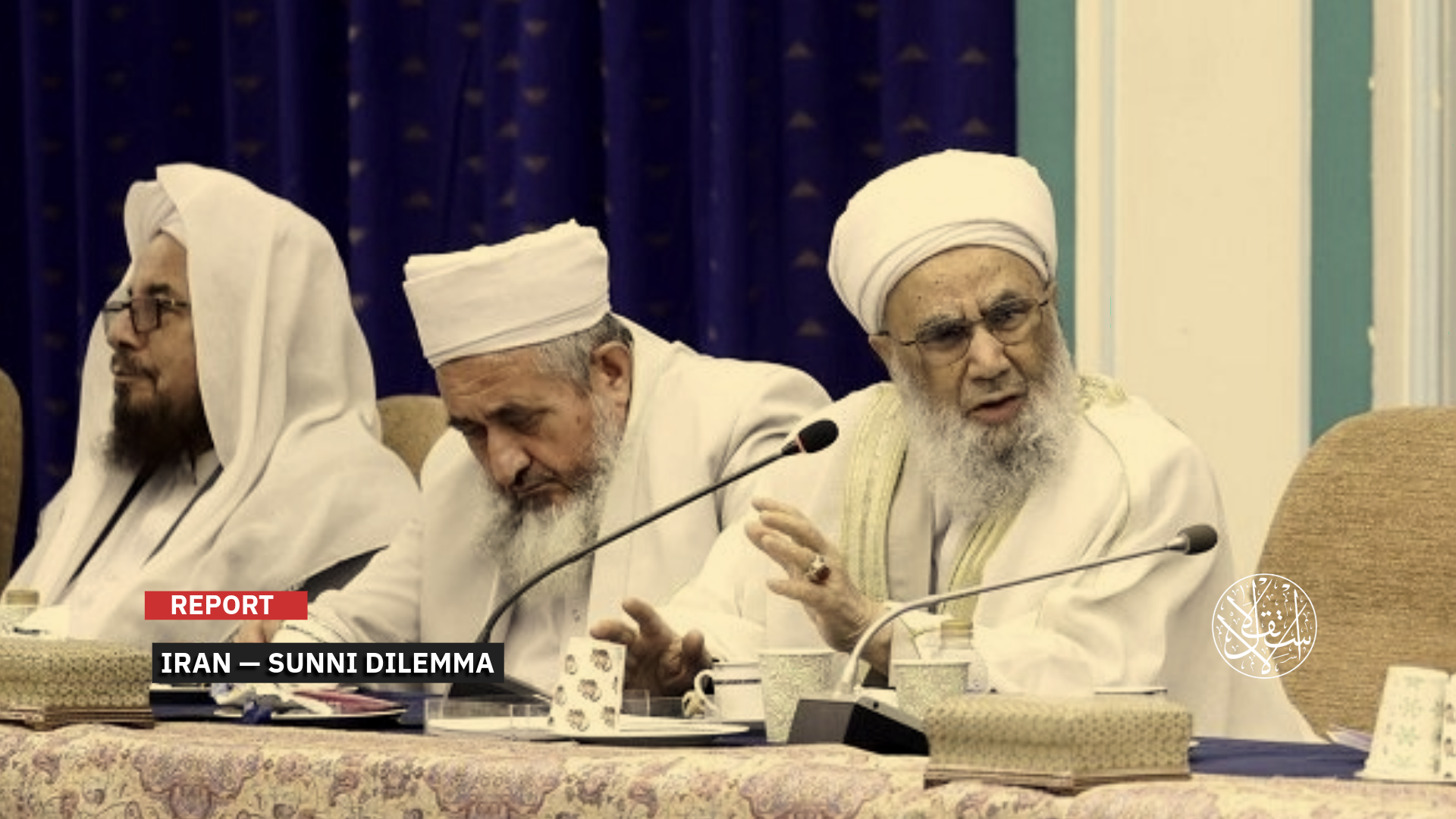
Iran’s Sunnis face longstanding problems, including the absence of a single Sunni mosque in the capital, Tehran.
Iran’s Sunnis were among the groups that drew attention during the battles Iran fought against the United States and “Israel”, as observers waited to see “what they would do and how they would respond.”
In the 12-day war in June 2025, followed by the war that erupted after the U.S. and Israeli attacks on February 28, 2026, and lasted 40 days, Iran faced one of the most difficult periods in its history, particularly with the killing of more than 40 Iranian officials, foremost among them Supreme Leader Ayatollah Ali Khamenei, along with several senior military commanders.
Historically, Iran’s Sunnis have faced a range of grievances. Some have been linked to the geographic areas where they are concentrated, while others concern the failure to meet some of their religious demands, in addition to security problems that have, in turn, taken on sectarian dimensions.
Iran’s Sunnis face longstanding problems, including the absence of a single Sunni mosque in the capital, Tehran. After the 1979 Revolution, Ayatollah Khomeini allocated a plot of land for this purpose.
However, the administrations of the city of Tehran and successive governments have, in one way or another, prevented the construction of a Sunni mosque in the capital.
The Sunnis of Sistan and Baluchestan, one of Iran’s most marginalized provinces, face problems related to identity and citizenship, as well as serious security challenges about which they have long expressed their dissatisfaction.
The same applies, albeit to a lesser extent, to Sunnis in the provinces of Kurdistan and Golestan, where they face similar problems.
Despite the passage of 47 years since the Iranian Revolution, the failure to address these grievances has only deepened them.
Consequently, it was expected that Sunnis would take an anti-Iranian position in both wars, particularly in the latest war that began on February 28, and that they would rise up and support the U.S. and Israeli attacks. But what happened was the opposite.

The War and the Sunnis
Following the attacks launched by the United States and “Israel” against Iran, statements were issued by the country’s various ethnic, religious, and sectarian communities.
Because the majority of the population is Shiite, statements and positions associated with Shiite Islam received the greatest attention, while statements by Sunnis and other communities received comparatively less attention and analysis.
The use of Shiite religious symbols in demonstrations and the deployment of sectarian rhetoric also contributed to overshadowing the positions of other sects and communities.
In reality, however, Sunni Friday prayer leaders and religious scholars in Iran issued numerous statements during the U.S. and Israeli military attacks on the country and the confrontations that followed.
Looking at what these Sunni clerics and scholars said, it is notable that they did not call for preserving the system of Velayat-e Faqih (Guardianship of the Islamic Jurist) or adhering to the values of the 1979 Revolution.
Instead, they primarily framed their positions around preserving and defending Iran’s territorial integrity and safeguarding national unity.
They also called in their statements, both during and after the war, for unity and solidarity, as well as vigilance in the face of external threats.
Among the main reasons that prompted these scholars to support Iran’s existing system is the possibility that Reza Pahlavi or an anti-religious force, such as the People’s Mojahedin Organization of Iran (MEK), could come to power.
Iranian Sunnis reject U.S. and Israeli support for Reza Pahlavi, the son of Iran’s ousted Shah, and their efforts to restore him to power. This is evident in the positions expressed by their religious scholars.
For example, during the war, the Sunni Friday prayer leader of Hamun in Sistan and Baluchestan province said, “The Iranian people are becoming increasingly vigilant, strong, and aware in confronting these schemes being plotted by criminal Israel and treacherous America. Blessed are those who have tasted the cup of martyrdom!”
He added, “We strongly condemn, rationally, intellectually, and spiritually, and in light of the Quran and Sunnah, this aggression carried out by the occupying Zionist regime. Know that the roots of these people are deeply embedded in terrorism, and that their essence is a mixture of crime and treachery. The Quran has told us that you will find the Jews to be the most hostile to you.”
Enayatollah Rasoulzadeh, the Sunni Friday prayer leader of Sarbaz in Iran, stressed that the U.S. and Israeli attacks would unite the Iranian people, saying,
“We must first understand that Israel has always been known as a criminal and treacherous regime that has committed numerous crimes since its establishment and has never shown any remorse for its actions. Examples of these crimes include the killing of Palestinians, violations of the borders of neighboring countries, and attempts to expand its influence in the region.”
He added, “With regard to Israel’s attack on Iran, I must say that rather than weakening Iran, this act will strengthen its national unity and solidarity among its people.”
Molavi Mohammad Rigi, the Sunni Friday prayer leader of the Iranian city of Khash, explained that “Israel’s” attack on Iran had created a sensitive and complex situation for the country and its people. He said,
“As one of the Sunni religious scholars in the region, I believe that it is my duty during this crisis to enlighten people about their religious and Islamic obligations. Our duty, especially that of our youth, in the current situation is to defend the homeland and Islamic values with full vigilance and readiness.”
He added that “defending the homeland and the Islamic entity is a duty incumbent upon all Muslims, and even upon non-Muslims. This duty is one of the essentials of the Islamic faith, and the Prophet Muhammad ﷺ repeatedly emphasized it.”
Support, Criticism, and Appeal
Many inside and outside Iran agree that one of the most prominent, influential, and outspoken Iranian Sunni scholars is Molavi Abdolhamid Ismaeelzahi, the Friday prayer leader of Zahedan and leader of the “Makki Movement,” owing to his criticism of the Iranian government, his appeals and strong grassroots connections, and his extensive network of followers.
Molavi Abdolhamid is known for addressing the problems faced by all Iranians, not just Sunnis, through his messages to the late Supreme Leader Ayatollah Ali Khamenei and his Friday sermons.
Following the outbreak of the war on February 28, Molavi Abdolhamid chose to remain silent for some time. However, about two weeks after the war began, he returned to express his views.
In his Friday sermon on March 13, 2026, Molavi Abdolhamid stressed that “Iran is going through difficult trials and possesses enormous potential, capabilities, and resources that make the countries of the world look to it, eager to exploit these riches.”
As is customary in his sermons, Molavi Abdolhamid called on the government to release all political prisoners, both Sunni and Shiite, and to discuss the country’s problems with these politicians.
In his April 17, 2026 sermon, Molavi Abdolhamid addressed shortcomings in the Iranian military’s capabilities and called for the “signing of a fair agreement.” He also sharply criticized hardline Shiite groups opposed to the agreement, saying,
“Iran’s airspace is under the control of the enemy, the country’s infrastructure is at risk of destruction, and the armed forces lack the necessary means for air defense. The only way out of this predicament is a ‘fair agreement.’ What will these hardliners, who are stubbornly obstructing the agreement today, say tomorrow to God and to the oppressed people if the homeland collapses?”
Amid the escalating confrontation between the United States and Iran, Molavi Abdolhamid addressed the problems and demands of Iran’s Sunnis, as well as the broader problems facing the country, in his Friday sermon on August 28.
During the month of Muharram, as Husayni mourning gatherings increased across the Shiite world, attacks and insults targeting the Companions of the Prophet and Sunni beliefs intensified, not only in Iran but also in Iraq, where some gatherings organized by hardline Shiite groups witnessed insults directed at the caliphs and Sunni beliefs.
In his sermon, Molavi Abdolhamid issued clear and explicit appeals to the Iranian government on this matter, saying:
“The Companions of the Prophet and the Ahl al-Bayt are among the sacred figures of Muslims, and all Muslims must respect the Companions. Even if they do not respect all of the Companions, they should at least refrain from insulting them. Our demand from the country’s officials is that they stop the hardliners who insult the Companions on various occasions.”
He added, “Officials must not allow anyone to publicly insult the Companions or the sacred beliefs of the majority of Muslims. Insulting others is unacceptable in any religion or sect, and we do not permit insults even against the sacred beliefs of non-Muslims. If someone has something to say, let them say it through reason and evidence, not through insults and contempt.”
Responding to statements and appeals by Iran’s Supreme Leader, Ayatollah Mojtaba Khamenei, and other government officials regarding the need for unity between Shiites and Sunnis, Molavi Abdolhamid said:
“Unity is a very good thing, and everyone welcomes it. We support it, but we do not accept a unity that remains confined to slogans; unity must be realized on the ground.”
Molavi Abdolhamid once again raised the need to build a Sunni mosque in Tehran, saying,
“In Moscow, the capital of Russia, and near the Kremlin Palace, a huge multi-story mosque has been built, costing $200 million, and tourists from all over the world visit it. The demand of Sunnis in our country for a long time has been that this great city, Tehran, where at least 2 to 3 million Sunnis live, should have a mosque where they can pray.”
He continued, “We believe in the freedom to build mosques throughout the country. Even in villages where our Shiite brothers are a minority, they should have their own mosque. In this province, Sistan and Baluchestan, there are villages and large towns where only one Shiite family lives, yet they have their own mosque, and the local residents do not object to this; rather, they help build it. This freedom should be available to everyone.”
Since approximately the early days of the Revolution, Iran’s security-oriented treatment of activities within the Sunni community has been an issue criticized and highlighted by Sunni scholars and prominent figures.
The Iranian government treats the Sunni community as a security issue rather than viewing it as part of Iranian society, an approach that needs to be corrected.
As a result of this security-oriented policy, many prominent Sunni figures have been imprisoned, some have been forced to leave the country, while some senior Sunni scholars have fallen victim to assassinations by unidentified perpetrators.
Molavi Abdolhamid is among the most prominent figures to clearly emphasize that Sunnis are not a security problem. He says, “Another legitimate and lawful demand of Sunnis is that their prayers, mosques, and education should not be turned into a security issue. The Constitution explicitly guarantees freedom of religion in religious affairs and education. Unfortunately, however, in the past, actions were taken in violation of the Constitution, driven by personal whims or by influence. If the law were observed, it would be in the interests of this country and its people.”

Molavi Abdolhamid in the Crosshairs
Molavi Abdolhamid Ismaeelzahi, the Sunni Friday prayer leader of Zahedan, has become a target of hardline Shiite groups, figures, and media outlets in Iran because of his repeated efforts to raise the problems facing the country and the Sunni community.
In a report published on May 10, the Fars News Agency accused Molavi Abdolhamid of “cooperating with Trump and Netanyahu” after he said that “the Strait of Hormuz is an international waterway, and Iran should open it to all ships.”
Campaigns by Persian nationalists in Iran against Molavi Abdolhamid reached their peak in 2022. Persian nationalists, whose influence in key institutions such as the Foreign Ministry and the Islamic Revolutionary Guard Corps grew during Hassan Rouhani’s presidency, accused Molavi Abdolhamid and the “Makki Movement,” which he leads, of “engaging in activities harmful to Iran.” This encouraged the state’s security agencies to intensify pressure on him.
Persian nationalist groups in Iran claimed that the “Molavi Gorgij incident” would be repeated, in an attempt to provoke the state into increasing pressure on all Sunnis by targeting Molavi Abdolhamid and the “Makki Movement.”
Mowlavi Mohammad-Hossein Gorgij, the Sunni Friday prayer leader in Azadshahr, Golestan Province, had been removed from his position in December 2021 after making remarks concerning religious issues that sparked objections among Shiite circles.
This was followed by a gathering of his supporters to protest his dismissal. He was subsequently barred from delivering sermons and leading Friday prayers in Galikesh County and was placed under house arrest.
Likewise, the aftermath of the police assault in October 2022 on worshippers inside a mosque in Sistan and Baluchestan during Friday prayers, as well as on those leaving the mosque, and the failure of the then-Supreme Leader, Ayatollah Ali Khamenei, to play a role in resolving the crisis, encouraged Persian nationalists to intensify their attacks on Molavi Abdolhamid and the Sunnis.

Despite Everything, Opponents of the Aggression
For 47 years, Iran’s Sunnis have been waiting for their longstanding social and sectarian problems to be resolved, and they have repeatedly called on the government to address them.
Despite the failure to resolve these problems, the government’s treatment of them as part of its security policies, and the pressure they have faced, they have not abandoned their country or homeland.
In both the June war and the February war, the Sunnis chose to stand with their country in confronting the United States and “Israel”, despite all the problems, pressures, and disagreements they have faced with the regime.
Just as cities with Shiite-majority populations, such as Tehran, Mashhad, Yazd, and Isfahan, witnessed demonstrations against the United States and “Israel”, so too did Sunni-majority areas, such as Zahedan, Sanandaj, Kermanshah, and Turkmen Sahra.
During the June war, one of Iran’s most prominent Sunni scholars, Molavi Abdolhamid Esmaeil-Zehi, became stranded in Saudi Arabia while performing the Hajj pilgrimage after the closure of the airspace.
As soon as the opportunity arose, he returned to Iran via Afghanistan, accompanied by other Iranian pilgrims who, like him, had been stranded there.
He urged citizens to maintain unity and solidarity and prevented the war from being exploited in Sistan and Baluchestan in ways that would serve the interests of the United States and “Israel”.
Senior Sunni scholars in Iran’s Kurdistan and Turkmen Sahra regions also encouraged people to stand against the U.S. and Israeli attacks, and many Sunni scholars took part in anti-U.S. and “anti-Israel” demonstrations held in the squares of their cities.