Bin Salman in Washington: The Abraham Accords vs. the F-35 Deal
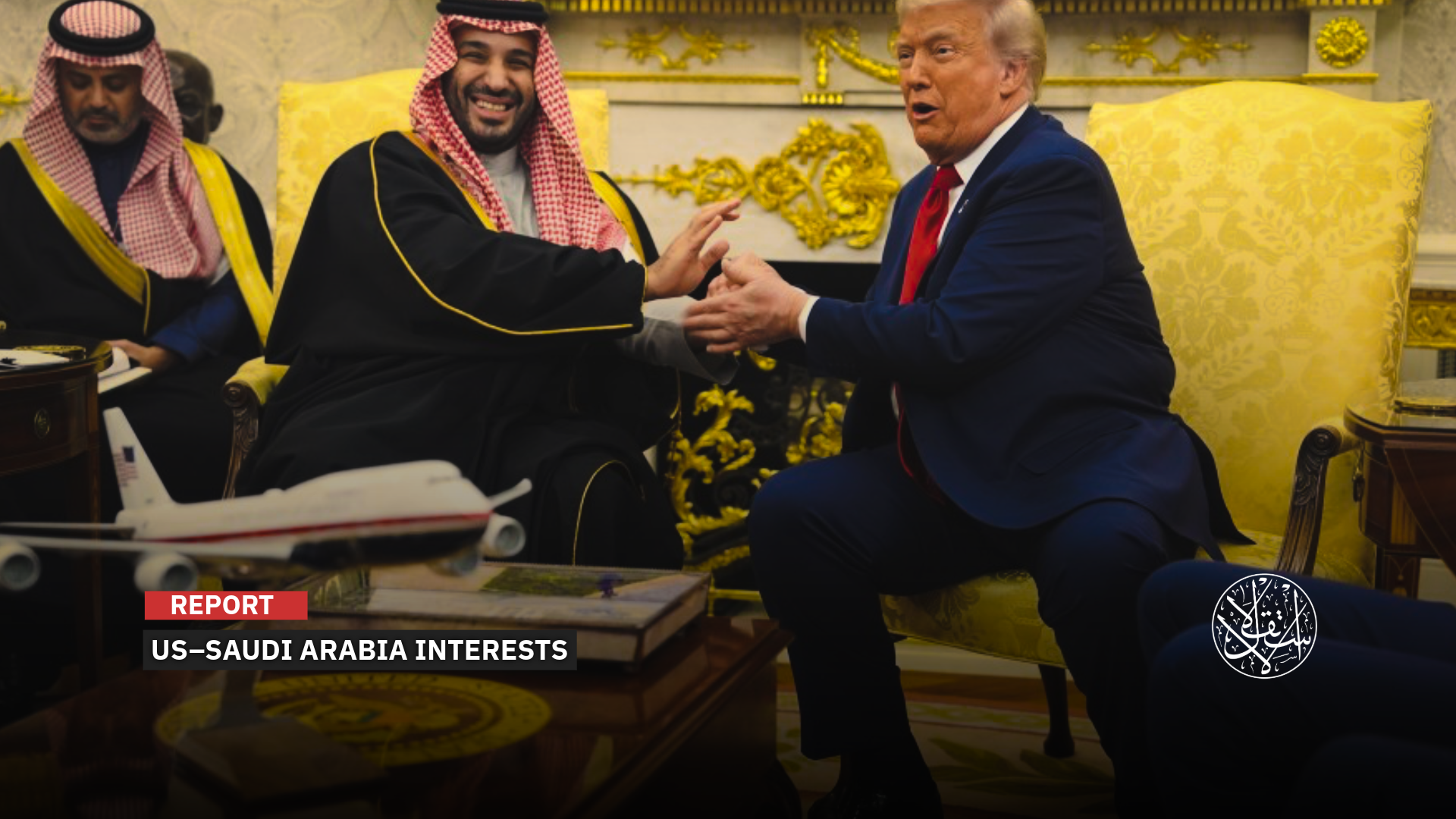
Reports indicate that the Abraham Accord is more important to “Israel” than the aircraft deal itself.
Despite Israeli media alarms over Saudi Arabia potentially acquiring U.S. F-35 fighter jets during Crown Prince Mohammed bin Salman’s visit to Washington, reports indicate that the Abraham Accord matters far more to “Israel” than the aircraft.
Military analysts in the Israeli Occupation and the West agree that “Tel Aviv” is far less concerned about Riyadh receiving advanced jets than it is about the normalization deal. For the Israeli Occupation, the accord is the real prize: a political shield that helps deflect accusations of the genocide in Gaza while delivering key diplomatic gains.
“Israel’s” lack of concern over the F-35 sale stems from technical safeguards. Saudi Arabia would receive a less advanced variant than “Israel’s” fleet, with built-in control mechanisms allowing Washington to disable the aircraft if it threatens “Israel” or other sensitive targets. Encrypted “kill switches” are in place for this purpose.
Bin Salman returned to Washington on November 17, 2025, ending a seven-year hiatus following the scandal over the 2018 murder of journalist Jamal Khashoggi by Saudi agents, a visit that ignited intense speculation about its purpose and possible outcomes.
Saudi priorities include securing security guarantees to protect the kingdom and its leadership and purchasing advanced F-35 jets, while U.S. President Donald Trump seeks to push the kingdom toward normalizing relations with the Israeli Occupation.
Normalization Is No Easy Task, But...
Talk in Washington, both before and after the crown prince’s arrival, focused heavily on U.S. demands for Saudi Arabia to join the Abraham Accords. Saudi caution remains, with Riyadh insisting on safeguards that ensure the establishment of a Palestinian state. Meanwhile, Trump has leveraged his role in halting the Israeli war on Gaza, proposing a U.N. resolution that explicitly mentions a Palestinian state for the first time.
In October 2025, Trump reportedly told the crown prince over the phone that with the Gaza war over, he expects the Kingdom to move toward normalization, according to Axios on November 15, 2025.
“I hope that Saudi Arabia will be going into the Abraham Accords fairly shortly,” Trump said.
Axios reported that U.S. officials said President Trump told Crown Prince Mohammed bin Salman during an October 2025 phone call that, with the Gaza war winding down, he expects Saudi Arabia to move toward normalizing relations with “Israel.”
However, the Kingdom is unlikely to agree at this stage. The crown prince has prioritized securing stronger U.S. security guarantees, particularly after Israeli strikes targeted Qatar in September, a key U.S. ally.
The main sticking point is Saudi Arabia’s demand that Israeli Prime Minister Benjamin Netanyahu commit to a “reliable, irreversible, and time-bound path” to establishing a Palestinian state, a condition Netanyahu has so far rejected.
As a result, Riyadh is not currently ready to advance the normalization agenda, especially as it leads an international push for a Palestinian state, which remains its declared prerequisite for normalization, according to Western reports.
The Associated Press (AP) reported on November 16, 2025, that Trump is trying to convince the crown prince that the U.S. 20-point peace plan on Gaza provides such a pathway.
A U.S. official told AP that the best outcome for these talks would be for Saudi Arabia to acknowledge the Trump plan as a starting point toward a Palestinian state and to publicly agree to consider joining the Abraham Accords in the future.
Previous U.S. administrations, including Trump’s first term and the Biden administration that followed, also tried to persuade Saudi Arabia to join the Abraham Accords. These efforts were blocked first by King Salman during Trump’s initial term and later by Crown Prince Mohammed bin Salman after Operation al-Aqsa Flood, which triggered the war on Gaza and the ensuing humanitarian crisis.
Jets for Normalization?
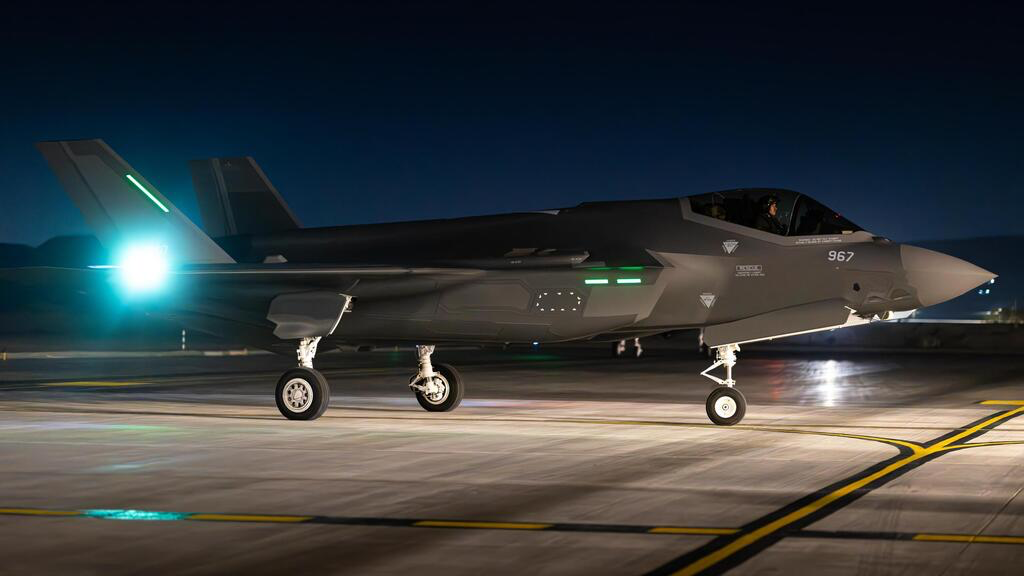
As soon as the possibility of the U.S. approving advanced F-35 fighter jets for Saudi Arabia emerged, Israel’s public broadcaster Kan voiced strong opposition on November 16, 2025.
The Israeli Occupation’s main concern is that Saudi acquisition of these jets could undermine its qualitative air superiority in the Middle East, and there is also fear that sensitive aircraft technology could leak to Russia or China, which are building closer ties with Riyadh.
According to Israel’s Channel 12, the Israeli Occupation remains the only country in the region currently operating F-35s, and supplying them to Saudi Arabia would shift the regional balance of power and challenge “Israel’s” military edge.
Congress passed a 2008 law requiring the U.S. to preserve “Israel’s” qualitative military edge, a principle supported across both Democratic and Republican parties.
Yet some Israeli analysts have begun to soften their opposition. One view is that Trump could finalize the deal without “Israel’s” approval and that concerns are overblown because Saudi Arabia would receive a less advanced variant than “Israel’s” fleet, with technical safeguards allowing Washington to disable the aircraft if used against allies.
The second view frames the sale as leverage for normalization: Saudi Arabia’s access to F-35s could be tied to progress on establishing diplomatic ties with the Israeli Occupation.
Israeli analyst Amos Harel said Saudi Arabia could receive F-35s without normalization, especially given Netanyahu’s waning influence over Trump. He added that Trump’s relationship with the Saudi royal family is so strong that he could hand Riyadh this gift without demanding anything tied to “Israel.”
Harel noted that in Trump’s first term, linking Abraham Accords deals to F-35 sales to the UAE was planned, but now the F-35 deal is a central pillar of Trump’s new foreign policy, sidelining traditional considerations about preserving “Israel’s” regional air superiority.
“Israel’s most worrying near-term scenario isn’t just the prospect of Saudi Arabia getting U.S. F-35 fighter jets. It’s the possibility that this will happen without a deal that includes Israeli-Saudi normalization and some kind of ambiguous Israeli recognition of the vision of a Palestinian state,” according to the Israeli analyst.
Yedioth Ahronoth reported on November 16, 2025, that a senior Israeli military source said Netanyahu is willing to sacrifice a significant portion of “Israel’s” air superiority just to achieve normalization, without committing to a two-state solution.
The Israeli Occupation has reportedly told the U.S. it does not oppose the F-35 sale, but only if it is tied to Saudi normalization with “Israel.”
“We told the Trump administration that the supply of F-35s to Saudi Arabia needs to be subject to Saudi normalization with Israel,” an Israeli official told Axios.
“Israel” is also expected to seek security guarantees from the U.S., such as restrictions on deploying the jets at Saudi airbases in the country’s western regions.
Beyond air superiority, the Israeli Occupation fears that Saudi Arabia could move toward nuclear capabilities under the framework of agreements with Trump. The Israeli Ministry of War has voiced concern over both the potential F-35 sale and the possibility of Riyadh acquiring civilian nuclear technology.
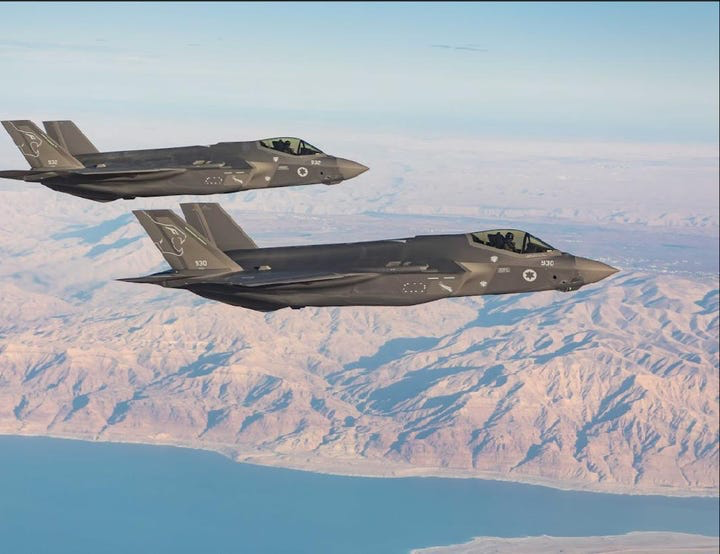
Pentagon Holds the Keys to Saudi F-35s
“Israel’s” acceptance of U.S. sales of F-35 fighter jets to Saudi Arabia, whether tied to normalization or not, does not mean Tel Aviv has relinquished control. Analysts and military experts emphasize that the reins of these aircraft remain firmly in the hands of the Pentagon.
Washington has equipped the jets with technology that allows it to disable them if they are used against the Israeli Occupation or any other target the United States wants to protect.
Ron Ben-Yishai, a military analyst for Yedioth Ahronoth, said the aircraft’s software includes coded keys that allow the Pentagon to track the jet’s flight path and monitor its targets in real time. If a jet threatens a U.S. interest—such as “Israel”—Washington can deactivate it using a “kill switch,” rendering the plane incapable of executing missions.
The U.S. concern over sensitive technology leaking to third parties, especially unstable Middle Eastern countries acquiring jets against American and allied interests, prompted these built-in safeguards.
Ben-Yishai noted that the F-35s destined for Saudi Arabia will lack the advanced upgrades and electronic warfare systems that “Israel” has installed on its own jets, which allow Israeli aircraft to track and target even Saudi jets on the ground.
Even if Saudi Arabia receives the more advanced Block 4 variant, it will not include the Israeli “Adir” enhancements.
This is also why the UAE rejected a similar F-35 deal in 2021, despite it being offered as a reward for joining the Abraham Accords.
Ben-Yishai added that the U.S. prefers selling F-35s to maintain control, partly to prevent Saudi Arabia from turning to Chinese J-20 fighters, which could undermine U.S. influence. Turkiye is also developing a similar stealth jet and is reportedly exploring sales to Riyadh.
Israeli military analysts note that Tel Aviv will likely demand U.S. security guarantees, including restrictions on basing Saudi F-35s at western airfields near “Israel” and other measures to preserve “Israel’s” air superiority.
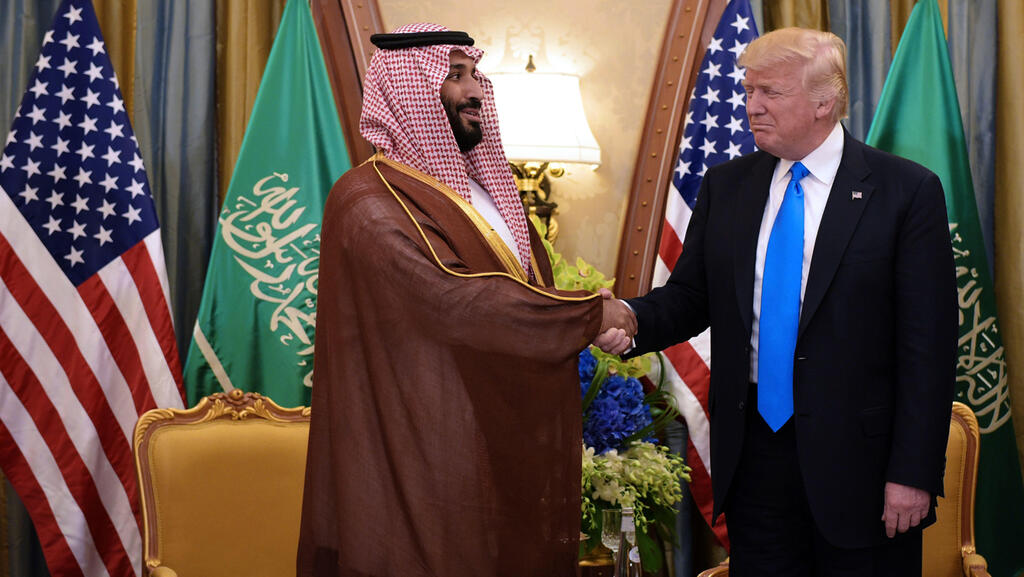
Securing Riyadh
While Saudi Arabia has ruled out joining the Abraham Accords and normalization agreements for now, its top priority during Crown Prince Mohammed bin Salman’s Washington visit was securing clear and concrete U.S. security guarantees. Riyadh wants assurances that any potential Israeli or Iranian attack would be met with American defense.
These guarantees also serve to protect Crown Prince Mohammed bin Salman personally, as he prepares to succeed his father as king and seeks strong U.S. backing for his succession. Notably, his reception in Washington resembled a royal coronation, sending an implicit signal of commitment to his protection.
In exchange for these guarantees, bin Salman spent billions during his visit on economic and military deals with the Trump administration, including the purchase of advanced fighter jets. The Washington Post described Trump hosting the Saudi prince at an official dinner as a dramatic step to rehabilitate a previously ostracized figure, despite lingering U.S. intelligence concerns about his role in the Jamal Khashoggi murder case.
The most critical security guarantee sought by bin Salman is a bilateral defense agreement in which the United States would commit to defend Saudi Arabia in the event of an attack, according to a U.S. official cited by Politico. This would be the second agreement of its kind in the Gulf region, after Trump’s September 2025 executive order to defend Qatar.
Despite these moves, outlets such as Politico and Responsible Statecraft criticized Trump’s foreign policy activity on Saudi Arabia, as well as on Gaza, Qatar, and Syria. They argue that he is risking the security of the United States and the wider region in order to deepen ties with Saudi Arabia, accusing him of courting the Kingdom at the expense of U.S. national interests.
Earlier in May 2025, Trump and bin Salman announced plans to sign a $142 billion military contract package—the largest in U.S. history—alongside multiple investment deals in aviation, energy, and infrastructure, pushing total commitments to around $600 billion. Key agreements included Boeing supplying 737-8 passenger aircraft to Saudi Airlines for $4.8 billion and Saudi investments in U.S. data centers and energy infrastructure.
Aziz Alghashian, a researcher at the Gulf States Institute in Washington, summarized the visit as having a “triple purpose: to strengthen, consolidate, and facilitate security and defense cooperation.” Saudi commentator Ali Al-Shihabi told the Washington Post that the Crown Prince is seeking stricter U.S. security guarantees, noting that the U.S.-Saudi relationship has evolved from a simple “security for oil” arrangement into a broader partnership covering counterterrorism, energy market stability, countering extremism, and promoting regional stability.
Sources
- Trump courts Saudi at the risk of US, Middle East security
- Trump, ignoring MAGA critics, is set to deepen US commitment to Saudi Arabia
- Saudi prince restores clout in first White House trip since Khashoggi crisis
- As Netanyahu's Influence on Trump Wanes, the Saudis May Get Their F-35s Without Normalization With Israel
- Benefits of normalization outweigh risks of selling F-35s to the Saudis
- White House to host Saudi prince tied by intelligence to journalist’s killing
- Trump, ignoring MAGA critics, is set to deepen US commitment to Saudi Arabia
- Headwinds for Trump in persuading the Saudi crown prince to agree to normalize ties with Israel