Anger in Morocco Against the Constitutional Court and Akhannouch: What Is Happening?
“Morocco is now facing a law set to enter into force after a review proved impossible due to a flaw in the referral documents.”
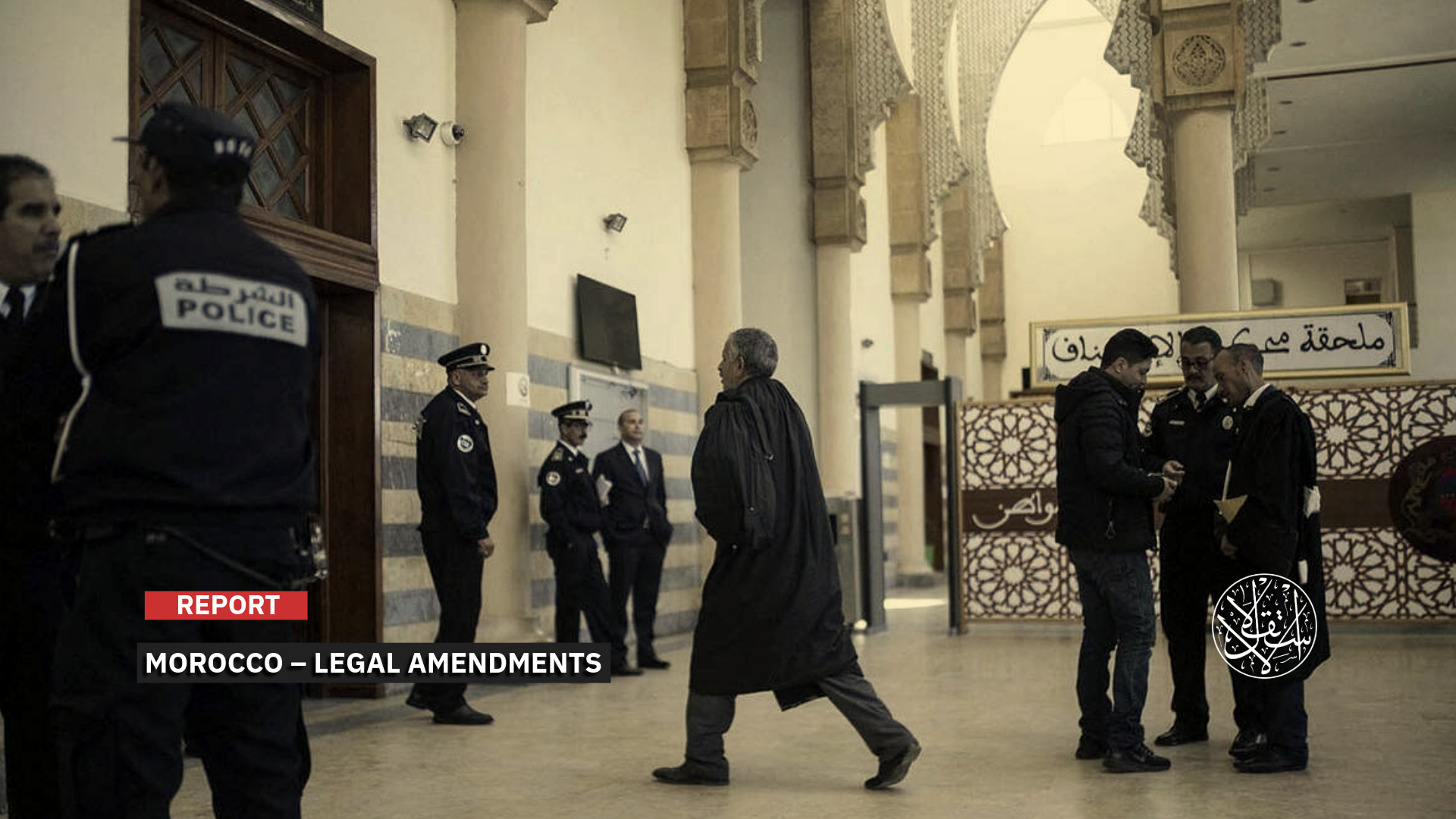
Morocco’s Constitutional Court has found itself under scrutiny over a new law regulating the legal profession. Professional associations and unions argue that the law grants the government of Aziz Akhannouch greater control over the profession and diminishes its independence.
The Official Gazette, in its issue number 7536 dated August 20, 2026, published Law No. 66,23 concerning the regulation of the legal profession, following its approval by both the House of Representatives and the House of Councillors. The law came into effect upon its publication.
The law’s issuance followed Constitutional Court Decision No. 277/26, dated August 10, in which the court declared its inability to rule on the referral concerning the law’s constitutionality in its submitted form.
The new law replaces Law No. 28.08 of 2008 and comprises 147 articles divided into five sections. It also includes significant amendments affecting the conditions for entering the legal profession and its regulatory mechanisms.
According to the court's reasoning, an examination of the case file revealed that the referring authority, the Speaker of the House of Representatives, failed to attach the original copy or a certified copy of the legal text under review to the referral letter.
The court considered this a reason for the lack of a valid review, effectively preventing it from exercising its jurisdiction in the case before it.
Instead of resubmitting the draft law to the court with the required copy, the government rushed to publish it in the Official Gazette, despite widespread objections from lawyers. They argued that the law violated legal, constitutional, and professional standards, undermining the independence of the legal profession and weakening its standing.
The Constitutional Court itself also came under criticism, given that it had previously faced a similar situation and had simply written to the Speaker of the House of Representatives requesting a copy of the Code of Civil Procedure as approved by the House of Councillors, without issuing a ruling of inability to issue a decision. This, in turn, prevented the government from taking a similar step to implement the law.
This development sparked widespread debate in Moroccan legal and political circles regarding the options and procedures available to lawyers to confront what they consider governmental overreach and the imposition of the law without a court ruling on the constitutionality of several of its articles, which are deemed unconstitutional.

Procedural Defect
In response to the event, the Legal Agenda website published a lengthy article on August 22, noting that the Constitutional Court took the full month stipulated by the constitution to issue its decision that it could not rule on the referral submitted to it due to a procedural defect.
The article added that the decision could have been issued before the legal deadline expired, given that the procedural defect was evident from the outset, as soon as the court reviewed the referral letter.
It further noted that the Constitutional Court chose to adopt a procedural neutrality approach, as it could have contacted the requesting body, the House of Representatives, to request a copy of the law in its final, approved form, or accessed it automatically through the House of Representatives' publicly available electronic portal.
The website argues that the court's actions deprived professionals and the public of an objective constitutional ruling that would dispel the ambiguity and establish confidence in the administration of justice.
The same source stated that publishing the law in the Official Gazette ignores a fundamental fact: the court did not even examine the law.
It is unacceptable to issue laws that have been subject to doubt regarding their constitutionality.
The source emphasized that the correct course of action would have been to refer the matter back to the Constitutional Court.
The most prominent political reaction came from the Justice and Development Party (PJD), headed by Abdelilah Benkirane, which, in a statement issued on August 20, held the government and its head fully responsible for the crisis that Morocco experienced due to this law.
The party condemned what it described as the flawed methodology adopted by both the head of government and the Minister of Justice in handling this law, which led to the suspension of professional services, the loss of rights, and the disruption of the course of justice. It also criticized the Speaker of the House of Representatives for the strange errors he made in referring the draft law to the Constitutional Court.
The party emphasized the necessity of upholding the independence of the legal profession and the immunity of the defense, considering them fundamental pillars for guaranteeing the right to litigation, the right to defense, and the right to a fair trial, as enshrined in the constitution and international conventions.
It cautioned that the publication of the law would not close the matter, as it would remain politically relevant, given that the possibility of amendment and change would still exist constitutionally and legally. Its publication in the Official Gazette does not signify the end of the struggle for the immunity of the defense and the guarantee of the independence of the legal profession.
The party added, "Especially as we approach upcoming legislative elections that will produce a parliament and a government, which will allow for the resumption of dialogue to address some of the fundamental concerns raised regarding the law."
The Islamic party also commended the legal profession for its steadfastness in confronting the government's flawed approach and its defense of the dignity and independence of the profession.

Professional Battle
Two days before the law's publication in the Official Gazette, the Moroccan Association of Bar Associations' Bureau issued a statement on August 18, reaffirming its decision to continue the complete cessation of professional services and to continue suspending the legal aid system, both in terms of appointments and payments.
The Association also decided to hold an extraordinary meeting of its council on September 5, 2026, hosted by the Rabat Bar Association, to implement all escalating protest measures and activate various forms of demonstration, while keeping the Association's council meeting in session.
According to the statement, the Association expressed deep regret at the dismissive treatment of a law as significant as the Law Regulating the Legal Profession, which has been the subject of considerable debate and has been met with absolute rejection by all professionals.
The Association further described the referral of the law to the Constitutional Court as tainted by an incomprehensible procedural flaw that calls into question the legislative institutions in our country and requires everyone to examine it closely to understand what transpired.
The statement pointed to the contradiction between the core of the decision and the letters from the Speakers of the two Houses of Parliament, the House of Representatives and the House of Councillors, requesting their comments on the law as received by the Constitutional Court, according to the letter from its President to both houses.
The office argued that the decision to refer the law to the Constitutional Court cast doubt on its constitutionality, and the Constitutional Court's own decision only perpetuates this doubt from a procedural standpoint, further amplifying its institutional weight.
It emphasized that the main problem with the law governing the legal profession is not the constitutionality of its provisions, but rather a methodological issue, a lack of genuine participation, and a failure by the government to fulfill its commitments.
In turn, the Federation of Young Lawyers' Associations in Morocco called for continued escalation of protests against the new law, demanding a continued work stoppage of professional services and the suspension of legal aid, along with a boycott of the upcoming professional elections and a discussion within professional bodies regarding their stance on the upcoming legislative elections.
In a statement issued on August 25, the Association asserted that the current phase necessitates preserving the independence of the legal profession and its role in society, including its contribution to critiquing and monitoring public affairs, and linking this to its role within the justice system and the rule of law.
It called on lawyers to continue what it termed the professional struggle, diversifying their tools and methods of protest according to developments, with the aim of maintaining the momentum of the struggle and unity, and preventing a decline in mobilization or a fragmentation of the unified professional stance.
Several lawyers also called for a work stoppage in protest against the new law, while others expressed their intention to escalate their actions against the ruling coalition parties.
In this context, lawyer Aziz Bouhammou stated in a Facebook post on August 25: "I call for a continued work stoppage due to the unconstitutional law governing the legal profession and the violation of the 2011 Constitution by the government, parliament, and the Constitutional Court."
For his part, lawyer Hossam Lotfi announced his resignation from the lawyers' forum affiliated with the Authenticity and Modernity Party (PAM), a member of the ruling coalition, which also includes Justice Minister Abdellatif Ouahbi.
In a Facebook post on August 25, Lotfi stated: "After careful consideration, I have decided to resign from the PAM lawyers' forum, in accordance with my professional convictions and as an expression of my stance on the handling of the draft law regulating the legal profession."
He continued: "I believe that the course this matter has taken raises political responsibility for the PAM, specifically the Minister of Justice, as the government official overseeing this file. This is said with full respect for individuals and institutions, and with appreciation for differing opinions and assessments on the matter."
He added: "I am leaving the forum because I am committed to my professional independence and my right to express my position clearly and responsibly. I emphasize that my resignation does not mean abandoning public service, but rather expresses a professional conviction that I cannot disregard. I am resigning from the forum, but not from my convictions."

Constitutional Incident
Lawyer and human rights activist Mustapha El-Manouzi described the situation as an unprecedented constitutional incident with far-reaching consequences. He explained that Morocco now has a law that has entered into force not after being declared constitutional, nor after being declared unconstitutional, but rather after its review was impossible due to a flaw in the referral documents.
In a statement to Channel 2 on August 21, El-Manouzi pointed out that no law was published after its constitutionality was established, but rather a law was published before its constitutional review was completed.
He emphasized that Decision No. 277/26 has no legal standing regarding the constitutionality of the law's articles because the court did not even consider them.
El-Manouzi rejected reducing the incident to a mere documentary error, noting that the flaw prevented the review of a law that directly affects a profession intrinsically linked to the rights of defense, a fair trial, and access to justice.
He added that a seemingly limited procedural incident has transformed into a profound institutional consequence: a law in force, constitutional concerns that remain unresolved, and prior review that is no longer possible after publication.
El-Manouzi revealed a paradox: while prior review was closed with the publication of the law, subsequent review remains postponed due to Article 31 of Organic Law No. 35,24, which delayed the implementation of the procedure for challenging constitutionality until July 2028.
He argued that this could effectively become a form of time immunity, as the text remains in effect while those whose rights are affected by its application are unable to bring their challenge before the Constitutional Court.
He called for a review of Article 31 through an amending regulatory law, either by enacting immediate enforcement of the procedure or by shortening the transitional period.
He stressed that challenging the constitutionality of a case is not a professional privilege but a guaranteed right for every litigant, and that this demand should become a general legal, judicial, and societal demand championed by bar associations, universities, human rights organizations, and parliamentary groups.
In a related context, El-Manouzi affirmed that lawyers would be the first to adhere to the requirements of the law, but that this adherence would not erase the problem.
He called for its implementation without normalizing its flaws and for its amendment without delay, explaining that the profession is not faced with a simple choice between compliance and surrender; it faces a more complex task: to be lenient without idolizing it, and to challenge it from within the framework of both legality and legitimacy.
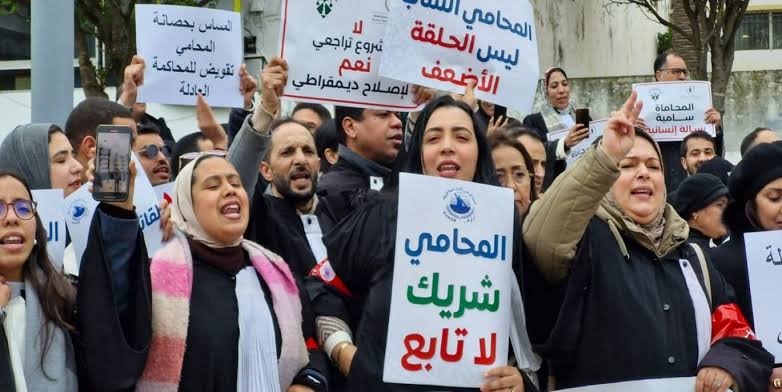
Subsequent Challenges
Regarding the repercussions of this case, lawyer and former member of the Justice and Legislation Committee in the House of Representatives, Amina Maelainine, stated that after the publication of the law regulating the legal profession in the Official Gazette, lawyers should not view this as a defeat or setback, because those who carry the message of defense do not break, nor does their resolve weaken.
Maelainine added to Al-Estiklal, "If the government sees this as a victory, it would not be surprising given the lack of maturity displayed by many of its representatives during the law's discussion before its implementation. This process could have been different had the necessary political will been present."
The lawyer and political activist emphasized that those who possess the greatest patience are the champions of justice, the men and women of the defense, who represent and support litigants through long and arduous legal proceedings at multiple stages, experiencing firsthand the meaning of a ruling in their favor, then against them, then in their favor again, and so on.
Therefore, Maelainine adds, "Noble battles do not end at any one point, but rather continue through various forms of advocacy and insightful, purposeful struggle."
She argued that enacting any law, regardless of its nature, does not preclude its amendment, nor does it protect it from modification or even subsequent challenges to its constitutionality, as long as the possibility of such a challenge remains, given the Constitutional Court's inability to rule on the matter, as she put it.
She added, "Furthermore, the Prime Minister's role, and that of members of Parliament, will continue to allow for amendment and change through the mechanisms of draft laws and proposals."
She continued, "We must not forget the possibility for lawyers, when they are parties to disputes before the courts, to use this law as a basis for judgment, arguing the unconstitutionality of what they believe violates the constitution."
The former member of the Justice and Legislation Committee in the House of Representatives cautioned that "the constitutional rights of citizens are not a battle for lawyers alone, and all state institutions must bear their legal and moral responsibilities in this regard."
She concluded, "History will record these overt and covert conspiracies in which this or that entity, this or that official, has been involved against the legal profession and the mission of defense."
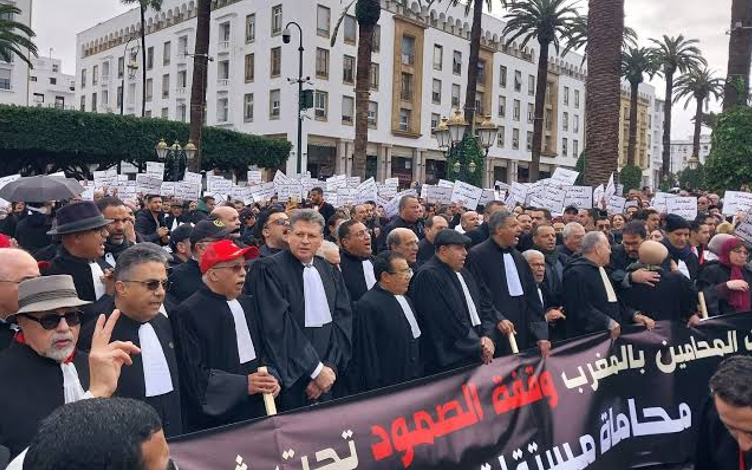
Guardianship Role
Hussain Ziani, President of the Moroccan Bar Association, has repeatedly stated in press conferences and other public pronouncements that the draft law on the legal profession constitutes a serious attack on the fundamental principles of the defense profession.
He asserted that it completely contradicts several international conventions, fundamental legal frameworks, core principles, and the Kingdom's constitution, and that it threatens the very foundations of the rule of law.
Ziani explained that the battle being waged by lawyers is a genuine political one, as it concerns the very foundations of the rule of law.
He added, "What kind of state governed by the rule of law do we want? A state that protects rights and freedoms, a state that creates meaning, or a state for control and domination?"
He continued: "Our battle today is not driven by factionalism, nor is it a dispute or a sectoral or professional crisis. Rather, it is a battle over the very system governing the concept of justice, and over the system governing the production of meaning and the production of justice, and what leads to the protection and preservation of rights."
He said: "Our position is neither impulsive, nor selfish, nor factional. We are not defending the interests of lawyers as much as we are defending the interests of the nation. We want a legal profession that serves the nation and its citizens, a legal profession that acts as a mechanism for balance within the system."
He argued that the greatest danger to the citizen is not a protesting lawyer, but a subservient one, noting that the citizen will be greatly harmed if we provide them with a fearful, cowardly lawyer, incapable of bearing the responsibility of defense.
He continued: "If the draft law subjects the legal profession, both individuals and professional institutions, to the guardianship and oversight of the executive branch, then we are no longer dealing with a true legal profession. We will be reduced to performing technical and administrative roles, and this contradicts the role of the legal profession throughout history."
He added: "We cannot operate under the provisions of this draft law, and we declare..." We bear no responsibility for this law, now or in the future, and we cannot engage with it. This project does not concern us..."
Sources
- The General Secretariat of the Justice and Development Party (PJD) issued a statement regarding Law No. 66.23 concerning the regulation of the legal profession, following its publication in the Official Gazette [Arabic]
- Ziani: The draft law on the legal profession “does not concern us” because it threatens the foundations of the rule of law and turns the lawyer into a subservient employee [Arabic]
- Law on the Legal Profession before the Constitutional Court: A decision to suspend proceedings ignites a battle over interpretation and responsibility [Arabic]