Abraham Accords after October 7: Redrawing the Balance of Power in the Middle East
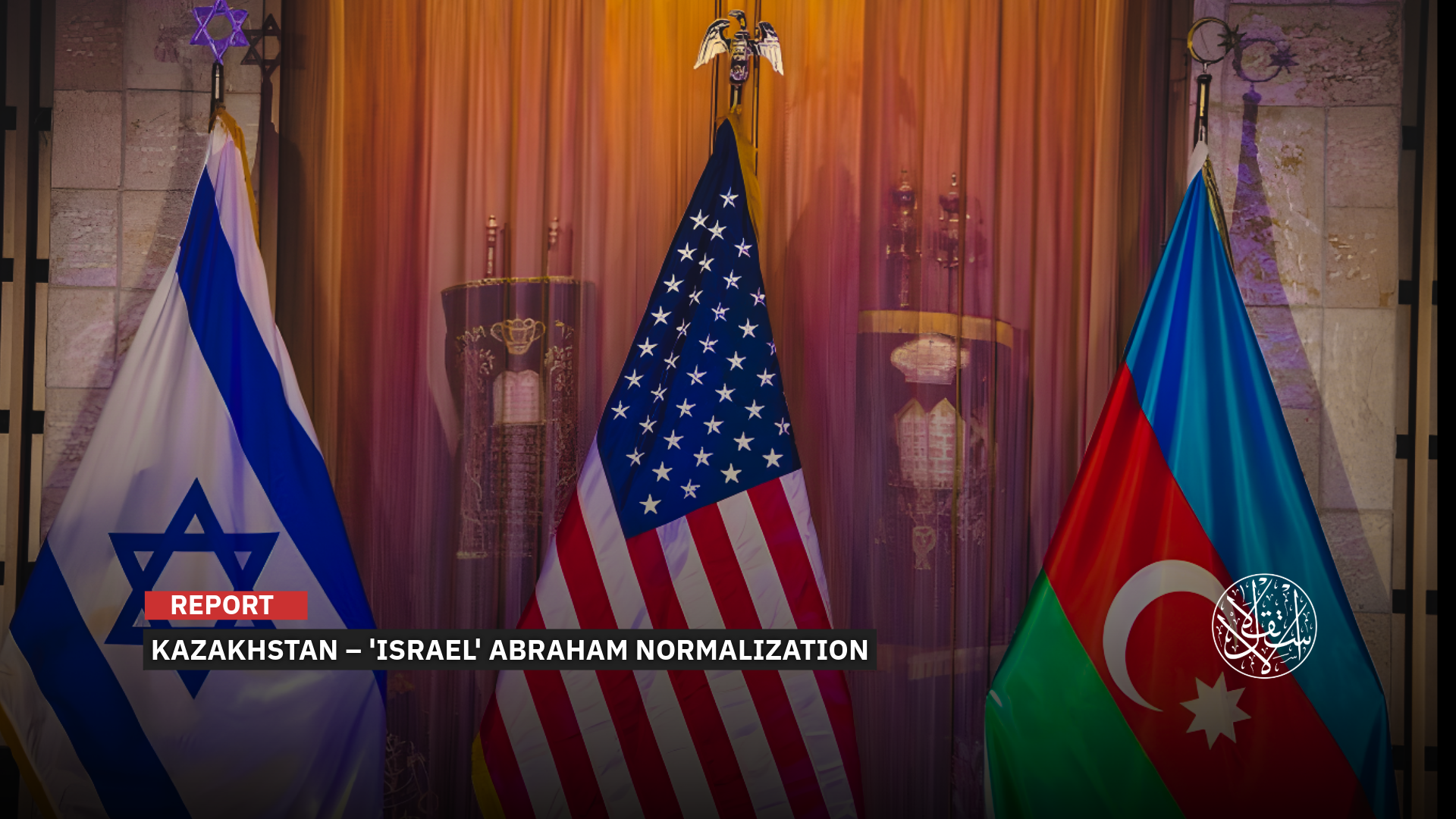
Kazakhstan has officially agreed to join the Israeli normalization accords.
As the genocide in Gaza drew to a close, the question of the "Abrahamic faith" or the so-called "Abraham Accords" resurfaced, sparking debate over whether the West and “Israel” were attempting to impose a new religion on the region, one designed to promote coexistence with, and normalization of, the occupation.
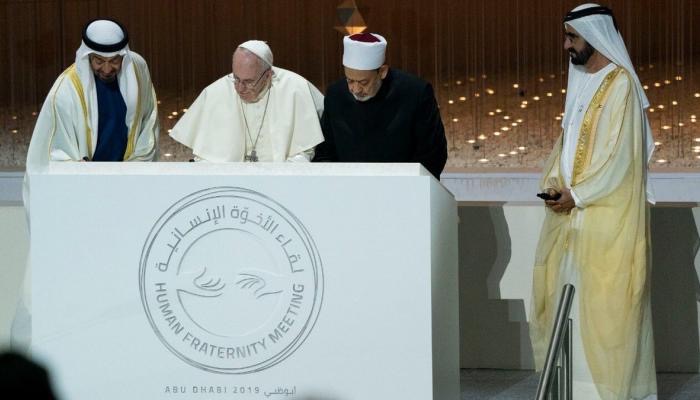
The Operation al-Aqsa Flood launched by Palestinian resistance on October 7, 2023, dealt a sharp blow to efforts to normalize relations with “Israel,” following the opening of the so-called “Abrahamic Family House” in the UAE on February 16 of the same year.
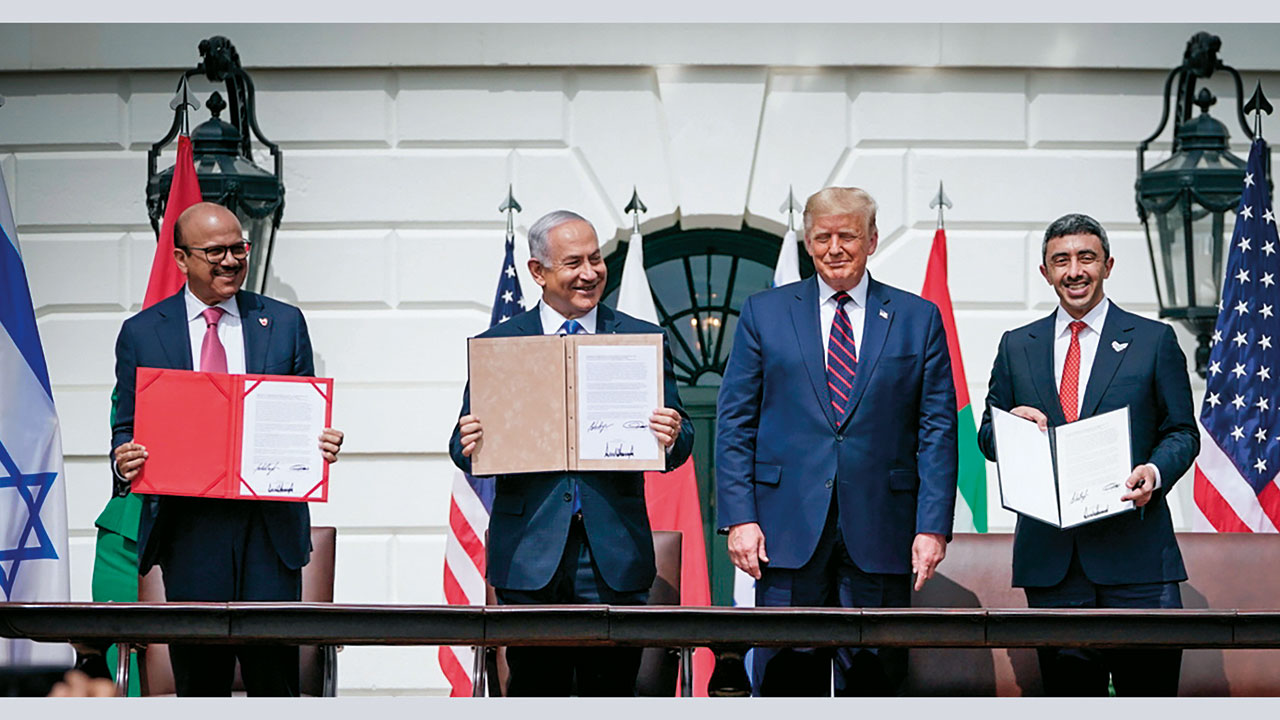
In 2020, during President Donald Trump’s first term, several Arab states moved to normalize ties with “Israel,” including Morocco, the UAE, Bahrain, and Sudan, signing what came to be known as the Abraham Accords or the Abraham project.
New Accession
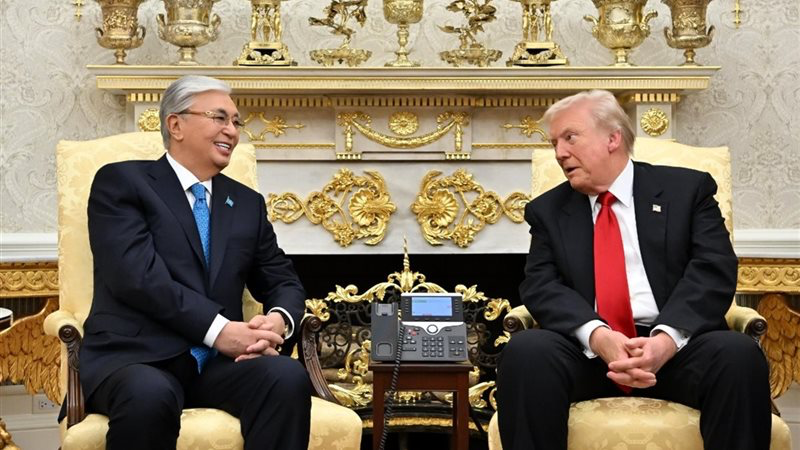
In the latest development in the normalization process, President Donald Trump’s administration announced during a White House summit with leaders from five Central Asian countries that Kazakhstan had officially agreed to join the normalization agreements with “Israel.”
Trump wrote on his Truth Social account on November 7, “Kazakhstan is the first country in my second presidential term to join the Abraham Accords, and the first of many to come. More countries are moving toward peace and prosperity through the Abraham Accords.”
On the same day, Atlantic Council cited an unnamed American official saying that “Kazakhstan has had diplomatic relations with Israel for thirty-three years, so the announcement that it is joining the Abraham Accords has a strange ring to it.”
Israel’s Channel 12 reported on November 7 that Kazakhstan’s accession, following more than three decades of diplomatic ties with “Israel,” “seeks to strengthen its economic relations with Washington and reaffirm its commitment to religious tolerance and dialogue.”
Unnamed American officials told the channel that the move aims to “revive the Abraham Accords and enhance cooperation between “Israel” and the Arab and Muslim worlds under U.S. sponsorship,” with one official calling the announcement “a symbolic step toward ending the war in Gaza and restoring Israel’s standing in the region.”
On October 9, Trump announced that “Israel” and Hamas had reached an agreement on the first phase of his ceasefire and prisoner exchange plan, following indirect talks in Sharm el-Sheikh involving Turkiye, Egypt, and Qatar, and overseen by the United States.
Channel 12 added that Trump plans a formal signing ceremony in December with Kazakhstan, “Israel,” and potentially other countries, without naming any specific state, noting that his team “hopes to expand the normalization agreements to include new countries like Saudi Arabia, though a comprehensive peace deal with Riyadh does not appear imminent.”
Saudi Arabia has held talks with Washington on normalizing relations with “Israel” but stepped back after the Operation al-Aqsa Flood, insisting that any potential normalization must coincide with progress toward an independent Palestinian state, a position opposed by Israeli Prime Minister Benjamin Netanyahu.
Trump remains optimistic about Saudi Arabia eventually joining the agreements since the ceasefire in Gaza took effect in early October, with Crown Prince Mohammed bin Salman expected to visit the White House on November 18.
Economic Project
On the prospects of the United States and “Israel” successfully implementing the Abraham Accords, writer and political analyst Abdul Baqi Shamsan told Al-Estiklal that, “The Abraham project, or the Abrahamic faith initiative, is theoretically difficult to achieve in the near term and practically even more so, because there are central, unresolved issues.”
Shamsan explained that the obstacles to its implementation include the Palestinian issue, the ongoing occupation, the cumulative effects of Israeli policies, and a Zionist project aimed at absorbing the entire Palestinian state, alongside the undermining of the two-state solution.
“All of these elements are major impediments to translating the Abraham project into reality,” he said.
The researcher asked whether the Abraham project is a long-term strategic initiative tied to the United States, or merely a policy of the current Trump administration, whose term will end in three years.
Shamsan predicted that many countries eager to normalize relations with “Israel” would seek to leverage the Abraham framework to establish economic, political, and security ties with the occupation.
He added that the Abraham project is linked to an economic corridor stretching from India through the UAE and Israeli ports to Europe, passing through Saudi Arabia, Jordan, and other states.
Shamsan warned that the project is likely to fail if a just solution to the Palestinian issue is not found, and that recognition of two states will be difficult to implement on the ground, given the systematic undermining of Palestinian statehood by Netanyahu and Israeli political factions, both extremist and mainstream.
He suggested that parts of the project may be realized through cooperation and economic initiatives with countries that have normalized relations, but stressed that its ultimate success depends on resolving the Palestinian issue, noting that “Israel” seeks to dominate the region.
Shamsan argued that the Arab world will not be a central player, as many states need one or two decades to rebuild their identity and economic foundations, citing Yemen, Iraq, Syria, Libya, and Sudan as examples of countries weakened by internal conflict and political factionalism.
He added that debt-laden Egypt, contradictions within the Gulf, and competing development projects leave multinational companies and “Israel” as the dominant forces in the region.
According to Shamsan, the United States and “Israel” may exploit the current state of the Arab world to advance the Abraham project politically and economically, using normalization as a tool for countries seeking political, economic, and security benefits.
He concluded that there is a shift regarding the Palestinian issue, with a new Arab generation demonstrating awareness and global information literacy.
“If the Abraham project succeeds, it will serve as a conduit for normalization and benefit a few states eager to integrate Israel into the region at the expense of our Arab and nationalist causes,” Shamsan said.
New Religion
The term “Abrahamic” and its recent prominence are closely tied to the signing of normalization agreements between the UAE and Bahrain with “Israel” on August 13, 2020, known as the Abraham Accords, brokered by the United States under President Donald Trump and his adviser Jared Corey Kushner.
In the official text of the agreement, published on the U.S. State Department’s website, it states, “We encourage efforts to promote interfaith and intercultural dialogue to advance a culture of peace among the three Abrahamic religions and all humanity.”
This passage became the foundation for numerous initiatives accompanying and following the normalization process. Establishing relations with “Israel” was not purely a political or economic deal, but extended into cultural dimensions affecting all parties involved.
Promotion soon followed around tolerance, communication, and dialogue between nations, peoples, sects, and religions, eventually evolving into discussions of what became known as the “unified Abrahamic faith.”
At the time, Trump announced that the peace agreement between “Israel” and the UAE was named the Abraham Accords, while Washington’s ambassador to “Israel,” David Friedman, explained that the name referred to the Prophet Abraham, father of the three religions, representing the capacity for unity among the world’s great faiths.
“Israel” itself refers to the treaty as the Abraham Accords, invoking Abraham as a central figure in the three major monotheistic religions, Islam, Christianity, and Judaism.
Article six of the agreement specifically emphasizes mutual understanding and coexistence, stating, “The parties commit to promoting mutual understanding, respect, coexistence, and a culture of peace between their communities in the spirit of their common forefather, Abraham.”
Egyptian researcher Heba Gamal El-Din notes that the use of the Abrahamic concept, according to Harvard University, was intended as an entry point for accepting normalization, something “Israel” had failed to achieve since its founding in 1948. She argues that the term was not mere rhetorical flourish, but rather a new political identity for American and Israeli diplomacy in the region.
In her study published on Visit on January 9, 2021, el-Din highlights that the identity was first promoted by former U.S. Secretary of State John Kerry in 2013, as a political foundation with geographic, religious, and historical dimensions, grounded in the concept of a “Greater Israel” map.
She emphasizes that it represents an avenue for spiritual diplomacy, combining religious leaders, diplomats, and politicians to negotiate through sacred texts and identify religious common ground to embed it within a political framework, granting legitimacy to indigenous populations.
The term “Abrahamic” and its recent visibility are thus inseparable from the August 13, 2020, UAE and Bahrain agreements with “Israel,” the so-called Abraham Accords, orchestrated by the United States under President Donald Trump and his adviser Jared Corey Kushner.