Why Do the Spaniards Consider Morocco the Second Top External Threat?
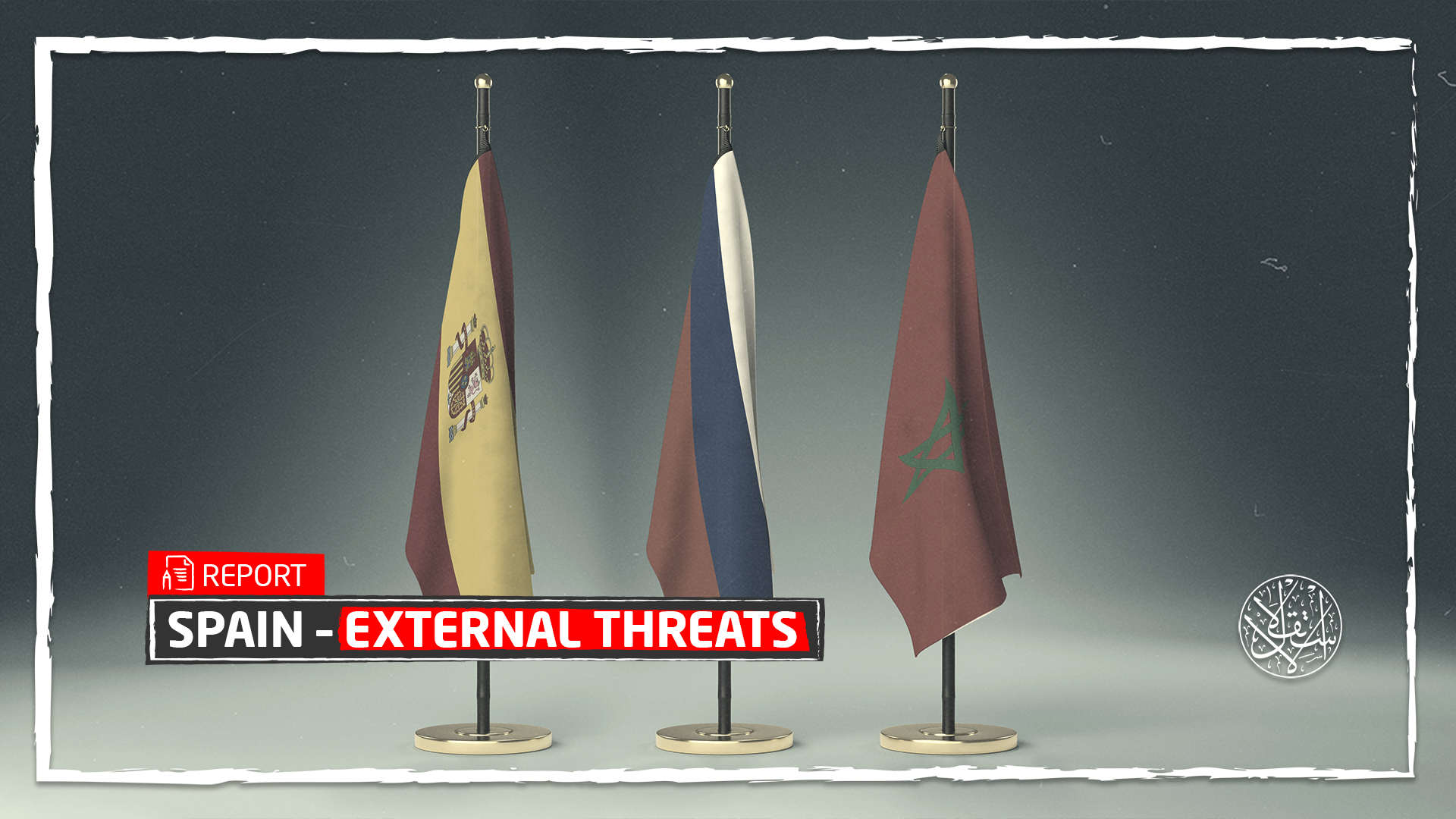
The latest survey by Spain’s Elcano Royal Institute revealed that Spaniards consider Russia the biggest external threat to Spanish security. The survey listed Morocco in the second position and terrorism in the third. Questions were raised about the reasons behind Spaniards’ tendency to consider the Moroccan Neighbor as one of the top threats.
The newspaper El Confidential issued a report pointing out that the Spaniards see Morocco as the second-largest external threat to their country, after Russia. It is not surprising that Russia is fueling the fears of the Spaniards and of the rest of the Europeans with its invasion of Ukraine. Yet, the basis for Morocco to stand in the second position is not strikingly clear.
While terrorism was the biggest concern of Spaniards last year, it ranked third in this year's report. The institute conducted its research between October and November 2021 and published the report on February 18, 2022.

External Threats
Russian military exercises around the Ukrainian border caused a dramatic change in the Spaniards' view of Moscow. Within months, the number of people in the kingdom, who view Russia as a threat, rose from 5% to 34%, a dramatic 29-point increase that made the Eurasian giant the number one security problem in Spain, according to the official Spanish report.
The sharp difference between last year’s survey results and today’s data disclosed the remarkable change in Spanish public opinion. Last year, terrorism was at the top of the list of the perceived foreign threats with 54%, while Russia’s choice was very marginal.
Today, the report stated that the picture is very different, with Moscow widely seen as the biggest threat (34%), Morocco in second place (20%), and terrorism to Fourth place (14 percent).
This year marks the fortieth anniversary of Spain's accession to NATO and there is strong support in Spanish public opinion for Spain to remain in the organization, with a large majority, close to 80%.
The report emphasized that this majority is now much higher than that obtained in the referendum conducted in 1986, which counted for 57% of supporters of Spain’s stay in NATO.
Three-quarters of those interviewed by the experts who prepared the report consider that having a presence within NATO gives Spain security against potential external threats.
Far-Right Influence
In an interview with Al-Estiklal the expert on politics and international relations Zouhair Attouf said: “In my opinion, there are 3 main reasons for this change in Spanish public opinion. First, last year was a year of the political crisis between the two countries par excellence. Naturally, this severe crisis would shape a negative Spanish public opinion about Morocco.”
He added: “Second, the rhetoric of the extreme right in Spain, entrench hatred against immigrants. Since Morocco is Africa's gateway to Europe, any incitement against immigration begins with incitement against Morocco. The Spanish far-right accuses Morocco of tolerating illegal immigration and allowing immigrants to reach Europe.”
He stressed: “Third, the crisis of Ceuta and Melilla, which returned to the fore during the past year. Official and popular demands for ending the Spanish occupation of these two cities increased with the political severe crisis between the two countries. This tense atmosphere and this growing tension naturally make Morocco on the list of the perceived external threats of the Spanish citizens.”
As far-right voices across Europe incite against immigrants, their representatives in Spain are concerned about Morocco in particular as a source of possible threats to Spain.
The Elcano Royal Institute’s report pointed out: “The far-right supporters are more concerned about irregular immigration and choose energy supply as the first objective of Spanish foreign policy, and as the main policy in relation to the southern Mediterranean to prevent irregular immigration.”

Morocco-Spain Escalations
The conflict between Morocco and Spain started in April 2021. When Spain hosted Ghali, the first enemy of Morocco and the leader of the Polisario Separatist front, to be cured of Coronavirus infection with a “false identity,” on April 21, 2021.
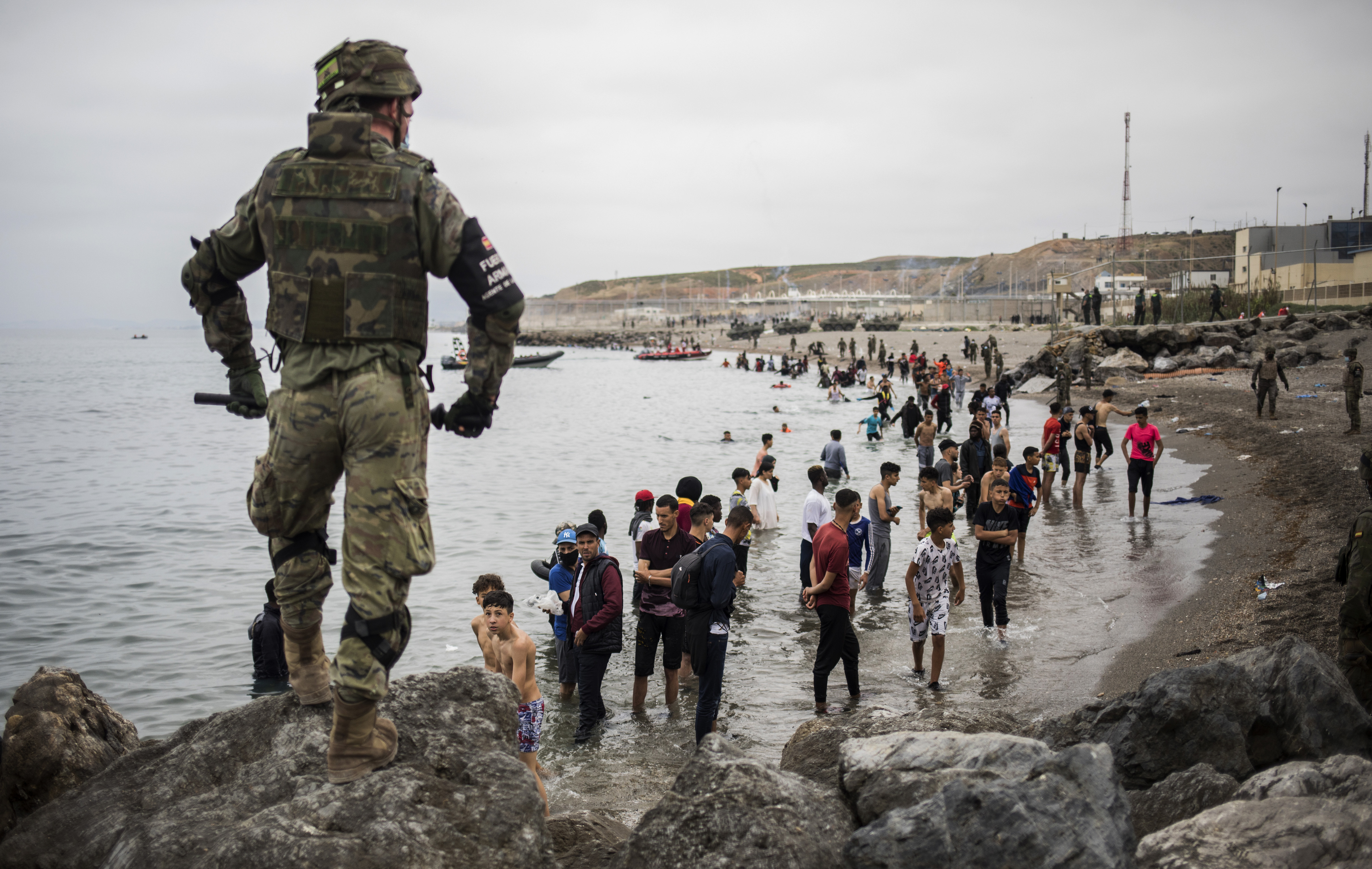
To show its anger, Morocco responded by striking the nerve of immigration. Thus, Morocco allowed more than 8,000 migrants—many of them minors—to cross the border illegally to Ceuta in northern Morocco between May 17 and 20, 2021.
The influx of irregular minors was one of the main causes behind the escalating rhetoric between Morocco and Spain and sparked a deep crisis between Morocco and other European countries.
However, Last July, Spanish Prime Minister Pedro Sanchez appointed Jose Manuel Alparis as Minister of Foreign Affairs instead of Arancha Gonzalez Laya, to improve relations with Morocco and manage other diplomatic files, according to the two countries' media.
In a televised speech on August 20, Morocco's King Mohammed VI said that his country is looking forward to inaugurating a "new and unprecedented" stage in relations with Spain.
In late November 2021, Spain protested against Morocco because of its establishment of a fish farm off the Jafari Islands under the sovereignty of Madrid.
The Spanish newspaper El Pais, quoting unnamed diplomatic sources, said that "despite the Spanish government's attempt, in recent months, to overcome the severe diplomatic crisis that has not yet ended, the Minister Its foreign ministry, Paris, considered what happened (the establishment of a fish farm) an illegal occupation of Spanish territorial waters.
Ceuta and Melilla
The cities of Ceuta and Melilla are located in the far north of Morocco, and they are under Spanish administration. They are historically and geographically Moroccan cities, but politically they are autonomous cities administered by Spain.
While Spaniards consider Ceuta and Melilla part of the Spanish territory, Moroccans believe that they are occupied holes by Spain.
June 2021, amid the crisis between the two countries, Moroccan official and public condemnations of the Spanish occupation of the two cities were raised. With hashtags like #Ceuta_and_Melilla_Moroccans or #Free_Ceuta_Melilla, Moroccans were drawing the attention of the international community to Spain’s continued colonization in northeastern Morocco.
They attempted to pressure the Moroccan authority to deploy the same efforts as those in the Moroccan Sahara affair to regain sovereignty over Ceuta and Melilla.
The author of a dissertation on Ceuta and Melilla, Yves Zorlu, explained this crisis by saying “Morocco wants to pressure Spain through Ceuta and Melilla to recognize its sovereignty over Western Sahara.”
Ceuta and Melilla were regularly present at the heart of the dispute between the two countries.
Sources
- Spanish newspaper: Russia and Morocco threaten us and NATO protects us – This is how the Spaniards see the world [Arabic]
- Spaniards: Morocco is Second Top Threat to Spanish Security
- Morocco and Spain: Is the dispute over the maritime borders renewed? [Arabic]
- Activists Reject Spain's Continuous Attempt to 'Europeanize' Its Political Crisis With Morocco (Hashtag)
- French Newspaper: The Diplomatic Tones Between Rabat and Madrid Are Over