Winners and Losers: Will Venezuela Be America’s New Quagmire?
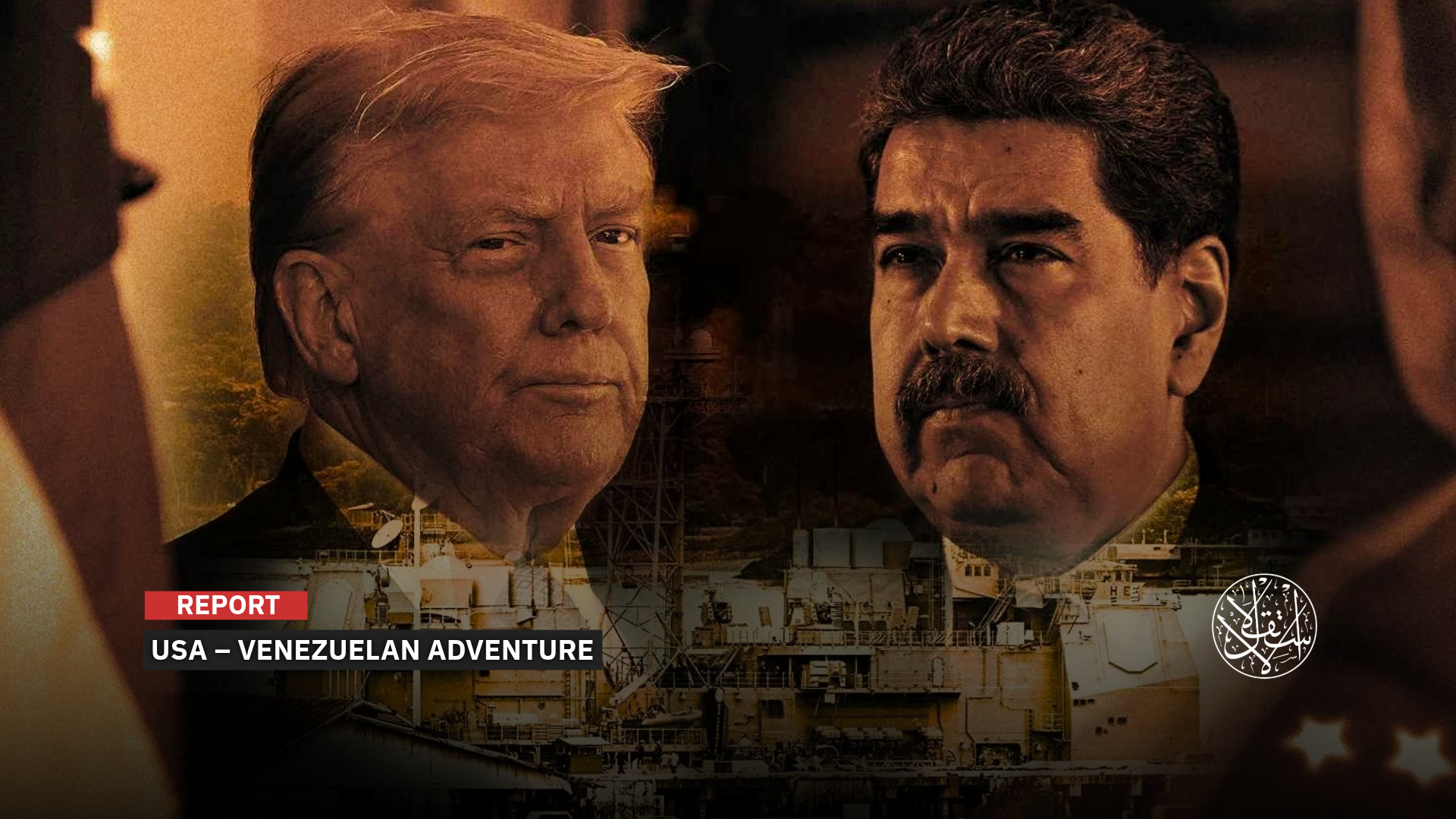
US Energy Secretary Chris Wright hinted that his country would control the oil sector in Caracas indefinitely
While the US attack on Caracas and the arrest of President Nicolas Maduro present an opportunity for American energy companies and hedge funds to reap further gains, other actors, primarily China and OPEC, are closely monitoring developments in Venezuela and view Washington's latest move as a major challenge.
Despite the US show of force in arresting the Venezuelan leader, who has long refused to comply with US policies, US President Donald Trump has not spoken of handing power to the opposition or of a clear democratic path. Instead, he has spoken of US control over the country and its oil, worth billions of dollars, and of a power transition postponed indefinitely.
Regarding the post-Maduro era, analysts have expressed concerns that any US actions in Venezuela could turn into a long and costly quagmire similar to Iraq or Afghanistan.
Others have questioned why the US administration is not providing full and unequivocal support to the democratic opposition.
Significant Gains
US energy companies reaped substantial rewards when global financial markets opened on January 5, following the US attack on Venezuela and the abduction of President Maduro over the weekend.
The MSCI US Energy Index, which tracks a basket of US energy-related stocks, rose 2.8%, significantly outperforming the broader S&P 500 index and other global energy stocks.
This surge reflected early investor bets that US multinational corporations and investors would reap substantial gains from President Trump's pledge to take control of Venezuela.
Chevron, the only US oil company operating in Venezuela under a special license from the Trump administration, led the list of gainers among oil producers, with its share price rising by approximately 6%.
ConocoPhillips shares rose 3.3%, while Exxon Mobil shares climbed 2.4%, and Halliburton shares surged 10%.
Ahmad Assiri, a research strategist at Pepperstone, told Forbes that the beneficiaries of recent developments in Venezuela are refiners and end users, particularly in the United States, noting that they are expected to profit from the potential influx of additional heavy crude oil supplies into the market at discounted prices.
Besides energy companies, other winners, who have received less attention from the U.S., return to gunboat diplomacy in Venezuela, include hedge funds and asset managers holding Caracas's sanctioned debt.
After years of economic crisis and US sanctions that isolated the country from international capital markets, Venezuela defaulted on its government and oil debt in late 2017.
Since then, interest, late payment penalties, and claims related to previous foreclosures have accumulated, increasing the principal of the outstanding debt and pushing total external liabilities far beyond the face value of the original bonds.
Venezuela’s non-performing debt has increased since Trump took office in January 2015, as speculators bet on the possibility of political change.
Analysts have estimated that Venezuela has about $60 billion in outstanding non-performing bonds.
However, total external debt, including obligations of the state oil company PDVSA, bilateral loans, and arbitration rulings, is estimated at between $150 billion and $170 billion, depending on how accrued interest and court judgments are calculated, according to Reuters.
About 20% of this debt is owed to China and Russia, which have supported the Maduro government for years.
Venezuelan bonds were trading at around 31 cents on the dollar before the U.S. ousted Maduro.
The price rose to 41 cents on January 5, but had been steadily climbing throughout the year from a low of 16 cents, coinciding with Trump's deployment of US troops to the Caribbean.
For investors holding Venezuelan bonds, this means a greater likelihood that the U.S. will help Venezuela restructure its debt.
If Venezuela's oil sector resumes operations, investors holding its bonds will be poised to benefit from substantial interest payments.
Elliott Management, a U.S. investment firm that won a legal battle in the U.S. to take control of a refinery formerly owned by Venezuela's state oil company, PDVSA, could also benefit.

Strategic Test
The US abduction of Maduro comes as energy analysts warn of an oil glut hitting an already low-priced market.
Middle East Eye quoted Saul Kavonic, a senior financial energy analyst at MST Financial, as saying that if Trump follows through on his pledge to exploit Venezuelan oil, the OPEC+ energy alliance, led by Russia and Saudi Arabia, will face serious competition.
He noted that Venezuela produces nearly 1% of the global oil supply, a significant figure that could triple in the coming years if investment returns to Venezuela.
He said the market is weighing expectations of short-term production disruptions amid fears of Venezuela slipping into instability against the potential for increased supply in the medium term.
Brent crude rose 1.61% on the afternoon of January 5 to $61.72 a barrel.
Dr. Mamdouh Salameh, an international oil economist, told Forbes, “If the U.S. were to gain control of Venezuelan oil, it would be virtually self-sufficient for the entire 21st century.”
He noted that current events will strengthen the United States’ influence over the global oil market, impacting prices and the dynamics of OPEC, particularly by increasing pressure on the group to raise production and help lower oil prices to benefit the US economy.
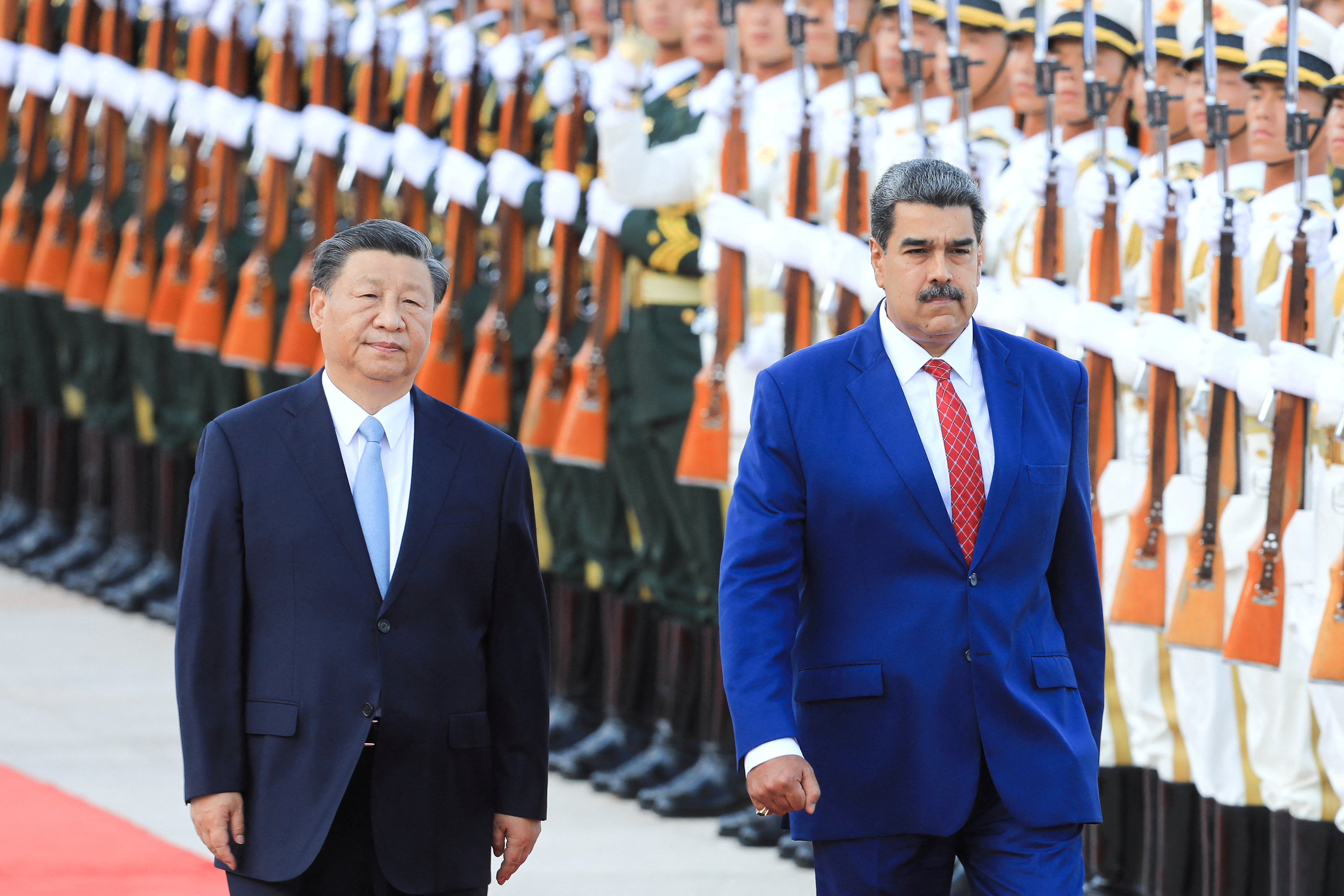
On the other hand, US intervention in Venezuela threatens Chinese ambitions in Latin America, a crucial emerging market that has long served as a major source of commodities and a strategic testing ground for Beijing’s global influence.
For years, China has been bolstering its diplomacy and investments with Latin American countries, including Venezuela, challenging US influence in a region Washington traditionally views as its backyard.
Since Maduro’s predecessor, the late Hugo Chavez, took power in 1999, China and Venezuela have become strong ideological allies, elevating their relationship to a comprehensive strategic partnership in 2023.
Venezuela has been the largest recipient of Chinese official loans and grants in South America, receiving approximately $106 billion between 2000 and 2023.
“Any successor to Maduro is likely to choose to work with the United States to ensure his survival, and this will come at the expense of current Chinese interests,” said Dr. Cui Shoujun, director of the Center for Latin American Studies at Renmin University.
Military Quagmire
The crisis in Venezuela will not be resolved in the near term. The Trump administration has developed a long-term strategy for using American power to compel regime change in Venezuela.
Washington will manage the Venezuelan democratic restoration in three phases. Secretary of State Marco Rubio defined those stages as stabilisation, recovery, and transition, all of which will be backed by American economic and military might.
Trump's remarks about post-Maduro Venezuela in recent days have focused on three main points: a temporary American administration, massive investments in the oil sector, and a postponed political transition.
During a recent press conference, Trump said that Washington would manage affairs in Caracas until a safe, appropriate, and reasonable transition of power is achieved.
He claimed that American companies would spend more than $100 billion to repair Venezuela's oil infrastructure, after which they would begin generating revenue for the country.
He asserted that the partnership between the United States and Venezuela would make the latter rich, free, and secure, and that the long suffering of the Venezuelan people would end.
In this context, US Energy Secretary Chris Wright hinted that his country would control the oil sector in Caracas indefinitely, reflecting the US administration's intention to play a direct role in managing Venezuela's oil wealth.
This American approach reflects a lesson learned from the mistakes of Iraq and Afghanistan, where a dangerous lack of any clear strategy led to protracted military quagmires.
However, analysts have suggested that if the situation in Venezuela spirals out of control in the coming period, the U.S. may find itself facing a difficult choice: either to allow the chaos to continue and bear the consequences on its borders, or to become militarily involved on the ground, thus becoming bogged down in another war.

A report by Chatham House, a British think tank based in London, revealed that Washington lacks a strong track record in managing political transitions after the overthrow of leaders and regimes.
The report also stated that the objectives are unclear, and the planning is inadequate, noting that the experiences in Iraq and Afghanistan serve as prime examples.
Laurel Rapp, Director of the US and North America Programme at Chatham House, stated that “regardless of whether Trump's stated goals for ousting Maduro align with his underlying motives, he and his administration now bear responsibility for what happens next in Venezuela.”
According to the Australian Financial Review, “Trump is playing with fire by assuming an orderly political transition is guaranteed. This is a familiar feature of US foreign interventions for more than half a century.”
The newspaper cited examples, including that if Venezuela were to descend into chaos and perhaps even civil war, a large number of US troops would be needed on the ground to contain such unrest.
It is also unclear whether US intervention in Venezuela’s oil sector will actually transform the country, despite Trump’s promises that a portion of the oil wealth will now go to the Venezuelan people.
For his part, military analyst Omar Melhem told Al-Estiklal that “the Trump administration, according to statements from its officials, has chosen a specific path in Venezuela, involving the cautious use of military force combined with economic and diplomatic pressure to protect its interests without sliding into open confrontation.”
“For decades, Washington has repeatedly succeeded in disrupting authoritarian regimes, but has failed to translate any military superiority into long-term political stability,” he added.
He concluded that “it is true that removing Maduro might pave the way for a sustainable political transition, but it could easily embroil the U.S. in a dangerous quagmire.”
Sources
- Venezuela Crisis Sends Ripples Through Global Oil Markets, Draws Middle East Attention
- Trump Says U.S. Oversight of Venezuela Could Last for Years
- Halliburton, hedge funds and Chevron: Big winners from Trump's vow to 'rule' Venezuela
- China’s influence in US backyard tested by Nicolás Maduro’s downfall
- US to ‘run’ Venezuela after Maduro captured, says Trump: Early analysis from Chatham House experts