Why is the Arab Youth Becoming More Religious?
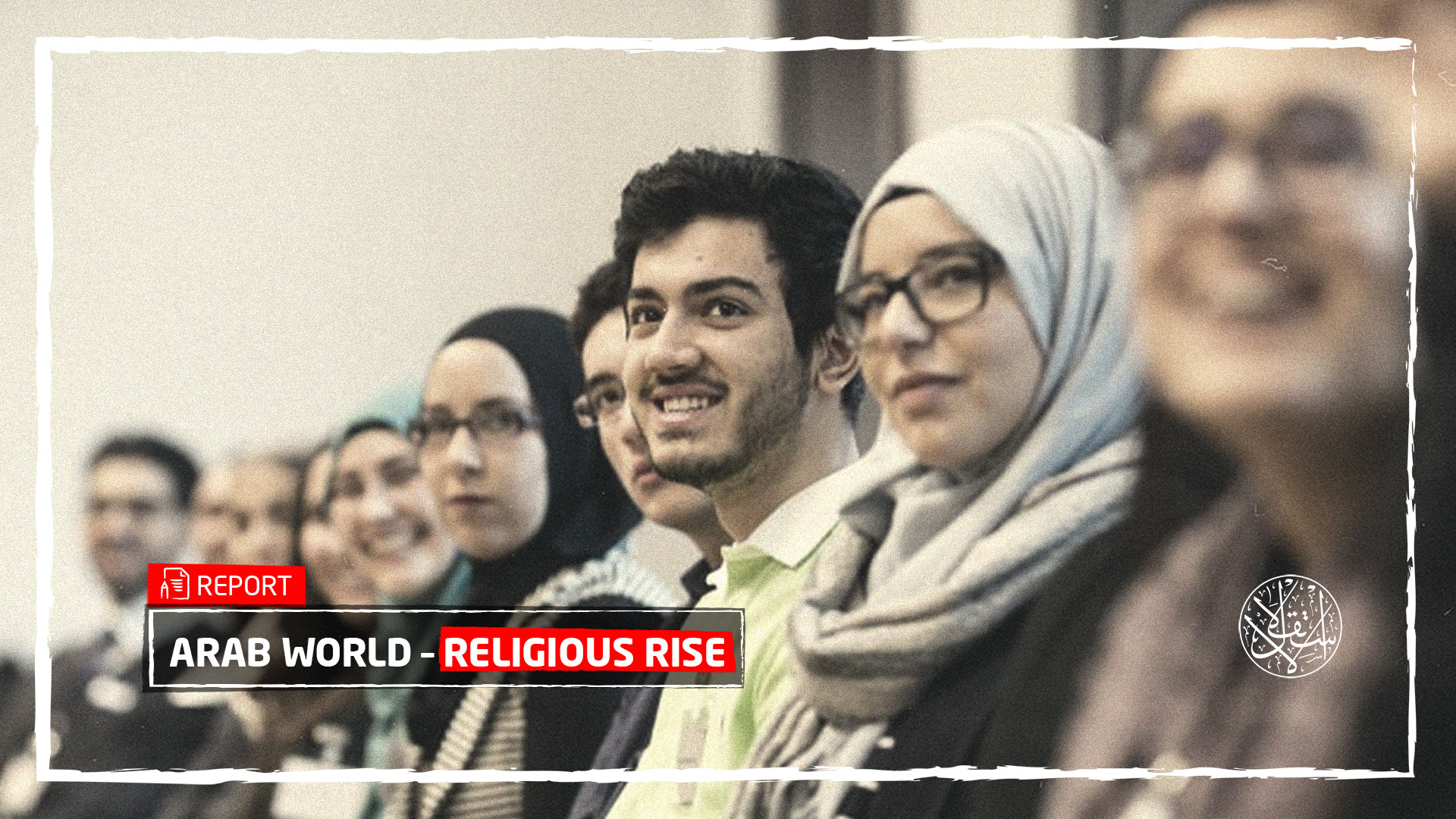
A significant shift in the relationship of young people under the age of 30 to religion and religious practice in the Arab world is happening. According to a new BBC survey, more people are accepting religiosity than in 2018.
The Arab Barometer network conducted a similar survey in late 2018 and spring 2019 involving the same category of respondents and was asked the same questions, but the answers were very different.
Less than four years ago, the survey found that an increasing number of Arabs turned their backs on religion and religious practices.
The survey at the time showed that one-third of Tunisians and a quarter of Libyans described themselves as non-religious, while in Egypt, the results of the 2018 survey indicated that the number of non-religious people had doubled, while in Morocco, they had quadrupled.
What was remarkable at the time was that the most significant increase in the number of non-religious people was among young people under the age of 30, rising by 18 percent.
Back to Religiosity
However, according to the latest poll, Tunisia, Libya, Morocco, Sudan, Egypt, Jordan, and the Palestinian territories have seen a decline in the number of self-described non-religious people of all age groups.
The survey revealed that more citizens of these countries now describe themselves as religious.
According to the 2022 poll, Morocco saw a 7 percent drop in the number of self-described non-religious people among all age groups, followed by Egypt with a decline of about 6 percent, followed by Tunisia, Palestine, Jordan, and Sudan, down 4 percent.
Among young people under the age of 30, Tunisia saw the largest decline in the number of young people who described themselves as non-religious.
Today, nearly two-thirds of Tunisian youth surveyed describe themselves as religious, a significant decline from the 2018 poll, in which roughly half of the young Tunisians surveyed described themselves as non-religious.
Morocco and Egypt experienced the second largest decline in the number of young people who described themselves as non-religious.
Ten percent of young Moroccans and 6 percent of young Egyptians surveyed say they are not religious.
The survey was conducted by 23,000 people, who were randomly selected to represent the different spectrums in all the countries surveyed.
The questions focused on religious practice, including regular prayers and reading the Qur'an, and respondents were asked about religious people holding senior positions in their country and the influence of clerics on government decisions, where their laws should be derived, as well as their opinion on religious education in schools.

Why Youth?
Mohamed Jouili, a professor of sociology at the University of Tunis, explains the increase in the number of Tunisian religious youth, explaining that from 2010, 2011 to 2018, religiosity on the scene in Tunisia was radical Salafist religiosity, which led many at the time to try to "deny themselves as religious to avoid being counted on a particular trend of violence."
Jouili said the situation changed today after "hardliners" withdrew from public space, encouraging young people to practice their religion of openness and freedom, reflected in the poll figures.
The second reason for the return of Tunisian youth to religious practice, according to Jouili, is the Covid-19 pandemic, which casts a shadow over people and raised questions about existence and death and the human relationship with nature and other beings.
Fear of the pandemic, according to him, made people cling more to religion, especially since the numbers of dead were large and the pandemic was mysterious.
The reason for this shift and the high proportions of young religious people "is the worsening of economic crises, as well as education crises and its severe deterioration," said Nabil Abdel Fattah, an Egyptian researcher at the Al-Ahram Center for Political and Strategic Studies, in press statements.
"In the wake of the so-called Arab Spring, waves of hope among young people have escalated that widespread social, political, and economic change will occur," Abdel Fattah said, thus believing that their dreams could be realized with their own hands and through democratic means.
But after years of popular uprisings, reality has imposed a lack of opportunities and hope for a better future, thus losing hope for social mobility upwards. In short, "these young people have nothing left but to hold on to religion and the unseen, so that they may have a miracle, as there is no hope of salvation except by a miracle."
Revolutions Depressions
Jouili agrees with Abdel Fattah that the economic and political situation after the revolutions of Egypt and Tunisia has pushed the youth of the two countries to more religiosity.
Jouili describes this situation in Tunisia as "economic uncertainty, democratic uncertainty, and general uncertainty about what can happen in the present and the future," which leads people to cling to religion as it gives them hope for a better tomorrow and thus gives them the desire for life and continuity.
After the revolutions of Tunisia and Egypt, there were democratic slogans and healthy political practices such as elections and referendums on the country's new constitutions, which allowed young people to engage in public action and civil society activities at the time.
But a few years later, "all these manifestations have faded, and the political and economic situation in the two countries has deteriorated, causing young people to disbelieve in democracy and think of religion as a last resort to get rid of the dire situation," Abdel Fattah and Jouili said.
Jouili is now preparing a study on the religious diversity of young people in Tunisia, and during his fieldwork, he noted that not a tiny percentage of Tunisian youth have shifted from Islam to other religions such as Catholic Christianity and Protestantism.
Tunisia has been in a state of political polarization since July 2021, following President Kais Saied's decision to dismiss the government and disrupt the elected People's Assembly. At the same time, unemployment rose unprecedentedly to more than 18 percent late last year.

Poverty's Role
According to Salah Aboujaoude, dean of the Faculty of Religious Sciences at St. Joseph University in Beirut, young Lebanese describe themselves as non-religious due to the economic and financial collapse and the decline of all the reasons for a decent life among Lebanese.
Aboujaoude says the reasons for this collapse are due to the sectarian system in which the country has been living for decades, pointing out that the sectarian system in Lebanon includes both political action and religious discourse, which makes people's relationship with religion linked to the prevailing political and social and economic conditions.
Unlike Tunisia and Egypt, Lebanon's poor economic and political conditions have led to an increase in the number of young people who are reluctant to practice religion.
According to Aboujaoude, these challenging economic conditions and financial crises, which have intensified since 2018, have prompted young people to emerge in a "popular uprising, against the sectarian system, which they considered a major suspect in most of the country's problems because the demonstrations were an expression of the anger and pain of these young people from all the leaders in this country."
Since then, Aboujaoude says, the gap between Lebanese youth and the various religions and communities in the country has increased.
However, Lebanese youth remains a unique situation among Arab youth, according to the survey results, as everyone, according to statistics, has returned to religious practices, including prayer and regular reading of the Qur'an in most of the Arab world.