Why Has ‘5G Technology’ Sparked a Conflict Between the US Government and Network Operators?
In light of an accelerating race towards the development of the fifth generation networks (5G), led by China known for its leadership of this technology; the United States is embroiled in debates between aviation officials and wireless operators about the technology's risks to aircraft safety.
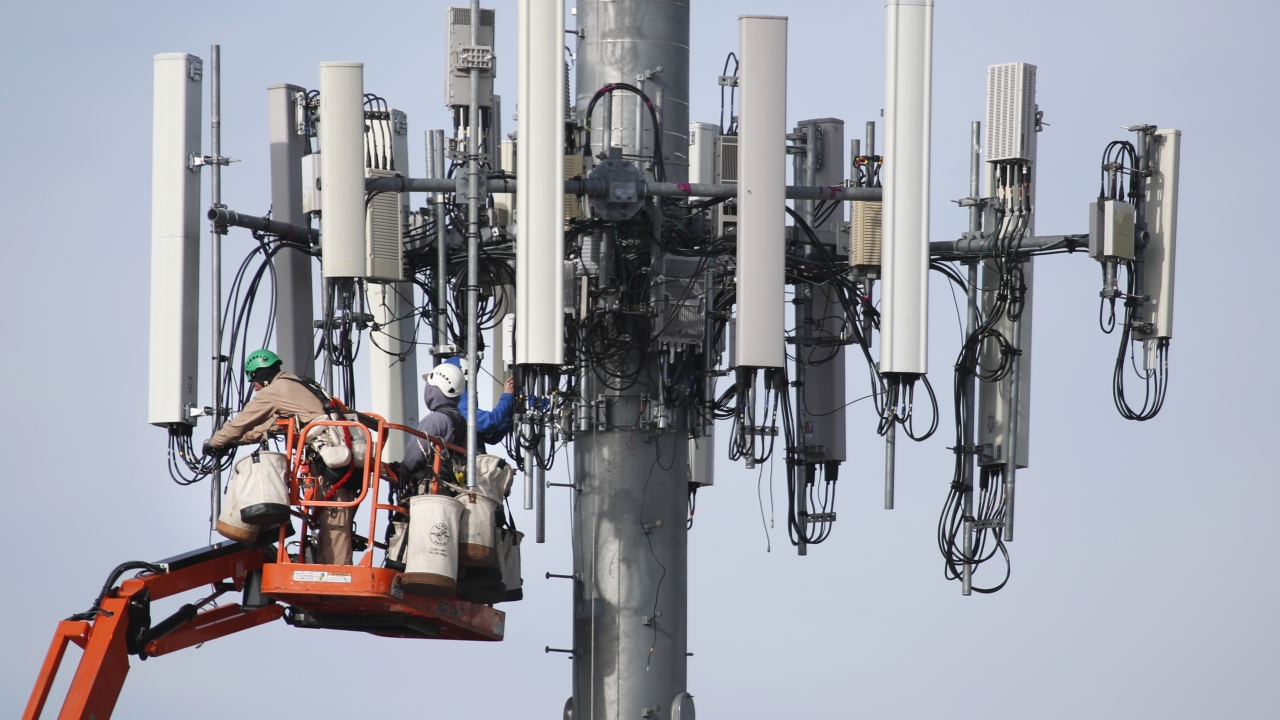
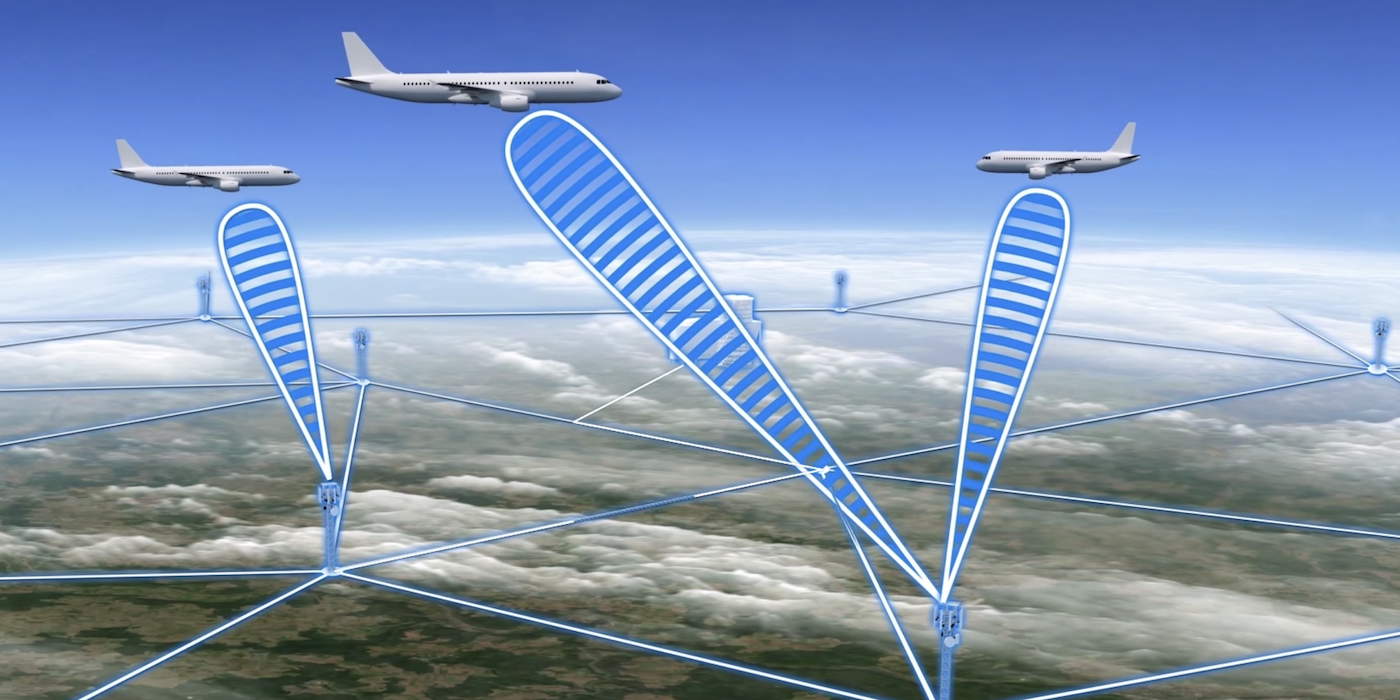
The US Department of Transportation (USDOT) and the Federal Aviation Administration (FAA) fear a widespread disruption to air traffic, due to the interference of the signals of the 5G network with the electronics and current aircraft landing instruments.
These fears are met by the rejection of network operators who have invested billions of dollars in order to launch this technology, while the government is working to postpone it.
Operators are demanding that priority be given to its operation, in light of the ongoing race with China, and the escalation of demand for wireless service amid the Corona pandemic.
On January 3, 2022, US wireless giants ‘AT&T’ and ‘Verizon Communications’ reached a compromise with officials.
They agreed to delay the launch of the 5G service by two weeks (January 19) and limit the placement of cell towers near 50 airports for at least six months.
Through its famous company, Huawei, China enjoyed an early dominance over the technology and challenges of 5G, which is currently an important part of the global economy; despite intense American pressures to promote that this Chinese boom threatens security and privacy in the democratic world.
In April 2019, former US President Donald Trump (2017-2021) revealed plans to launch mega auctions for radio spectrum to support the development and construction of 5G networks worth $275 billion.
At the time, Trump said in a press statement at the White House: “The United States should win the 5G technology race. We cannot allow any other country to surpass the United States in this strong industry of the future.”

New Technology
According to the Global System for Mobile Communications Association (GSMA), “5G means broadband cellular networks in the field of communications, which began to spread globally in 2019.
Prior to the arrival of 5G, 1G technology made it possible to communicate between individuals via voice calls, and in 2G, SMS text messages were available.
The connection to the internet came with 3G, and in 4G, the speed of the internet connection increased.
While 5G provides a very high speed, to the extent that the average user will be able to download a movie within 10 seconds, specialists assert that it will change the world of the internet and will produce a revolution in areas such as medicine and industry, especially self-propelled cars.
The majority of countries in the world are currently moving towards adopting this technology in all their infrastructure, including hospitals, transportation, and energy production stations. 5G networks are expected to have more than 1.7 billion subscribers worldwide by 2025.
In this context, Bloomberg said, in a report on June 16, 2021, that 3G networks heralded the arrival of the iPhone, while 4G networks enabled services such as Uber and FaceTime.
“5G will provide the business sector with security, high speed, reduce network congestion, and accommodate a very large number of users, paving the way for smart factories,” it said.
5G provides its users with a speed exceeding 100 times the speed that the internet currently provides, in addition, the service is wireless, transmitted over the air and not through a wire that connects to the house.
Types of Technology
On its part, the American Dallas News website explained in a report on March 6, 2021, that 5G networks vary according to the part of the radio spectrum used in them.
The low bandwidth uses frequencies of 600, 800 and 900 megahertz, with a maximum download speed of 100 megabytes per second.
The mid-bandwidth uses frequencies between 2.5 and 4.2 gigahertz, with a peak speed of 1 gigabit per second, and the higher bandwidth uses multiple frequencies between 24 and 47 gigahertz and produces maximum speeds of up to 10 gigabits per second.
As the first bandwidth is the least fast, but its transmission travels farther from the cell tower and penetrates buildings successfully.
While the high bandwidth is the fastest, its transmission does not travel far from the towers, and does not penetrate buildings to the required degree.
As for the mid-bandwidth, it can be considered a solution that offers a satisfactory combination of speed, distance and building penetration.
In the United States, T-Mobile uses a large portion of the low-bandwidth spectrum, Sprint owns the bulk of the mid-bandwidth, as for the high band, it is operated by giants AT&T and Verizon Communications.
Shameful Confusion
Recently, the confrontation between ‘AT&T’ and ‘Verizon Communications’ began on the one hand, the USDOT and the FAA, as well as the two giant aircraft manufacturers, ‘Boeing’ of the United States and ‘Airbus’ of Europe, on the other hand.
Bloomberg reported on January 1, 2022, that the FAA warned on December 23, 2021, that aircraft safety devices could be disrupted due to missing or erroneous altimeter readings, as a result of the high bandwidths of 5G.
Both companies responded that the frequencies in the bands are low enough to prevent interference.
They pointed out that similar 5G operations outside the United States did not cause any damage to aviation.
On December 31, 2021, that is, 5 days before the agreed date to launch the service, the USDOT asked the two companies to postpone this for an additional two weeks, after a previous month-long delay, which was supposed to end on January 05, 2022.
The USDOT said that during that period it will determine the safety of the airports' operation, although the imposition of a buffer zone would allow flights to continue safely.
It also suggested activating the service later on a rotation basis near priority airports until March 2022.
After much controversy, the two companies responded to the request and postponed the service until January 19, and said that they would operate at low capacity, with the aim of alleviating aviation concerns.
On January 14, the FAA returned to warn that the risks in which the fastest 5G bandwidth interferes with aircraft equipment require restrictions until operations are ensured.
It began publishing one of the most comprehensive air mission notices in its history, according to Bloomberg, which included 1,462 requests that apply to dozens of large airports where 5G signals are expected.
For example, aircraft landing at Chicago's O'Hare International Airport will be prohibited from using certain low-visibility instrument landing procedures, unless aircraft manufacturers can demonstrate the safety of their equipment.
These restrictions would disrupt thousands of flights and cost airlines about $1.6 billion annually.
The Reality of Confrontation
To find out the relationship between the high-speed 5G bandwidths and the losses of airlines in the United States, The Independent highlighted shocking facts in this regard in a report dated December 22, 2021.
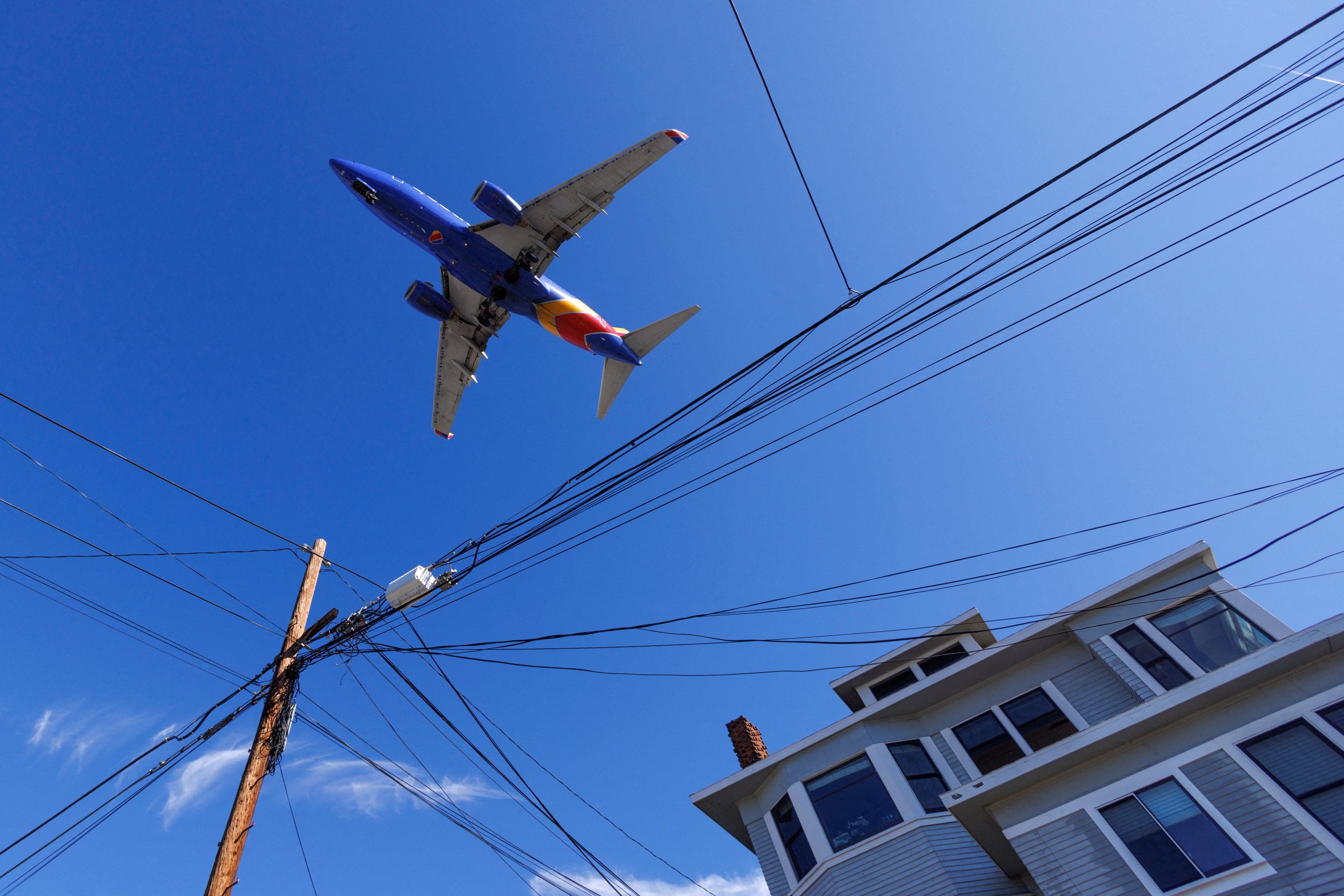
“The confrontation revolves around an electronic tool called a radio altimeter, used by all types of aircraft to measure the altitude and distance between the aircraft and the ground, it works by sending a signal toward the ground, then determining altitude based on the time it takes for the signal to reverse and return to the plane,” the newspaper explained.
Radio altimeters operate in the frequency bandwidth 4.2 to 4.4 gigahertz, and these devices will be placed with 5G services, including devices that passengers routinely carry on board (e.g., mobile phones and tablets).
Aircraft manufacturers warn that if 5G frequencies interfere with radio altimeters, major disruptions to passenger air travel, commercial transportation, and various helicopter services are expected.
These companies are aware of the sensitivity of radio altimeters to interference; there are studies confirming that the interference between them with the high-bandwidth frequencies of 5G cannot be predicted.
Assigning this bandwidth of the 5G network to operators by the US government poses problems for outdated or shoddy aircraft radar systems.
This, in turn, imposes significant costs on the aviation industry to modernize its electronics.
That's why the FAA had to ban low-visibility landings in areas covered by the 5G network.
A move that would disrupt up to 350,000 flights, and losses of about $2.1 billion annually, according to estimates by the pressure group, Airlines for America.
These warnings do not resonate with operators, who have spent nearly $81 billion to acquire rights to use the disputed bandwidth, and repeatedly assert that safety concerns are unfounded.
They suggest reducing the quality of frequencies near airports, a proposition that aviation officials do not believe is sufficient.
Airlines do not want to make any concessions, especially after two tough years, during which the sector witnessed billions of dollars in losses due to the Corona pandemic.
Now the ball is in the court of lawmakers, who must reach an agreement between the two sectors in due course.
At the same time, aircraft manufacturers such as ‘Boeing’ intend to build their next aircraft according to these developments.
One of the indicators of the great confusion that the United States is witnessing in this regard is: The FAA alone has only released 10 statements in about 30 days about high-bandwidth 5G, half filled with warnings, and half with soothing messages.
Nevertheless, the US State Department, through its Share America website, continues to publish statements in which it expresses to countries of the world its willingness to help them build secure 5G networks away from Chinese companies and technologies that threaten national security, privacy, human rights, and intellectual property.
At the forefront of the non-US companies working in this technology are China's Huawei and ZTE, Finland's Nokia, South Korea's Samsung, and Sweden's Ericsson.