Why Did Somalia Cancel Its Agreements With the UAE?
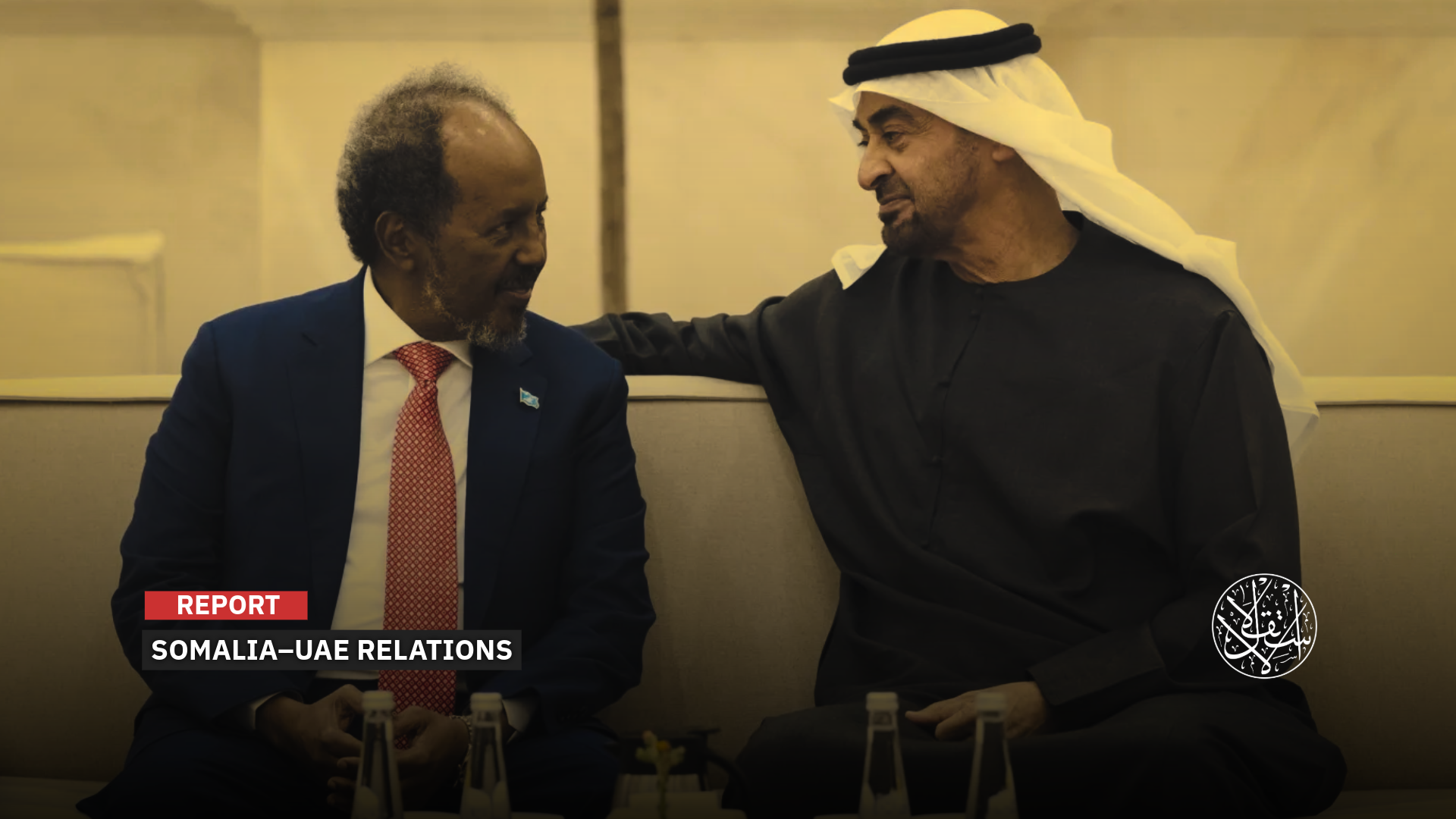
“There are credible reports and compelling evidence of malicious Emirati practices in Somalia.”
The deterioration in relations between Mogadishu and Abu Dhabi is no longer merely a technical dispute over port management or military training programs. In recent days, it has escalated into an open political confrontation centered on one key issue: sovereignty.
On January 12, 2026, the Somali government announced the cancellation of all agreements with the UAE, including port agreements (such as those for Berbera, Bosaso, and Kismayo) and defense and security cooperation agreements.
Mogadishu accused Abu Dhabi of seeking to undermine the country’s sovereignty, unity, and political independence.
The government asserted that the decision is based on credible reports and compelling evidence of what it described as malicious practices that infringe upon Somalia’s sovereignty, territorial integrity, and political independence.
This decision comes at a time when several thorny and complex issues intersect, most notably the UAE’s growing influence within Somali regions, the strained relationship with the breakaway region of Somaliland, and the incident involving the smuggling of a Yemeni separatist leader through Somali territory.
In the background, escalating regional differences between Abu Dhabi and Riyadh loom, making the Somali move part of a broader regional context that transcends the bilateral dispute.
Sovereignty Dispute
The breakdown in relations did not occur in a vacuum. Since 2014, the UAE has been involved in numerous projects within Somalia, including training security forces, funding the salaries of thousands of soldiers, contributing to the establishment of training centers, and constructing a charitable hospital in the capital, Mogadishu.
However, the relationship began to deteriorate significantly starting in 2017, when Mogadishu refused to align itself with the Gulf polarization and maintained neutrality in the Gulf crisis.
Tensions reached a peak in April 2018 when Somali authorities seized $9.6 million in cash from a UAE plane at Mogadishu airport, amid official and public questions about the intended use of the funds and their legal basis.
The UAE responded that the money was intended to pay the salaries of Somali soldiers, before escalating the situation by announcing the termination of its training program in Somalia and the closure of the Sheikh Zayed Hospital in the capital.
This move marked a pivotal turning point, shifting Emirati influence from direct cooperation with the federal government in Mogadishu to parallel channels through semi-autonomous and breakaway regions.
Abu Dhabi subsequently continued to support and train the maritime police force in Puntland, northeastern Somalia, based in Bosaso.
It also expanded its influence in the breakaway region of Somaliland by building a military base and launching extensive investment projects, most notably granting DP World a 30-year concession to develop and operate the port of Berbera, with investments totaling $442 million.
From the perspective of the federal government in Mogadishu, these agreements exceeded the authority of the central state and dealt with a separatist entity outside the bounds of constitutional legitimacy.
Accordingly, in 2018, the Somali government warned DP World against proceeding with any contracts that bypassed its official channels, deeming such actions a direct threat to the country's unity.
Mogadishu also condemned the agreement to establish the Emirati military base in Berbera, describing it as a blatant violation of international law and threatening legal action to defend its sovereignty and national unity.
The UAE's engagement with Somaliland as an economic and security partner reinforced the Somali government's conviction that Abu Dhabi was encouraging the secession of this region, which declared its independence from Somalia in 1991 without any international recognition.
These concerns intensified in December 2025 after an Axios report quoted Israeli officials as saying that Tel Aviv's recognition of Somaliland's independence was a diplomatic achievement facilitated by Abu Dhabi.

Regional Developments
In this context, Eritrean researcher and Horn of Africa specialist Abdul Qadir Mohamed Ali told Al-Estiklal that one of the main reasons for the termination of the agreements was the role played by the UAE within Somalia.
He said that the UAE's agreements with federal states that rival Mogadishu's authority, along with its role in supporting the idea of Somaliland's secession through massive investments, constituted a direct infringement on Somali sovereignty, ultimately leading to the decision to cancel them.
He suggested that Saudi support for Mogadishu's decision might reach the level of direct political pressure, within the context of what he described as a Saudi campaign to eliminate the Emirati presence in the southern Red Sea.
This assessment comes amid escalating accusations against the UAE of supporting the Rapid Support Forces militia in Sudan, at a time when Saudi Arabia is supporting the Sudanese army in the ongoing war there.
The Somali decision also coincides with a similar move by the legitimate Yemeni government, which announced in early January 2026 the cancellation of all agreements signed with the UAE and called for the complete withdrawal of its forces from the country—a move that received notable Saudi support.
Tensions began to rise within the legitimate Yemeni camp after the UAE-backed Southern Transitional Council (STC) seized control of large swathes of eastern and southern Yemen in late 2025, particularly the oil-rich governorates of Hadramout and Al-Mahra.
The head of the STC, Aidarus al-Zoubaidi, took a further step by issuing a unilateral constitutional declaration in early January, launching a two-year transitional period culminating in a referendum to determine the future of southern Yemen.
The Yemeni Presidential Council considered these steps a coup and a blatant rebellion against legitimacy, prompting it to announce al-Zoubaidi's dismissal and issue a decree referring him to the Attorney General, paving the way for his trial on charges of high treason and leading an armed rebellion that threatens the state's existence and unity.
Meanwhile, Saudi Arabia was taking action on the ground, launching an airstrike on the port of Mukalla on December 30 to prevent a shipment of Emirati weapons from reaching the separatist forces. It then issued an ultimatum demanding the withdrawal of Emirati forces from Yemen within 24 hours, which led Abu Dhabi to announce the withdrawal of its remaining personnel to avoid escalation.
Bloomberg confirmed that the Somali move came after pressure exerted by Saudi officials on the Mogadishu government to reduce its relations with the UAE.
Mr. Abdul Qadir Mohamed Ali pointed to another reason for the strained relationship between the UAE and Somalia: Abu Dhabi's facilitation of al-Zoubaidi's escape from Yemen through Somali territory.
According to Saudi reports, al-Zoubaidi left Aden by boat bound for the port of Berbera in the Somaliland region, before boarding a plane that took him to Mogadishu. From there, he departed on a UAE military aircraft that landed at a military airport in Abu Dhabi.
Somali authorities considered this operation a blatant violation of the country's sovereignty and announced an official investigation into the transfer of a fugitive from justice through Somali airspace and airports.

UAE Projects
In light of these rapid developments, a fundamental question looms: Has the UAE's military and economic presence in Somalia come to an irreversible end, following Mogadishu's announcement of the cancellation of all agreements signed with Abu Dhabi?
In this context, Khadar Hussein Abdi, Minister of Presidential Affairs in Somaliland, stated: “Somalia’s dreams will not change anything… The UAE is here to stay, regardless of what the weak administration in Mogadishu says.”
The authorities of Puntland State (northeast Somalia), which enjoys semi-autonomous status and hosts a UAE military base, deemed the federal government’s decision to cancel agreements with the UAE invalid and without effect within the state’s borders.
Puntland affirmed the continuation of its security and development partnership with Abu Dhabi, particularly regarding the development project for the port of Bosaso, managed by DP World.
For its part, Jubaland State (southwest Somalia), which also enjoys semi-autonomous status, criticized the decision issued by Mogadishu, given its close ties with the UAE, asserting that existing security and development agreements would remain in effect.
These positions reflect the extent of the internal divisions within Somalia and highlight the difficulties the federal government faces in enforcing its decisions across all Somali territory, thus putting its sovereignty to a real test.
Analysts expect the UAE's presence to become an additional factor fueling internal conflicts between the central government in Mogadishu and the federal states that refuse to implement its decisions.
In the event of a complete abandonment of the agreements and Emirati support, Reuters quoted Somali officials as saying that Somalia might seek alternative sources of funding and military assistance by strengthening its partnership with Qatar or Saudi Arabia instead of the UAE.
On the other hand, Turkish researcher Ebuzer Demirci believed that while Mogadishu currently lacks the military capacity to enforce its decisions by force, it still retains significant legal and judicial leverage that enables it to suspend or challenge Emirati investments linked to strategic assets, such as the ports of Bosaso and Berbera.
“Although the port of Berbera is administered by the Somaliland authorities and operated by the UAE, which limits the federal government’s ability to unilaterally suspend activities there, Mogadishu still possesses legal tools that can be employed regarding these assets,” he told Middle East Eye.
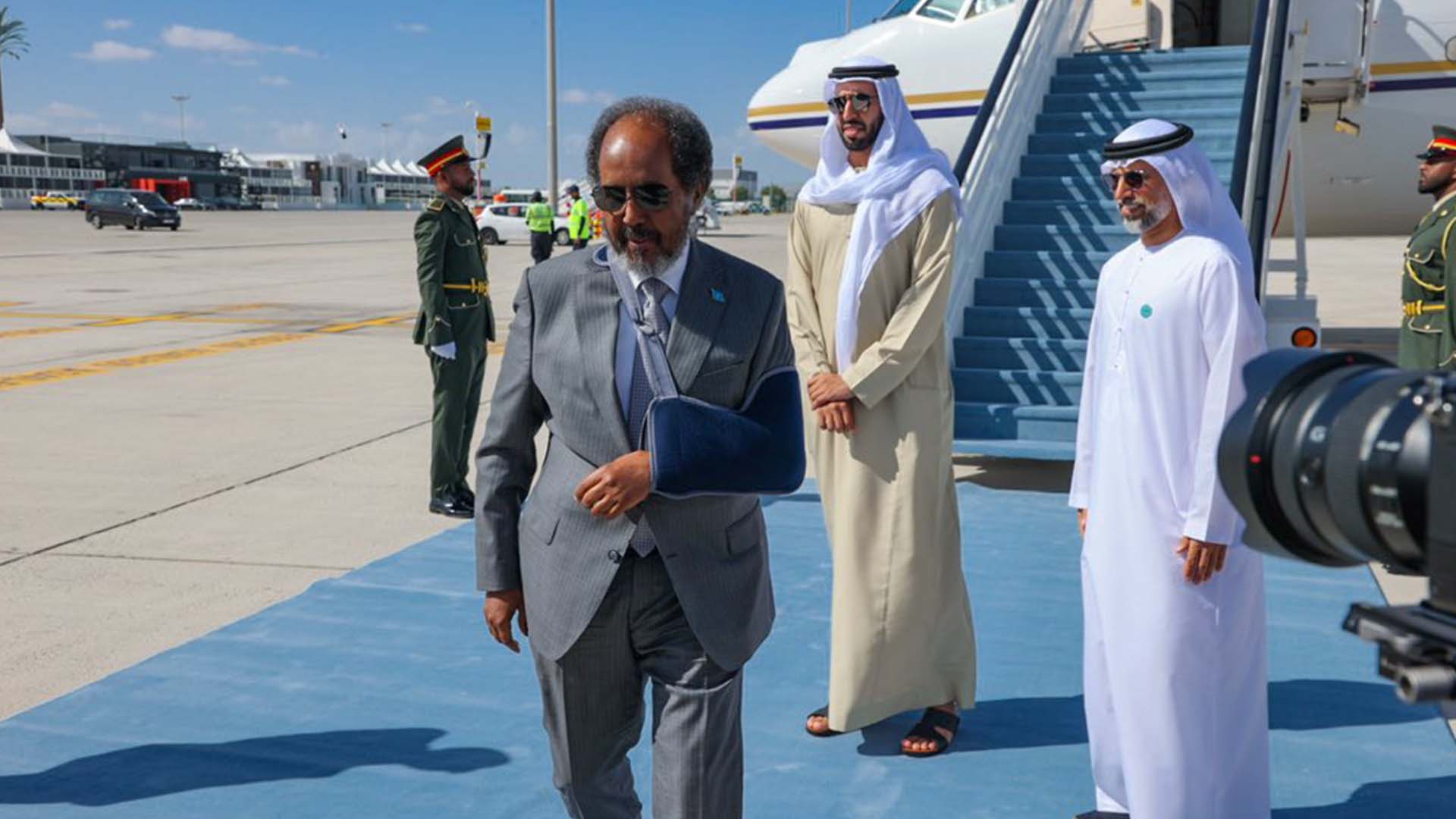
It should be noted that President Hassan Sheikh Mohamud has not officially severed diplomatic relations with the UAE, and he may be attempting to express his position through recent actions.
However, Abu Dhabi does not favor this kind of ambiguity, preferring its partners to be either fully aligned with it or in a position of clear confrontation.
In turn, researcher Khalif Abdullahi suggested that the UAE might cut off its funding to the Mogadishu government and work to support opposition figures, as well as encourage the formation of a parallel government as the current president's term nears its end in May.
Sources
- UAE removing its military from Bosaso after angry Somalia ends agreement
- Somalia Scraps UAE Deals Covering Key Ports After Sovereignty Dispute
- Somalia’s Rebuke of UAE Highlights Influence of Saudi Arabia
- Somali regions reject Mogadishu's move to cut ties with UAE
- Somalia ends port deals and security cooperation with UAE