Water Diplomacy: Can Turkiye Fill Iran's Void in Iraq?
Ankara Leverages Water Diplomacy to Cement Influence Over Iraqi Leaders.
The document signed between Iraq and Turkiye on water cooperation was far from a mere technical agreement aimed at addressing water shortages or regulating releases to Iraqi lands, observers noted.
Many saw it as carrying broader political implications, particularly as it comes at a time when Iran’s role in the Middle East is visibly waning.
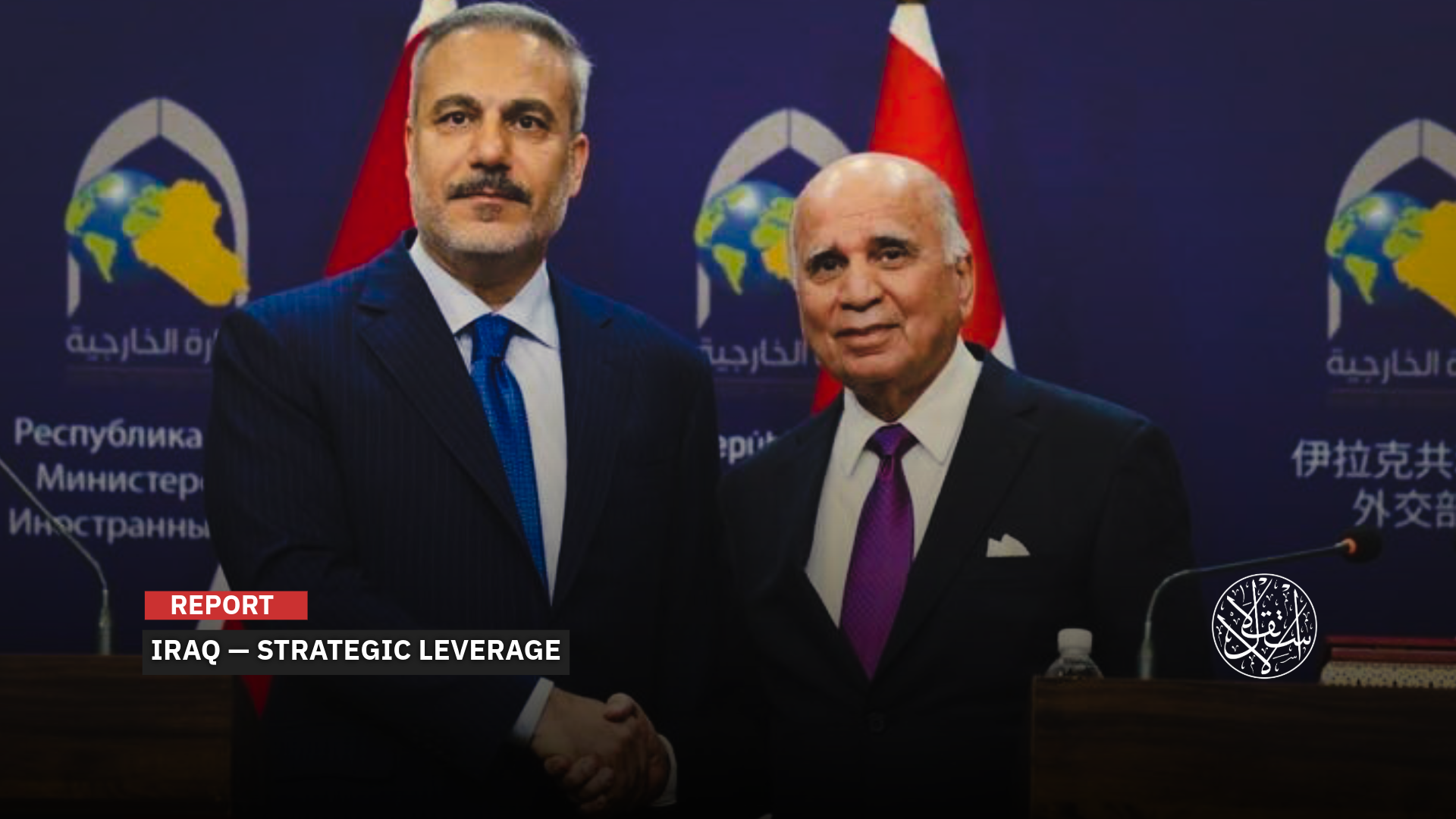
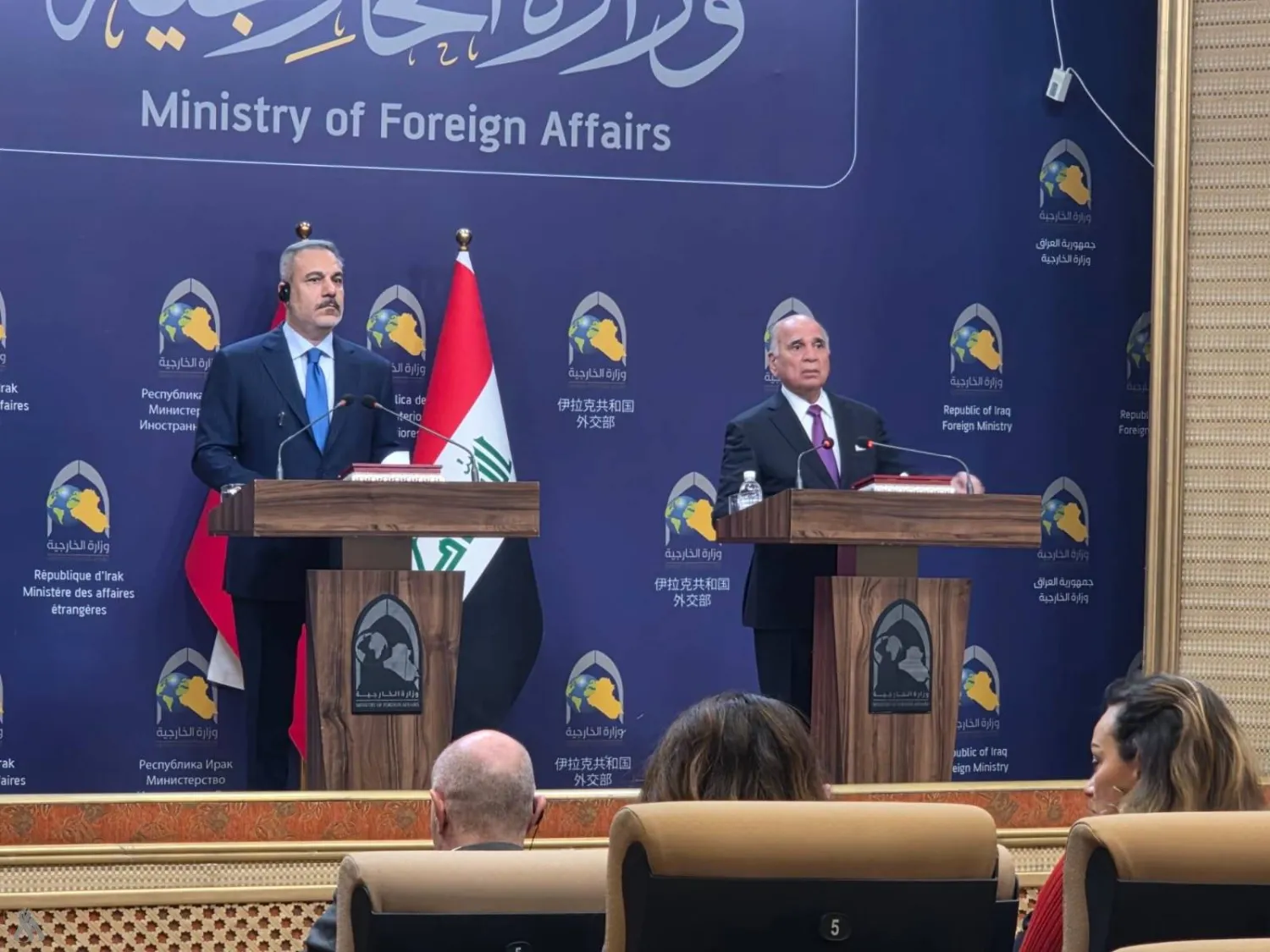
On November 2, 2025, Turkish Foreign Minister Hakan Fidan and his Iraqi counterpart Fuad Hussein signed a document in Baghdad concerning the mechanism for financing projects under the framework water cooperation agreement between the two governments, following up on a deal reached in 2024.
Oil for Water
On the official Iraqi level, Prime Minister Mohammed Shiaa al-Sudani emphasized that the framework cooperation agreement signed with Turkiye represents a significant step toward finding lasting solutions to Iraq’s water crisis, according to a statement issued by his media office on November 2.
According to al-Sudani, “The agreement will be one of the sustainable solutions to the water crisis in Iraq, through a series of large joint projects to be implemented in the water sector, aimed at addressing and managing the scarcity of water resources.”
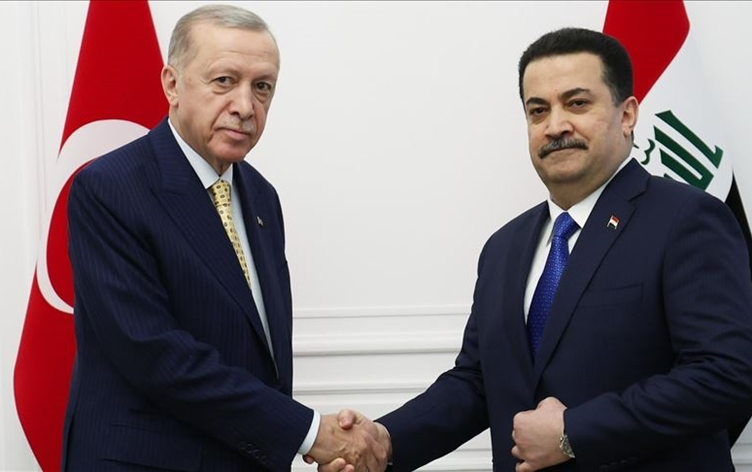
He also highlighted the importance of following through on the outcomes of the agreement reached during Turkish President Recep Tayyip Erdogan’s visit to Baghdad in 2024, stressing that water scarcity is a global issue and that Iraq is one of the countries most affected by it.
Al-Sudani further noted that “The financing mechanism agreement will enhance bilateral relations with Turkiye and contribute to their growth across various fields, ultimately serving the mutual interests of both friendly nations.”
For his part, Iraqi Foreign Minister Fuad Hussein described the agreement, during a joint press conference with his Turkish counterpart Hakan Fidan, as “a historic agreement on water management between Baghdad and Ankara.”
He added, “We held extensive meetings in Ankara on the water issue, and we reached agreements there, which were later transformed into a memorandum of understanding. This historic agreement on water management, the first of its kind in Iraqi-Turkish relations, will be signed in a few hours.”
Turkish Foreign Minister Hakan Fidan, meanwhile, said that the agreement “will pave the way for the permanent rehabilitation of Iraq’s water networks,” adding, “It will be the largest infrastructure investment in Iraq’s history.”
According to the Iraqi News Agency (INA) on November 4, discussions between Ankara and Baghdad continued for more than a year to reach an appropriate mechanism for implementing the agreements and memoranda of understanding signed concerning the water sector.
The official agency noted that the projects would include “improving water quality and halting river pollution, developing irrigation methods and employing modern irrigation techniques, reclaiming agricultural land, and establishing water governance in Iraq to promote efficient water use.”
It added that “Funding for these projects will follow the procedures of Iraq’s Ministry of Finance, from an account to be created by selling quantities of crude oil, the amount of which will be determined by a decision from the Cabinet, and based on the international price of Iraqi oil sold to the Turkish company, which must be acceptable to the Iraqi State Oil Marketing Organization.”
“The mechanism includes a clause stipulating that if Iraqi oil is resold outside Turkiye and only in the European market, Iraq’s share will be 65% of the profits gained from reselling the oil at a price higher than the international benchmark,” the agency further reported.
The “Framework Cooperation Agreement on Water,” signed on April 22, 2024, and the “Financing Mechanism Document” signed on November 2, mark the beginning of a new strategic phase in the economic and commercial relations between the two countries, according to Turkiye’s Anadolu Agency.
Political Dimensions
Regarding the timing of the agreement’s signing just before the Iraqi elections held on November 11, Turkish affairs expert Mahmoud Alloush remarked that “there is a clear political dimension to the agreement, as it is tied to the new reality in relations between the two countries, particularly under the government of Mohammad Shiaa al-Sudani, which has seen significant progress in bilateral cooperation.”
Alloush explained in an interview with Al-Estiklal that “the water issue is part of a broader set of issues that define the overall framework of Iraqi-Turkish relations, with security at the forefront, especially since the signing of the agreement coincided with growing cooperation between the two sides in combating terrorism, as well as Iraq’s role in facilitating and supporting the peace process between Turkiye and the Kurdistan Workers' Party (PKK).”
The expert added, “Iran’s decline in the region has created clear vacuums, particularly in Syria and Iraq, which Turkiye is seeking to fill. In Syria, Ankara, thanks to its growing influence following recent changes in Damascus, has managed to occupy much of the space left by Iran’s retreat.”
“In Iraq, there’s no doubt that Turkiye is seeking to capitalize on Iran’s relative decline, but it is also aware that Tehran remains a dominant regional force in terms of influence on the Iraqi scene, far outpacing Turkiye,” Alloush continued.
He viewed the relationship between Ankara and Baghdad as “an important opportunity for the latter to expand its regional maneuvering space and balance its relationships with key regional actors, including Turkiye and Iran.”
“Turkiye is not seeking to intervene in Iraq’s internal politics, but it sees Iraq’s stability as a key part of its own stability, much like in Syria.”
From this perspective, Turkiye’s diplomacy toward Iraq, according to Alloush, is based on “helping Baghdad achieve internal stability, seeing it as a gateway for more effective cooperation with Turkiye on issues of mutual concern, notably security and water.”
Meanwhile, Iraqi observers believe that Ankara has, through the water agreement, secured new strategic leverage in Iraq, which it may later use as political pressure against the Shiite-led ruling forces that have held power since 2003.
This, they argue, would give Turkiye increasing influence in Iraq’s political landscape, particularly as Iran’s influence wanes and America’s role rises.
Observers pointed out that Iran had previously used the electricity issue as a pressure tool on past Iraqi governments.
In the summer of 2018, Iran’s suspension of electricity supplies sparked widespread protests in Iraq, which played a key role in preventing then-Prime Minister Haider al-Abadi from securing a second term.
Al-Abadi himself stated in a televised interview at the end of 2018 that Tehran had contributed to preventing him from securing a second term due to “a struggle of wills within Iran and beyond.”
He emphasized that this struggle also included Iran’s decision to cut off gas supplies to Iraq’s power plants.
Water Diplomacy
In a similar vein, the U.S.-based Monitor website reported that Ankara is using what it calls "water diplomacy" as a tool to maintain its influence over Iraqi decision-makers, particularly in the lead-up to the November 11 elections.
The move allows Turkiye to position itself as part of the solution to Iraq’s growing water shortage crisis.
The report, published on November 3, noted that the announcement provided a political boost to Iraqi Prime Minister Mohammad Shiaa al-Sudani, who is facing rising public discontent due to the severe water shortages, especially in Basra province, where protests have escalated because of the ongoing drought.
From the Turkish side, the arrangement will allow Ankara to curb capital outflows and ensure that its companies secure lucrative contracts, the report stated.
In a similar tone, the Lebanese newspaper Al-Akhbar, which is affiliated with Hezbollah, described the agreement as one that “gives Turkiye technical and administrative powers over water release management, in exchange for the cancellation of outstanding debts and raising the annual trade exchange cap to $30 billion.”
The newspaper added, “Turkish management will take responsibility for the dams, reservoirs, and water infrastructure during the implementation phase.”
The paper argued that the agreement gives Turkiye the upper hand in managing Iraq’s lifeblood, raising concerns about potentially tying the country’s water decisions to economic and political files, particularly at a time when public anger is mounting in Iraqi cities over the drought affecting the Tigris and Euphrates rivers and the southern marshes.
However, the paper also noted that “the Iraqi government is focusing more on the political side of the agreement with Ankara, while technical and environmental issues remain on the back burner.”
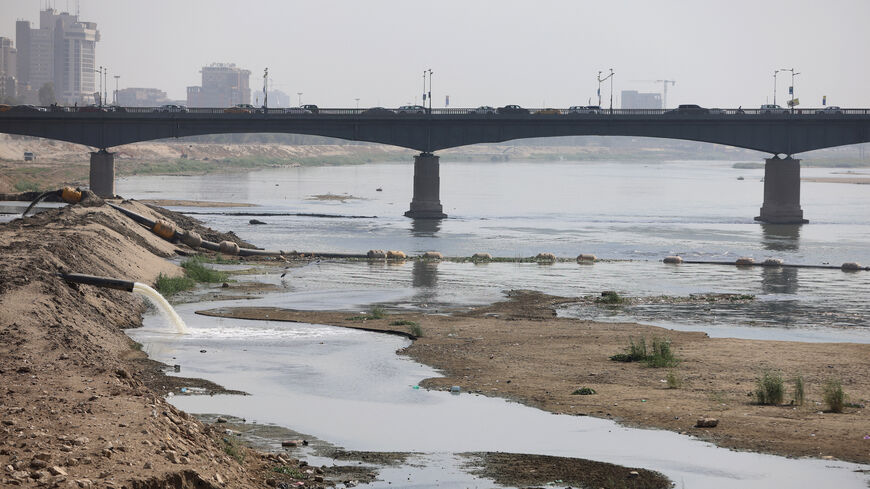
In a striking visual representation of Iraq’s water crisis, the Tigris River in central Baghdad appeared more like a shallow canal, encircled by mud islands, while the Euphrates continued to recede in the country’s western provinces.
For the first time, Iraq is experiencing a drought crisis that is considered the worst in nearly a century. The Iraqi Ministry of Water Resources officially declared that “2025 is the driest year since 1933.”
Iraqi Minister of Water Resources Aoun Dhiab confirmed that Iran had cut off four tributaries of the Tigris. He also pointed out that Tehran had altered the course of several rivers feeding into the Diyala River in eastern Iraq.
In a televised interview on April 11, 2024, the Iraqi minister stated that his country had informed Iran of the need to coordinate regarding the rivers that feed the Tigris.
Due to the continued rise in temperatures and the worsening water shortages year after year, Iraq is now ranked among the top five countries most vulnerable to the impacts of climate change, according to the United Nations.
This has led to the displacement of thousands of families from the southern provinces, particularly from Maysan and Dhi Qar.
Sources
- "Water for Oil": Iraqis Criticize Water Agreement Between Iraq and Turkey… What Are the Details? [Arabic]
- The First Water Agreement in Decades: Iraq at the Mercy of Turkey [Arabic]
- "Strategic" Agreement Between Baghdad and Ankara to Regulate and Manage the Water File [Arabic]
- The First Water Agreement in Decades: Iraq at the Mercy of Turkey [Arabic]
- Turkey and Iraq Sign the "Mechanism Document" to Fund Water Cooperation Projects [Arabic]