Washington Returns Forcefully to Iraq: What Does Trump’s Envoy Bring?
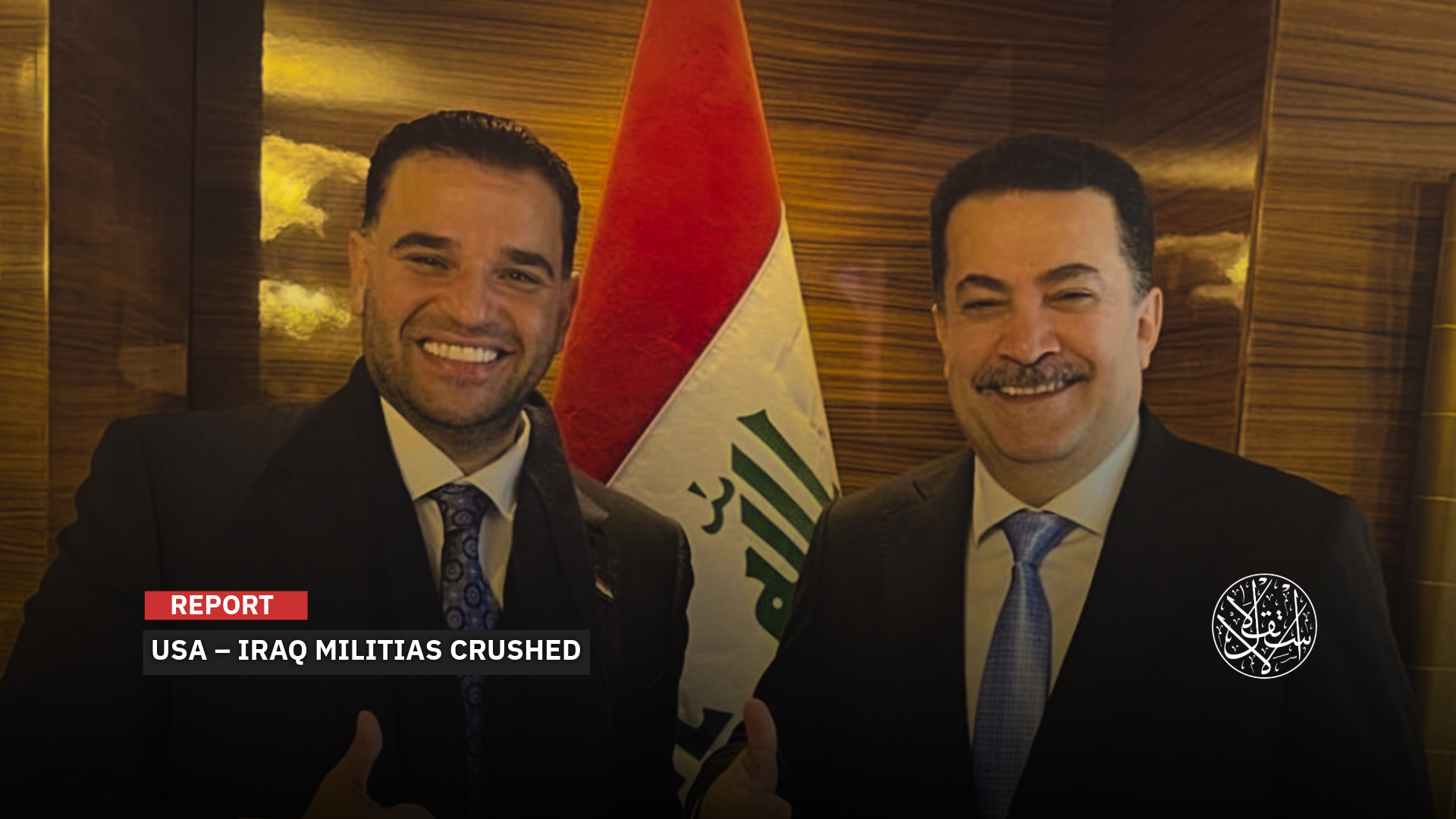
Savaya confirmed that his discussions included the role of Iran-backed militias and their affiliated networks.
As the countdown begins for the arrival of Mark Savaya, the envoy of U.S. President Donald Trump, to Iraq, expectations are rising about the agenda he will bring, particularly in light of the intensive talks he has been holding on an almost daily basis with U.S. ministers and officials.
Those discussions have focused squarely on Iraqi affairs, spanning political, security and economic files.
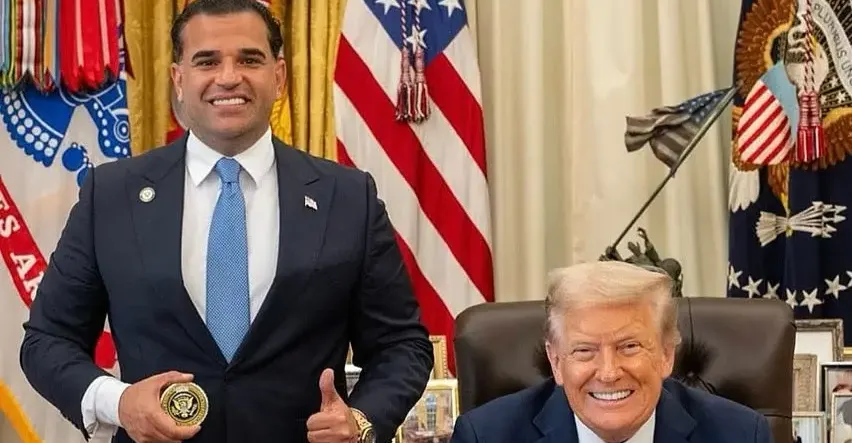
President Donald Trump tasked Savaya, who is of Iraqi Chaldean origin and 43 years old, with the mission in October 2025, following his emergence as one of the most prominent members of Trump’s election campaign in Michigan.
His appointment also reflects his notable role in the case of Elizabeth Tsurkov, the Russian-Israeli woman held by militias in Iraq, and his involvement in efforts that led to her release.
Preparatory Meetings
Ahead of his anticipated arrival in Baghdad, Savaya held a series of meetings with senior officials in the Trump administration, aimed at putting the final touches on the agenda for his visit.
The discussions revealed a clear focus on examining key challenges and reform opportunities in Iraq’s banking sector, both public and private.
In this context, Savaya met on January 15, 2026, with the U.S. Treasury Department and the Office of Foreign Assets Control, or OFAC.
The meeting examined the possibility of conducting a comprehensive review of records of suspicious payments and financial transactions involving institutions, companies, and individuals in Iraq, linked to smuggling and money laundering, as well as fraudulent financial contracts and projects used to finance and enable terrorist activities.
The U.S. envoy also discussed next steps related to anticipated sanctions targeting what he described as “malicious” entities and networks that contribute to undermining financial integrity and weakening state authority, according to a post he published on the X platform.
In a second meeting at the White House with U.S. Defense Secretary Pete Hegseth and counterterrorism director Sebastian Gorka, it was agreed that the issues discussed would be raised again and in expanded form during Savaya’s upcoming visit to Iraq.
Savaya said in a post on X on January 16 that he intends to engage with what he called the “appropriate decision makers” in Iraq, with the aim of addressing conditions on the ground in a way that serves the interests of the Iraqi people, in his words.
In his final meeting inside the United States through January 18, Savaya met with Director of National Intelligence Tulsi Gabbard and Joe Kent, head of the National Counterterrorism Center under her authority, describing the encounter as “highly productive.”
The meeting revisited a range of core issues he had previously raised, foremost among them the role of Iran-backed militias and the networks linked to them.
Savaya said the discussions also covered the importance of the Iraqi government continuing its efforts throughout 2025 to strengthen border security, combat smuggling and corruption, and consolidate state authority.
He added that, under the leadership of President Donald J. Trump, he is fully committed to exposing violations and pursuing those involved wherever they may be, while working to achieve stability in Iraq and ensure its security in a manner that serves its sovereignty and the well-being of its people.
Parallel Context
These moves align with a tour conducted by the acting U.S. ambassador in Baghdad, Joshua Hays, since early January, which included meetings with a number of Iraqi political leaders. Among them were discussions with two prominent figures in the Shiite Coordination Framework, Ammar al-Hakim and Nouri al-Maliki, during which he stressed the need to “dismantle terrorist militias.”
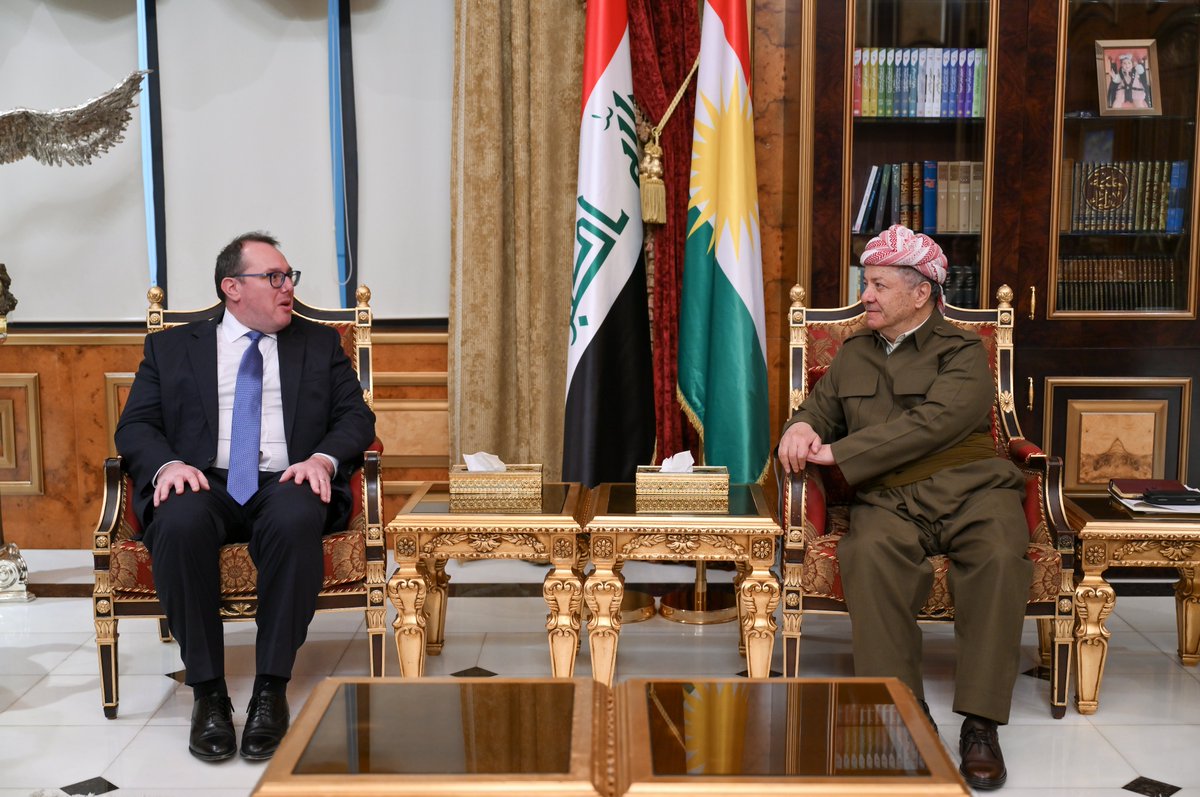
Hays’ most recent meeting took place on January 13 with Kurdistan Democratic Party leader Masoud Barzani, where he reiterated that “Iran-backed terrorist militias that ignore Iraq’s calls for disarmament have no place in the Iraqi government in any capacity.”
Hays also emphasized that the United States will continue to state clearly and consistently the need for Iraq to move urgently to dismantle militias that pursue external agendas, undermine its sovereignty, drain its resources, threaten the security of both Iraqis and Americans, and draw the country into wider regional conflicts.
A New Phase
On the implications of Savaya’s moves and their political messages, Iraqi political affairs researcher Hamed al-Obaidi said the “seriousness with which the U.S. envoy is operating this time appears higher than before, and the American eye has grown far redder toward militias in Iraq, before these pressures turn into military slaps.”
Al-Obaidi told Al-Estiklal that Savaya’s actions are consistent with broader shifts underway in the Middle East, noting that 2026 signals a new phase that could see the region cleared of militias, whether in Lebanon, Syria, Iraq, or Yemen, with future international engagement confined exclusively to governments.
He pointed to what happened with the Syrian Democratic Forces, or SDF, as a clear example. Despite previous U.S. support, Washington ultimately backed the government of Ahmed al-Sharaa in extending its control over all Syrian territory.
He added that the same applies to Yemen’s Southern Transitional Council militia, whose role ended after its rebellion against the state, amid Western backing for Saudi Arabia’s move against its ally, the United Arab Emirates.
Al-Obaidi went on to say that recent developments carry far-reaching implications, noting that Ahmed al-Sharaa has consolidated his alliance with the United States, Turkiye, and Saudi Arabia, and is using that alignment to address internal files involving Kurds, Alawites, and Druze, as well as Israel, which has announced its intention to withdraw from nine sites in the Golan Heights it had seized.
He argued that the “Shiite crescent has ended, to be replaced by a Sunni crescent, Turkish, Syrian, Jordanian and Saudi, with U.S. approval,” explaining that this crescent now encircles Iraq and extends into its territory from the Kurdish side through the Kurdistan Region.
According to al-Obaidi, this crescent agreed to hand Kurdish leadership to Kurdistan Democratic Party leader Masoud Barzani, after the Kurdistan Workers’ Party had nearly wrested it from him over the past decades.
The researcher also suggested that Iran and the Shiite religious establishment may move toward riding a wave of political Islam rather than the sectarian rhetoric that dominated the previous phase, in an effort to win over the Sunni street and confront U.S. pressure by stripping it of its regional influence.
In the same vein, prominent Iraqi Shiite politician Izzat Alshabandar said that Savaya’s meetings, as he prepares to arrive in Iraq soon, will not carry good news for many of the figures dominating Iraq’s political scene. In a post on X on January 19, he wrote, “The bankrupt man in the caravan is trustworthy.”
Potential Measures
Regarding the expected agenda of Savaya’s visit, the Iraqi newspaper Al-Mada reported on January 18 that the U.S. envoy may seek to shut down most Iraqi banks, leaving only a limited number, between four and six, out of more than 96 banks. The move would come as part of a stringent U.S. campaign to combat money laundering and cut off Iran’s sources of financing.
On the formation of Iraq’s next government, the paper said the Shiite Coordination Framework has expressed its readiness to fully cooperate with Savaya on the issue of armed factions, leaving it to the United States to decide how to deal with groups that refuse to disarm, whether through military force or by targeting their economic activities.
The report noted that as Washington raised the level of its threats toward Tehran, at one point brandishing harsh military options before later stepping back, Iraqi factions were preoccupied with internal struggles in Baghdad over the distribution of posts in the next government and the contours of a post-weapons phase.
According to the newspaper, official statements issued in Washington and Baghdad indicate that the two main files on the table concern preventing armed factions from participating in the next government and cutting off their funding sources, as well as Iran’s access to hard currency.
For its part, the Iraqi daily Al-Sabah al-Jadeed argued in an article published on January 18 that Savaya’s moves carry two core messages. The first is directed at the Iraqi government and calls for speeding up reform of the banking sector and tightening financial controls in line with international standards.
The second is a warning to those benefiting from financial chaos, signaling that the era of turning a blind eye has come to an end.
By contrast, Al-Alam al-Jadeed went further, citing unnamed sources close to the Coordination Framework, saying the U.S. envoy has already begun intervening in consultations over forming the new government and selecting ministers, particularly for sovereign ministries.
According to a report published by the newspaper on January 18, Savaya’s involvement in choosing ministers is being coordinated with the Coordination Framework, in exchange for overlooking certain forces and factions to which the U.S. administration has reservations.
The paper said Savaya’s moves reflect Washington’s desire to play a direct role in shaping Iraq’s next government, revealing that the Trump envoy’s activity precedes his anticipated visit and comes ahead of any official announcement that the government formation process has begun.
According to the information cited by the newspaper, these developments have sparked internal debate among Iraqi political forces over the extent of U.S. involvement in forming the next government, despite repeated official denials by leaders of the Coordination Framework in particular.
Sources
- Expectations Surrounding Savaya’s Plan, Closing All Banks Except Four and Targeting Defiant Factions [Arabic]
- Sources to Al-Alam al-Jadeed, Savaya Coordinates With the Coordination Framework to Select New Ministers Two Days Before Arriving in Baghdad [Arabic]
- Message to the Factions, Trump’s Envoy Says We Are Committed to Pursuing Any Violations Wherever They Exist in Iraq [Arabic]
- Signals Behind the Expansion of U.S. Sanctions, Savaya’s Moves With the Treasury Alarm Those Involved in “Suspicious” Activities in Iraq [Arabic]