Trump Admits: Will 'Israel' Use Its Nuclear Weapons Against Iran?
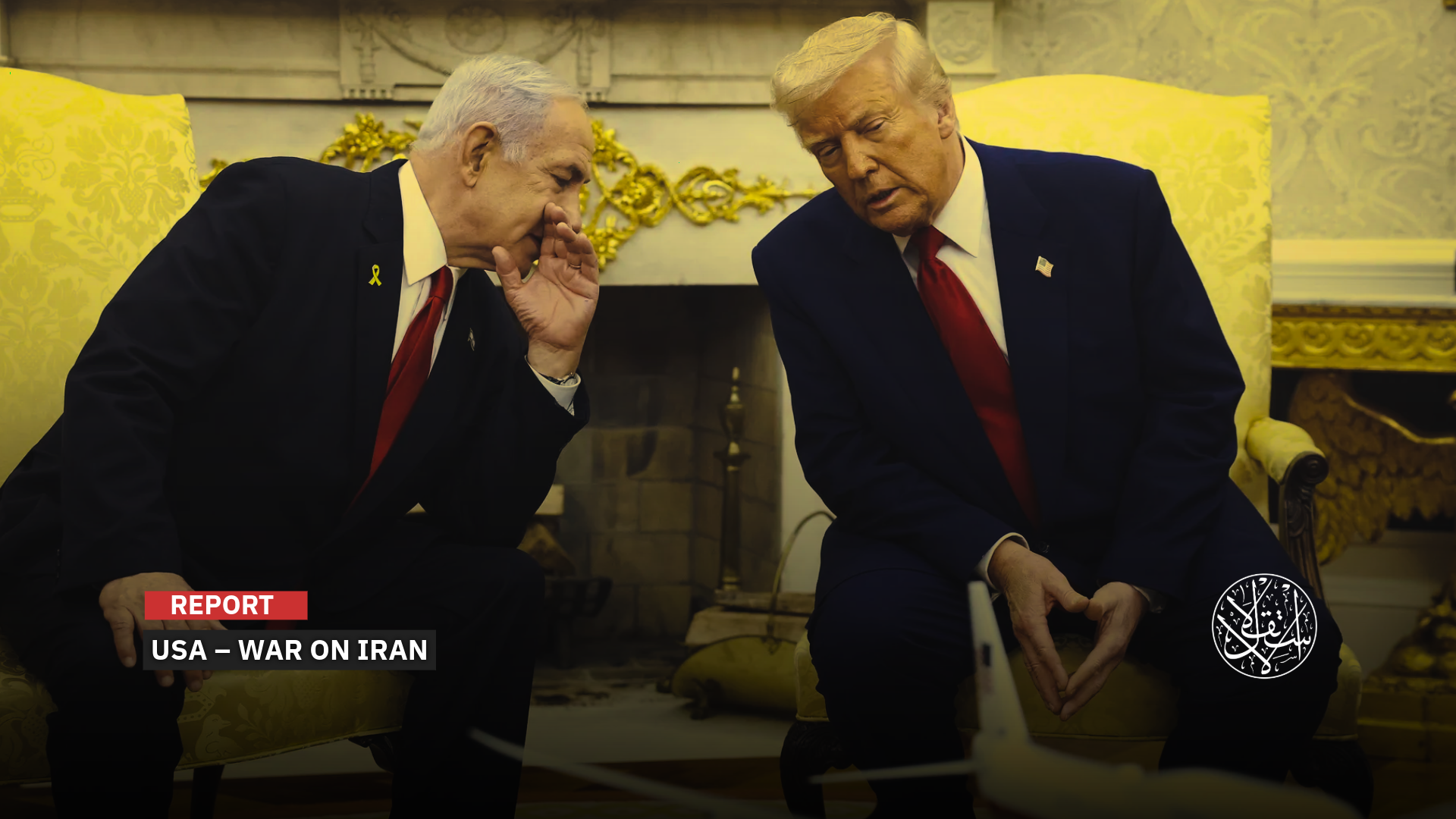
“The Samson Option is an Israeli strategy based on destroying extensive targets using nuclear weapons.”
In a rare acknowledgment of "Israel's" possession of nuclear weapons, U.S. President Donald Trump revealed on March 16, that "Tel Aviv" possesses atomic arms.
This disclosure came in response to a question regarding whether he possessed intelligence assessments indicating that “Israel” indeed holds a nuclear arsenal.
When asked about the possibility of the occupying state employing such weaponry against Iran, Trump replied: “Israel would never use its nuclear weapons against Iran.”
He offered no explanation for the source of his confidence, despite "Tel Aviv's" strategic doctrine—known as the Samson Option—which is presumed to be activated should the state’s very existence come under threat.
Some analysts viewed Trump’s admission as a slip of the tongue, given the often-contradictory statements he issued.
However, others suggested the remark may have been intentional—serving as a message and a form of pressure aimed at compelling Tehran to capitulate.
Nevertheless, this admission implicitly signals a shift in U.S. policy—a stance also adopted by "Tel Aviv"—known as nuclear ambiguity. This doctrine entails neither explicitly confirming nor explicitly denying "Israel's" possession of nuclear weapons.
This marks the first official acknowledgment by a U.S. president in a considerable period that “Israel” possesses nuclear weapons.
This stands in stark contrast to the actions of the United States and its allies, which have waged wars against nations such as Iraq and Iran under the pretext of their potential possession of nuclear arms, while maintaining a steadfast silence regarding “Israel”.
Nuclear Ambiguity
In a series of controversial statements on March 12, U.S. President Donald Trump asserted that Iran was on the verge of defeat.
He further warned that the United States possesses the capability to escalate its strikes to such an extent that the reconstruction of the Iranian state would become virtually impossible.
Analysts have interpreted this as an implicit threat to employ nuclear weapons—reminiscent of the strikes on Hiroshima and Nagasaki.
Speaking to reporters in Washington, Trump stated: “We could strike areas in Tehran and elsewhere; were we to do so, it would be nearly impossible for them to rebuild their country—and that is not something we want.”
Two days later, a senior White House advisor—a close confidant of the U.S. President—called for seeking an exit strategy from the war with Iran.
This marked the first public indication of internal dissent within the administration regarding the ongoing conflict, accompanied by a warning that nuclear weapons could potentially be brought into the theater of war.
This internal dissent corroborates the assertions made by Joe Kent, the former Director of the U.S. National Counterterrorism Center, who resigned in protest against the war with Iran.
Kent argued that the administration had been dragged into the conflict under pressure from “Israel” and its associated lobbying groups within the United States.
Furthermore, both the Financial Times and Newsweek magazine quoted David Sacks—Trump’s advisor on artificial intelligence—during his appearance on the All-In podcast on March 14.
Sacks stated that now is the time to declare victory and withdraw, noting that global markets require a clear resolution to the conflict.
However, he added that a certain faction—predominantly within the Republican Party—desires to escalate the war despite the inherent risks.
He warned that if the conflict were to persist for weeks or months, it could leave “Israel” vulnerable to destruction and deplete its air defense capabilities.
This has fueled fears that “Israel” might resort to unprecedented escalation—potentially even contemplating the use of nuclear weapons against Iran.
But U.S. President Donald Trump responded by saying: “Israel will not launch a nuclear strike against Iran to end the war.”
This stance stands in contrast to Israeli assessments suggesting that "Tel Aviv"—should it perceive its very existence to be fundamentally threatened—would consult no one and would instead implement what is known as the Samson Option, a strategy based on destroying extensive targets using nuclear weapons.
Sacks's remarks garnered widespread attention in the American media and across social media platforms.
Thomas Wright, a senior fellow at the Brookings Institution, wrote an article in The Atlantic describing these remarks as astonishing.
He noted that Sacks had warned that certain factions are attempting to push Trump toward escalating the situation with Iran—a course of action that could render the Gulf uninhabitable and compel Israel to consider the use of nuclear weapons.
Similarly, Dr. Andreas Krieg—an academic and author—wrote in a post on X: “When the choice lies between a nuclear strike and a diplomatic exit in an unwinnable war, I believe the choice is clear.”
He added that the international community must stand united against the United States and “Israel” to put an end to this madness.
In an analysis published on March 18, by the American leftist magazine Jacobin, the publication noted that “Israel” is the only state in the region known to possess nuclear weapons.
It suggested that “Israel” might resort to using them if it felt its conventional military options had been exhausted—particularly in the context of a war with Iran that had spiraled out of control.
The magazine added that there are virtually no indications that Israel is achieving its war objectives against Iran, warning that the possibility of "Tel Aviv" resorting to nuclear weapons must be taken seriously, particularly in light of the waning of what is known as the myth of Israeli invincibility.
The magazine attributed this possibility to Iran's capability to target Israeli military and civilian infrastructure using advanced missiles, while simultaneously partially disrupting defensive systems—including the Iron Dome and David's Sling systems.
Jacobin quoted missile experts—including Ted Postol, Professor Emeritus of Science, Technology, and International Security at the Massachusetts Institute of Technology (MIT)—as stating that the interception rate for Iranian missiles does not exceed one out of every twenty missiles.
He asserted that the success rates announced by “Israel”—which reportedly reach as high as 87%—are entirely inaccurate, and that the Iron Dome serves more as a political spectacle than as an effective defensive shield.
The magazine concluded by warning that Iran's resilience and partial success in confronting the attacks could push a besieged “Israel”, terrified of losing its strategic security, to resort to using nuclear weapons.
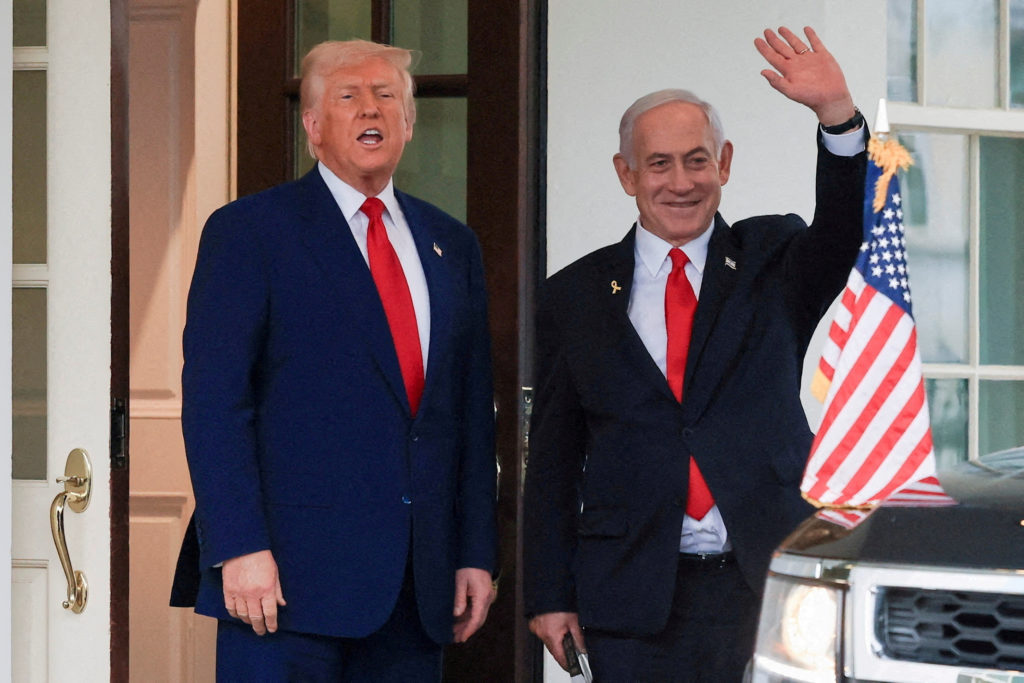
American Admission
Although US President Donald Trump's statements on March 16, are the closest thing to an official admission that “Israel” possesses nuclear weapons, they are not the first American acknowledgement of this fact.
The issue had previously appeared in statements by American officials, but it remained outside the framework of officially declared US policy.
Since the 1960s, Washington has pursued a policy of nuclear ambiguity toward “Israel”, neither confirming nor explicitly denying "Israel’s" possession of nuclear weapons, and avoiding official recognition of them.
Despite this official ambiguity, some statements have been interpreted as tacit admissions, most notably former US President Jimmy Carter's 2008 remarks that “Israel” possessed approximately 150 nuclear weapons.
This has also been implicitly acknowledged in declassified US government documents, such as a 1960 report, congressional reports, and statements by former Pentagon officials, but these have not translated into official US policy recognition.
The origins of this policy of ambiguity lie in an unannounced strategic understanding reached in 1969 between US President Richard Nixon and Israeli Prime Minister Golda Meir, stipulating that Washington would tolerate "Israel's" nuclear program as long as “Israel” did not publicly declare its possession of nuclear weapons or conduct a public nuclear test.
The aim of this understanding was to avoid embarrassing Washington on the issue of nuclear non-proliferation, to prevent a nuclear arms race in the Middle East, and to maintain "Israel's" deterrent without formal recognition.
In 2009, a report issued by the US Joint Chiefs of Staff included “Israel” among the nuclear-armed states in a non-classified strategic analysis—a rare occurrence, as Washington usually avoids mentioning "Israel" among nuclear powers.
US intelligence assessments since the late 1960s have consistently suggested that "Israel" possessed nuclear weapons, but this has remained confined to intelligence reports and has not translated into official political acknowledgment.
The legal reason for this lack of official recognition is related to certain US laws, such as the Symington Amendment, which prohibits providing assistance to countries developing nuclear weapons outside the framework of the Non-Proliferation Treaty.
If Washington were to officially recognize "Israel's" possession of nuclear weapons, it could open a legal debate regarding US military aid to “Israel”.
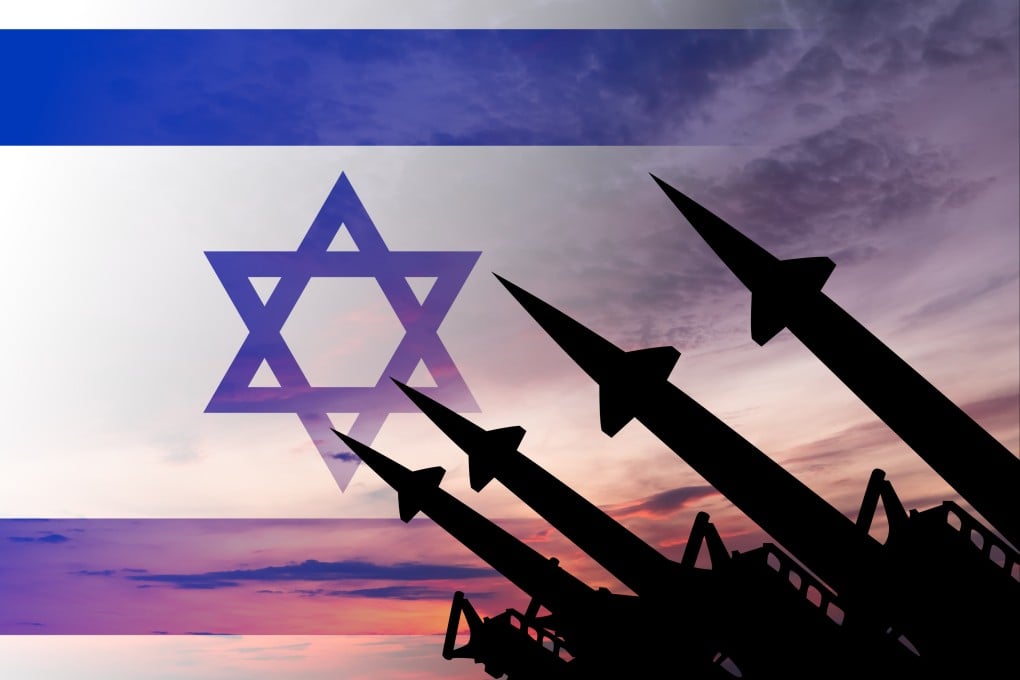
Israeli Nuclear Bombs
According to American and international estimates, “Israel” possesses a large, undeclared nuclear arsenal of more than 100 warheads, built with French assistance and concealed from the United States for decades.
This arsenal can be deployed via submarines and long-range ballistic missiles, and Israeli planners consider it the Samson Option, named after the biblical figure who destroyed the Temple of Dagon to harm his enemies, knowing the risk of his own death.
This option indicates that “Israel” might use nuclear weapons if it felt its existence was seriously threatened.
The Federation of American Scientists estimates that “Israel” possesses approximately 90 plutonium warheads produced at the Dimona heavy water reactor.
Several reports, most notably a 2015 report by the Center for Science and National Security, have asserted that "Israel" possesses approximately 115 nuclear warheads, in addition to 660 kilograms of plutonium—more than Iran's 400 kilograms.
According to previous testimonies, including a 1986 report by former reactor technician Mordechai Vanunu, more recent estimates suggest that "Israel" may possess around 200 nuclear warheads.
"Israel" relies on the Samson Option doctrine as its nuclear deterrent strategy, meaning the use of nuclear weapons if its existence is threatened.
“Israel” has not signed the Treaty on the Non-Proliferation of Nuclear Weapons (NPT), and therefore its nuclear facilities are not subject to the International Atomic Energy Agency's (IAEA) comprehensive safeguards system, which allows for periodic inspections of member states' nuclear facilities.
During the initial military confrontation between "Israel" and Iran in June 2015, newspapers such as The New York Times pointed out that “Israel” bombed the Iranian nuclear program while possessing its own clandestine nuclear program, which it does not publicly acknowledge and which some experts believe is continuously expanding.
The IAEA confirms that 30 countries are capable of developing nuclear weapons, but only nine actually possess them.
“Israel” has the second-smallest nuclear arsenal among these countries, ahead of only North Korea, according to the International Campaign to Abolish Nuclear Weapons (ICAN), a Nobel Peace Prize-winning organization.
Experts can launch Israeli warheads from fighter jets, submarines, or land-based ballistic missile launchers, making "Israel" a fully operational nuclear power, ready to implement the Samson Doctrine if needed.
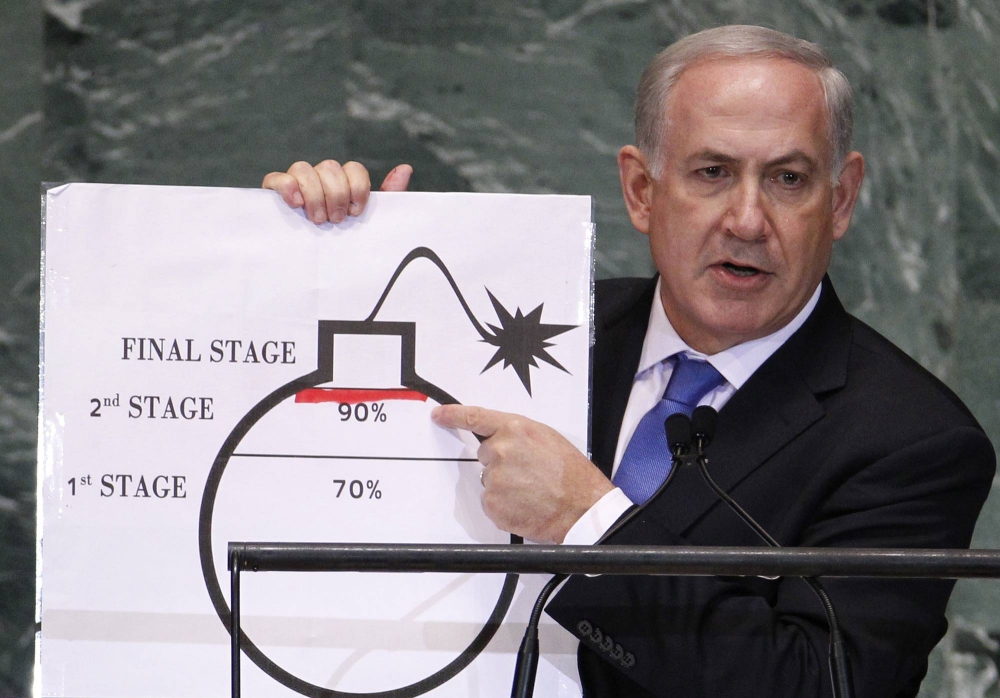
Iranian Strategy
Reports indicate that Iran may be on the verge of revising its stance on acquiring nuclear weapons, given the second war being waged against it by the United States and “Israel” since mid-2025.
According to the American magazine Jacobin, the policies of the former Supreme Leader, Ali Khamenei, succeeded in keeping Iran a threshold nuclear state.
But it appears that Tehran has already begun a political and technical review of this strategy, especially after the assassination of Khamenei and the escalation of Israeli and American attacks.
A senior Iranian official stated that official discussions are underway regarding the possibility of retracting Khamenei's fatwa prohibiting the possession and manufacture of nuclear weapons, and replacing it with a new fatwa permitting the possession of nuclear weapons as a deterrent against Israeli and American attacks.
“Israel and the U.S. assassinated the one who issued the fatwa, and therefore, retracting it is very likely in the coming days,” he said.
In October 2003, Khamenei issued a verbal fatwa prohibiting the production, stockpiling, and use of nuclear weapons and weapons of mass destruction, based on the Islamic legal principle of ‘no harm, no retaliation’ and the prohibition of indiscriminate killing.
But the reality of Iran's nuclear program reveals that it had a remaining stockpile of uranium enriched to 60% purity of approximately 440 kilograms before the United States withdrew from the nuclear agreement.
According to American and international nuclear experts, this stockpile paved the way for the production of several nuclear bombs within weeks.
Officials indicate that part of this stockpile is stored underground at the Isfahan site, giving Iran the ability to access it quickly should it decide to escalate the situation.

Experts believe that Iran does not need to conduct a nuclear test to effectively use its weapons, but it might choose to do so to demonstrate its deterrent capabilities in a long-standing conflict with "Israel", which possesses a secret nuclear arsenal.
The analysis adds that both countries are rich in heroic and suicidal myths: “Israel” is based on the Masada myth, which promotes courage and heroism, while Iran has the Karbala myth for symbolic and political deterrence.
This increases the likelihood of nuclear escalation should either country feel a direct existential threat.
In light of these changes, the world is facing a new equation for nuclear deterrence in the Middle East, where the possibility of Iran possessing nuclear weapons is no longer out of the question, and the rules of the game in the region have completely changed.