This is How Washington’s Supply of Cluster Munitions to Ukraine Is Controversial

Last week, the White House officially announced that the United States had decided to supply Ukraine with cluster munitions as part of a new $800 million military aid package, which brings the total U.S. military aid to more than $40 billion since the Russian invasion of Ukraine in February 2022.
While Washington says that the failure rate of cluster munitions that it will send to Ukraine does not exceed 2.3%, NATO members, including the UK, Canada, Germany, and Spain, and human rights organizations have expressed their refusal to use cluster munitions.
In a rare move, a number of Democratic lawmakers are seeking to oppose Biden’s latest decisions regarding the Ukraine war, pointing out that supplying internationally banned weapons to Kyiv is tantamount to relinquishing the moral threshold.
This type of bomb is prohibited by the Convention on Cluster Munitions, which was opened for signature in Oslo in 2008.
Although more than 100 countries have signed the treaty banning the production, stockpiling, use, and transfer of cluster munitions, Russia, Ukraine, and the U.S. are not signatories.
U.S. officials say they agreed to Kyiv’s request to obtain cluster munitions, which can kill or maim civilians that they would not know about after months or years after it became clear that it was running out of regular artillery ammunition and that production would not meet its needs.
The U.S. has used cluster bombs in Laos, Vietnam, and Iraq, and each time there are always question marks about how they were used.
Controversial Ammunition
U.S. President Joe Biden announced in an interview with CNN on July 7, 2023, that new defense aid would be sent to Ukraine, including cluster munitions, noting that the decision was difficult, stressing that his administration is convinced that Ukraine needs cluster munitions in its counterattack.
“We consulted closely with allies to make that decision, and some allies who didn’t sign Oslo accepted it with open arms, and that’s exactly the right thing to do,” said U.S. National Security Adviser Jake Sullivan.
Sullivan added in a press conference that Ukraine had given written assurances that the munitions would be used in a very careful manner in order to minimize any danger to civilians.
The U.S. announcement of this step, which has been under study for a long time, came after assurances that this type of munitions had been modernized to reduce the risks to civilians, and that the failure rate was 2.35% or less, which is much higher than the usual rate for this type of bomb.
On his part, Ukrainian President Volodymyr Zelensky thanked his U.S. counterpart, Joe Biden, for the new military aid, without referring to cluster munitions.
“We are grateful to the American people and President Biden for decisive steps that bring Ukraine closer to victory over the enemy,” Zelensky said in a tweet.
A timely, broad and much-needed defense aid package from the United States. We are grateful to the American people and President Joseph Biden @POTUS for decisive steps that bring Ukraine closer to victory over the enemy, and democracy to victory over dictatorship. The expansion…
— Володимир Зеленський (@ZelenskyyUa) July 7, 2023
On the other hand, The New York Times refuted, in a report on July 8, 2023, the Pentagon’s figures on the accuracy of the cluster bombs sent to Ukraine.
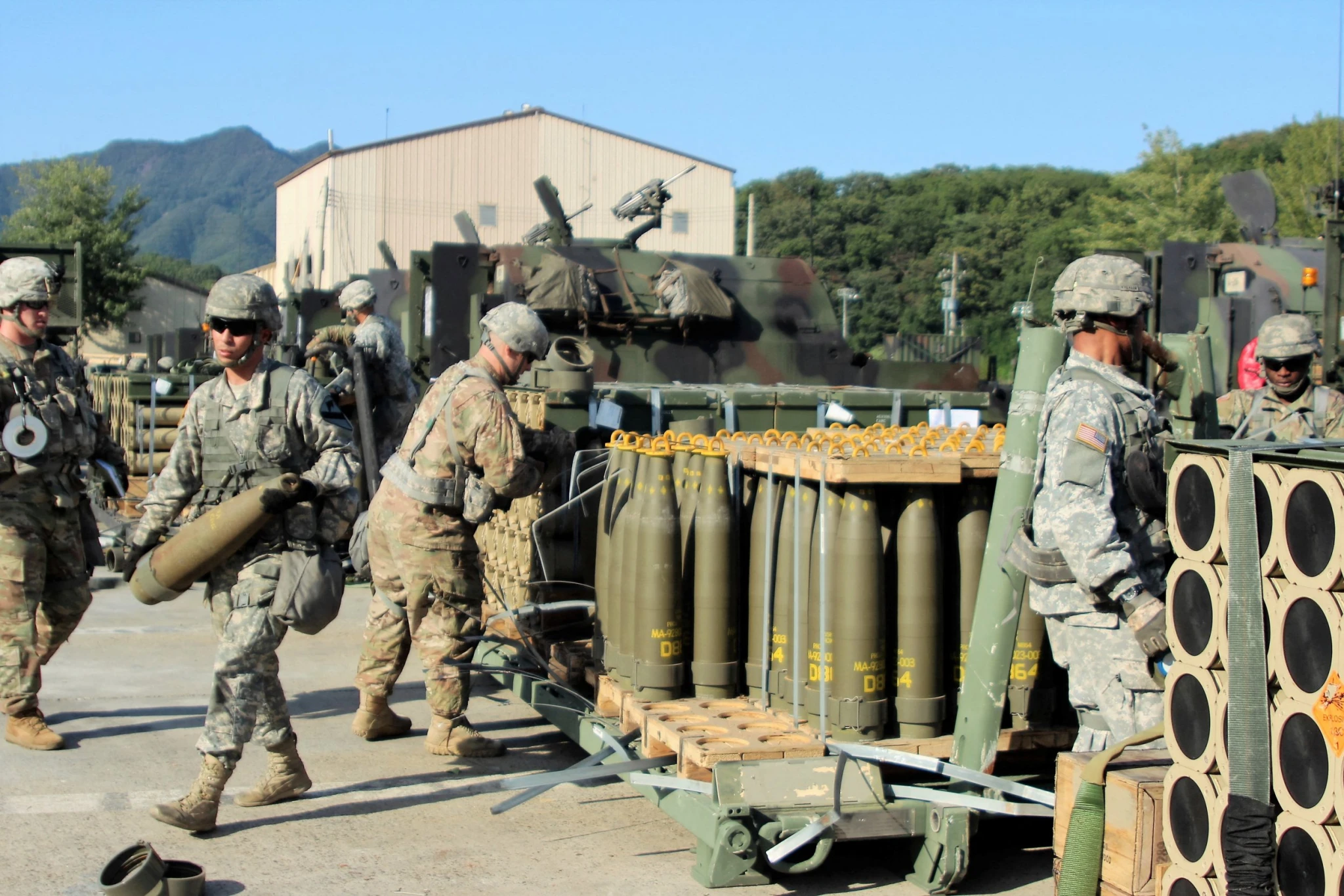
The report confirmed that Washington plans to send old models of bombs that do not explode immediately by 14%.
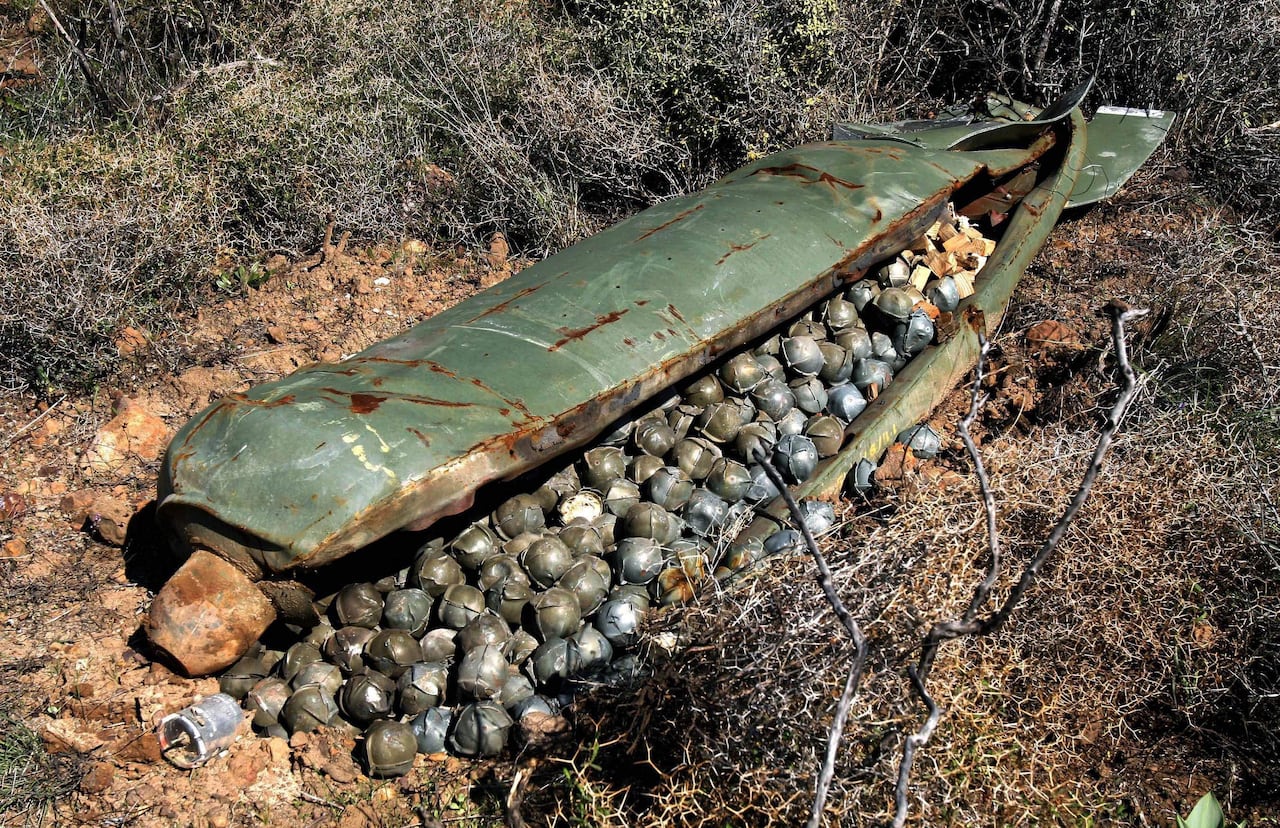
According to the newspaper, the failure rate means that some of the bombs contained in a single cluster container, which are spread over an area the size of a football field when launched, will not explode at the moment of impact and will become mines that can explode in anyone who stumbles upon them.
American Split
After the U.S. announced its intention to send cluster munitions to Ukraine, the American Axios website stated that bipartisan U.S. lawmakers are seeking to prevent the administration of President Joe Biden from sending these munitions.
Democratic Representatives Ilhan Omar and Sara Jacobs have introduced an amendment to the annual defense spending bill that must be passed to ban cluster munition transfers entirely.
Florida Republicans Matt Gaetz and Anna Paulina Luna, who are affiliated with the far-right movement in the GOP, signed the bill.
Democratic senators Cory Booker and Chris Murphy told Axios that they signed a letter to the White House opposing his plan to send cluster munitions to Ukraine.
Axios believed that any effort to block the Biden plan would face great difficulties, given that supporters of sending munitions to Ukraine represent a majority in the House and Senate.
It is unclear whether the Republican-dominated House of Representatives will give the bill put forward by Democratic Representatives a vote in the House.
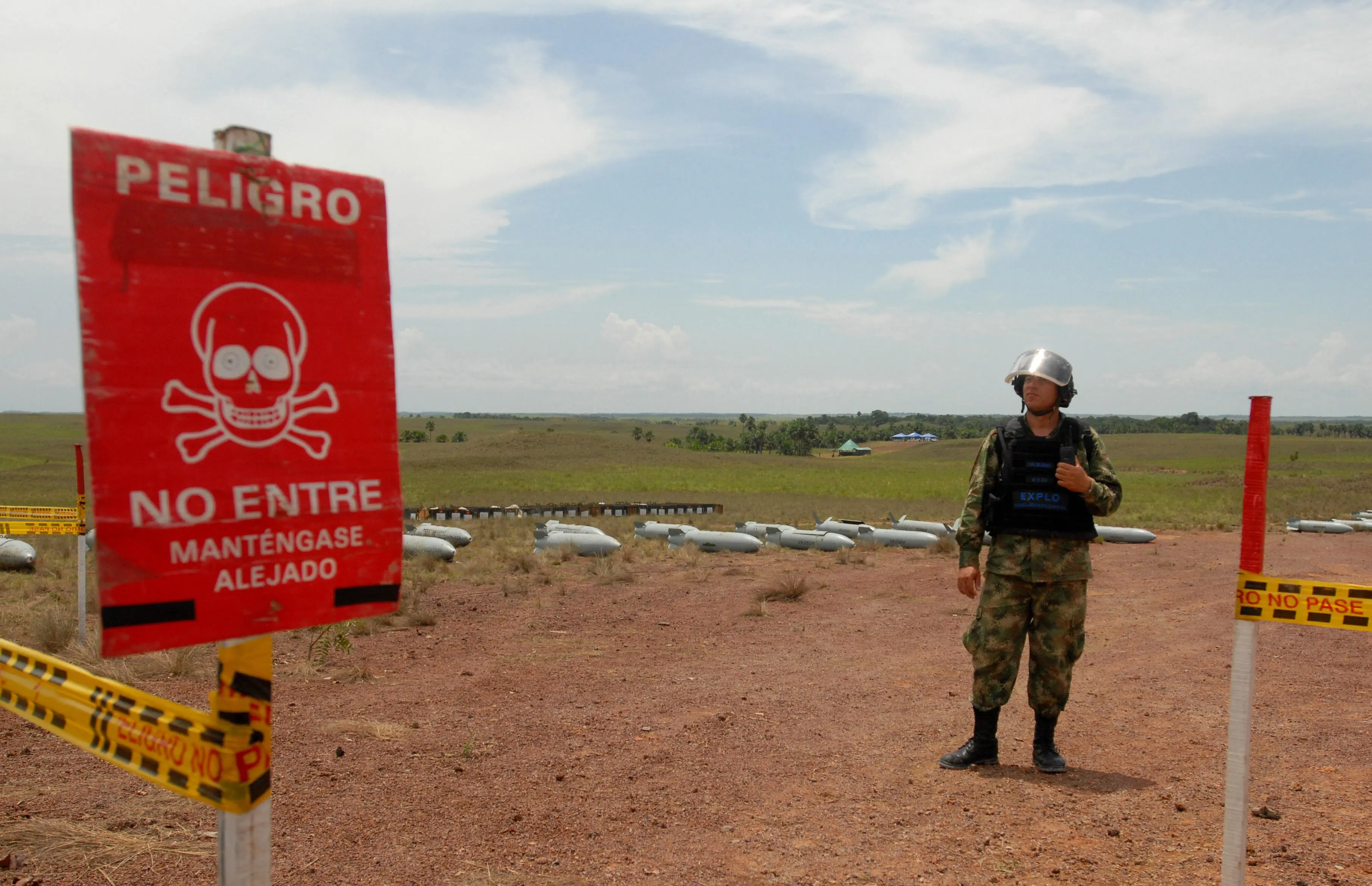
Since 1993, the United States has spent more than $4.6 billion helping other countries clear landmines and other unexploded ordnance, including cluster bombs, according to the State Department.
The United States also spent more than $376 million to support conventional weapons destruction activities in more than 65 countries and regions during fiscal year 2022 alone.
In a statement, 19 progressive House Democrats warned that cluster munitions cause indiscriminate harm, referring to the international opposition to the use of these munitions.
“The legacy of cluster bombs is misery, death, and expensive cleanup generations after their use,” Democratic Rep. Betty McCollum said in a statement opposing Biden’s move.
“The U.S. pays tens of millions of dollars annually to remove cluster munitions in Laos from the Vietnam era as these remnants of war continue to kill and maim civilians,” she added.
During the Vietnam War, the United States dropped nearly 270 million cluster bombs on Laos, even 30% of which failed to explode. As the United States has spent decades now helping to fund the disposal of these munitions.
A number of right-wing senators also joined in opposing the move as part of a broader effort against U.S. aid to Kyiv, including MO Senator Josh Hawley and Ohio Senator J.D. Vance.
Despite this, there is still a strong group of lawmakers in Congress who support sending cluster bombs.
Republican Foreign Affairs Committee Chairman Mike McCaul, Armed Services Committee Chairman Mike Rogers, and their Senate Republican counterparts have all been urging the move.
The House Intelligence Committee’s top Democrat, Rep. Jim Himes of Connecticut, has said Washington should give Kyiv what it says it needs to win the fight, including cluster munitions and F-16 fighter jets.
Senate Armed Services Committee members Mark Kelly and Joe Manchin and Democratic Senator Tammy Duckworth also commended the U.S. decision.
Senator Kevin Cramer also confirmed that he agrees with the American plan, adding that the Ukrainians are at war with an enemy that has weapons far superior to them and is not bound by any rules.
Dangerous Escalation
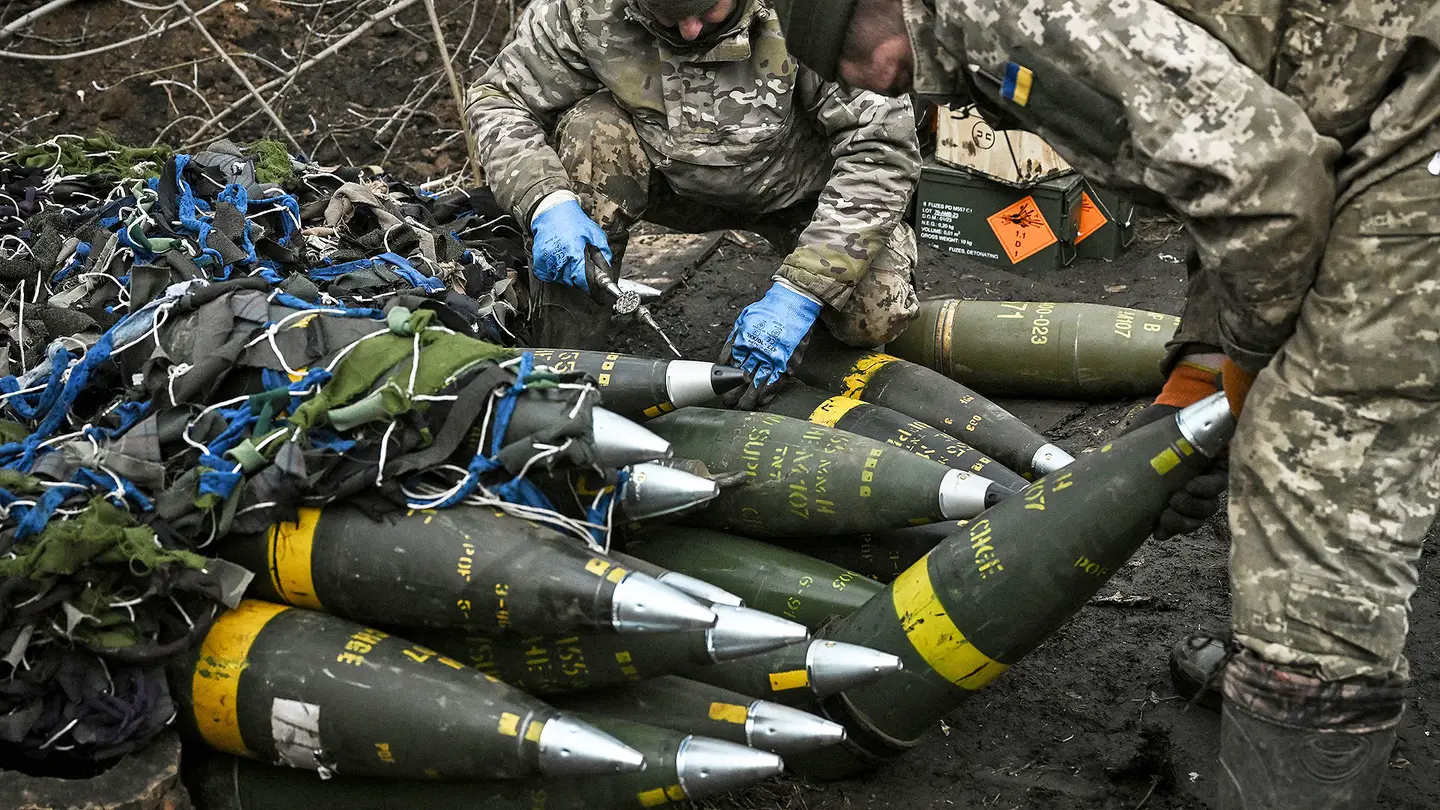
International criticism also came to the Biden administration’s controversial decision regarding supplying cluster munitions to Ukraine, a step that was objected to by the United Nations and many countries, including Washington’s allies, as well as a Russian position that considered the last decision to express an aggressive approach.
While German Foreign Minister Annalena Baerbock expressed her country’s opposition to sending cluster munitions to Ukraine as it is among the 111 member states of the Convention on Cluster Munitions, the German Defense Minister said that this is not an option for Berlin.
On his part, British Prime Minister Rishi Sunak said that his country is among the signatories to an agreement banning the production and use of cluster munitions and urges that they not be used.
While the Canadian government said it opposes the use of cluster bombs, stressing its commitment to the Oslo Accords, which ban these controversial bombs.
Spanish Defense Minister Margarita Robles said that cluster bombs should not be sent to Ukraine.
On the other hand, Russia considered that supplying Ukraine with cluster munitions aims to prolong the conflict in Ukraine, stressing that this will not affect the course of the Russian military operation, according to Sputnik agency.
In turn, Russian Defense Minister Sergei Shoigu threatened that if the U.S. supplied Ukraine with cluster bombs, Moscow would be forced to use similar weapons, pointing out that Russia has cluster munitions that are much more effective than American munitions.
On his part, Deputy Chairman of the Russian Security Council Dmitry Medvedev said that providing the West with modern means of destruction is very dangerous.
Washington had earlier accused Moscow of using cluster munitions in its war against Kyiv, and said that the failure rate of their explosion was up to 40%, which made Ukrainian lands full of unexploded bombs.
The U.S. decision was also met with U.N. and human rights criticism, as the Secretary-General of the UN, Antonio Guterres, expressed his desire not to see these weapons used in the field.
Human Rights Watch said that the transfer of these weapons will inevitably cause long-term suffering to civilians.
Moscow and Kyiv’s use of cluster munitions during the 17-month-old conflict in Ukraine has been documented by both the U.N. Human Rights Council and Human Rights Watch.
Amnesty International considered that the Biden administration must realize that any decision that allows the widespread use of cluster munitions in this war will lead to one expected result: the additional killing of civilians.
“Cluster munitions are an indiscriminate weapon that poses a great danger to the lives of civilians even long after the end of the conflict, stressing that their use does not comply with international law,” it added.
Sources
- CNN Exclusive: Biden says sending cluster munitions to Ukraine was difficult decision, but they needed them
- The Killing That Comes after the Conflict, Daily Brief July 6, 2023
- Cluster Weapons U.S. Is Sending Ukraine Often Fail to Detonate
- Top Dems break with Biden over sending cluster bombs to Ukraine
- U.S. spends millions worldwide to clean up widely banned bombs destined for Ukraine
- Bipartisan push forms in Congress to deny Ukraine cluster bombs