This Is How the Torture File Against the Assad Regime Reached an International Court for the First Time

Over the past 12 years, many countries around the world have tried to refer the situation in Syria to the International Criminal Court (ICC), claiming that the Assad regime committed gross violations against human rights in addition to violating international law, but these efforts have always been met with a Russian-Chinese veto.
In September 2020, the Netherlands decided to file a case against Syria before the International Court of Justice (ICJ), and Canada joined it in March 2021. However, they are currently seeking to complete their efforts to refer the file of the violation of international law in Syria to the court after the diplomatic efforts failed to force the Assad regime to comply with the international laws that it signed earlier.
The return of Syrian President Bashar al-Assad to the international arena last May, when he attended an Arab League summit for the first time in more than a decade, brought the file of crimes committed against Syrians back to the fore.
However, the question remains about the feasibility of the next steps and whether these countries will continue their path in pursuing files of human rights crimes and international violations committed by the Assad regime against the Syrian opposition in the country.
Dutch Canadian Complaint
On June 12, 2023, Canada and the Netherlands filed a complaint against the Syrian regime before the ICJ on the grounds that it committed crimes and torture in Syria, including its use of chemical weapons against civilians.
The ICJ said in a statement that, in their request, the two countries accused the Syrian regime of violating the U.N. Convention Against Torture and Other Cruel Methods.
The two countries said, according to the statement, that the Syrian regime has committed countless violations of international law, starting at least in 2011, calling for urgent measures to be taken to release those illegally detained and to reveal the burial sites of people who died in custody.
They indicated that these violations include the detestable treatment of detainees, inhumane conditions in places of detention, enforced disappearance, the use of sexual and gender-based violence, and violence against children.
They added that it also includes the use of chemical weapons in what is considered a particularly abhorrent practice to intimidate and punish the civilian population, which has resulted in many deaths and injuries and severe physical and mental suffering.
Canadian Foreign Minister Melanie Joly and her Dutch counterpart, Wopke Hoekstra, said in a joint statement: “There can be no lasting peace and lasting reconciliation in Syria without justice for its victims and survivors.”
“Bringing this case before the ICJ is a major next step on the long road to achieving that goal,” Hoekstra said.
Russia and China had blocked a draft U.N. Security Council resolution to refer the situation in Syria to the ICC in 2014.
It is noteworthy that the invitation of the Netherlands and Canada was apparently based on the testimonies of Syrian survivors from the prisons of the Assad regime.
The Syrian regime has never before faced international tribunals over a war in which more than 500,000 people have been killed, which broke out after Syrian President Bashar al-Assad cracked down on pro-democracy protests in 2011.
Nor was the ICJ, the U.N.’s highest court, able to deal with the Assad regime because Syria had not ratified the Rome Statute, the court’s founding treaty.
If the court finds that it has jurisdiction to consider the submitted case, it will be the first international court able to reach a legal conclusion regarding the Syrian regime’s use of torture in Syria, which is a violation of the Convention against Torture signed by Syria in 2004.
It is expected that the judges of the ICJ will hold the first hearings on the case in the near future, but the court has not set a date for that, and any final ruling may take years before it is issued.
A diplomatic source told AFP that “the Syrian regime was blocking efforts to arrange talks with the Dutch and Canadians, who then decided to refer the case to the ICJ.”
Assad’s Atrocities
The joint lawsuit filed by the Netherlands and Canada against the Syrian regime at the ICJ was welcomed by the United States and the United Nations, while the Syrian Negotiation Commission called for taking more such steps.
The U.S. State Department said in a statement on its official website on June 15, 2023: “For over twelve years, the Assad regime has been responsible for innumerable atrocities, including those involving killings, torture, enforced disappearance, the use of chemical weapons, and other inhumane acts.”
“Those abuses are well documented, and the Assad regime must be held accountable for them,” the statement continued.
We welcome Canada and the Netherlands’ decision to initiate legal proceedings at @CIJ_ICJ to hold Syria accountable for torture. With massive evidence of the Assad regime’s violations and abuses, the regime must answer for the atrocities it has committed.https://t.co/mZxrOXCjLl
— Matthew Miller (@StateDeptSpox) June 15, 2023
“[The U.S.] applauds efforts by Canada and the Netherlands to hold Syria accountable for violations of the Convention Against Torture,” said U.S. Global Criminal Justice ambassador-at-large Beth Van Schaack.
We applaud efforts by Canada and the Netherlands to hold Syria accountable for violations of the Convention Against Torture. The U.S. supports accountability for the Assad regime for its atrocities, some of which rise to the level of war crimes.
— Ambassador Beth Van Schaack, Global Crim Justice (@StateDept_GCJ) June 12, 2023
The head of the United Nations Commission of Inquiry on Syria, Paulo Pinheiro, welcomed the Dutch-Canadian case, considering it landmark proceedings to hold the Syrian State accountable for the tens of thousands who have been tortured and ill-treated in Government detention facilities.
@UNCoISyria welcomes institution of landmark proceedings at @CIJ_ICJ to hold the Syrian State accountable for the tens of thousands who have been tortured and ill-treated in Government detention facilities, see https://t.co/8yRiTa1pJ9 https://t.co/HVz5xRB0Hr
— UN Syria Commission of Inquiry (@UNCoISyria) June 12, 2023
Systematic Torture
On his part, Bassam Tablieh, an expert in international law, said in a statement to Al-Estiklal that “if the ICJ is found to have jurisdiction, it would be the first international court to rule on the use of torture during the war in Syria, which may lead to the referral of the Syrian file to the Security Council in the future.”
However, he ruled out taking decisive decisions in the Security Council, pointing out that the court’s ruling will remain a black spot on the page of the Assad regime, especially since the issue is related to gross violations of international law and agreements.
On the effective steps that can be taken at the international level in this regard, Mr. Tablieh explained that “until now, there is no real will on the part of European countries and the United States to remove the Assad regime from power.”
During the 12 years of the Syrian revolution, the name of President Bashar al-Assad and his regime has been associated with systematic killings and torture of his opponents in detention facilities, which was documented by international human rights organizations, including Amnesty International and Human Rights Watch.
Perhaps the Caesar images and the human slaughterhouse report, issued by Amnesty International in 2017, are the most famous among hundreds of human rights reports and evidence.
In the report, the organization revealed cases of mass executions by hanging carried out by the Assad regime against 13,000 detainees in Sednaya prison, most of them opposition civilians, between 2011 and 2015, describing the prison as a place where the Assad regime quietly slaughters Syrians.
In mid-2016, Amnesty International documented the killing of 17,723 detainees while they were detained in the prisons of the Assad regime between March 2011 and December 2015, an average of 300 detainees per month.
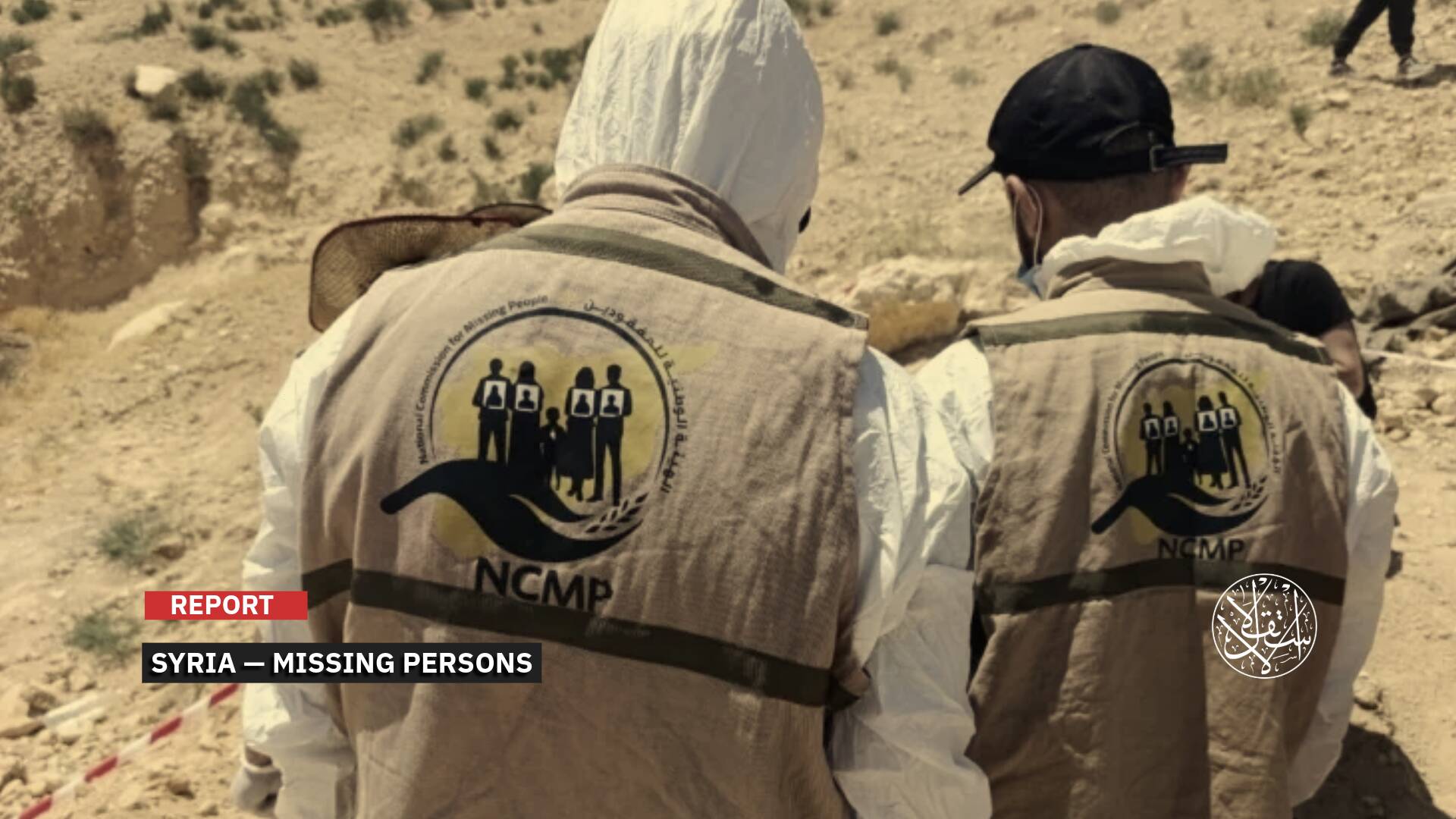
The Syrian regime currently holds more than 215,000 detainees in its prisons without disclosing their names and locations, according to the statistics of the Syrian Network for Human Rights.
The Organization for the Prohibition of Chemical Weapons (OPCW) has also accused the Syrian regime, during the past years, of using internationally prohibited weapons in the war it launched to eliminate the Syrian revolution.
The Chemical Violations Documentation Center in Syria stated that it documented the use of chemical weapons by the Syrian regime 262 times.
Legal Pursuits
Within the framework of the efforts related to the prosecution of the perpetrators of humanitarian crimes in Syria, France announced last April the start of the trial of three Syrian officials before the French Criminal Court on charges of complicity in the killing of two Syrian citizens of French nationality, Mazen Dabbagh and his son Patrick, who were arrested in Syria in 2013.
The three Syrian officials are Maj. Gen. Ali Mamlouk, the head of the Syrian security services and a close advisor to Assad, Maj. Gen. Jamil Hassan, the director of the Syrian air force, and Maj. Gen. Abdel Salam Mahmoud, the head of investigations at the military airport of Mezzeh in Damascus.
The French judiciary can move the case against the accused, given that the victims hold French nationality, especially since the judge has evidence suggesting the intervention and involvement of the three accused in the aforementioned crime, which may lead to the issuance of an arrest warrant against them later.
France has not announced any developments since that time regarding the case, but according to human rights specialists, if an arrest warrant is issued by the French courts against the three accused, this means that any of them will go to a country that signed a bilateral treaty related to the extradition of criminals to justice with France. It would mean the possibility of arresting them through international Interpol.
Last May, French Foreign Minister Catherine Colonna said that Bashar al-Assad should be tried after hundreds of thousands of deaths and the use of chemical weapons during the war in Syria.
While international efforts have not succeeded so far, national courts have convicted a number of Syrian regime officials in the areas under their jurisdiction. Based on the principle of universal jurisdiction, the German judiciary has convicted many former officials of the Syrian regime of torture, crimes against humanity, and war crimes.
Legal prosecutions against perpetrators of crimes in Syria began years ago, particularly within the European Union. In mid-2018, German judicial authorities issued an arrest warrant for Jamil Al-Hassan for crimes against humanity.
Last year, the German judiciary sentenced a former Syrian intelligence officer, Anwar Raslan, 58, to life imprisonment, for his conviction of committing crimes against humanity, at the conclusion of the world’s first trial centered on atrocities attributed to figures in the Assad regime.
In February 2021, another person, Eyad al-Gharib, was convicted by German courts and sentenced to four and a half years in prison on charges of aiding in the commission of crimes against humanity.
In 2018, lawsuits were filed in Austria against Assad regime officials accused of torture, murder, and restriction of freedoms, including Maj. Gen. Ali Mamlouk.
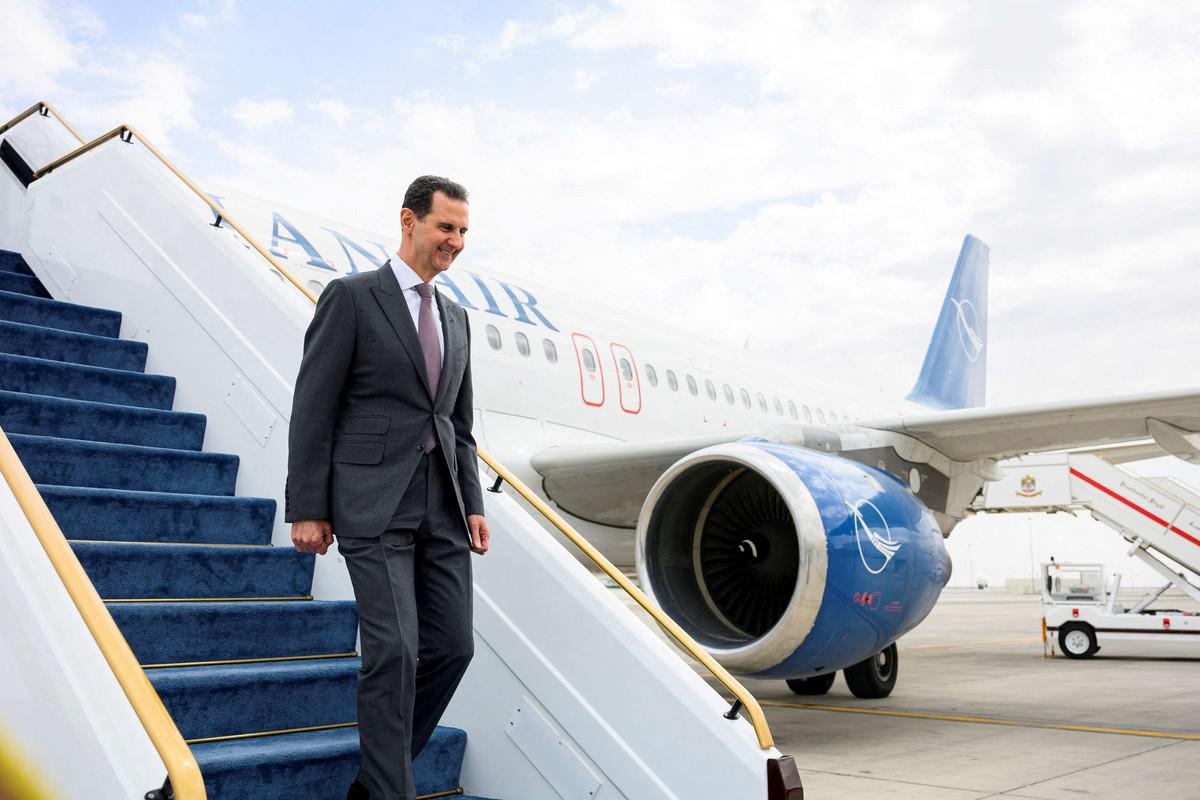
The Syrians are calling for the ICC to issue an international arrest warrant against the head of the Syrian regime, Bashar al-Assad, in view of the brutal violations committed by his army and intelligence against the opposition civilians.
The Syrians’ calls increased after the same court issued an arrest warrant against Russian President Vladimir Putin last March on the basis of a complaint filed by Ukraine.
Russia and China, since the disclosure of these violations, which are considered a flagrant violation of international human rights laws by the Assad regime after 2011, have aborted the referral of the Syrian file to the ICC in the U.N. Security Council, using the veto power several times.
Sources
- The Netherlands and Canada to bring case against Syria before ICJ
- Joint statement by Canada and the Kingdom of the Netherlands on instituting proceedings at ICJ to hold Syria to account for torture
- Netherlands, Canada take Syria to ICJ over torture claims
- Netherlands and Canada bring torture case against Syria at UN’s top court
- Record of enforced disappearances