The War on Iran: What Are the Political and Economic Repercussions for the Maghreb Countries?
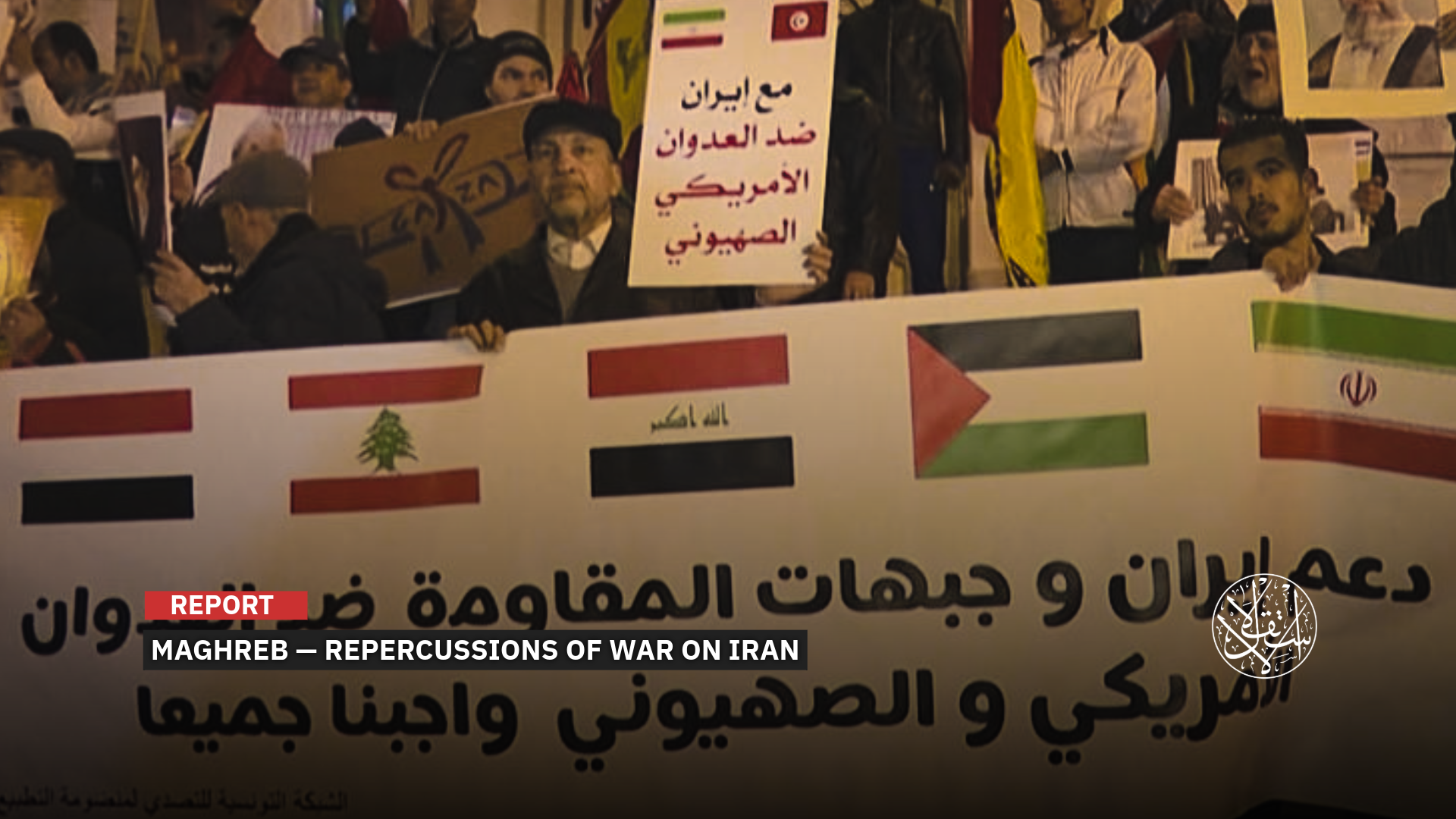
The aggression against Iran has major repercussions for the Arab world and the Maghreb as a whole.
Amid the American and Israeli attacks on Iran, and despite the geographical distance between the Maghreb countries and the conflict zone, Maghreb reactions to developments in the region have been widespread, with warnings about the negative economic repercussions of what is happening.
The American and Israeli attack on February 28, 2026, which led to the assassination of Iran’s Supreme Leader Ali Khamenei and a number of senior leaders, created divergence in the official positions of the Maghreb Union countries, especially after the Iranian response that targeted American bases in the region.
Measured Steps
In Morocco, Foreign Minister Nasser Bourita affirmed that Rabat stands alongside the Gulf countries and Jordan following the Iranian missile attacks they were subjected to, expressing his country’s strong condemnation of these attacks.
While he described those attacks as a “blatant aggression” and a “sinful assault,” no position was expressed regarding the American and Israeli attack on Iran.
As for Algeria, which maintains strong relations with Iran, its Foreign Minister Ahmed Attaf issued two statements, the first expressing “concern” over the growing military escalation and calling for its de-escalation, and the second, in early March 2026, referring to the reception of ambassadors from Arab countries that had been subjected to military attacks, without directly mentioning their source.
In Tunisia, Foreign Minister Mohamed Ali Nafti expressed his country’s full solidarity with Saudi Arabia, Kuwait, Qatar, Bahrain, Oman, the United Arab Emirates, Jordan, and Iraq.
He reiterated Tunisia’s call for an immediate halt to military operations, prioritizing wisdom and reason, and a return to dialogue and negotiation as the only way to resolve disputes and conflicts, along with the need for urgent action by the international community to stop this dangerous escalation.
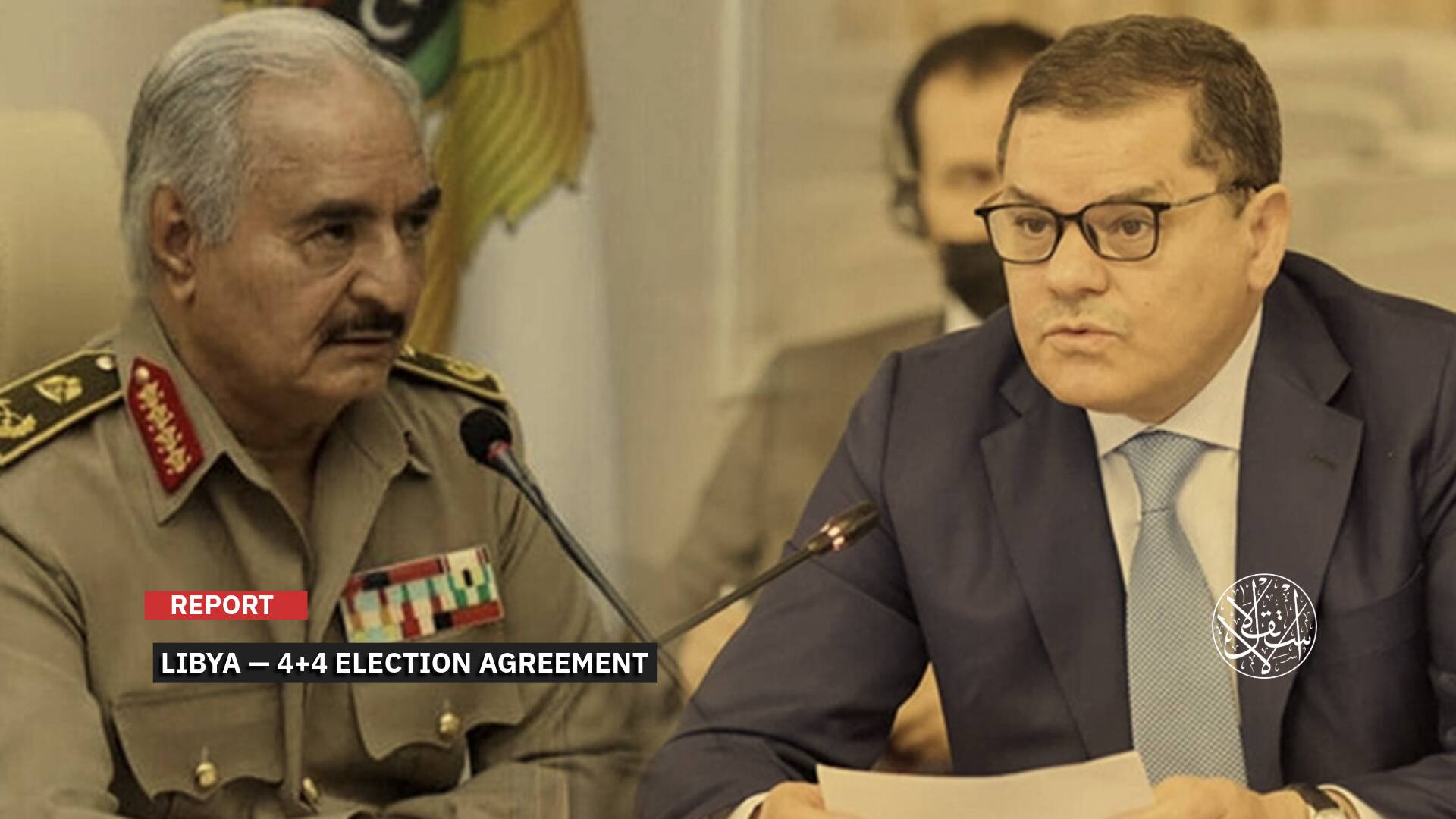
The Libyan position was identical to the Tunisian one, as stated by the Acting Minister of Foreign Affairs and International Cooperation, Al-Taher al-Baour, during the emergency meeting of Arab foreign ministers held via video conference on March 8, 2026.
Al-Baour announced “Libya’s solidarity with the Arab countries targeted by the attacks, and called for prioritizing the language of dialogue and negotiation away from military escalation.”
Meanwhile, Mauritania’s Foreign Minister Mohamed Salem Ould Merzoug considered that developments in the Gulf require taking measured, effective, and wise steps that take into account the various contexts and backgrounds related to the ongoing conflict, in a way that ensures the preservation of the security and stability of Arab peoples, who are at risk of being drawn into this war.
Ould Merzoug affirmed during the aforementioned ministerial meeting that the violation of these countries’ sovereignty and territorial integrity constitutes a direct threat to Arab national security and must be addressed with the necessary measures, reaffirming Mauritania’s support for all steps that the targeted countries will take to defend their security and stability.
Public Response
Voices across the Maghreb have risen to warn of the repercussions of the American and Israeli war on Iran, and its negative political objectives against the unity of the Islamic nation and its vital forces.
In this context, Aziz Hennaoui, Secretary-General of the Moroccan Observatory Against Normalization, warned of the “Greater Israel” project, which aims to fragment the Arab region and impose a new Sykes-Picot-style plan based on nationalities and ethnicities.
Hennaoui told Al-Estiklal that the aggression against Iran “has major repercussions for the Arab and Maghreb region as a whole, requiring awareness, caution, and heightened vigilance.”
Noting the Moroccan authorities’ ban on pro-Iran demonstrations, Hennaoui said that protests in Morocco against the aggression “do not make Moroccans Shiites, but at the same time should not make them Zionists.”
He stressed that the relevant Moroccan authorities, particularly the Ministry of Interior, should not prevent demonstrations, as they are not a favor but a fundamental right and a clear constitutional requirement.
Hennaoui also criticized the double standards of Arab regimes in dealing with Iran, saying that “Israel” continuously bombs Lebanon, attacking the capital Beirut and villages across the country, without any official response from the Arab League, which has become focused on Iran, as if Lebanon were not part of the Arab nation.
He noted that the absence of any mention of Lebanon or a halt to the massacres in the Gaza Strip and across Palestine in the latest Arab League statement sends a direct message to “Israel” to continue its crimes and bloody war.
Responding to those who applaud and celebrate the U.S. and Israeli war on Iran to change its political system, Hennaoui said they should preserve their memory, as they will need it to take a “burning” stance if the same scenario occurs in another capital in the region with an advanced scientific program or a political position opposing Israeli occupation of Palestine and Jerusalem.
He added, addressing these voices, in reference to the “We Are All Israelis” trend and some Arab voices supporting the war on Iran: “Do not throw large stones into the Iranian well, because you will have to climb down to retrieve them from the bottom of your own well when the tide turns against you one day.”
The opposition Justice and Development Party, the Unity and Reform Movement, the Al-Adl wal-Ihsan group, the Party of Progress and Socialism, the Democratic Left Federation, and other Moroccan currents have issued statements rejecting the aggression against Iran.

Global Chaos
The Algerian Movement of Society for Peace (MSP) viewed what occurred as a blatant violation of state sovereignty, the principles of international law, and the United Nations Charter, laying the groundwork for a new phase of chaos and uncertainty in the region.
In a statement issued in early March 2026, the movement held “Israel” and the U.S. administration fully responsible for the consequences of this escalation and its serious repercussions on regional and international security and peace.
It called on Arab and Islamic countries to take a unified and responsible stance that rises to meet the current challenges, working to curb this dangerous U.S.-Israeli recklessness, which has plunged the region into conflict and tension that serves only the Zionist agenda.
In Tunisia, the Ennahda Movement affirmed that, given Tunisia’s location and its Arab, Islamic, and Mediterranean identity, the country is concerned with defending the logic of calm and political solutions, while avoiding all policies of factionalism, hypocrisy, or opportunism that do not serve justice and national interests, by siding with fairness and upholding it.
In a statement on March 3, 2026, the movement emphasized that the true protection of states and societies comes through the extension of freedom, peaceful political struggle, and the choice of a democratic civil state, rejecting the use of regional wars and conflicts to justify authoritarianism or restrictions on freedoms in any country.
Amid this regional storm, the movement reiterated its affirmation that there is no way out for our countries and peoples except through dialogue and coexistence among those who differ, and through the values of Arab and Islamic brotherhood.

Economic Concerns
Economic circles across the Maghreb are experiencing a state of unspoken alert, as fears rise that the escalation could have a negative impact on economic affairs and, consequently, on social conditions.
In Libya, concerns appear particularly high due to the repercussions of the war on Iran, especially since the country relies on imports to secure more than 80 percent of its basic needs.
This means that any geopolitical tensions affecting global energy and trade routes quickly translate into a severe livelihood crisis.
In this regard, an analysis published by the Libya24 website on March 8 noted that the greatest current concern is the fate of the national currency, as traders and importers rush to buy foreign currency, creating massive pressure that drives the dinar’s black-market exchange rate to record levels.
Although Libya might benefit from rising oil prices, the same source pointed out a “Libyan paradox”: this increase does not favor the general budget, since Libya lacks sufficient refineries to meet its refined product needs, forcing it to import a large portion of its fuel and gas requirements at high international prices, which strains the budget and limits any potential financial surplus.
The website also highlighted that nearly one-third of the population relies on fixed government salaries that do not adjust to price changes caused by Middle East tensions, meaning any rise in the cost of living sharply reduces purchasing power.
In Mauritania, a net importer of fuel, the country has become exposed to global market fluctuations, particularly since it began liberalizing fuel prices and cutting government subsidies a month ago.
In this context, the local site Aqlame noted in an editorial on March 2 that any increase in oil prices quickly translates into higher transportation, electricity, and food costs, given the country’s reliance on imports to meet a significant portion of its basic needs.
On the positive side, the source highlighted that the crisis offers Mauritania an opportunity as a recently emerging gas exporter through the joint “Grand Turtle Ahmim” project with Senegal.
The website suggested that rising global gas prices could increase revenues, provided the contracts in place and the project’s ability to adapt to an international environment characterized by rising insurance and shipping costs, meaning potential gains are linked to relative market stability.
In Morocco, Minister of Economy and Finance Nadia Fettah Alaoui stated that the country is prepared to face potential economic repercussions from the war on Iran, noting that the government has preventive mechanisms to support affected groups.
In an interview with the French channel BFM on March 4, Alaoui explained that Morocco “has a resilient economy, significant foreign currency reserves, and an energy mix with a growing share of renewables.”
However, the country’s reliance on fuel imports makes it vulnerable to major fluctuations. The government budgeted for a barrel of oil at $65 for the current year, while prices have risen since the start of the war on Iran.
Rising fuel prices affect transportation costs and, consequently, consumer prices, which have contracted over the past three months.
According to the Moroccan minister, “the government is already addressing this increase, and regarding gas, which is mainly consumed by households,” she noted that the impact can be “contained thanks to our public finances,” expressing hope that the crisis will be short-term.
Regarding Tunisia, international oil consultant Mahmoud el May believes that the closure of the Strait of Hormuz, through which around 20 percent of global maritime oil trade passes, would affect countries worldwide, including Tunisia.
El May explained to Ultra Tunisia that global price increases would create additional trade deficits in Tunisia if supply difficulties escalate, which would have a direct impact on Tunisia’s budgets and the country’s economic activity.
He also noted that Tunisia’s energy deficit accounts for about 60 percent of its trade balance deficit, a situation that will continue under current conditions and without solutions for companies operating in exploration and drilling to secure alternative energy sources for the Tunisian population.
Future Outlook
Former Moroccan Prime Minister Abdelilah Benkirane stated that what we are witnessing with the war on Iran “is neither ordinary nor trivial, but a very large and historic event.”
Benkirane emphasized in his opening speech at the meeting of his party, the Justice and Development Party, General Secretariat on March 7 that for the nation to emerge from this predicament, countries in the region, especially the major ones, must urgently consider establishing the foundations of a real alliance, military, political, and economic, that could enable them to defend themselves in the future.
“What is happening shows that our Sunni countries should have arranged their affairs for such a day, and it is also required of the Maghreb to correct its position, come together, resolve its disputes, and unify as an alliance, a bloc, or something of that nature,” he added.
Benkirane pointed out that America attacked Iran without defending its Arab allies, who were supplying it with everything, because it cares only about one country, “Israel,” for multiple reasons discussed by specialists.
“The situation is negative, and we do not know where it will lead,” said the same spokesperson, noting that we must turn inward, especially to Egypt, Turkiye, and Saudi Arabia because of their unique capabilities. If these countries come together and unite, they could form a foundation to rely on in the future.
After mentioning that the party has expressed its absolute rejection of Iran’s attack on the Gulf countries, he emphasized that supporting them today is based on a logical and simple principle: they were attacked outside all reason while engaged in negotiations that were close to yielding results, but were betrayed. Therefore, we see the United States looking for reasonable and acceptable justifications for this attack.
Benkirane warned that experts speak of Turkiye or Egypt as potential new targets of Zionist aggression and war after Iran, all in God’s knowledge and power, indicating that we are heading into a very difficult situation, God forbid.
“Our leaders must take the initiative to abandon disputes, cooperate jointly, and assume their historical responsibility, because we are facing a matter of life or death for our countries and our nation,” said the Secretary-General of the Justice and Development Party, adding that this is necessary if we want to preserve our dignity and independence.
Benkirane concluded by turning to God in prayer, asking Him to inspire the nation to return to its religion and Quran, noting that 90 percent of the Islamic nation are Sunni, who should be at the center of leadership, while other sects should be respected and their place in the nation acknowledged.
Sources
- Bourita: Iran’s Aggressive Policies Are Based on Creating Terrorist Entities and Militias [Arabic]
- Libya’s Fears of Iran’s Distant Fire: The War Hits Citizens’ Pockets Before Oil [Arabic]
- The War in Iran and Its Repercussions on Mauritania: Between Price Pressures, Gas Opportunities, and Political Balance Calculations [Arabic]
- What Are the Repercussions of the Continued Aggression on Iran for Tunisia’s Economy? Experts Answer [Arabic]