Professor Walid Khalidi: Leading Historian of Palestine, Dies at 100
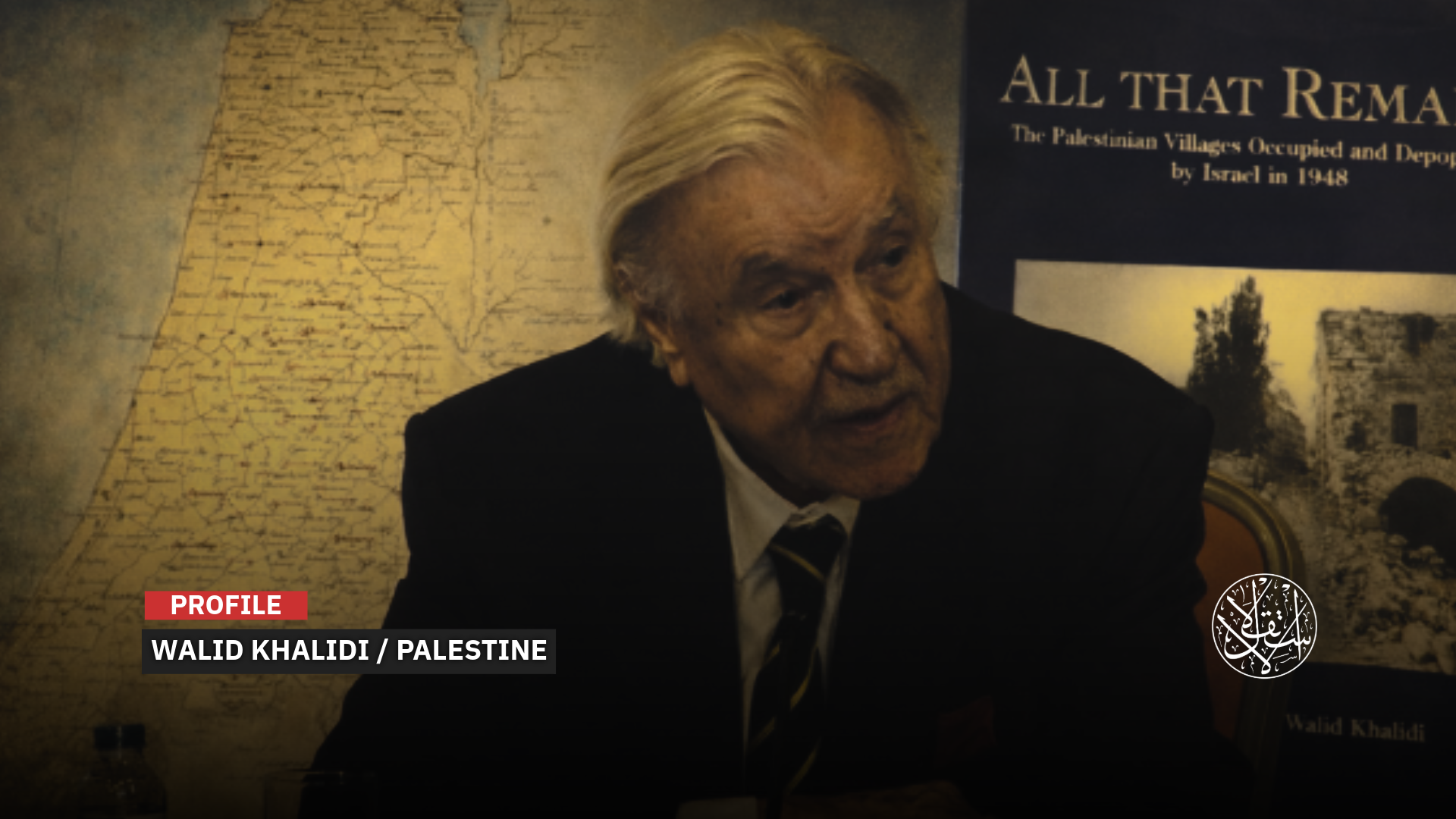
One of Khalidi’s most influential milestones was the founding of the Institute for Palestine Studies.
At the age of 100, Walid Khalidi, the Palestinian historian from occupied Jerusalem, died on March 8, 2026, after a long intellectual journey that helped rebuild Palestinian memory on rigorous academic foundations and challenged dominant Zionist narratives of the 1948 Nakba.
The Institute for Palestine Studies, which Khalidi helped found, was quick to announce his passing in Cambridge, Massachusetts, calling it a national and scholarly loss, as tributes poured in from Palestinian and Arab intellectual circles honoring his role in preserving historical memory.
Khalidi was not just a historian. He was one of the architects of the modern Palestinian narrative, shifting it from emotional rhetoric to carefully researched, deeply documented scholarship.
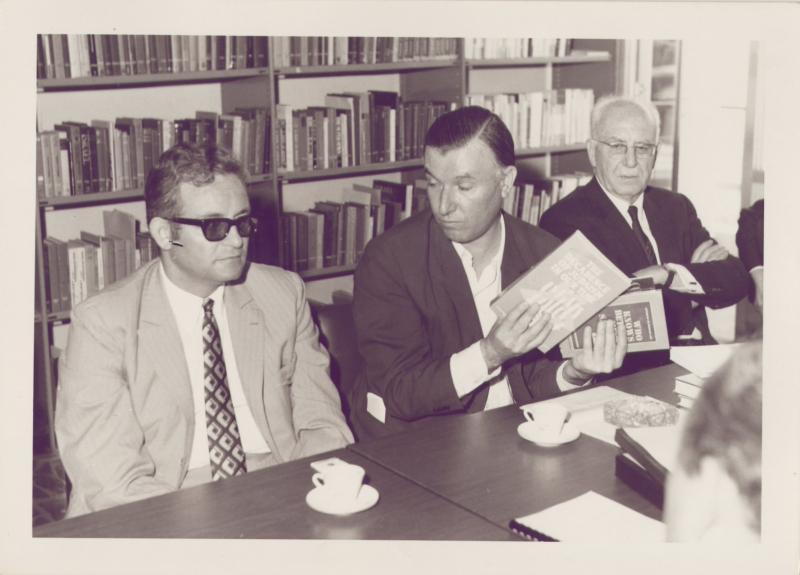
A Historian of Record
Walid Ahmad Khalidi was born in occupied Jerusalem on July 16, 1925, into a prominent family. His father served as dean of the Arab College in the city, while his mother, the Lebanese educator Anbara Salam, was a pioneer of the Arab feminist movement.
He studied at the Friends School in Ramallah and St. George’s School in occupied Jerusalem before moving to Britain in the 1940s to continue his education. He earned a bachelor’s degree in philosophy from the University of London in 1945, followed by a master’s degree in Islamic studies from Oxford in 1951.
That same year, he began teaching Islamic philosophy at Oxford, but resigned in 1956 in protest over Britain’s role in the tripartite aggression against Egypt alongside France and the Israeli Occupation.
In 1957, he returned to the Arab world to join the American University of Beirut, where he taught political science until 1982. During that time, he held research fellowships at Princeton University from 1960 to 1961 and at Harvard’s Center for International Affairs from 1976 to 1978.
In the early 1980s, he moved to Cambridge, Massachusetts, becoming a senior research fellow at Harvard’s Center for Middle Eastern Studies, where he remained until his retirement in 1997.
Over the course of his career, he was elected to the American Academy of Arts and Sciences in 1994 and received several honors, including Jordan’s Order of Independence First Class, and the the prize of Distinction in Cultural Achievement in the Arab World awarded by the Arab League Educational, Cultural and Scientific Organization (ALECSO) in 2002.
Alongside his academic work, Khalidi was also a quiet political and diplomatic figure. He was involved in the Arab Office established by the Arab League in occupied Jerusalem in 1945 to bring the Palestinian voice to the world. He was active in the Arab nationalist movement and maintained close ties with leading figures such as George Habash and Hani al-Hindi. He also served as an adviser to the Iraqi delegation at the United Nations after the 1967 war.
He later joined the Arab League delegation to Britain in 1983 and the joint Jordanian-Palestinian delegation to the Madrid Peace Conference in 1991. Despite his political engagement, Khalidi consistently maintained that the historian’s role was to defend truth through documentation, not propaganda.
One of Khalidi’s most influential contributions was co-founding the Institute for Palestine Studies in Beirut in 1963 alongside Constantine Zurayk and Burhan Dajani. It was the first independent research institution in the Arab world dedicated to producing scholarly knowledge on the Palestinian cause.
He oversaw the development of the institute’s library and archives, which grew to include tens of thousands of books and documents. The institution later expanded to Washington, with offices in occupied Jerusalem, while Khalidi remained chairman of its board of trustees for decades.
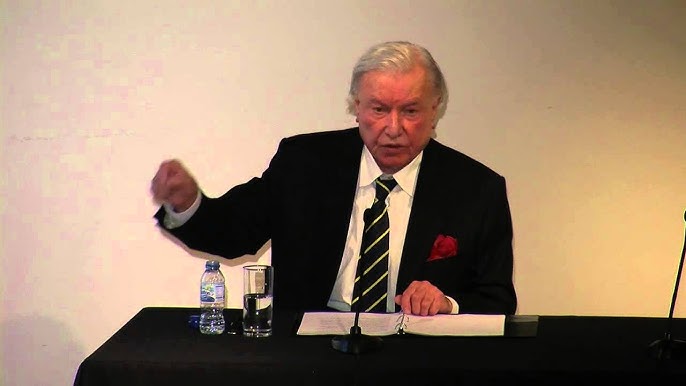
Documenting History
For Walid Khalidi, writing Palestinian history required more than narrative; it demanded an archive. What set his method apart was his heavy reliance on official and military documents, firsthand testimonies, maps, and photographs.
In his 1961 article “Plan Dalet: Master Plan for the Conquest of Palestine,” Khalidi examined a secret Israeli document outlining a military strategy to seize Palestinian villages and expel their residents. Published in the Middle East Forum, the study was among the first to draw on Zionist sources to prove the systematic nature of the ethnic cleansing against the Palestinians.
One of his most influential projects was the 1984 book “Before Their Diaspora: A Photographic History of the Palestinians,” 1876–1948, which brought together thousands of images from Palestinian and Western archives. Through careful curation and commentary, Khalidi reconstructed everyday life in Palestinian cities and villages before the Nakba.
The aim was clear: to challenge the zionist claim that Palestine was “a land without a people” and to document a vibrant society that once existed. The book went on to become a foundational reference for scholars and students, as well as a powerful visual record of a society that was later destroyed.
He followed this with another landmark work, “All That Remains: The Palestinian Villages Occupied and Depopulated by Israel in 1948,” published in 1992. Widely regarded as the most comprehensive encyclopedia of destroyed Palestinian villages, the project brought together a team of researchers who documented more than 400 villages.
They recorded names, locations, population figures, and each village’s fate during the 1948 war, drawing on detailed maps, aerial photographs, and testimonies from former residents. The result was more than a book—it became a lasting database used in historical, legal, and documentation efforts.
Khalidi also edited “From Haven to Conquest: Readings in Zionism and the Palestine Problem until 1948 (1971),” a collection of translated Zionist, Arab, and international texts that gave readers direct access to the intellectual roots of the cause.
His broader work included “Conflict and Violence in Lebanon (1983),” a historical and political analysis of the Lebanese civil war, and Palestine Reborn (1992), a collection of essays on the future of Palestine and the Palestinian right to self-determination.
Methodologically, Khalidi rejected conclusions based solely on oral testimony. He insisted on reading Israeli, British, and Arab archives together, drawing on sources such as Haganah records, British Foreign Office files, and the diaries of David Ben-Gurion and Moshe Sharett, some of which he translated into Arabic and English.
Khalidi also compiled village records, aerial photographs, and population data, cross-referencing them to identify clear patterns in the forced displacement of Palestinians.
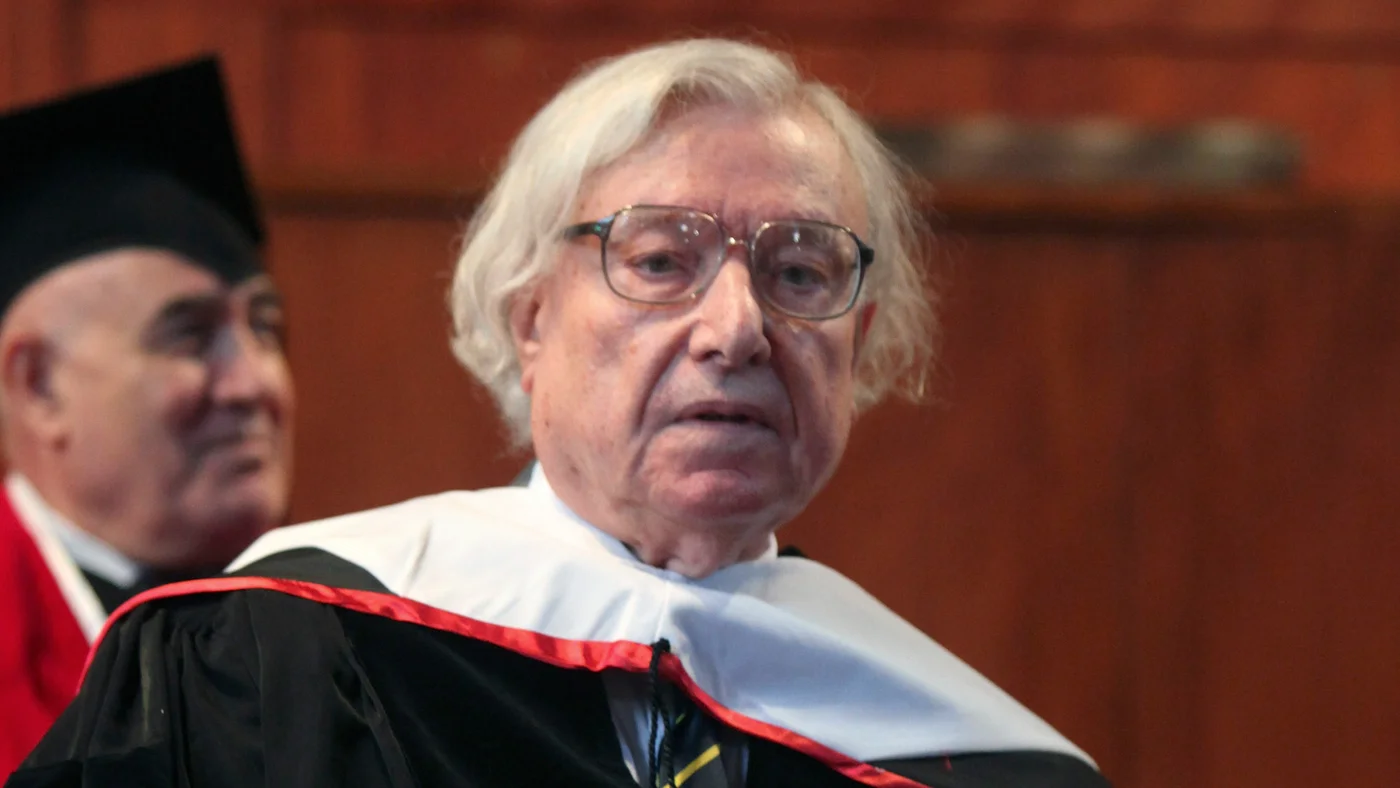
The Nakba in His Work
The Nakba stood at the center of nearly everything Walid Khalidi wrote. He understood early on that defending the Palestinian cause required dismantling Zionist myths, chief among them the claim that Palestinians left their land voluntarily.
In his essay “Why Did the Palestinians Leave?”, first published in 1959 and revisited in 2005, Khalidi challenged Israeli arguments that Arab leaders had instructed Palestinians to evacuate their villages. Drawing on wartime broadcasts and military records, he showed that the displacement followed a deliberate strategy, and that the narrative of “Arab orders” was a political construct aimed at absolving “Israel,” as an occupying power, of responsibility for the Palestinian refugee crisis.
The essay also engaged with the work of Israeli historian Benny Morris, who acknowledged the collapse of the official Israeli narrative, even as he continued to assign partial responsibility to Arab actors—an acknowledgment that underscored the weight of Khalidi’s earlier findings.
In his study of Plan Dalet, Khalidi uncovered a Hebrew document from the Haganah leadership outlining a coordinated plan to seize Palestinian towns and villages on the eve of the establishment of what is called “Israel,” including provisions for destruction and forced displacement.
His work demonstrated that the forced displacement was not a byproduct of war, but a structured policy—an argument that later influenced “Israel’s new historians,” including Ilan Pappe and Benny Morris, who went on to acknowledge the reality of ethnic cleansing in 1948.
Among his other major works, “Jerusalem: A Factual Background” (1968) challenged biblical and political narratives surrounding a unified and eternal Zionist capital, drawing on Ottoman and British records. In “Thinking the Unthinkable” (1978), he called for considering the establishment of a Palestinian state on the territories occupied in 1967—an idea widely seen at the time as implausible.
Khalidi also examined the broader regional context of the Nakba. His 2006 study on illegal Jewish immigration to Palestine during the British Mandate introduced new documentation on how Zionist institutions circumvented international restrictions.
What set Khalidi’s work apart was his ability to combine rigorous historical research with the building of national memory. He did not stop at publishing books; he led major documentation efforts, including the Palestinian village archive project at the Institute for Palestine Studies.
He also supported the creation of the digital platform PalQuest, which transformed his All That Remains into an interactive database for researchers.
According to the American Academy of Arts and Sciences, his leadership in these documentation projects helped establish a foundational archive, using maps, photographs, and records to provide a detailed account of destroyed Palestinian villages.
Sources
- Walid al-Khalidi, Architect of Modern Palestinian Historiography, Dies at 100
- Statement: ADC Mourns the Passing of Walid Khalidi, a Pioneering Scholar for Palestine
- Professor Walid Khalidi, leading Palestinian historian, dies aged 100
- Renowned Palestinian historian Walid Khalidi dies aged 100
- Walid Khalidi
- Walid Khalidi (1925–2026)
- Walid Khalidi