Sweets Instead of Food: How Israeli Occupation Turned Gaza Aid into a Tool of Blockade
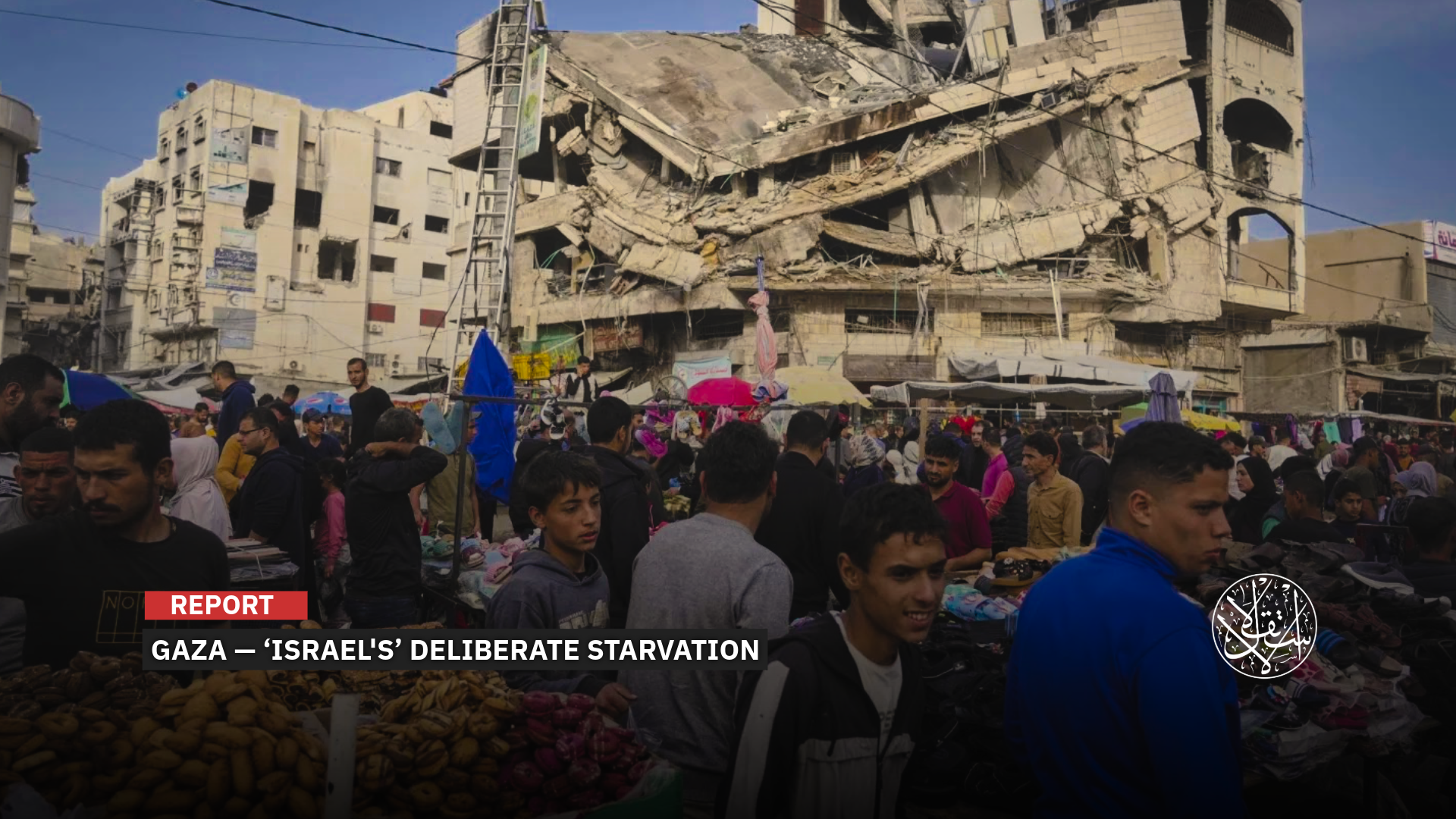
Hundreds of thousands of families find themselves without real sources of food despite the end of the war.
Even after the Gaza ceasefire, young Palestinian Raed Faris still cannot provide his children with healthy meals because the Israeli Occupation violated the humanitarian terms of the agreement.
Instead of delivering enough essential supplies to meet basic needs, “Israel” has limited the number of trucks entering Gaza and prioritized nonessential items like chocolate and juice over real food.
As a result, hundreds of thousands of families remain without proper nutrition, even though the ceasefire signed on October 10, 2025, was meant to ease the escalating humanitarian crisis.
Non-Nutritive Products
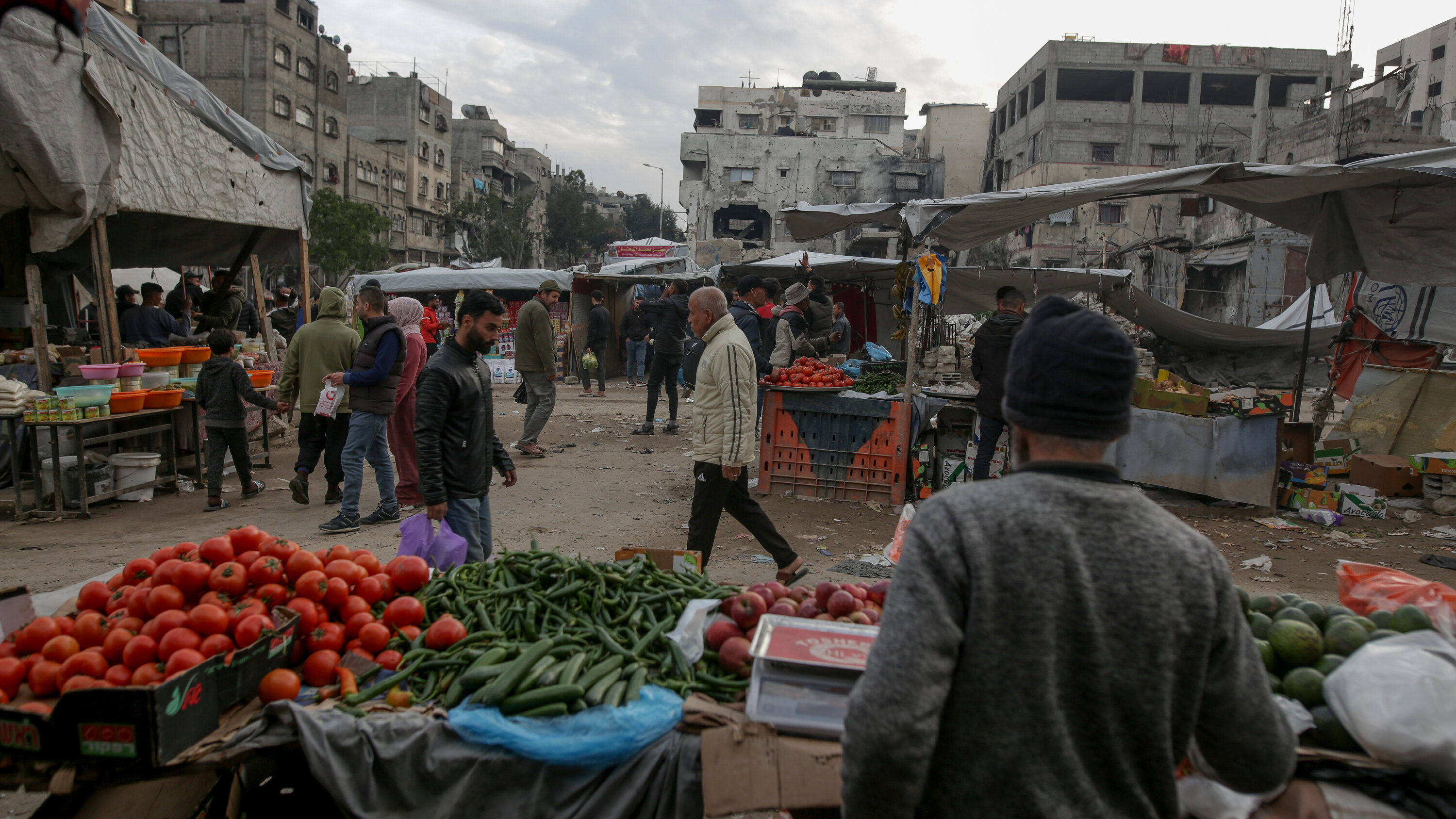
The Gaza Government Media Office said that the Israeli Occupation is blocking essential food items, including eggs, red and white meat, fish, cheese and dairy products, vegetables, nutritional supplements, and dozens of other staples needed by pregnant women, the sick, and people with weakened immune systems.
“Meanwhile, the Israeli Occupation allows larger quantities of nutritionally worthless goods, such as soft drinks, chocolate, and processed foods, which reach markets at prices more than 15 times their actual value due to Israel’s control of supply chains,” the office added in a statement on November 6.
Speaking to Al-Estiklal, Raed Faris, 38, a father of three, said, “Israel has flooded the markets with sugar, chocolate, and boxed juice, along with other nonessential products.”
“Very small amounts of frozen chicken have been allowed in, sold at outrageous prices, reaching $100 per piece, while red meat, eggs, and other animal proteins are still banned.”
“Gaza’s food trucks look full of nutritious goods after two years of shortages but mostly deliver sugar with no real benefit,” he added.
“We should be feeding our children foods rich in vitamins and proteins to strengthen the bodies that have been starved for two years. Instead, we are left with canned goods and sugary products. The children enjoy them, but it does not provide what they truly need.”
Atef Khalil, 40, a father of seven, told Al-Estiklal, “The Israeli Occupation is misleading the world and circumventing the ceasefire. The focus should be on what the trucks actually contain.”
“Sadly, the world pays little attention to our deprivation of meat for over two years. Mediators are misled into thinking that trucks are arriving daily, but they carry the same items: chocolate, biscuits, juice, and some canned goods,” he added.
Khalil emphasized that little has changed in food aid since the ceasefire, “as if the war is still ongoing,” and asked, “Why is the Israeli Occupation still blocking chicken, red meat, and eggs?”
“The Israeli Occupation calculated the calorie needs of more than two million Gazans over two years of war and released food aid according to that calculation. Nothing is done randomly.”
“The Israeli Occupation has left Gaza’s population physically weakened through malnutrition and by blocking nutritious foods, and today continues the same strategy, deliberately making people sick and exhausted,” according to Khalil.
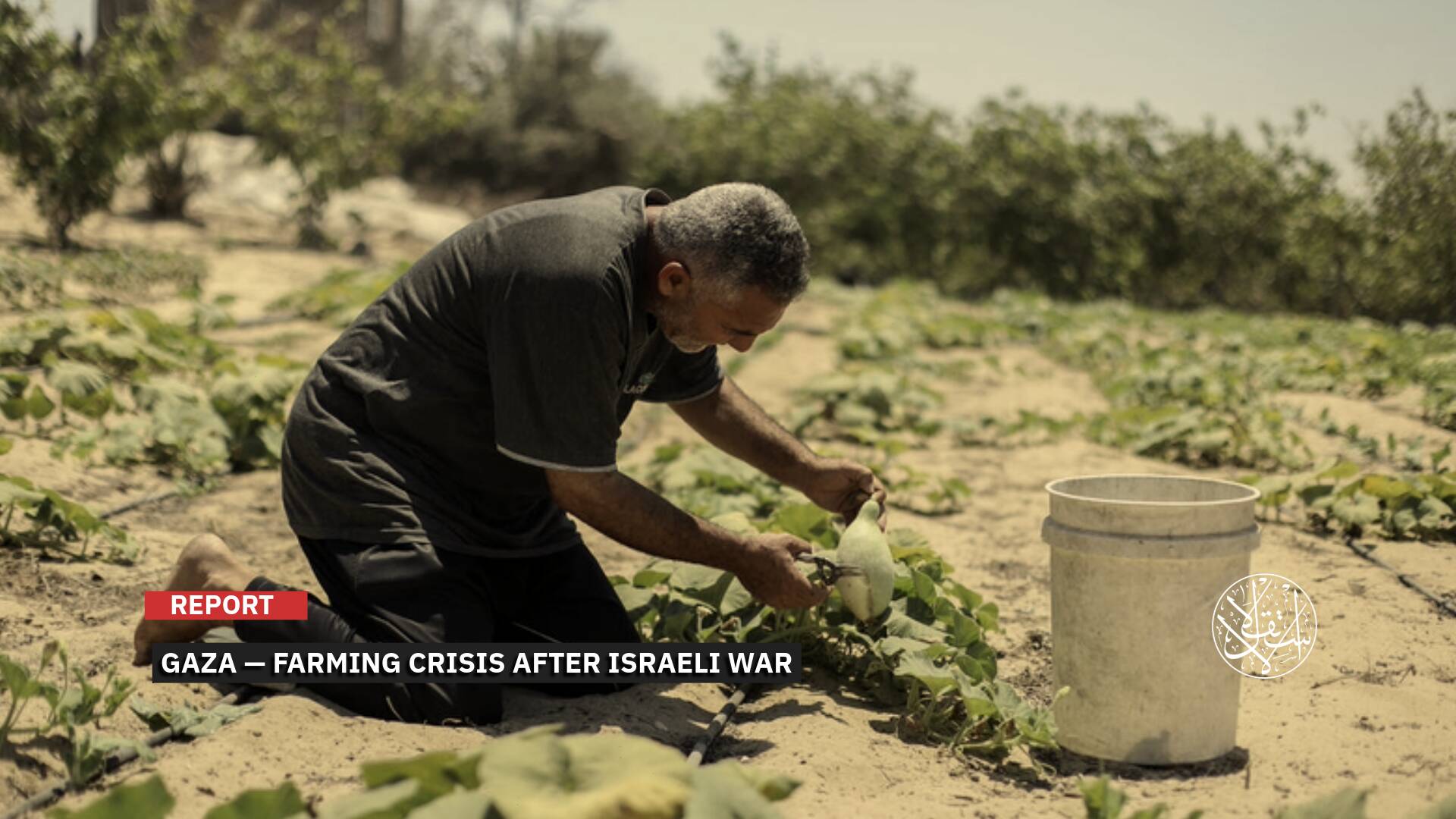
The situation has worsened with the ban on importing animal feed, vaccines, seeds, fertilizers, spare parts, and irrigation and energy supplies, leaving Gaza’s agriculture and crop production nearly paralyzed.
Gaza agricultural expert Nizar al-Wahidi told the press, “This ban has caused food prices to skyrocket, forced hundreds of farms out of production, and worsened poverty and malnutrition among families,” according to Felesteen News.
He stressed that “food aid alone is not a solution; it is temporary and does not restore the community’s productive capacity,” calling for a shift from relief to agricultural reconstruction through repairing damaged greenhouses, restoring wells, and providing essential materials to start a new farming season.
Number of Trucks
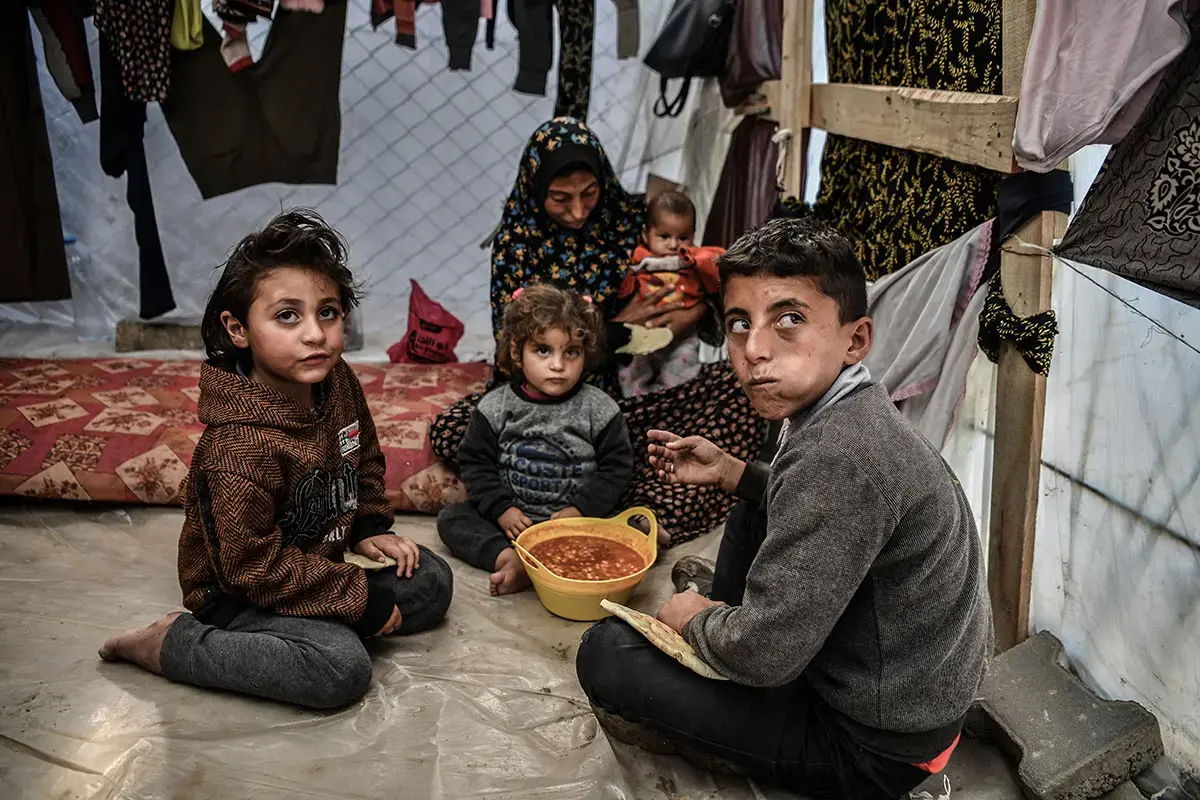
Since the signing of the ceasefire agreement until November 6, the Israeli occupation has allowed only 4,453 trucks into Gaza out of the 15,600 that were supposed to enter, according to the Gaza Government Media Office.
This amounts to just 28 percent of the trucks agreed upon in the ceasefire arrangements and the accompanying humanitarian understandings.
Among these convoys were 31 trucks carrying cooking gas and 84 trucks carrying diesel fuel for bakeries, hospitals, generators, and other vital sectors, despite a severe and ongoing shortage of these essential supplies for daily life.
On average, only 171 trucks have entered daily since the ceasefire went into effect, far below the 600 trucks per day stipulated in the humanitarian protocol, the Media Office said.
These figures contradict claims by the U.S. Civil-Military Coordination Center, which reported that Washington and Tel Aviv were delivering about 674 trucks of aid to Gaza daily since the ceasefire began.
The center, established by U.S. Central Command (CENTCOM) and headquartered in “Kiryat Gat” in southern Israeli Occupation, opened on October 21, 2025, to monitor the implementation of the Sharm el-Sheikh ceasefire agreement.
Data published by the center on November 9 indicated that more than 15,000 shipments of commercial goods and medicine had been delivered to Gaza since the agreement. These numbers are contradicted by on-the-ground realities, Gaza government figures, and testimonies from residents.
The Government Media Office stressed that “the Israeli Occupation continues to impose a policy of suffocation, starvation, humanitarian pressure, and political blackmail on more than 2.4 million Palestinians in Gaza.”
The limited deliveries fail to meet even the minimum food, medical, and living needs; Gaza urgently requires a steady flow of at least 600 trucks per day carrying food, medicine, fuel, cooking gas, and other health sector supplies.
As part of its policy of tightening the blockade, the Israeli Occupation continues to deny civilians in Gaza access to more than 350 essential food items needed by children, the sick, the wounded, and other vulnerable groups.
According to the Media Office, this reflects a deliberate strategy of systematic starvation, control over food security, and the direct targeting of civilian lives.
‘Insane Prices’
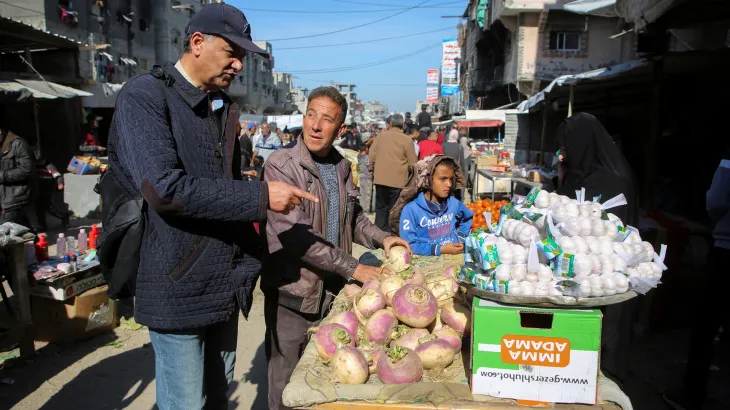
Faris and Khalil confirmed that prices have not dropped despite the ceasefire, pointing out that the Israeli Occupation, along with some corrupt and monopolistic traders, continues to control them.
The issue of persistently high prices has sparked ongoing reactions on social media, where Palestinians share photos of available products and their “insane” prices.
“People in Gaza still have no resources to stock up, prices have not gone down, and the overall conditions of war and its impact on daily life remain unchanged,” Ibrahim Alhaj posted on X.
Gaza resident Ghazi Almajdalawi urged the closure of all shawarma restaurants until chicken prices come down, pointing out that they had reopened after frozen poultry shipments arrived.
Raed Faris told Al-Estiklal that he paid $100 for five shawarma sandwiches, adding that the prices are “insane, but I had no choice since we haven’t tasted meat in two years.”
Zakaria Alkahlout posted on X, “In Gaza, on Fridays, food prices shoot up as if they are competing with the global stock market, and unscrupulous traders display the goods people cannot do without.”
The head of the Gaza Chamber of Commerce, Ayed Abu Ramadan, revealed that inflation in the Strip reached 330 percent during the summer of 2025, meaning prices were 33 times higher than before the Israeli war. Prices have recently dropped slightly to 300 percent thanks to the entry of some goods.
Speaking at a hearing organized by the Gaza Chamber of Commerce, Industry, and Agriculture in collaboration with the Vision Association for Human Capability Development, he said, “Even with a relative drop in prices, more than 90 percent of Gaza’s population cannot afford to buy anything. They have lost their jobs, homes, and assets and rely entirely on humanitarian aid.”
He pointed to the Israeli Occupation as the main cause of economic chaos through policies aimed at starving Palestinians and fostering corruption and monopolies.
Abu Ramadan said the Israeli Occupation allows a few “vampires” to import through coordination, while blocking most traders, which drives prices up dramatically.
“Some traders pay hundreds of thousands of shekels just to bring in a single truck of goods. This creates a black market and harsh monopolies that leave citizens exhausted and deprived of the basics of life.”
“The solution lies in opening commercial crossings without restrictions, providing international support to help the local private sector restore its ability to import and distribute goods, and strengthening joint oversight among the government, chamber of commerce, and civil society,” he added.