Rampant Administrative Corruption in Morocco: Can the Interior Minister Deliver Real Change?
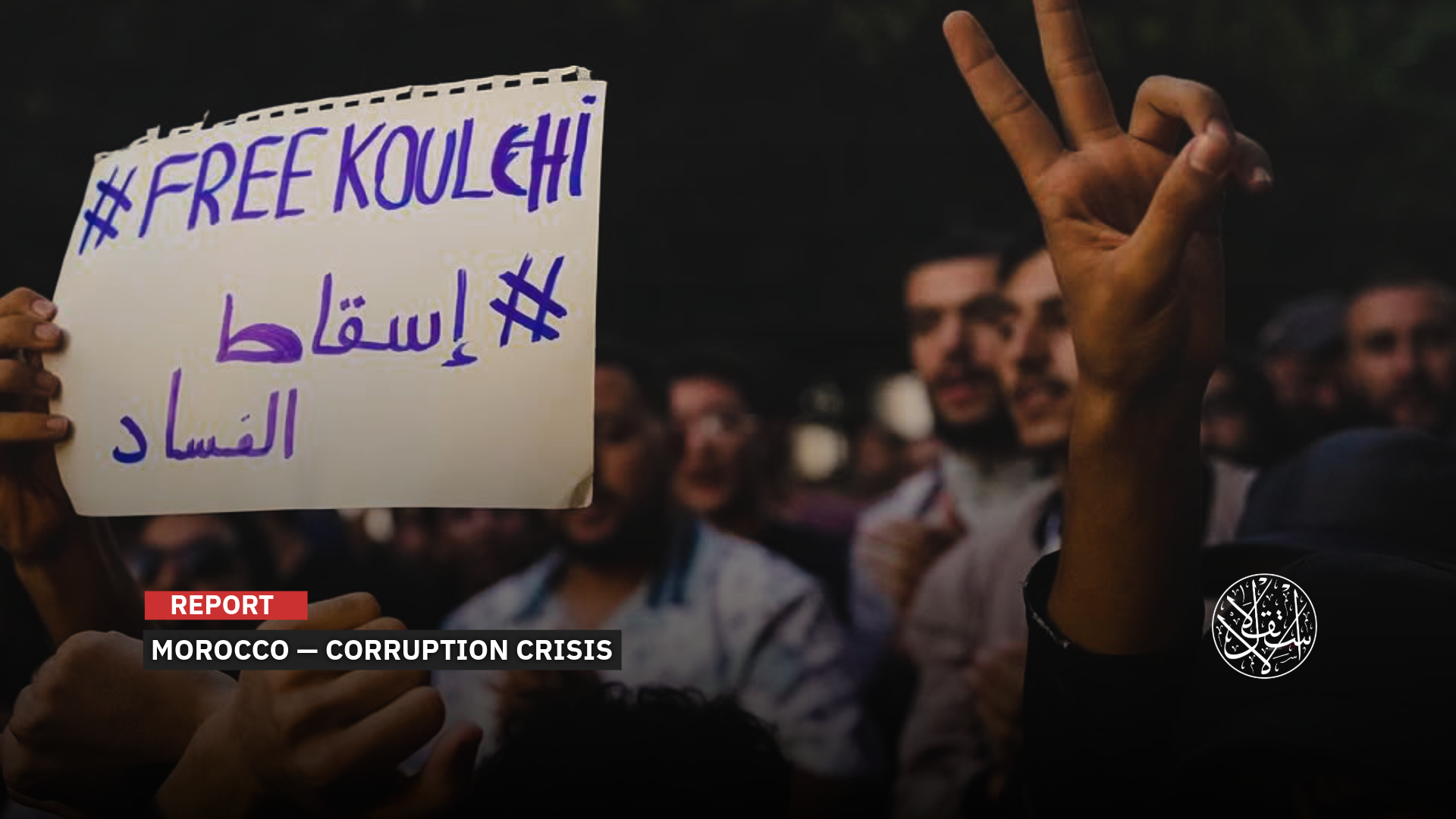
The real challenge today lies not in the government's promises, but in the awareness of society.
New Statements from Moroccan Authorities Warn Against Interfering with State Property, as Criticism Grows Over Lack of Concrete Action
Recent statements from Moroccan authorities have issued strong warnings against any interference with state property, at a time when criticism is mounting over the lack of practical measures to turn these warnings into real action.
The official stance, described as sharp in tone, has revived the debate over the seriousness of Prime Minister Aziz Akhannouch’s government in tackling corruption and recovering stolen public funds.
Civil society organizations have reiterated their concerns, stating that "corruption mafias have entrenched themselves in both the state and society, and now occupy positions that are nearly invulnerable."
Amid the official rhetoric and the reality on the ground, the question remains: how prepared is the government to move from statements to action, especially given the ongoing trials that have yet to result in the recovery of assets and rights?
Unresolved Message
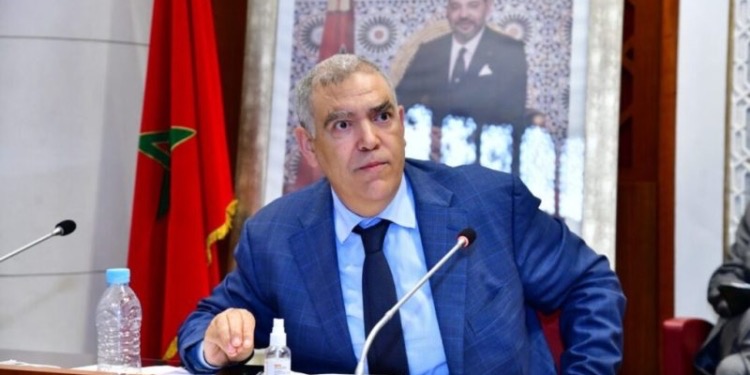
Interior Minister Abdelouafi Laftit stated that "anyone who extends their hand to a dirham or property from state assets will be forced to return it, willingly or by force… or we will reach a bad point with them."
Laftit made these remarks in response to parliamentary interventions on governance on November 6, 2025, saying, "If there is land designated for a particular project, we must not be lenient in handling it, and we will go back to the past to hold people accountable."
Addressing elected officials, Laftit added, "Anyone who has land belonging to the municipality or a dirham that is not rightfully theirs should return it. We have already started the process in Casablanca, and we will continue until the end."
In response to Interior Minister Abdelouafi Laftit's recent comments, political analyst Mohamed Hafid questioned whether the ministry was unaware of the elected officials who have seized land or embezzled public funds, prompting the need for thieves and looters to voluntarily return what they have taken. "Does the Interior Ministry not know which elected officials have appropriated land or embezzled public money, to the point where it must wait for the thieves and looters to graciously return what they have stolen, as the minister suggests?" Hafid asked.
In an article published on the local safircom official website on November 7, Hafid further posed a pointed question: "Should the Interior Ministry offer these embezzlers and looters a choice between 'kindly' (with gentleness) or 'forcefully' (with strength), either they return what they have stolen willingly, or it will be reclaimed from them by force?"
Hafid argued that the Interior Ministry possesses the legal tools, technical capabilities, and human resources necessary to identify individuals who have exploited their positions in local authorities to embezzle, steal, or misappropriate public funds.
"The ministry has all the means at its disposal to identify those who illegally enrich themselves, who profit from the people’s money, and who trade in Morocco’s assets," he continued.
Hafid emphasized that any delay or failure to act in protecting public funds and property, and recovering them, places responsibility squarely on the ministry.
"At any rate, we hope that the Interior Minister’s comments will not be reduced to mere statements, especially considering that, in recent history, we have seen similar messages fall short of action."
Collective Despair
Fatima Tamni, a member of the "Federation of the Democratic Left" party, has raised serious concerns about the current state of corruption in Morocco, warning that its widespread nature is deeply troubling. "The current situation of corruption in our country is extremely worrying," she said, "because its manifestations are no longer exceptions, but have become an everyday reality that hinders development, erodes citizens' trust in institutions, and perpetuates collective frustration and despair."
Tamni shared her thoughts in a post titled "Corruption in Morocco: The Silent Danger Eroding Trust and the State," where she emphasized that despite repeated slogans about "transparency" and "holding officials accountable," the government's response does not match the magnitude of the problem.
"Empty rhetoric, committees without impact, bodies with no real powers, and slogans that remain confined to paper," she wrote, pointing to the disconnect between the government’s words and actual action.
Her comments reflect growing frustration within the opposition and civil society, who argue that the government has yet to implement meaningful reforms to combat corruption and restore public trust.
In a post on Facebook on November 6, Fatima Tamni underscored that the fight against corruption requires more than just new slogans, it demands genuine political will.
"The truth is, fighting corruption doesn’t need new slogans, but rather real political will to end impunity, activate oversight mechanisms, hold people accountable, and tackle issues like rent-seeking, public contracts, and conflicts of interest without hesitation," she wrote.
Tamni warned that when corruption becomes a self-protecting system, and when power is used as a tool to cover up wrongdoings rather than holding perpetrators to account, "it means we are facing a direct threat to the principle of justice and to the state itself."
She further emphasized that "today, the bet is not on the government's promises, but on the awareness of society and its active forces that refuse to normalize corruption and defend the rule of law, equality, and transparency." Tamani also questioned, "Why was the proposed law on illicit enrichment buried?"
Meanwhile, Mohammed el Ghaloussi, head of the Moroccan Association for the Protection of Public Funds, launched a sharp attack on what he described as "thieves and money launderers" who exploit public funds and property.
He condemned their practice of establishing shell companies to win public contracts and manipulating public programs to serve their personal interests and those of their families and allies.
In a Facebook post, el Ghaloussi stated,"These individuals intimidate the public, leverage their ties to power, and try to show the government and the authorities their loyalty. When they speak on platforms like Parliament, they compete to defend the government, the Interior Ministry, or the police, in an attempt to demonstrate their allegiance to the state and the public good."
According to el Ghaloussi, "The state and its institutions are not so weak that they need thieves to defend them or to protect social peace and security. In fact, these individuals represent the greatest threat to both,"
"The truth is, these people are hypocrites, frauds, charlatans, swindlers, and bribe-takers, their consciences tainted. They are only interested in using their power to escape punishment and shield what they have stolen from the country's wealth," el Ghaloussi said.
Concerning Indicators
The National Integrity and Anti-Corruption Commission has warned that corruption in Morocco remains at unsatisfactory levels, with indicators showing the country’s continued decline in global rankings.
In a report on the 2026 budget presented to the Moroccan parliament on November 5, the Commission confirmed that, like previous administrations, Prime Minister Aziz Akhannouch’s government has failed to address the issue. The country dropped from 87th place in the Corruption Perception Index in 2021 to 99th place in 2024.
Regarding the Rule of Law Index from the World Justice Project, the Commission highlighted the worsening ranking in the sub-indicator for "absence of corruption."
Morocco's position has significantly deteriorated, dropping from 47th place in 2015 to 95th place in 2024, reflecting a growing negative trend compared to other countries.
According to official data, Akhannouch’s government has witnessed an unprecedented number of legal actions against parliamentarians for corruption in all its forms.
In addition, there has been a record number of decisions stripping parliamentarians of their seats. The current government’s term is now regarded as one of the most scrutinized and condemned in terms of corruption-related legal actions.
Political analysts suggest that this term is likely to be remembered as one of the worst in Morocco’s parliamentary history, with concerns that it could mark the final blow to the already fragile public trust in the Moroccan parliament, given the volume of judicial proceedings tied to corruption cases.
Figures from the Ministry of the Interior for the 2025 fiscal year, which were submitted to the parliament in early November, show that there have been 302 legal cases against members of local councils (municipalities), including 52 mayors, 57 deputy mayors, 124 councilors, and 69 former mayors, all within 2025 alone.
As of October 10, 2025, 11 members of parliament from the 395 elected in September 2021 were imprisoned, while 26 others are still under investigation for corruption. Some of these MPs have been acquitted at the first instance, others convicted, and some are awaiting appeals.
In an unprecedented move, 63 MPs lost their seats in the parliament, half of them for involvement in corruption (financial, administrative, or electoral), while the other half lost their seats for reasons such as conflicts of interest, ineligibility, or resignation.
Political science researcher Amine el Idrissi pointed out that despite the presence of anti-corruption laws and an official body, the National Integrity and Anti-Corruption Commission, its effectiveness remains limited due to weak enforcement and insufficient accountability.
"Although Morocco has legislative frameworks and an official institution dedicated to integrity, the lack of effective implementation and an adequate level of accountability remain major obstacles to combating corruption," el Idrissi told Al-Estiklal.
He added that the available data reveals that corruption is not a temporary or isolated issue in Morocco, but rather a deeply embedded system affecting various sectors, from public services to real estate and public contracts.
"This is reflected in the widespread perception among citizens of corruption within elected councils," he said.
El Idrissi also argued that "government statements, including those recently made by Interior Minister Laftit, fail to resonate with citizens, as there is a strong belief that corruption persists and that officials and elected representatives are not deterred by such rhetoric."
"The fragility of the governance and accountability system directly undermines public trust, potentially leading to increased disengagement and social tensions," el Idrissi said.
El Idrissi concluded by stressing that the negative image associated with corruption weakens Morocco’s attractiveness to investors and undermines its economic competitiveness.