Radical Shift: How Europe Enters an Unprecedented Arms Race
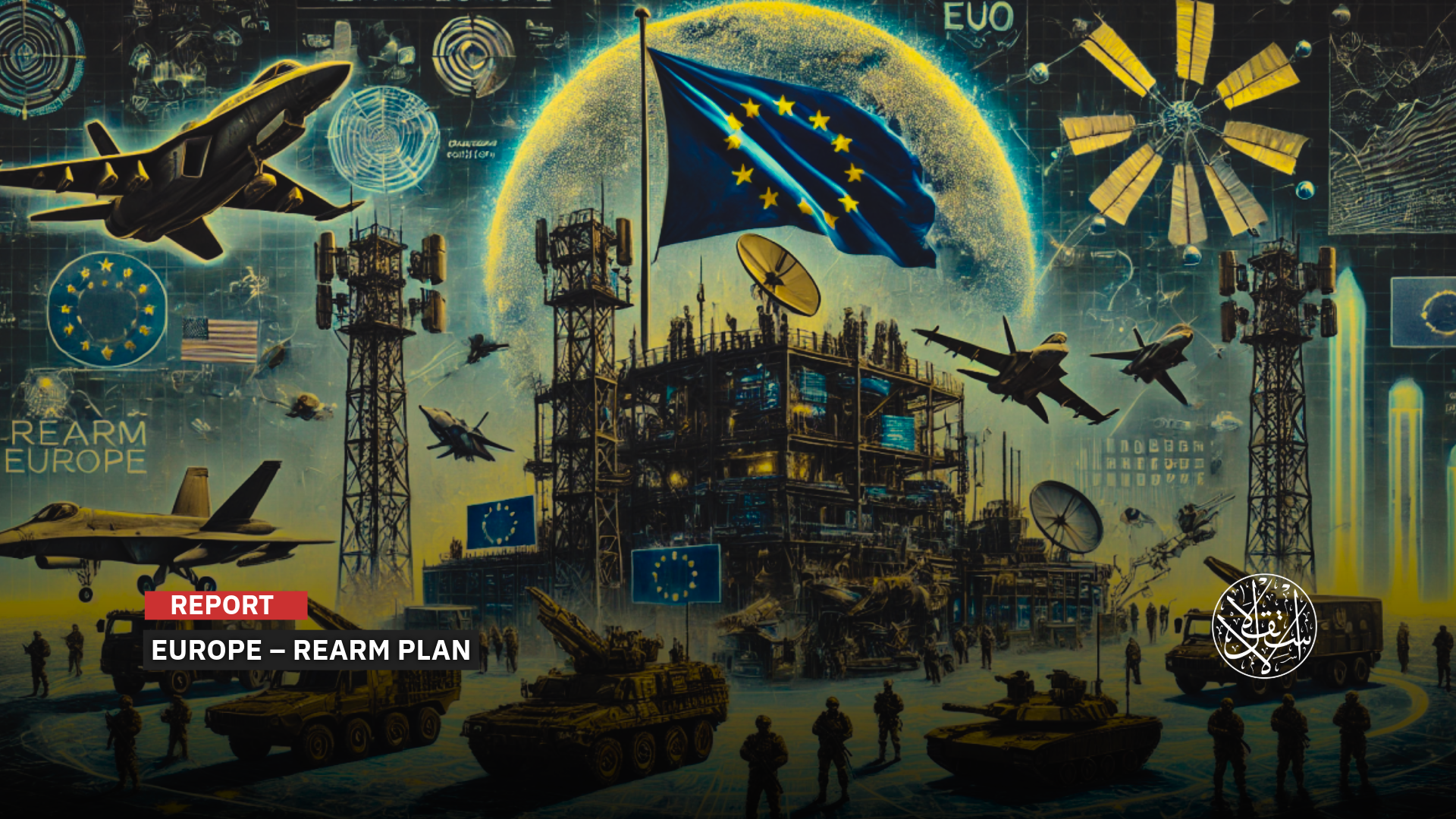
“Europe's weapons factories are expanding at three times the rate of peacetime.”
Europe is witnessing a pivotal moment in its security and military history. After decades of reliance on permanent peace and American protection, everything is fading in the face of a new reality that has pushed the Old Continent back into a large-scale arms race.
Giant European defense companies such as Rheinmetall, MBDA, and BAE Systems have recently doubled their production lines, with funding directed toward drones, air defense, and long-range missiles in an attempt to bridge the gap with Russian superiority in these fields.
According to observers, this shift reflects deep European concern about the shifting global balance of power, the possibility of renewed tensions with Russia, and declining confidence in defense guarantees from across the Atlantic.
They pointed out that the EU is now forced to redefine its priorities from economic integration to massive investment in weapons and military deterrence.
Defense Independence
Amid escalating tensions with Russia and the decline of US guarantees under Donald Trump, Europe is witnessing an unprecedented wave of rearmament, driven by a frenzied race to build an independent defense industrial base.
Western reports indicate that there is a European military-industrial boom, not a temporary one, but rather an attempt to reshape the long-term defense infrastructure after the Russian-Ukrainian war.
This momentum coincides with explicit US calls for Europe to assume greater responsibility for its own security, which is pushing the Old Continent toward defense independence despite its economic problems, which have worsened after the COVID-19 pandemic and the war in Ukraine.
In recent months, Europe's largest military powers have been developing plans to assume defense responsibilities on the continent from Washington, including presenting an offer to the Trump administration for an orderly transfer of responsibility over the next five to ten years.
These discussions were held in an attempt to avoid the chaos that could result from a unilateral US withdrawal from NATO, a fear fueled by Trump's repeated threats to weaken or withdraw from the alliance that has protected Europe for nearly eight decades.
Under repeated US pressure, European NATO members recently pledged to increase their defense spending to 5% of GDP during their summit in The Hague last June.
European leaders also pledged to provide long-term support for Ukraine and include military aid in defense spending, considering Russia poses a long-term threat to the security of Europe and NATO, requiring the strengthening of European military and defense industries.
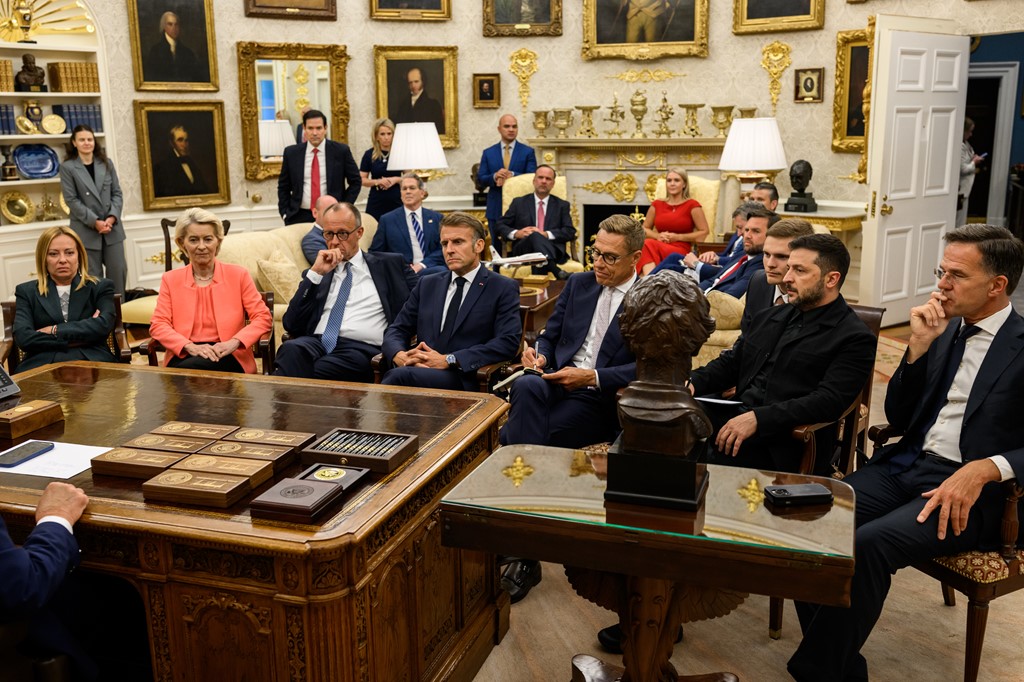
Defense has long been a key issue among the European countries, especially following the previous US decision to suspend military aid to Ukraine, subsequently resuming some of it and suspending other types.
European defense budgets have witnessed an unprecedented leap over the past few years, reflecting a radical shift in the Old Continent's approach to security issues.
Military spending by EU countries increased by more than 30% between 2021 and 2024, reaching approximately €326 billion.
Despite nearly doubling their defense spending since Russia's annexation of Ukraine's Crimea in 2014, European countries were—until last month—averaging less than 2% of GDP, a target met by 24 of the alliance's 32 member states. The U.S., meanwhile, funds nearly two-thirds of NATO's military budget.
Danish Prime Minister Mette Frederiksen warned weeks ago that Russia poses a real security threat to the EU by the end of the decade, noting that defense industries in Europe and Ukraine must be strengthened over the next five years to prepare.
European officials have warned that Russian President Vladimir Putin may soon attempt to test the security guarantee enshrined in Article 5 of the North Atlantic Treaty—a pledge that any attack on any ally will be met with a collective response from all members of the alliance.
NATO Secretary General Mark Rutte said that Russia is accused of sabotage, cyberattacks, and fake news campaigns – largely to undermine European support for Ukraine – and that while Europe is not currently at war, it is not at peace either.

Europe's rearmament
In a related development, a recent analysis revealed that arms factories in Europe are expanding at three times their peacetime rate, recently encompassing 7 million square meters of new industrial development, representing a rearmament on a historic scale.
Construction activity at European arms sites has been in overdrive since Russia's full-scale invasion of Ukraine in February 2022, according to a Financial Times analysis of radar satellite data covering 150 industrial facilities belonging to 37 defense companies.
The data shows that Europe's long-awaited defense revival is beginning to materialize not just in political rhetoric or spending pledges, but also in factory expansion and accelerated production, especially as European countries seek ways to sustain arms deliveries to Kyiv and rebuild their own stockpiles.
Using more than 1,000 satellite images, the newspaper was able to track changes in sites associated with ammunition and missile production across Europe, two key points of Western military support for Ukraine.
The data indicates that approximately one-third of the sites examined showed excavation, road paving, and new building construction, as well as expansions of existing buildings.
The analysis showed that the area of change jumped from 790,000 square meters in 2020-2021 to 2.8 million square meters in 2024-2025.
Mega projects dominated the expansion scene. A joint venture between German company Rheinmetall and Hungarian company N7 Holding built a massive production site in Varpalota, Hungary, on previously undeveloped land in 2022.
The first factory was completed in July 2024 to produce 30mm ammunition, with construction continuing to produce 155mm artillery shells and 120mm ammunition for the Leopard 2 and Panther tanks, as well as an explosives factory.
In France, the Rouxelles plant in Saint-Medard-en-Jalles underwent major expansion.
The analysis also identified changes affecting 94,000 square meters at MBDA's German headquarters in Schrobenhausen, which produces the mobile Enforcer missile and the Patriot GEM-T surface-to-air missile.
Most of the expansions benefited from the EU's Action in Support of Ammunition Production (ASAP) program, which invested €500 million to address bottlenecks in ammunition and missile production.
The analysis, which covered 88 sites linked to the program, indicated that 20 sites showed significant physical expansion, including the construction of new factories and roads, while 14 sites saw small expansions such as parking lots.
European Defense Commissioner Andrius Kubilius reported that Europe's annual ammunition production capacity had increased from 300,000 pieces to approximately 2 million by the end of this year.
Rheinmetall plans a massive jump in its production of 155mm shells from 70,000 in 2022 to 1.1 million in 2023.
British company BAE Systems has pledged to increase 155mm shell production capacity sixteenfold at its Glascoede site in South Wales when its new explosive filling facility comes online.
In June 2024, Norwegian company Kongsberg inaugurated a $62 million missile factory, increasing its total missile production capacity.
The EU is negotiating a follow-up programme worth €1.5 billion to replicate ASAP for missiles, air defence, drones and artillery.
The European Commission is considering using similar approaches to incentivize industry expansion in priority areas including missiles, air defense, artillery, and drones.

Strategic Shift
In a related context, Germany recently witnessed an unprecedented strategic shift in its defense policy, positioning itself at the forefront of a growing European armament project.
Under Chancellor Friedrich Merz, Berlin has made the boldest military commitment since the Cold War: to transform Germany into Europe’s leading land power.
To put that in perspective, Germany is pledging nearly €1 trillion over ten years toward military modernization.
This spending could reshape the balance of power within the European Union, according to a report published in The Times.
The newspaper noted that companies such as Rheinmetall, Krauss-Maffei Wegmann, and ThyssenKrupp Marine Systems have already begun expanding their production lines to meet the growing demand for tanks, armored vehicles, and submarines.
Germany has also recently pushed for European-wide defense unification, seeking to reduce the fragmentation of EU weapons systems and enhance strategic independence from the US arms market.
Germany's rearmament is not occurring in isolation. In March, the EU pledged additional defense investments exceeding €800 billion over the next four years.
Across Europe, countries are boosting their military budgets, reintroducing conscription, and building integrated force structures.
France, which is the only nuclear power in the EU, has pursued a strategy of global presence and military autonomy.
For years, Poland has invested heavily in the military with the goal of developing the strongest land forces in Europe.
However, tensions are already emerging. While Poland and the Baltic states welcome German power in theory, they remain historically wary of German hegemony.
France, meanwhile, views Germany's military resurgence as a strategic necessity and a potential challenge to its leadership.
Britain, long considered Europe's preeminent military power, now faces a strategic shift, its conventional forces diminished by years of budget cuts and overstretch.
With Germany's defense budget several times that of Britain's, and Berlin taking the lead in shaping EU defense policy, London risks being marginalized in shaping Europe's military future.
To maintain its relevance, Britain will need to deepen its bilateral defense ties, invest heavily in force readiness, and determine whether to align more closely with Washington or return to a European commitment.

Despite these multibillion euro rearmament programs in Europe, little is likely to change in the global ranking of military strength, at least in the medium term.
According to the 2025 Global Firepower review, the United States clearly leads and is followed by Russia, China, India and South Korea. The UK follows in sixth place, while France is ninth. Germany is currently 11th.
Sources
- Europe builds for war as arms factories expand at triple speed
- Europe’s Arms Makers Get a Boost From Trump’s NATO Demands
- Financing European air defence through European Union debt [Analysis]
- Trump’s threats gave Europe the political will to spend more on defense. But challenges are ahead
- European military powers work on 5-10 year plan to replace US in Nato
- Rheinmetall wins ammunition order worth several hundred million euros
- Germany’s Bold Rearmament: A Historic Shift Toward Europe’s Strongest Army [Analysis]