Race for Iraq’s Premiership: Can al-Sudani Escape the Coordination Framework Trap?
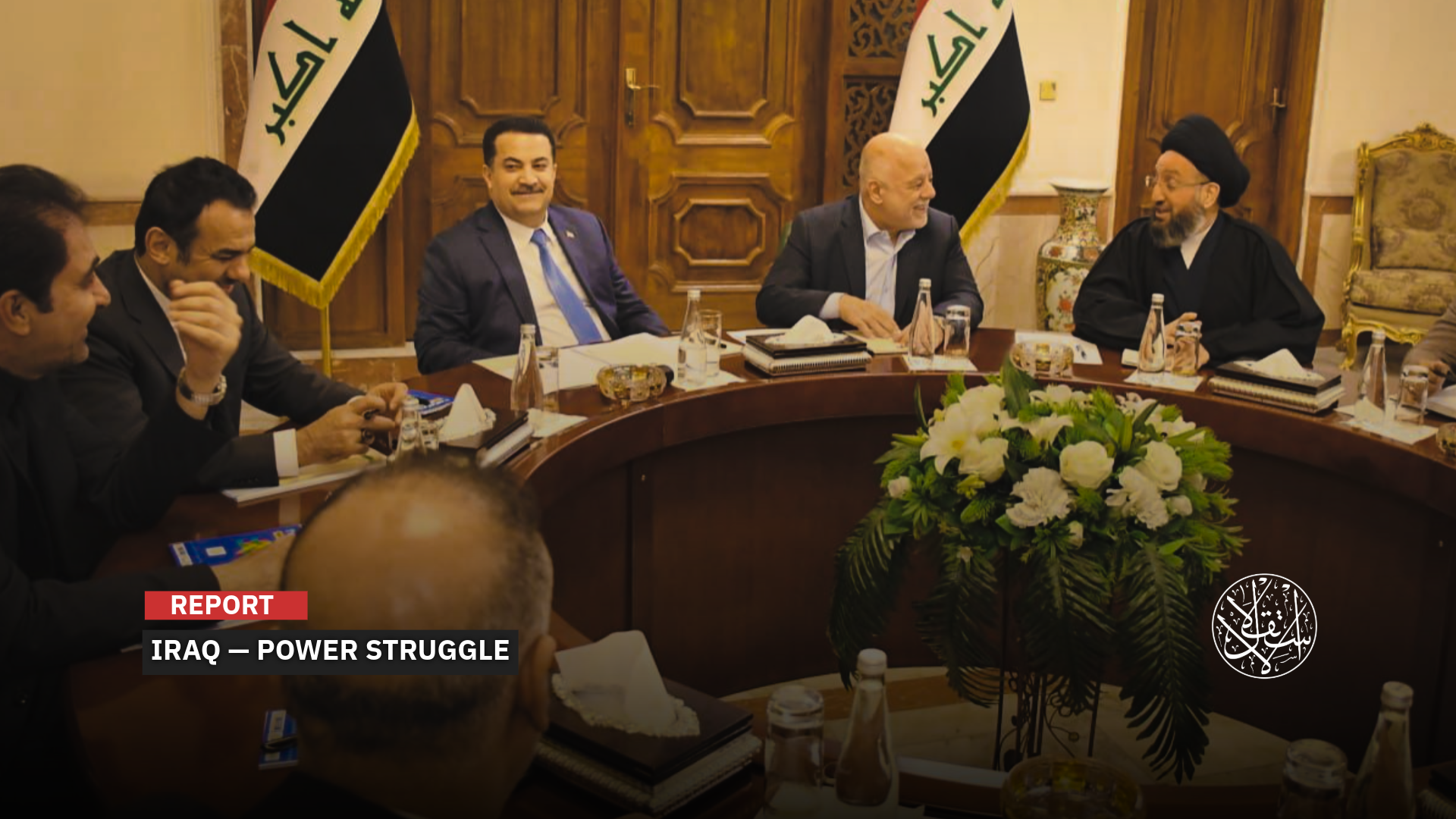
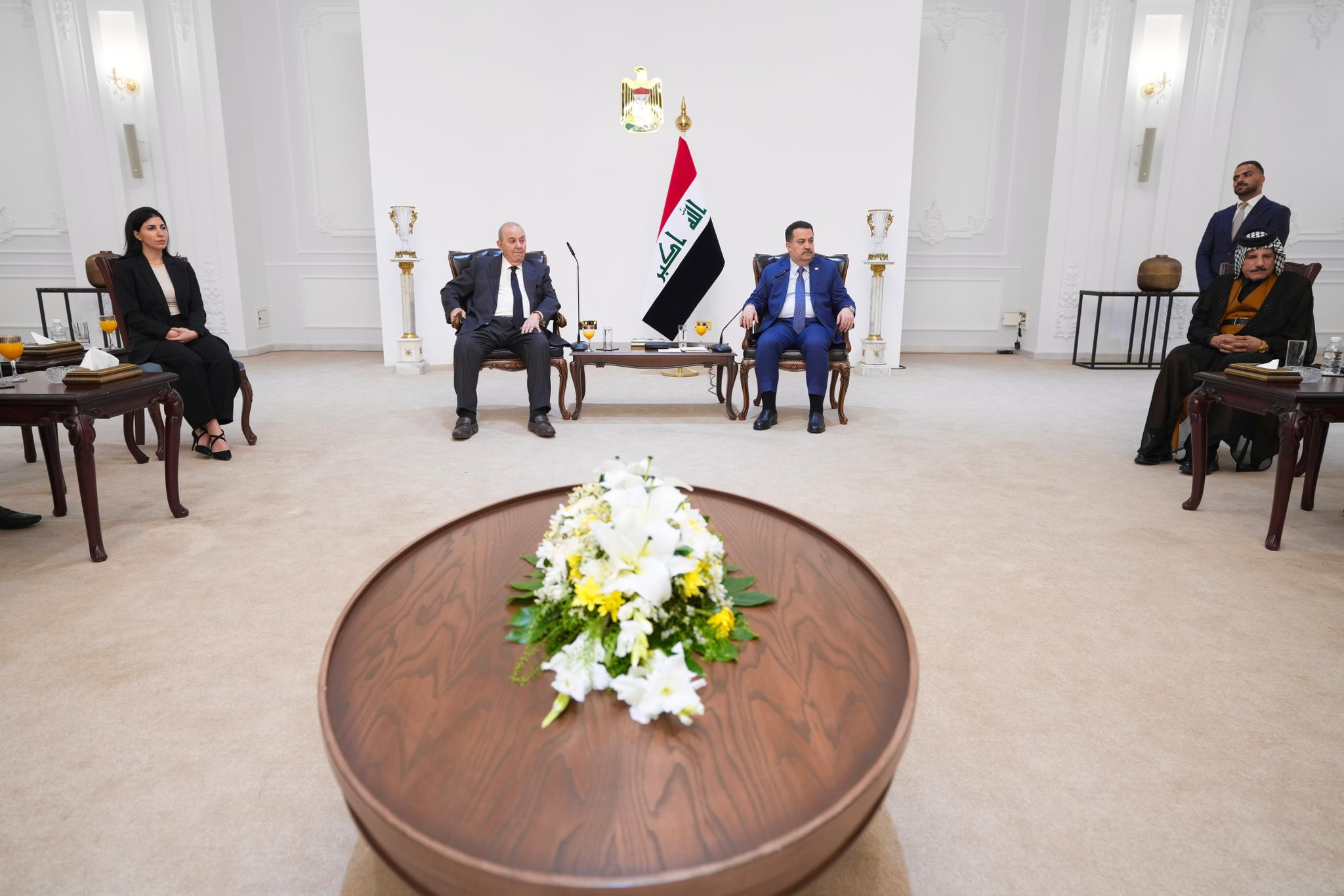
As the winning bloc, al-Sudani conducts consultations outside the Coordination Framework.
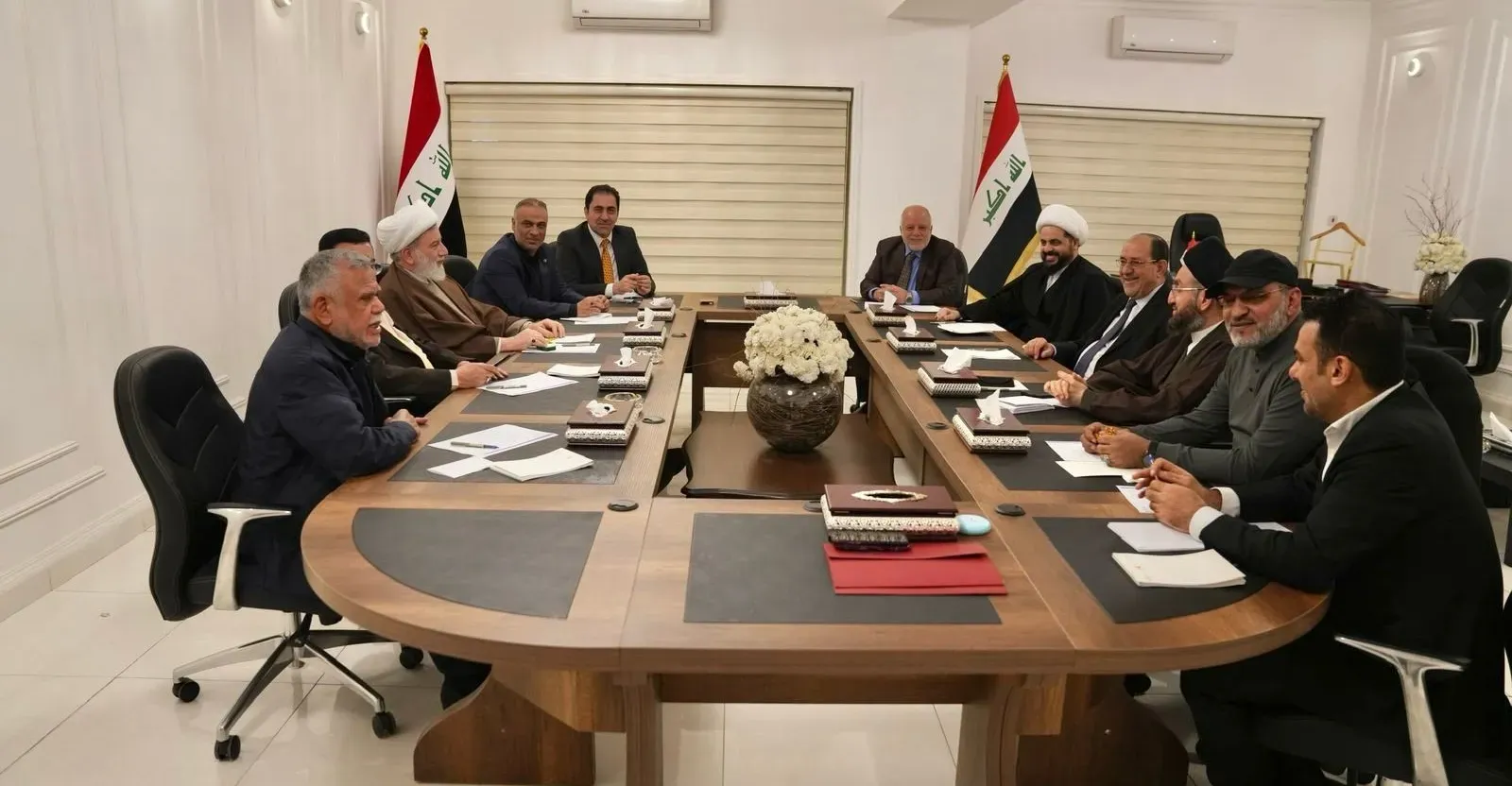
With Iraq’s parliamentary elections concluded, the winning alliances and parties, particularly the Shiite blocs, have begun initial consultations to form the largest coalition that will select a candidate to lead the new government, amid deep divisions within the Coordination Framework.
Although the Reconstruction and Development coalition led by Prime Minister Mohammed Shia’ al-Sudani secured first place with around 46 seats, the Coordination Framework forces, running on eight separate lists, managed to regroup after the preliminary results, forming a bloc exceeding 140 seats.
The November 11, 2025, elections have created a complex political landscape, raising questions about whether the Coordination Framework can sideline al-Sudani despite his lead or if Iraq is heading toward a political deadlock that could open the way for a compromise candidate.
Shiite Power Struggle
In a bid to accelerate the formation of alliances that will lead to the selection of Iraq’s next prime minister, Iraqi media reported that the Coordination Framework forces agreed to appoint a representative to meet with Sadrist Movement leader Muqtada al-Sadr and update him on government formation talks.
Al-Sadr had announced his permanent withdrawal from politics at the end of August 2022 and instructed his supporters to boycott the local elections on October 10, 2024, and the parliamentary elections on November 11, 2025, despite efforts by various political figures to change his mind.
According to a report by Shafaq News on November 16, the Framework’s meetings are ongoing, discussing both the composition and agenda of the next government, as well as any obstacles that could delay its formation. Communication with al-Sadr is part of these efforts, with a trusted representative chosen to meet him at his residence in Najaf once the final results are confirmed.
The Framework aims to finalize government formation quickly, ahead of constitutional deadlines, but challenges remain—particularly regarding the appointment of a new prime minister or the potential extension of incumbent Prime Minister Mohammed Shia’ al-Sudani, whose coalition led the elections.
Under the Iraqi constitution, the president must convene parliament within 15 days of validating the results to elect the speaker and deputies, followed by the presidential election, after which the president assigns the largest parliamentary bloc to form the government within 30 days.
Al-Sudani, meeting his newly elected MPs, highlighted that the recent elections marked a clear restoration of public confidence in the political process. With turnout exceeding 56 percent, he described it as a significant indicator for regional and international institutions assessing popular trust in Iraq’s democracy.
He emphasized that restoring citizens’ trust had been essential after its decline in recent years and pledged that his coalition would continue reform efforts to meet Iraqis’ expectations. Al-Sudani also noted that his coalition had faced campaigns of misinformation prior to the elections and expected challenges to continue despite winning approximately 1.4 million votes, an unprecedented figure in previous electoral cycles.
He added that coalition leaders will double their efforts in the coming period, with reconstruction projects set to continue for more than two decades, focusing on development across sectors and negotiating the formation of a “parliamentary-governmental project” capable of fulfilling public aspirations and addressing current challenges.
Three Crucial Elements
Amid the political scramble and questions over the Coordination Framework’s ability to sideline al-Sudani, Iraqi analyst Iyad Thabet noted that post-election moves show the Framework is focused on solidifying its internal alliances. Its leadership continues to meet independently of al-Sudani, who so far has only met with the winners from his own coalition.
“The most striking move was the coordination framework’s meeting with Falih al-Fayyad, head of the Popular Mobilization Commission and one of al-Sudani’s closest allies, a pressure tactic meant to corner al-Sudani and force him back into line, something the prime minister appears unwilling to accept so far,” Thabet told Al-Estiklal.
“Al-Sudani might attempt to form a separate alliance reminiscent of the 2021 trilateral coalition, or he could accept a reduced political role, participating in government with smaller influence, or shift to an opposition bloc within parliament, the latter being the most likely scenario.”
“A shift to the opposition could splinter al-Sudani’s coalition, since many of its members backed him mainly to secure a share of power in a second term,” he added.
Thabet said several names are already circulating for the premiership—from former PM Nouri al-Maliki and ex-sports minister Abdul-Hussein Abtan to intelligence chief Hamid al-Shatri, with Adnan al-Zurfi and former PM Haider al-Abadi also in the mix. But he noted that floating names this early may be a deliberate tactic to “burn” them before a compromise figure is chosen, a strategy the Framework is using to chip away at al-Sudani’s chances.
Political analyst Majashaa al-Tamimi told al-Alam al-Jaded on November 15 that discussions about the Framework forming the largest bloc without al-Sudani are, at this stage, more a negotiating tactic than a final direction. Yet they reveal the start of a subtle internal competition within the Shiite bloc, particularly after some Framework forces gained extra seats, increasing their maneuvering power.
Al-Tamimi identifies three key determinants for selecting the next prime minister: the balance within the Shiite political house, the stance of Sunni and Kurdish forces, and regional and international acceptance—especially from the United States, Iran, Turkiye, and Gulf states seeking a stable, non-confrontational government in Baghdad.
On resolving the contest for leadership of the largest bloc, al-Tamimi expects an internal compromise that prevents a split within the Shiite house. The most likely scenario, he says, would keep al-Sudani as the primary candidate for prime minister while redistributing roles and influence internally to achieve balance among the Framework and its allies.
External Pressures
Despite the internal momentum within the Coordination Framework and al-Sudani’s coalition, Iraq’s political process has remained subject, to varying degrees, to external influences since the U.S. invasion in 2003, particularly in selecting the three key presidencies: parliament, the presidency, and the government.
The Atlantic Council in Washington highlighted the results of the 2025 elections and the notable shifts in Iraq’s political landscape, including the decline of the Sadrist Movement, which chose to boycott the political process, and the consolidation of traditional parties that maintained their parliamentary weight.
The Council’s report, published on November 14, 2025, noted that direct U.S. involvement in forming the next government has decreased compared with previous cycles, as Washington prioritizes supporting stability over decisive intervention in shaping political alliances. This shift gives domestic forces greater room to redraw power balances.
The report pointed out that the elections occurred under pressure from the Trump administration to crack down on Iran-backed militias operating in Iraq, while Prime Minister Mohammed Shia’ al-Sudani sought to strengthen his international position through media outreach in Western outlets, including a New York Post article and interviews with Bloomberg and Newsweek, promoting his “Iraq First” vision and building support for a second term.
However, the Council observes that the era of decisive U.S. intervention in selecting the prime minister is over. To secure a new term, al-Sudani must rely on traditional coalition mechanisms within the Shiite political house, acknowledging that he lacks ready-made alliances with other major Shiite blocs.
The report identifies the two largest Shiite blocs after al-Sudani, which are former Prime Minister Nouri al-Maliki’s State of Law Coalition and the al-Sadiqoun Bloc (which is affiliated with the U.S.-designated Foreign Terrorist Organization Asa’ib Ahl al-Haq), both of which oppose giving al-Sudani a second term. According to the report, both oppose granting al-Sudani a second term.
The Atlantic Council also notes that Iranian influence, alongside American influence, will play a role in the prime ministerial nomination, as in previous cycles where informal agreements between Washington and Tehran shaped outcomes. Yet, tensions between the U.S. and Iran under President Trump may make such agreements harder to reach, potentially prolonging the formation of the new government.
Mark Savage, Trump’s special envoy to Iraq, congratulated the Iraqi people on completing the elections in a statement on November 13, calling them “a crucial step toward strengthening democracy and stability. He emphasized the United States’ commitment to supporting Iraq’s sovereignty, reducing external interventions and the influence of armed groups, and working with the incoming government to deepen strategic partnerships in security, energy, and development, contributing to a more prosperous future for Iraqis.
Iranian President Masoud Pezeshkian described the recent Iraqi parliamentary elections, held in a calm atmosphere, as an important achievement that strengthens Iraq’s standing and reflects the ability of its people to manage national responsibilities steadily.
During a November 14 phone call with Prime Minister Mohammed Shia’ al-Sudani, Pezeshkian said he hoped the coming period would bring broader cooperation between Tehran and Baghdad, strengthening and deepening ties between the two countries on all fronts.
According to the official IRNA news agency, the Iranian president’s statements reaffirmed Tehran’s support for Iraq’s democratic process and its aspiration to develop political, economic, and security partnerships with Baghdad in the period ahead.
Sources
- Al-Sudani: Voter Turnout Was Unprecedented and Unexpected [Arabic]
- Experts react: How will Iraq’s parliamentary election shape the country’s politics?
- The Coordination Framework’s Dilemma: Renew al-Sudani’s Term or Rekindle Shiite Divisions? [Arabic]
- The Framework Tests al-Sadr’s Mood with a Special Envoy Trusted by All [Arabic]
- After Baghdad Rejects Tehran’s Remarks, How Did Iranian Officials Respond to Iraq’s Elections? [Arabic]
- Division Within the Coordination Framework Over Iraq’s Prime Minister [Arabic]