Pre-1979 Era Revisited: Unraveling Iran's Stable Relations with Africa

Iran's policy towards Africa is governed within the framework of Khamenei's openness strategy.
Contrary to the stereotypical image of Iran's foreign policy associated with regional expansion through militias and nuclear activities, Iran maintains a stable policy regarding its relations with Africa, dating back to pre-revolutionary times in 1979.
Observers note that Iran's policy of "calmness and patience" toward Africa has allowed it to develop good relations with many African countries across various fields, particularly at the diplomatic and economic levels.
A Remarkable Development
In this context, Tehran hosted the Second International Forum between Iran and Africa on April 26, 2024, following the first edition held a year earlier.
At the outset of his speech at the forum, late Iranian President Ebrahim Raisi delivered strong messages regarding Iranian–African relations.
He emphasized that this forum symbolizes the initial step toward strengthening relations, according to IRNA, the official news agency.
He explained that Iran's view of Africa "differs from the Western perspective," noting that "the West wants Africa for itself, but Iran wants Africa for the Africans."
Raisi sent a message to the participants stressing that "it is very important for Africa to recognize the technological progress achieved by Iran."
It was notable that a significant part of the Iranian President's speech was related to the economy.
In this regard, Raisi stated, "Iran aspires to operate mines and establish power plants in Africa. The capabilities are available in African countries, and the necessary technology for operating and processing these mines exists in Iran.
"Iranian experts today have the ability to build advanced refineries and power plants, which is an important capability for expanding bilateral cooperation.
"The necessary infrastructure projects must be implemented to develop relations, including maritime transport and the development and enhancement of aviation companies," Raisi added.
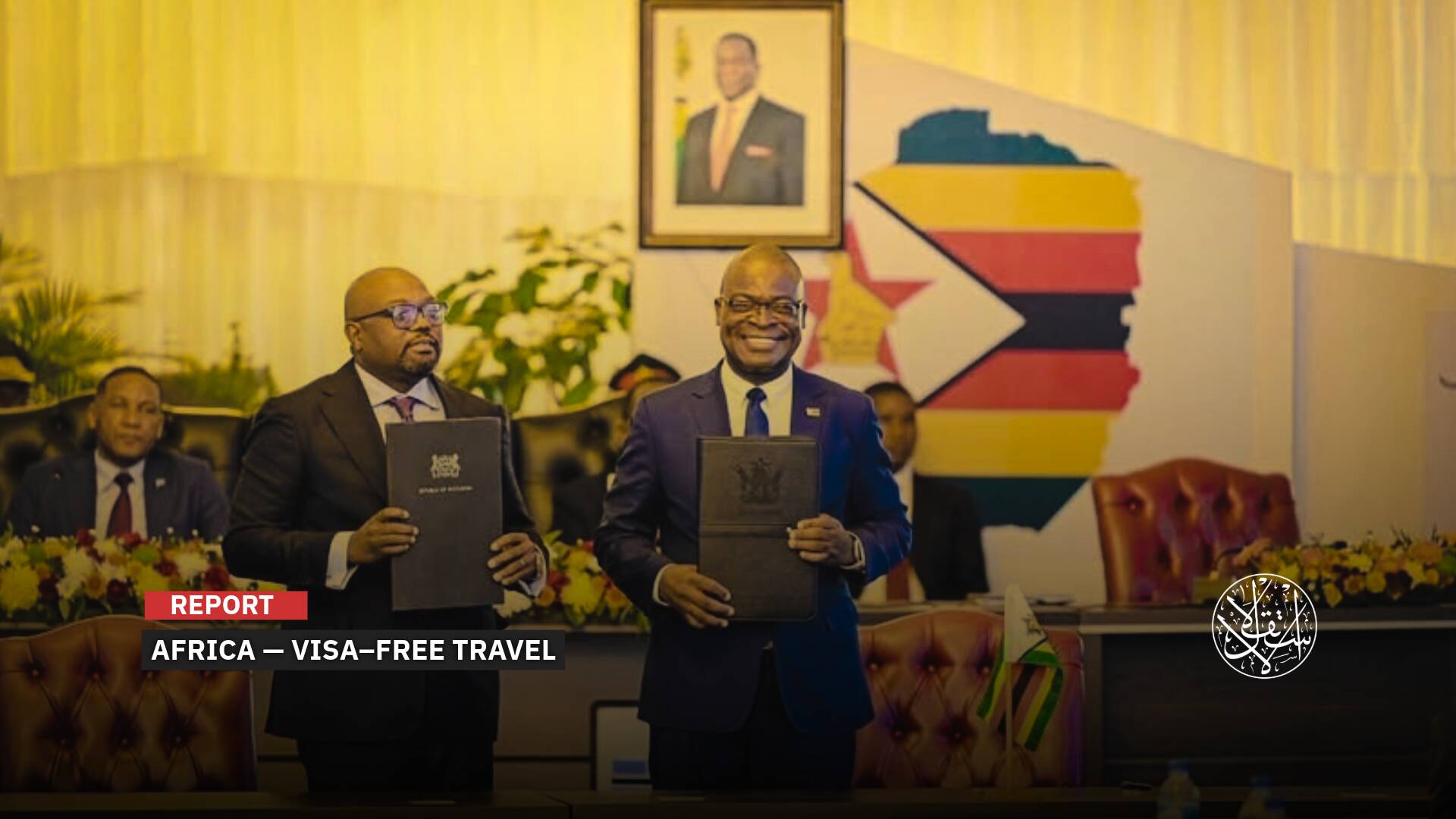
This forum followed a tour by Raisi to Africa, which included Kenya, Uganda, and Zimbabwe in July 2024, as part of efforts to strengthen relations with the African continent.

The Reasons and Means
Several reasons lie behind Iran's efforts toward Africa, foremost among them being its desire to offset the economic damage resulting from the sanctions imposed by the United States and its allies due to its nuclear activities.
Despite Iran's establishment of trade relations with many African countries, these relationships have yet to reach a level sufficient to cover Iran's economic losses.
Another reason for Iran's initiative and interest in Africa is to "gain the voting support of African countries in international organizations, such as the United Nations."
In this regard, Iran seeks to establish relations with Africa that extend beyond mere governmental interactions, aiming for a genuine display of sympathy and affection from the African peoples toward Iran.
Iran carries out its work under two main headings: anti-American discourse and ideological projects.
When considering a broad historical process including the pre-Islamic Revolution era, Iran emerges as one of the countries adept at employing soft power.
Therefore, Iran works to develop good economic and political relations with African countries, while also seeking to have a strong presence through soft power institutions, including education, aid, and religion, to reach African peoples and ensure a form of relationship that is more enduring and impactful.
In this context, Iran is present in almost all African countries in mosques, schools, relief organizations, and university offices.
The Imam Khomeini Relief Committee, based in Tehran, is actively engaged in most African countries. Additionally, Al-Mustafa International University offers Persian language courses and religious education, with open offices in Africa. The university, responsible for spreading the Shia doctrine and the official ideology of the Iranian state, is active in South Africa, Tanzania, Nigeria, and Togo.
On another front, the Red Crescent Society of the Islamic Republic of Iran is actively operating in African geography, owning healthcare centers in 14 African countries.

Challenges and Obstacles
On the flip side, Iran faces several obstacles in its efforts to enhance its relations with African nations and communities to establish a lasting presence in the region.
The activities of cultural centers affiliated with Al-Mustafa International University aim to "spread Shia Islam" in some countries, putting pressure on these institutions.
Consequently, Sudan decided to close several Iranian cultural centers on the basis of their promotion of Shia doctrine during the era of former President Omar al-Bashir.
Iran's relationship with separatist organizations during regional crises raises concerns among some countries.
A recent example of this is Iran's ties with the Polisario Front, advocating for the independence of Western Sahara, which led to the diplomatic rupture between Iran and Morocco.
Morocco withdrew its ambassador from Iran on the grounds that Iran supports the Polisario Front through Lebanese Hezbollah and its diplomats in Algeria.
Minister of Foreign Affairs, African Cooperation and Moroccan Expatriates of Morocco Nasser Bourita claimed in a 2021 speech that Iran fuels instability in Africa, especially in Morocco, through its proxy forces.
Another challenge Iran faces in Africa is its competition with Saudi Arabia and the United Arab Emirates.
Indeed, the rivalry between Iran, Saudi Arabia, and the UAE in African geography can be seen as an extension of their competition in the Middle East.
It's worth noting that Somalia, Sudan, and Djibouti are among the biggest supporters of Saudi Arabia and the UAE in their competition with Iran.

Long-Standing Relations
Iran's interest in Africa dates back to the era of Shah Mohammad Reza Pahlavi, when Iran, as America's strongest ally in the Islamic geography during the Cold War, began showing interest in the region within the framework of America's policy in Africa.
During the Shah's reign, Iran was the largest supporter of American policies in the African geography to prevent the newly independent African countries from falling under Soviet influence after World War II and to prevent the spread of communism throughout the region.
After the Islamic Revolution in Iran in 1979, Iran's policy toward Africa took on a different dimension, with Iran beginning to focus on the African geography within a more ideological framework based on Shia Islam.
Ayatollah Khamenei embarked on an African tour in 1986, covering Mozambique, Angola, Zimbabwe, and Tanzania, signing numerous agreements with the visited countries in various fields.
Iran also sought military presence in the region, supporting Omar al-Bashir with weapons in the coup that took place in Sudan in 1989.
During the presidencies of Ayatollah Hashemi Rafsanjani and Mohammad Khatami, Iran's policy toward Africa did not change significantly, but it became less vigorous within the framework of pragmatic politics.
Under Ahmadinejad's presidency, Iranian policy toward Africa gained new momentum through the South–South strategy aimed at strengthening relations with Africa and South America.
The era of Hassan Rouhani is considered a period of "quiet rooting," where Iran adopted a quieter and more stable African policy, although Africa did not appear to be a clear priority for Iran.
Under the late Ebrahim Raisi's presidency, who became Iran's president in the 2021 elections, and with late Foreign Minister Hossein Amir-Abdollahian, who served as Deputy Foreign Minister for Middle Eastern and North African Affairs for five years during Hassan Rouhani's presidency, Iran's policy toward Africa is managed within the framework of the openness adopted by Khamenei and the "export of revolution" policy embraced by Ayatollah Khomeini.