Overthrow or Contain? The West’s Dilemma with Iran
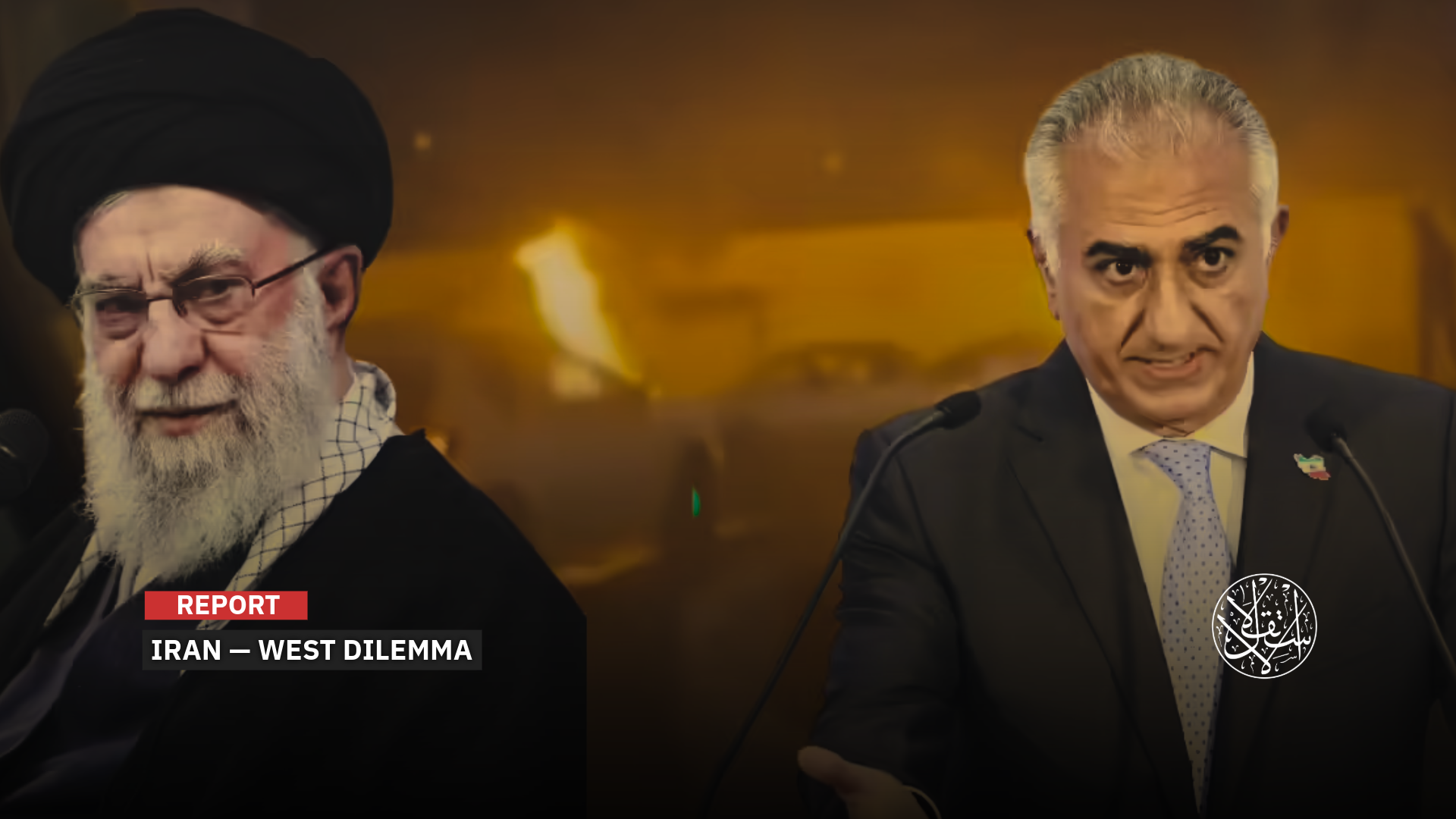
Trump refused to meet Pahlavi at this point, saying it’s not the moment.
As popular protests grind on in Iran and Washington sharpens its warnings against any violent crackdown, a pressing question has come to the fore. Is the West, led by the United States, genuinely moving toward supporting change in the Guardianship of the Islamic Jurist (al-Faqih) system, which has survived similar crises and endured for more than four decades?
Since December 28, 2025, Iran has been gripped by a sustained wave of unrest that began in Tehran’s Grand Bazaar and quickly spread to universities and several cities. What started as anger over economic hardship and the collapse of the national currency soon escalated into attacks on security facilities, some of them torched, alongside chants openly calling for the fall of the government.

An American Role
Since the protests erupted, Iran’s leadership has leveled direct accusations at the United States, blaming it for what officials describe as riots sweeping the country. At the same time, Tehran has intensified its rejection of any American involvement or attempts to revive the Shah’s monarchy, overthrown in 1979.
Supreme Leader Ali Khamenei has labeled the unrest in Iranian cities as acts of sabotage and terrorism, insisting that the Islamic Republic would not tolerate what he called agents of the West. His remarks were reported by the Tasnim News Agency on January 9, 2026.
Addressing what he described as American support for the protests, Khamenei said the U.S. president’s hands were stained with the blood of more than a thousand Iranians, including military commanders, scientists, and civilians, during the twelve-day war on the country. He was referring to the Israeli Occupation aggression on Iran in June 2025, carried out with U.S. backing.
On June 13, 2025, “Israel” launched a twelve day-war, supported by Washington, targeting military and nuclear sites as well as civilian infrastructure, and assassinating senior military figures and nuclear scientists. Tehran responded with unprecedented missile strikes that hit vital facilities inside Tel Aviv.
Khamenei said the Islamic Republic was founded on the blood sacrifices of hundreds of thousands and would not retreat in the face of saboteurs or collaborators. He added that Donald Trump’s fate would be no different from that of Pharaoh, Nimrod, Reza Shah, and Mohammad Reza Shah.
Iranian President Masoud Pezeshkian echoed the accusations, saying the United States and the Israeli Occupation were seeking to sow chaos and instability inside Iran by inciting unrest. He urged Iranians not to be drawn in by what he described as agitators of chaos and terrorists.
Ali Larijani, secretary of Iran’s Supreme National Security Council, said there were clear American and Zionist hands behind the events, arguing that the aim was to pave the way for direct foreign intervention.
Iran’s ambassador to the United Nations, Amir Saeid Iravani, also held Washington responsible for what he said was the transformation of peaceful protests into violent and destructive acts. He accused the United States, in coordination with “Israel,” of illegally interfering in Iran’s internal affairs through incitement and threats.
Conflicting Narratives
By contrast, messages from Washington have carried unmistakable signals of support for the protesters. In posts on X, Republican Senator Lindsey Graham addressed Iranians directly, writing that their courage and determination to end the injustice they face were inspiring.
He shared a post by Trump saying that Iran was looking toward freedom as never before and that the United States stood ready to assist.
Graham said Trump’s slogan “Make Iran Great Again” meant the protesters’ victory over Ayatollah Ali Khamenei, adding that help was on the way.
“God bless and protect the brave people of Iran who are standing up to tyranny,” he added.
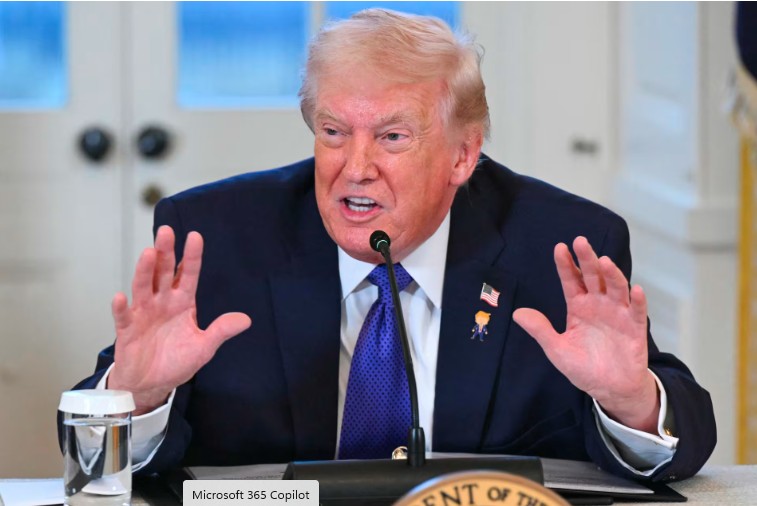
Yet in a January 9 podcast interview, Donald Trump struck a more cautious tone on backing any political alternative. He described Iranian opposition figure Reza Pahlavi as “a very nice” person but said a meeting with him might not be “appropriate at this point.”
“He seems very nice, but I don’t know how he’d play within his own country,” Trump said of Pahlavi. “And we really aren’t up to that point yet.”
“I don’t know whether or not his country would accept his leadership, and certainly if they would, that would be fine with me,” he added.
Observers read this as Trump expressing general support for change in Iran without committing to any one figure to lead a transitional phase.
Axios reported on January 9 that Washington was closely monitoring signs that could lead to the “regime’s collapse,” but still saw the current protests as insufficient to trigger radical change. The assessment is subject to revision as events accelerate.
The outlet suggested that Trump’s reluctance to back Reza Pahlavi may reflect a U.S. desire to keep the Iranian government intact for now—or at least avoid rushing to topple it.
Also on January 9, Pahlavi addressed Trump on X, writing, “Last night you saw the millions of brave Iranians in the streets facing down live bullets. Today, they are facing not just bullets but a total communications blackout. No Internet. No landlines.”
“Ali Khamenei, fearing the end of his criminal regime at the hands of the people and with the help of your powerful promise to support the protesters, has threatened the people on the streets with a brutal crackdown. And he wants to use this blackout to murder these young heroes.”
“Your threat to this criminal regime has also kept the regime’s thugs at bay. But time is of the essence. The people will be on the streets again in an hour. I am asking you to help,” he added.
“You have proven, and I know you are a man of peace and a man of your word. Please be prepared to intervene to help the people of Iran.”
Reframing the Lines
Commenting on the prospects of toppling the Iranian government and the possibility of Reza Pahlavi taking power, political analyst specializing in international relations and strategic affairs Ali Aghwan argued that Pahlavi is, in practical terms, unfit to lead a country as complex as Iran. “He lacks any real leadership qualities. He is simply the son of the Shah who was overthrown in 1979,” Aghwan said.
In a post on Facebook, he added that “Pahlavi could answer the key question Trump has yet to address since Israel raised the idea of toppling the Iranian regime: who could step in as a temporary leader to guide the country for a limited period?”
The analyst noted that Netanyahu is reportedly trying to convince Trump that Pahlavi could serve as a stopgap leader of Iran. “If he succeeds, fine. If he fails, another alternative—matured either inside or outside Iran—would take over. The priority is that a replacement exists now. Netanyahu is pursuing a temporary advantage; what happens afterward is secondary.”
Without specifying when or where these discussions took place, the analyst said Netanyahu allegedly told Trump that Pahlavi would hand over Iran’s ballistic and nuclear programs to the United States and “Israel” within hours and sign a direct normalization agreement within weeks.
“Netanyahu portrayed Pahlavi as someone who would not burden the U.S. administration, would be obedient during the transition, and, if successful, could even replicate the current regime’s role in maintaining a chronic regional threat—except toward Israel.”
“This chronic threat is crucial,” the analyst added, “because it allows the U.S. to continue leveraging countries for deals on protecting regimes, arms, energy, and technology, all under the pretext of defending against a ‘new Pahlavi Iran.’”
“Trump has never been fully convinced, during or after the twelve-day war, that toppling the Iranian regime is necessary in the way Netanyahu envisions. He believes there is a chance to recalibrate Iran’s role and behavior in the region, and there is no ready alternative to lead the next phase,” Aghwan said.
“Even if Trump were to decide on regime change, achieving it through protests alone would be extremely unlikely.”
“The people would have to surprise both the regime and the world with a dramatic overthrow, which seems improbable at this point,” according to the analyst.
“Removing the Iranian regime would require significant military intervention. Unlike Iraq in 2003, this would not involve a large-scale ground invasion, making any effort to topple Iran far more difficult.”
Meanwhile, the Iranian political analyst close to the regime, Mohammed Saleh Sedghian, offered a sobering perspective. “For the thousandth time, we hear that the Iranian regime is about to fall. Each time they say it’s different. The people are determined to change things, conditions are unbearable, and everyone dreams of escaping somewhere—one to the farthest corner, another to country X, a third to country Y, and so on,” he posted on X.
“Anyone who wants to understand Iran and Iranians must grasp their culture, awareness, and priorities. Convincing an Iranian is difficult; acceptance is even harder. Anyone betting on regime change is deluded. The reality is far more complex than that.”
Earlier, on January 6, Sedghian appeared in a YouTube video, arguing that “the Iranian regime is not fragile, and the Iranian people have not demanded its overthrow. They want course corrections, economic reforms, and urgent measures because conditions are unbearable, including in foreign policy.”
The analyst insisted that “it’s hard to find an Iranian who wants chaos or foreign, particularly Israeli, intervention. Even during the twelve-day war, when Prime Minister Benjamin Netanyahu sought to sow disorder, Iranians rejected that. The awareness of Iranian citizens frustrates what Netanyahu, and even the hawks in the U.S. administration, hope to achieve.”
Sources
- Trump says Iran’s Reza Pahlavi ‘seems very nice’ but unsure if he can garner support
- 'Help is on the way,' top Trump ally Graham tells Iranian protesters
- Supreme Leader Khamenei: Iran Will Not Tolerate Western Agents, the U.S. President’s Hands Are Stained with Iranian Blood [Arabic]
- Larijani: American and Zionist Hands Clearly Behind Recent Unrest in Iran [Arabic]
- Iravani: The United States Behind the Turn of Iran’s Protests into Riots [Arabic]
- Pahlavi Urges Trump: Please Be Prepared to Intervene to Help the People of Iran [Arabic]
- U.S. watching for signs Iran's protests could bring down regime
- 'Your long nightmare is soon coming to a close': US senator tells Iranians
- Iran’s President Blames America and Israel for Stoking ‘Riot' [Arabic]
- Exclusive: Trump questions support for son of Iran's last Shah inside country