Mass Graves of Assad in Syria: From Tools of Concealment to Evidence of Guilt
"The mass graves contain decisive evidence of war crimes or crimes against humanity."
When Bashar al‑Assad’s regime collapsed, it threw open the door to long-hidden crime scenes and the tools used for years to erase evidence of the war crimes and crimes against humanity committed after the revolution. Since Assad’s fall on December 8, 2024, the discovery of mass graves across several Syrian provinces has become among the strongest pieces of physical proof of those crimes.
Largest Mass Grave
Documenting the locations of mass graves, preventing tampering, and identifying the victims is essential to uncover the full extent of these grave violations and address this heavy legacy through transitional justice, especially in light of the profound political changes Syria has experienced. Transitional justice offers the most effective path to comprehensive societal recovery and the rebuilding of the state and society after decades of dictatorship and systematic repression.
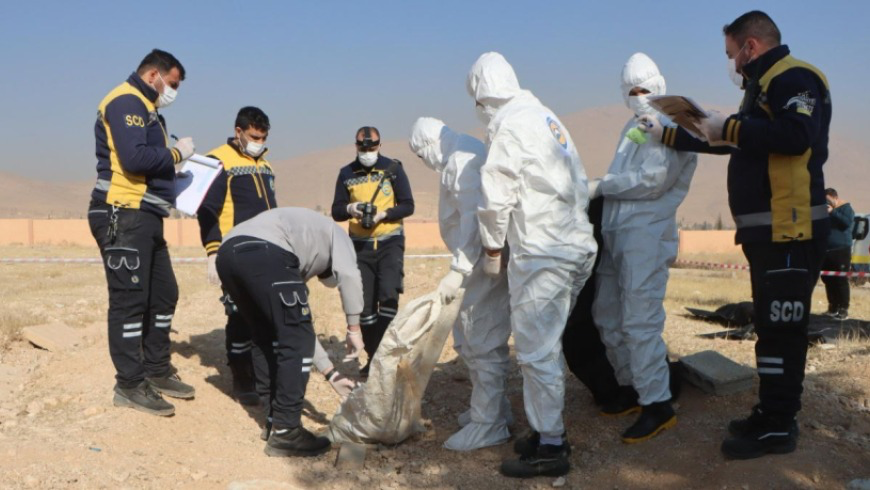
Syrian Civil Defense teams, with the help of local residents, have discovered a number of mass graves since Assad’s fall, working to preserve them, document the cases and numbers, and prevent the erasure of evidence. Most recently, trenches in rural Damascus were found containing the remains of thousands of Syrian detainees under Bashar al‑Assad’s rule, marking the largest mass grave discovered in Syria to date.
A Reuters report published on October 17, 2025, revealed a secret reburial plan in the Syrian desert, in which orders to move the bodies came directly from Bashar al‑Assad. The process was overseen by a colonel known as “the master of cleansing” from 2019 to 2021.
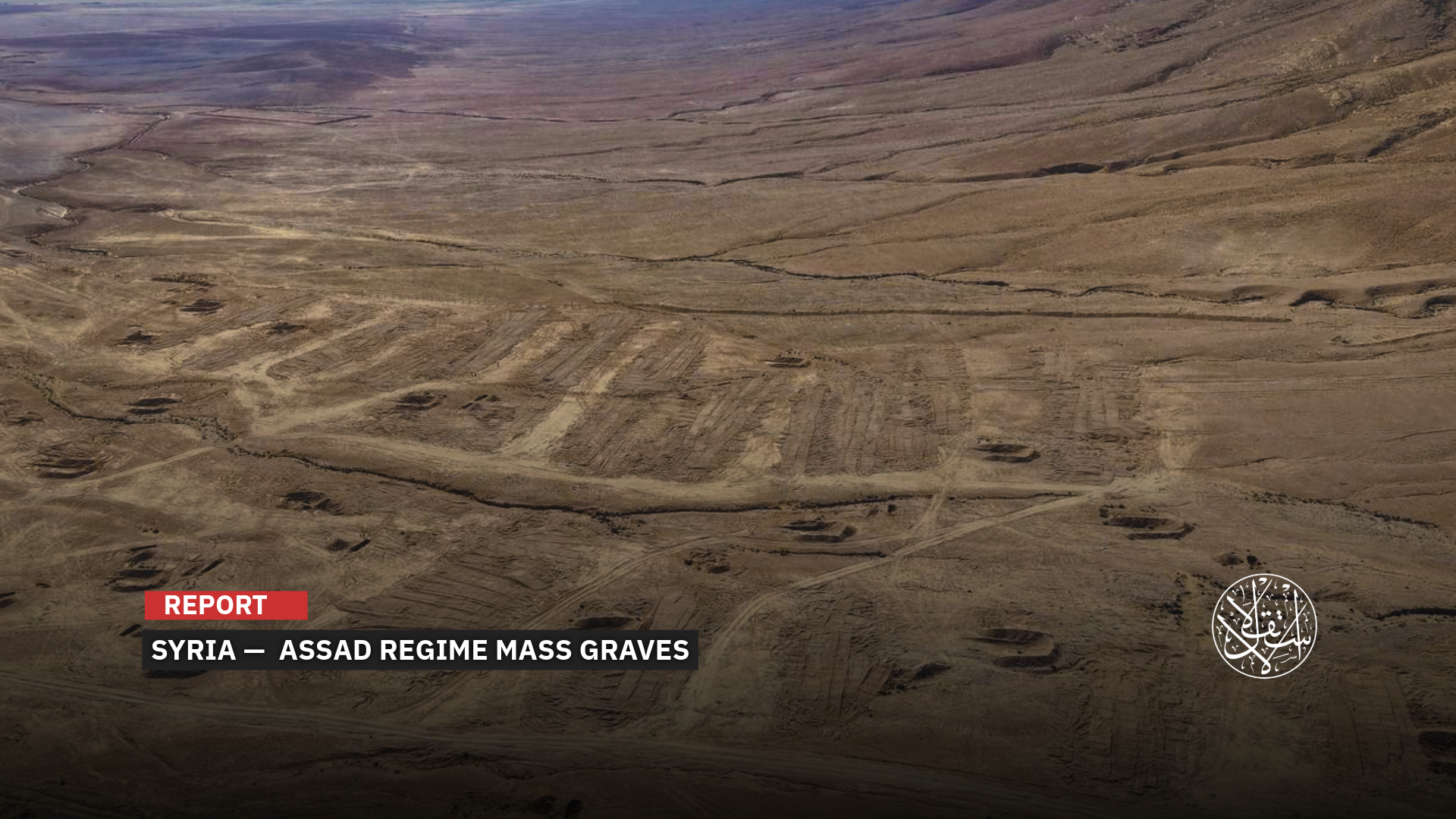
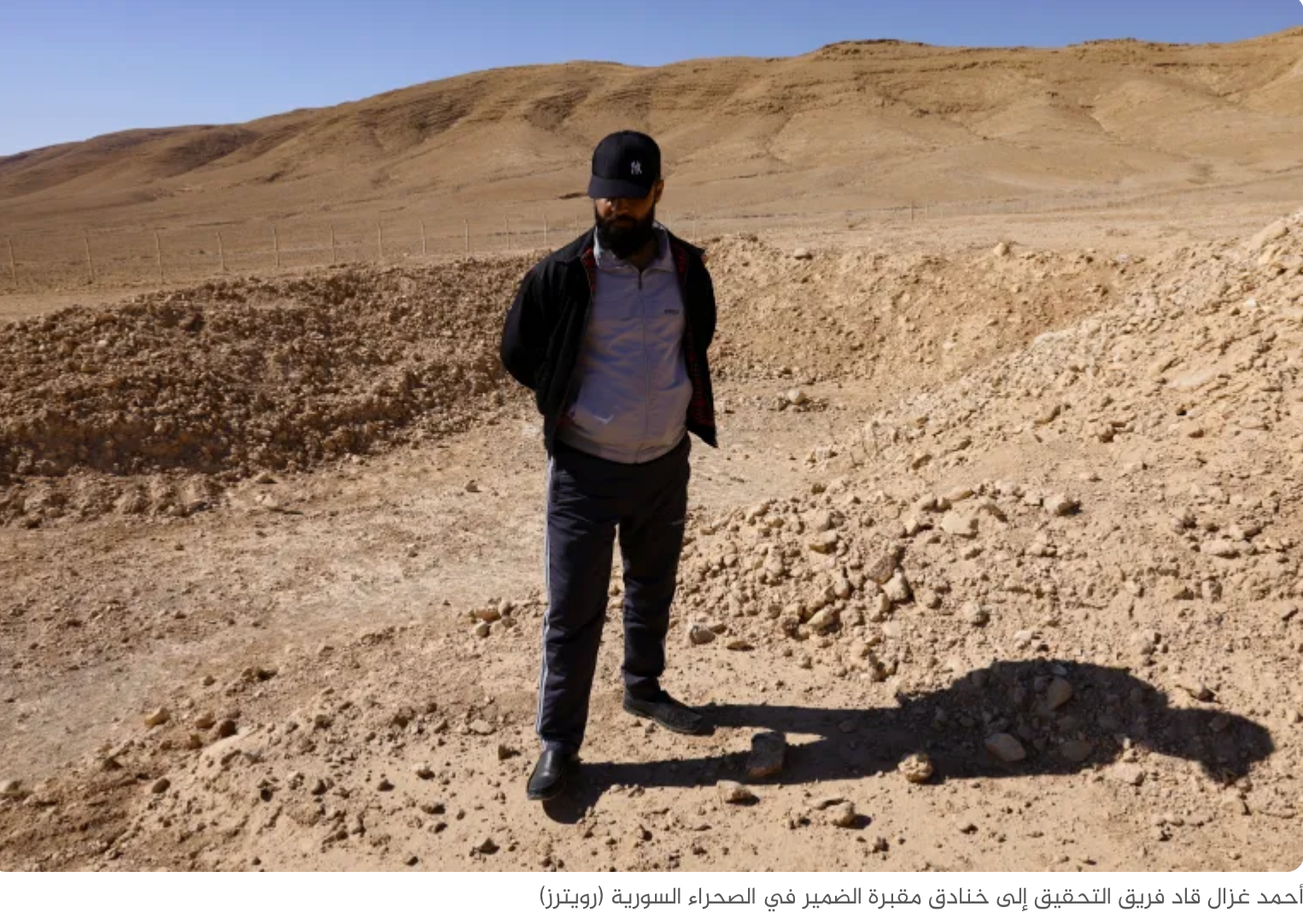
The first grave, in the town of Qutayfah near Damascus, contained trenches filled with people killed in prison, during interrogation, or in combat. Human rights activists had previously identified this mass grave, but a Reuters investigation revealed that the Assad regime secretly exhumed thousands of bodies from Qutayfah and transported them by truck to a new site in a military facility over an hour away in the desert near the city of Dumair.
Thirteen individuals with direct knowledge of the two-year effort to move the bodies confirmed the operation to Reuters. The newly discovered secret site is now among the largest known mass graves. With at least 34 trenches totaling two kilometers in length, the Dumair desert grave is one of the widest excavations carried out by Assad’s intelligence. Witness accounts and the size of the site suggest tens of thousands of bodies may have been buried there.
Syrian human rights organizations report that over 160,000 people disappeared at the hands of the deposed dictator’s massive security apparatus and are believed to be buried in dozens of mass graves he ordered to be dug. The government estimates that since the Assad family came to power in 1970, up to 300,000 people have gone missing. Organized excavations and DNA analysis could reveal the fates of these individuals and help begin healing one of Syria’s deepest historical wounds.
A former Republican Guard officer told Reuters that the idea of moving thousands of bodies began in late 2018, when Assad was close to achieving a military victory. The officer, who requested anonymity, said Assad hoped to regain international recognition after years of marginalization due to sanctions and allegations of atrocities. At that time, Assad was already accused of detaining thousands of Syrians, yet no independent Syrian groups or international organizations could access the prisons or mass graves.
The officer added that in a 2018 meeting with Russian intelligence, Assad was reassured that allies were working diligently to end his isolation, and the Russians advised him to conceal evidence of widespread human rights violations, particularly the arrests, mass graves, and chemical attacks.
‘The Master of Cleansing’
Reuters reviewed court testimonies and dozens of signed documents showing the chain of command from prison deathbeds to morgues. Many of those documents bore the official stamp of the same colonel who oversaw the two mass burial sites: Col. Mazen Ismandar.
Ismandar, affiliated with the Air Intelligence branch of the deposed Assad regime, was mentioned by the well-known “gravedigger.” He is a young Syrian who had worked as an administrative employee in Damascus’s municipal offices until, in 2011, Syrian intelligence officers forced him to work for them.
The man managed to escape Syria in 2018, carrying with him testimony of the systematic killings within the regime’s prisons, which had been concealed through mass graves. For security reasons, he used the alias “gravedigger” to protect himself and his family, who later joined him in Europe.
When he revealed his identity in April 2025, the “gravedigger” stated that Colonel Mazen Ismander and Colonel Ayman al-Hassan from Air Intelligence oversaw the burial in 2011 of dozens of bodies packed in bags in mass graves. He recalled meeting them at the Nadzha grave site in rural Damascus, where more than 400 bodies were buried in less than a week.
In an April 19, 2025, interview with Syria TV, the “gravedigger,” whose real name is Mohammed Afif Naifa, said that at the beginning of 2012, Colonel Mazen Ismander informed him of a move to a new grave in al-Qutayfah near the 3rd Military Division. The land there was easier to dig, and the trenches reached 200 meters in length.
According to a Reuters source from the 3rd Division of Assad’s former forces, Colonel Mazen Ismander was presented to the division as the “master of cleansing.”
Documents from 2018 reviewed by Reuters show that Ismander’s official post was Head of Budget in the Medical Services Directorate of the Syrian Army, a highly influential regime unit overseeing medical care for soldiers and anyone transferred to military hospitals, including thousands of detainees whose deaths were recorded there.
Both Anwar Haj Khalil, former head of the Qutayfah City Council, and a 3rd Division officer confirmed that Ismander, together with two commanders, designated a plot of army-controlled land in the city as a burial site for victims killed by security agencies.
Initially, bodies arrived in dozens at a time from two nearby hospitals, wrapped in shrouds labeled with names. Haj Khalil added that within months, he grew accustomed to midnight calls from Ismander ordering him to dispose of bodies coming from Tishreen Military Hospital outside Damascus and another officer coordinating bodies arriving from the notorious Saydnaya prison.
Processing mass graves after armed conflict poses legal and humanitarian challenges that require precise measures grounded in international humanitarian law, human rights law, and international criminal law. Such measures ensure respect for the dignity of the deceased, deliver justice for victims, and hold perpetrators accountable.
A Human Rights Watch report published on December 16, 2024, noted that one mass grave in Damascus and testimonies from local residents indicate the site was a scene of collective killings and possibly summary executions. The report called on Syrian authorities to secure, collect, and preserve evidence, including that found at mass graves, in government records, and in archives, which would be crucial for future criminal trials and legal proceedings.
The report emphasized that transitional authorities should ensure independent observers have full access to help preserve evidence—including the International, Impartial and Independent Mechanism for Syria and the UN Commission of Inquiry on Syria—while engaging Syrian human rights organizations in these efforts. Other states, it stressed, should also support the work of securing and safeguarding this evidence.
Judicial Acceptance
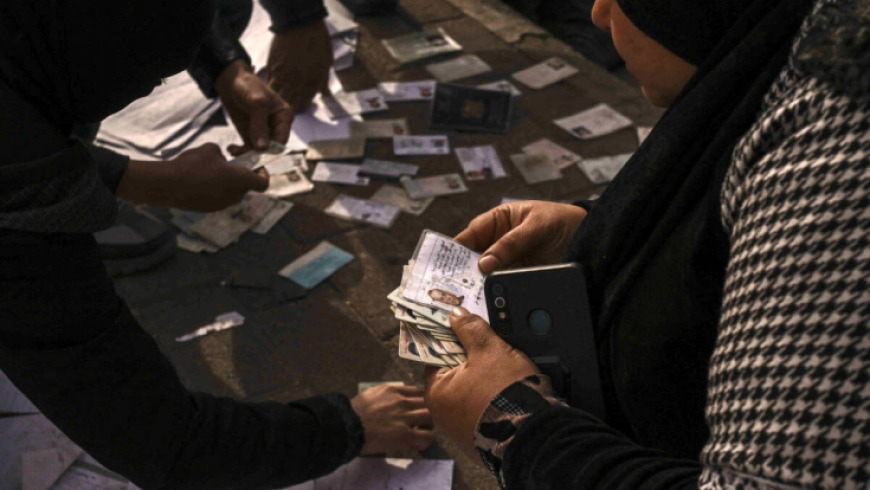
Syrian lawyer Anas Nabhan told Al-Estiklal that the discovery of mass graves constitutes material—and often strong—evidence of serious human rights violations and breaches of international law, including extrajudicial killings, enforced disappearances, torture, and more.
“Mass graves contain decisive evidence of war crimes or crimes against humanity, which ultimately helps document the evidence and make it legally admissible if Bashar al‑Assad and his officers are brought to trial, whether in Syria or abroad,” he said.
“Without these physical resources, accountability becomes far more difficult. Evidence from mass grave sites is used in investigations of crimes against humanity and war crimes. Human rights organizations emphasize that preserving these sites is essential for holding the former regime accountable.”
Nabhan also noted that uncovering mass graves under the previous Assad regime provides victims and their families with the chance to learn the fate of their loved ones, forming a cornerstone of transitional justice, including holding officials accountable and providing reparations.
He stressed that documenting mass graves in Syria helps break the cycle of impunity, which remains an urgent issue in the country today.
“Protecting these sites is critical at this stage in the development of the new Syrian state, before they can be tampered with or destroyed, which could erase evidence and key proof of crimes committed by the Assad regime to suppress the revolution,” Nabhan added.
“Preserving evidence and ensuring smooth investigations is crucial: if the graves are not immediately protected, the evidence could be damaged, altered, or destroyed, undermining the prospects for prosecution.”
Nabhan highlighted that the Bournemouth Protocol on the protection of mass graves serves as a key reference, providing clear guidance on how to safeguard mass graves while emphasizing their central role in achieving justice, reconciliation, and truth.
Sources
- Assad-era conspiracy to hide thousands of dead turned Syria’s remote desert into a mass grave
- Discovery of a Mass Grave in the Town of Assal al-Ward, Rural Damascus [Arabic]
- The 'Gravedigger' Lifts the Veil and Reveals the Secrets of Assad’s Mass Graves [Arabic]
- Syria: Mass Grave in Damascus Should be Protected, Investigated