Kharg: Could Trump Seize Iran’s Oil Island and Ignite a Wider Energy War?
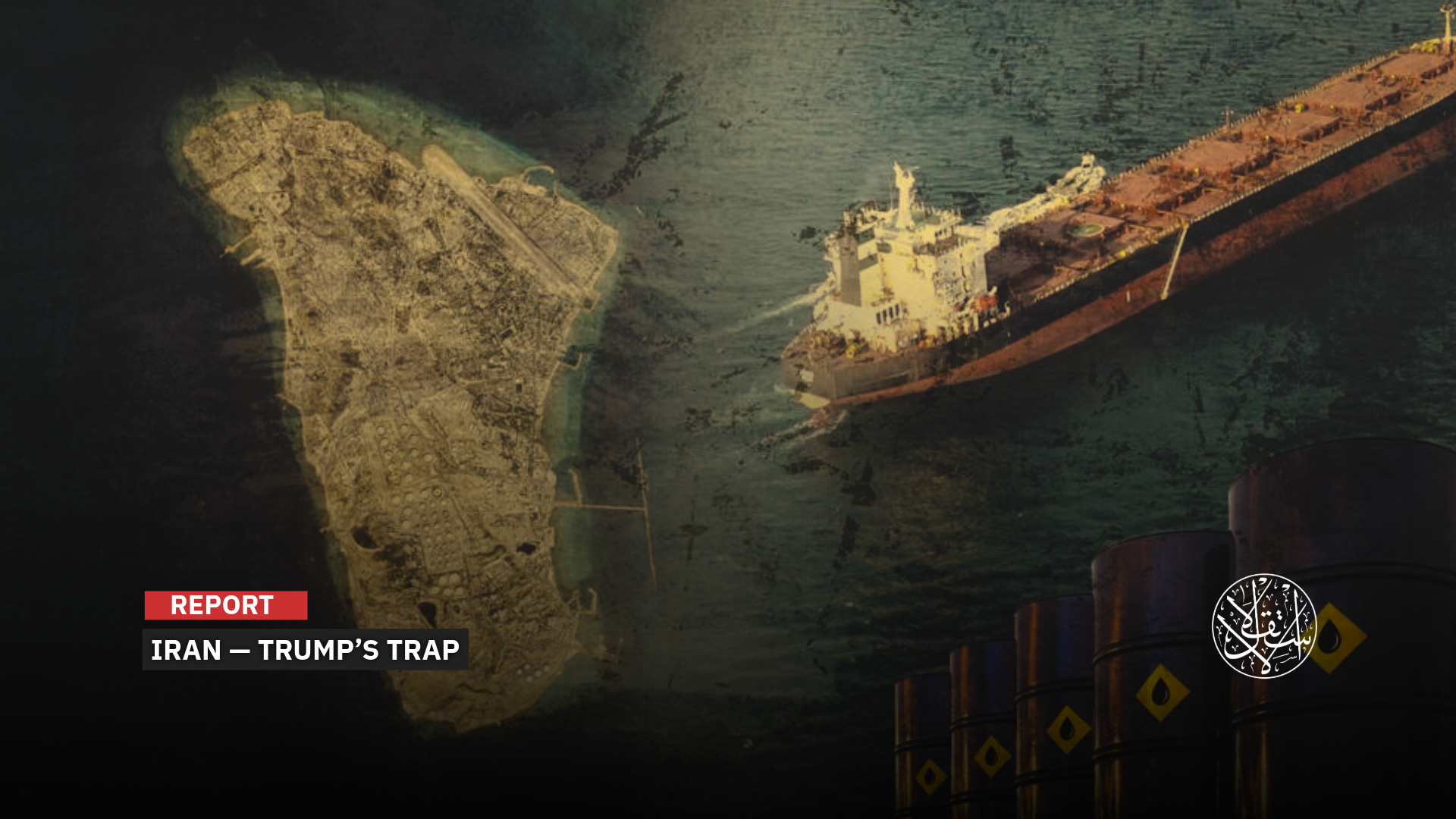
The island serves as Iran’s main oil lifeline.
Expert assessments published in Foreign Policy and Foreign Affairs suggest that the United States and “Israel” have stumbled into a crisis in their war on Iran that may be larger than either can manage. Analysts describe the situation confronting Donald Trump as a “trap,” one that echoes the kind of strategic miscalculation that once hastened the decline of the British Empire.
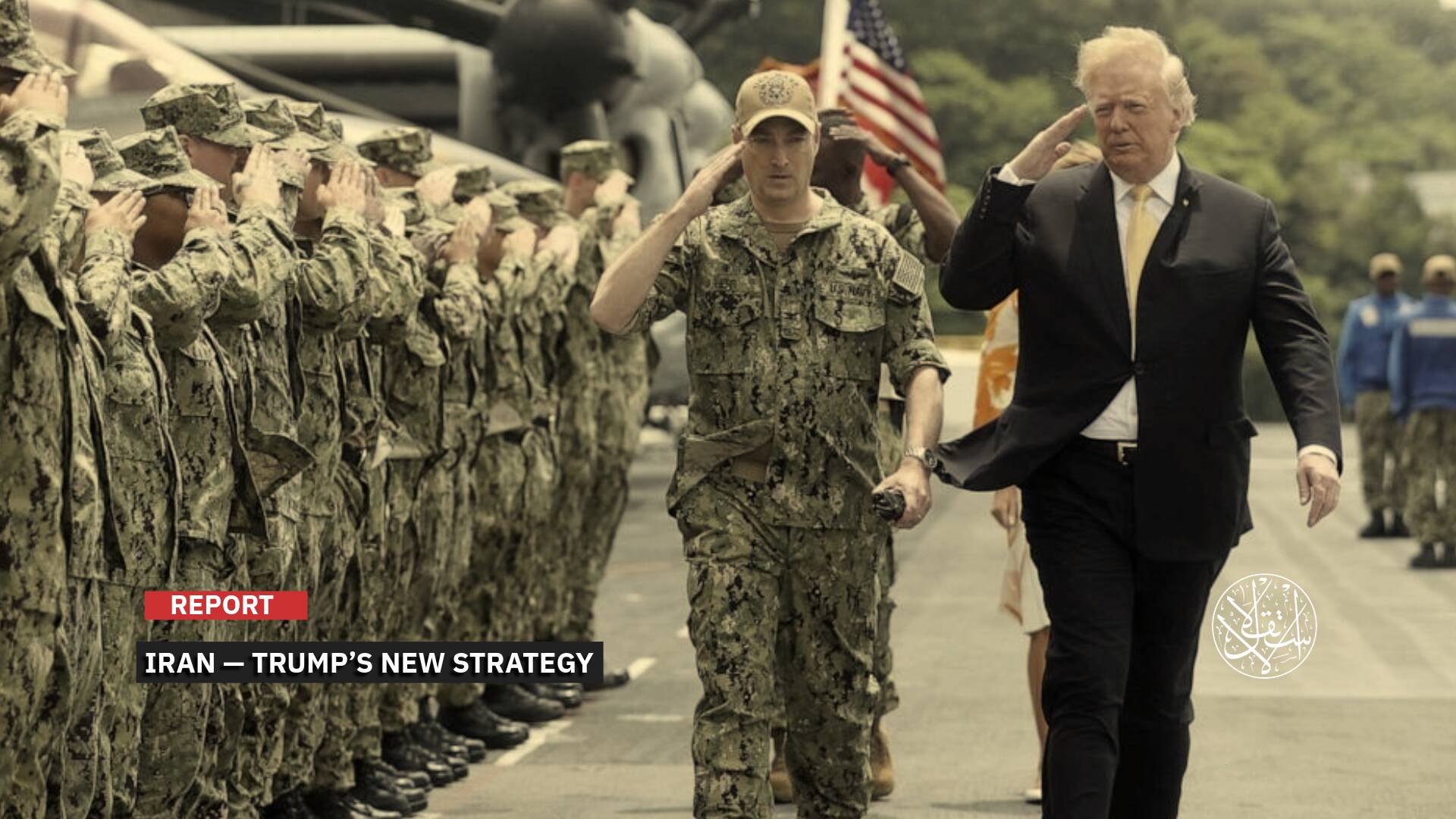
Facing that dilemma, Trump has turned to a sharper military escalation, a move that looks less like strategy than an attempt to break the deadlock. The aim appears clear: secure a decisive outcome that would allow him to declare an end to the war on his own terms and restore a sense of American authority.
That escalation has included expanding airstrikes, with U.S. forces targeting Iranian military sites on Kharg Island, a critical hub through which much of Iran’s oil exports flow. Trump has also signaled that oil infrastructure itself could become a target if the Strait of Hormuz remains closed to U.S. vessels and their allies.
But this path carries significant risks. Striking vital infrastructure could greatly escalate the war, threaten regional stability, and spill over economically into global oil markets, leaving the region on the brink of a military and energy crisis.
A Direct Target for Trump
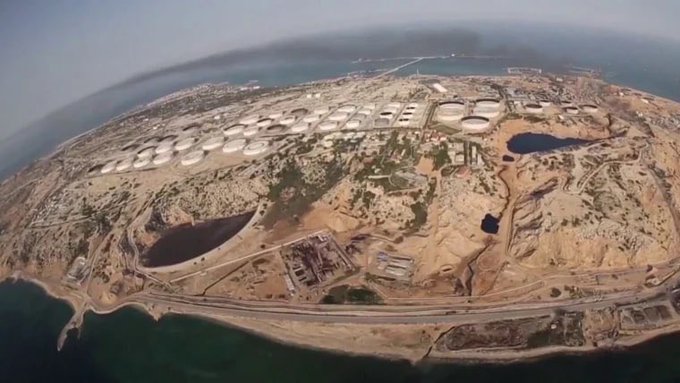
In an interview with NBC News on March 14, 2026, Donald Trump said U.S. strikes had “completely destroyed” much of Kharg Island, adding that he might hit it again “just for fun,” a remark signaling a more forceful escalation.
The message was hard to miss: Iran’s oil lifeline is now a direct target in Washington’s war on Tehran. Earlier, Trump had insisted U.S. attacks were limited to military sites, but he is now openly threatening to strike oil infrastructure—moves that could disrupt critical energy supplies not just for Iran but for global markets.
Western intelligence assessments suggest that targeting Kharg Island, which handles roughly 90 percent of Iran’s oil exports, could serve two main objectives.
The first is to apply maximum pressure on Tehran to force it to back down from closing the Strait of Hormuz by threatening export terminals and storage facilities after already hitting military positions on the island should Iran continue to obstruct tanker traffic.
The second points to a more far-reaching possibility: an attempt to seize control of the island and its export infrastructure, allowing Washington to exert leverage over a portion of Iran’s oil flows—potentially offsetting some of the economic and military costs of the war. The strikes on military sites could be an early signal of a broader scenario, one that might include a larger operation targeting export terminals while increasing pressure on the Iranian authorities.
But Iran’s response—threatening to strike oil facilities in the UAE and across the Gulf—raises the stakes even further, risking a wider conflict rather than containing it, as both sides dig in and show little willingness to step back or negotiate a de-escalation.
Kharg Island: What’s at Stake?
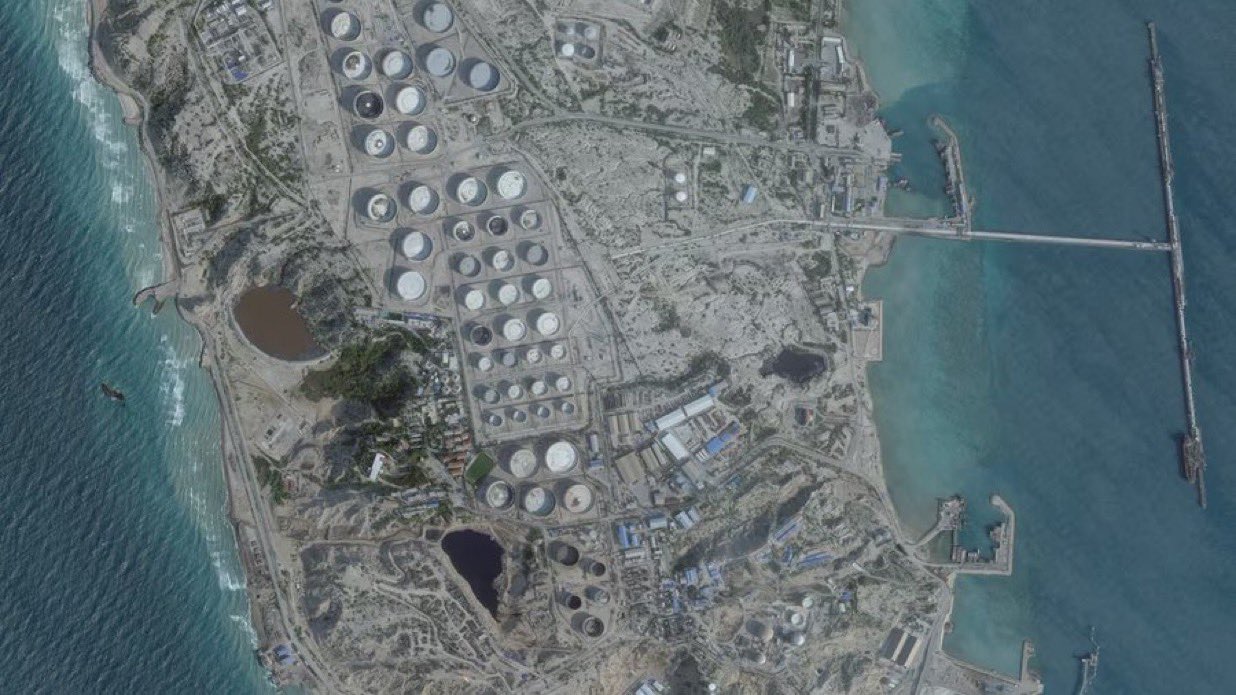
Kharg Island sits at the heart of Iran’s oil system, handling roughly 90 percent of the country’s exports. Located about 500 kilometers northwest of the Strait of Hormuz, any strike on its oil facilities would not just hit Iran’s economy, but risk triggering a global oil shock, driving up prices and potentially tipping markets into recession.
The island is Iran’s main oil artery and one of the most strategic and vital sites in its energy network, as the vast majority of Iranian oil exports pass through it.
Despite its small size, Kharg carries outsized weight. It hosts major infrastructure operated by Iran’s oil ministry, including production and export facilities, petrochemical plants, and large-scale storage and shipping hubs. Disrupting this network would have immediate consequences far beyond Iran, rippling through global energy markets.
Measuring just about 8 kilometers in length and 4 to 5 kilometers in width, the island’s deep waters allow it to accommodate the world’s largest oil tankers. It lies roughly 25 kilometers off Iran’s coast and about 55 kilometers northwest of Bushehr, exporting close to 950 million barrels annually with a loading capacity of up to 7 million barrels per day.
Oil arriving via pipelines from key offshore fields such as Abuzar, Forouzan, and Doroud is stored in massive tanks before being shipped to global markets, particularly in Asia. The island’s storage capacity exceeds 28 million barrels, supported by terminals capable of handling the largest crude carriers.
Kharg’s importance is not new. Before the 1950s, it had limited use, even serving as a site of political exile under the Shah. But by 1960, it had been transformed into Iran’s main export terminal through partnerships between the national oil company and international firms.
Its geopolitical significance is just as critical. Positioned near major oil fields and close to the Strait of Hormuz, one of the world’s most vital energy chokepoints, Kharg functions as the backbone of Iran’s oil economy. Any disruption there would effectively halt most of the country’s exports.
That centrality has made it a repeated target in the war. During the Iran-Iraq war, the island was bombed multiple times by Iraq, yet Iran managed to restore operations and continue exports.
Today, Kharg is heavily defended by Iran’s Revolutionary Guard Corps (IRGC), with air defense systems, anti-ship missiles, and fast attack boats protecting what is considered a strategic asset in any Gulf confrontation. These are among the targets Trump says U.S. forces have already struck.
IRGC has warned that any attack on the island would create a “new and harsh equation” in global energy markets, with direct consequences for oil prices and supply worldwide.
The Oil Lifeline
The United States has said its strikes on Kharg Island were limited to military infrastructure, targeting missile storage sites and naval mines while leaving the island’s economic facilities untouched.
That restraint appears deliberate. Hitting the military positions that protect the island, without targeting export terminals or storage tanks, reflects an understanding that damaging those assets would trigger severe economic fallout—not just for Iran, but for global markets—sending oil prices sharply higher. Reports indicate that oil loading operations at the island’s terminals continued even after the U.S. strikes.
Still, the calculus may be shifting. On March 16, 2026, Axios reported that U.S. officials said Trump is weighing the option of seizing Kharg Island with ground forces if the blockade of oil tankers in the Gulf persists.
The idea points to a more aggressive strategy: full control of the island could deliver what some in Washington see as a decisive economic blow to Iran by cutting off a critical source of revenue, especially as the continued disruption of the Strait of Hormuz makes a quick end to the war unlikely.
U.S. officials also say Washington is working to build an international coalition to reopen the strait. But with many countries reluctant to commit militarily, the possibility of a unilateral move, including a ground operation on the island, remains on the table.
That prospect carries serious risks. Deploying troops on Kharg could provoke Iranian retaliation against oil facilities and pipelines across the Gulf, particularly in Saudi Arabia, potentially widening the conflict.
At the same time, Iran appears to be shaping the flow of energy in its favor. Gulf exports are being constrained, while tankers carrying Iranian oil continue to move, ensuring supply to key buyers such as China and others.
Signs of a Possible Occupation
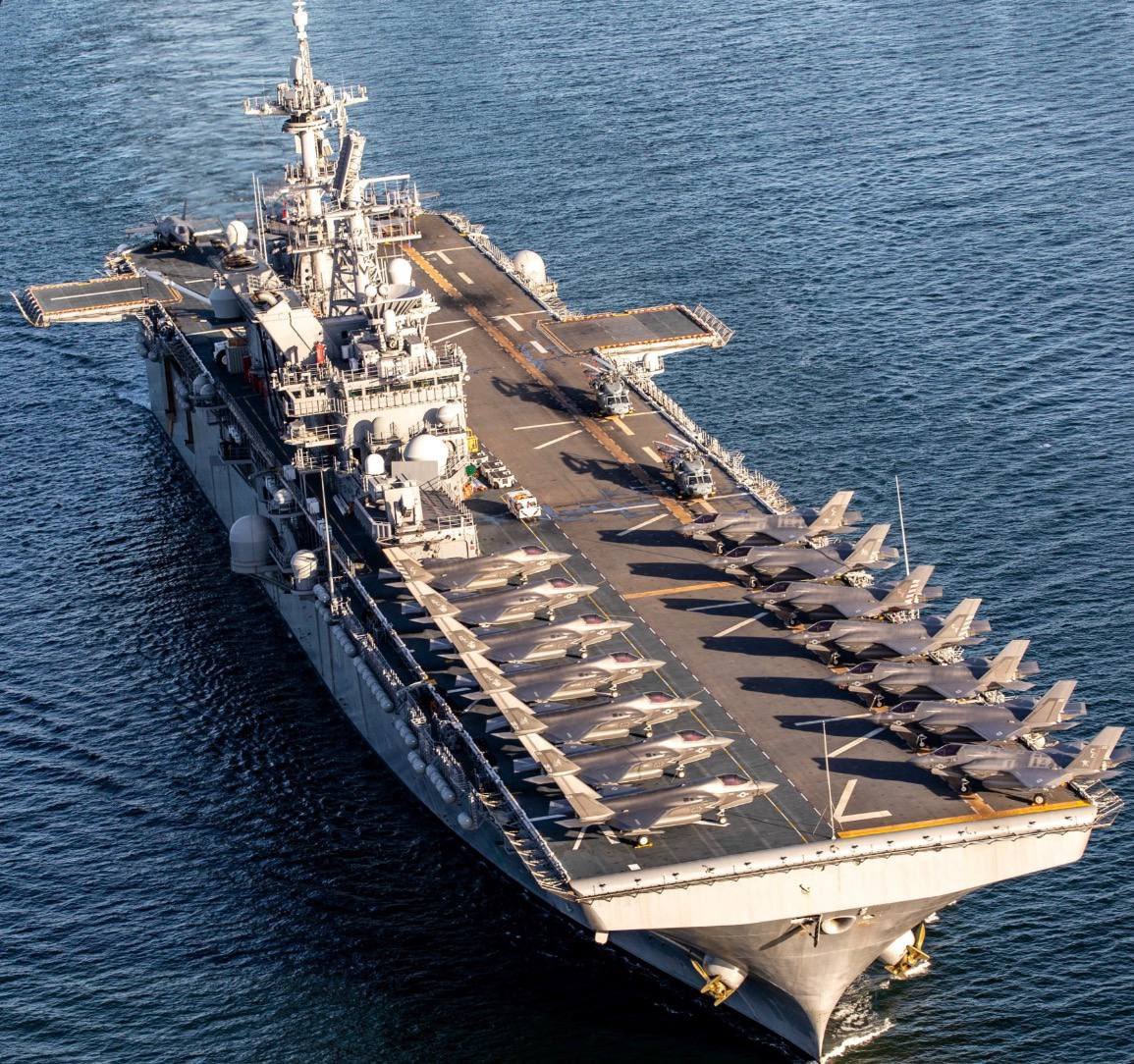
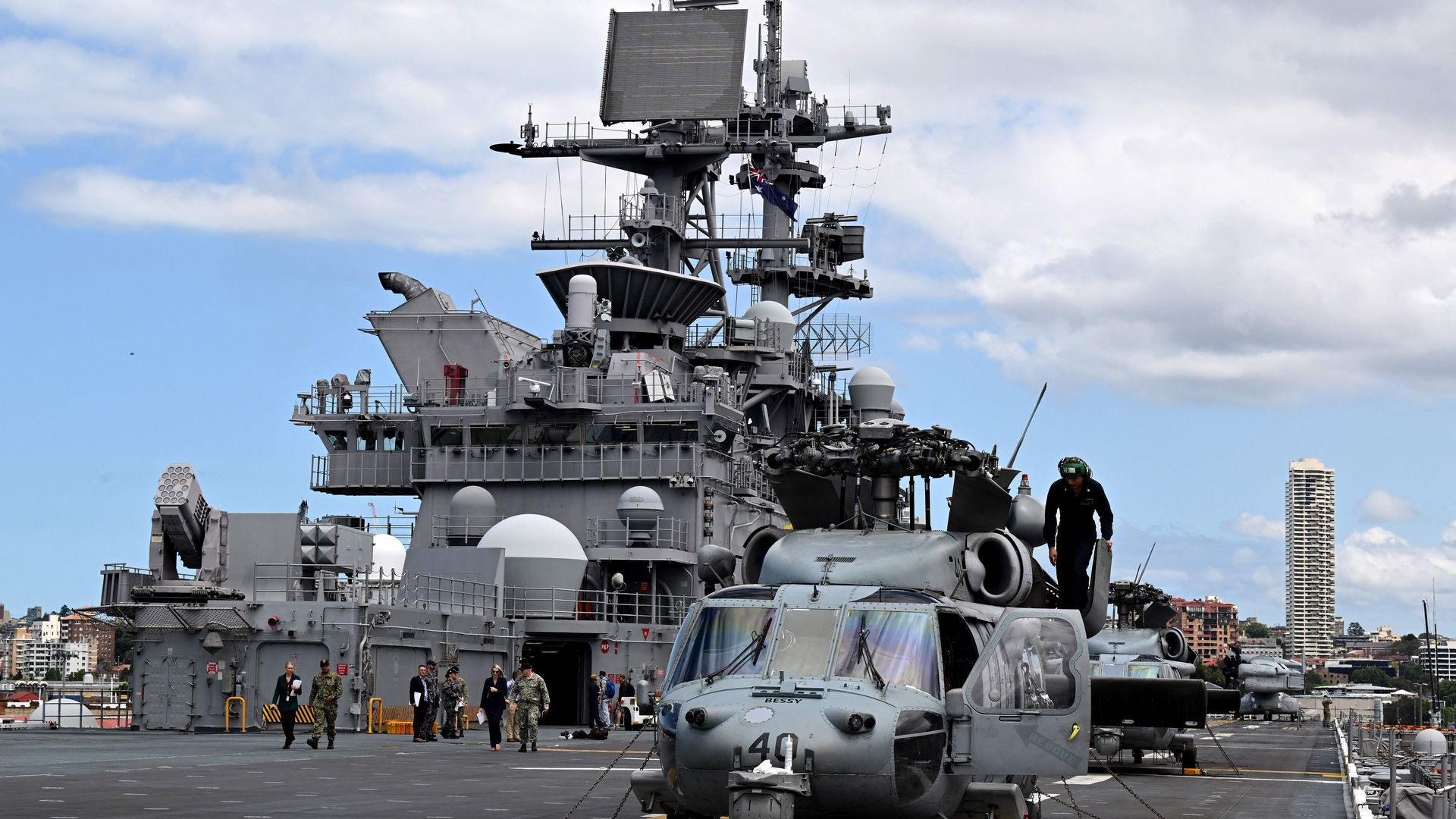
Analysts say the targeting of military bases and defense positions on Kharg Island could point to something larger: the early stages of a potential U.S. invasion. That possibility gained traction with the reported movement of the amphibious assault ship USS Tripoli toward Iranian waters, confirmed by satellite imagery from the European Copernicus program.
Such vessels are designed to deploy Marine forces in coastal assaults and long-range operations, making them central to any scenario involving a land intervention aimed at securing strategic sites like oil infrastructure.
The Pentagon has also deployed a Marine expeditionary unit of around 2,500 troops, a rapid response force trained for amphibious, coastal, and limited ground operations, typically used to capitalize on air and naval strikes.
At the same time, Israeli journalist Yossi Melman reported on March 14, 2026, what he described as an “air bridge,” with 12 transport aircraft arriving at Ben Gurion Airport from the United States, believed to be carrying ground forces as part of the broader war on Iran.
But any plan to seize the island carries serious risks. Fighting near oil terminals raises the risk of explosions and severe damage to critical infrastructure, potentially knocking Iranian oil out of global markets for an extended period and pushing prices to $150 a barrel or higher.
More dangerous still, a U.S. Israeli assault on Kharg Island could give Iran a pretext to strike oil facilities across the Gulf in retaliation, widening the war.
The official spokesperson for IRGC has already warned of attacks on Gulf energy infrastructure and port facilities, following reports that some of the strikes were launched from bases in Gulf countries, particularly the United Arab Emirates (UAE).
Iran has also threatened to target oil facilities in neighboring countries after the Israeli Occupation struck five energy sites in and around Tehran, carrying out a series of attacks, the most intense of which hit Dubai.
On March 15, 2026, IRGC’s spokesperson warned, “If you can handle oil at more than $200 a barrel, then keep playing this game.”
In response, U.S. Energy Secretary Chris Wright told CNN that the strikes on Iranian oil facilities were carried out by “Israel,” adding that the United States does not intend to target Iran’s energy infrastructure.
Experts caution that any escalation involving oil facilities on both sides could significantly widen the conflict and deepen U.S. involvement, with prices potentially surging to $200 a barrel. Such a spike could carry serious political consequences for Trump and the Republican Party ahead of the November 2026 midterm elections.
Global oil prices have already risen by about 40 percent since the start of the U.S.-Israeli war on Iran in late February 2026.
Washington’s Crisis
Across Washington, politicians and analysts have pointed to the shifting and often contradictory tone of Donald Trump’s statements on Iran as a sign of something deeper: a growing sense that the United States, whether directly or through “Israel,” is entangled in a crisis larger than it can easily control.
If Trump decides to end the war as it stands, Iran, despite the destruction it has suffered, would have won. It would retain its ability to pressure the Strait of Hormuz and exert influence over the Gulf’s economic and security architecture.
But escalation carries its own risks. Striking oil terminals on Kharg Island or sending in ground forces could pull the United States into a prolonged war, repeating the mistakes of George W. Bush in Iraq, a war Trump himself once criticized.
Robert Pape, a political scientist writing in Foreign Affairs, captured part of the bind. Iran’s actions, he argued, are not scattered retaliation or the flailing of a weakened state, but a deliberate strategy of horizontal escalation designed to widen the conflict and extend its timeline. In that framework, further escalation, especially targeting oil, could ultimately work against Trump.
“The escalation favors Iran,” Pape wrote, describing a strategy often used by weaker actors to reshape the calculations of stronger adversaries. He explained that U.S. opponents responded to American air power displays with horizontal escalation, which in Vietnam led to U.S. defeat and in Serbia frustrated American military objectives, triggering the worst wave of ethnic cleansing in Europe since World War II.
Rather than confronting a stronger opponent head on, Iran is expanding the field of risk, drawing in more countries, economic sectors, and political pressures. It has already extended the conflict beyond its borders, launching strikes in at least nine countries, many hosting U.S. forces, sending a clear message: the war will not remain contained.
The consequences are no longer confined to battlefields. With airports closing, commercial assets damaged, and energy and insurance markets disrupted, Gulf leaders have found themselves reassuring investors and foreign visitors as much as managing security.
A Reuters report on March 11 described Iran’s use of what it called the oil lifeline as a strategic lever, effectively turning the Strait of Hormuz into a tool of deterrence against Western military dominance. According to regional sources cited in the report, Tehran has devised its own weapon, threatening the flow of global oil to offset its conventional disadvantages.
At its core, Iran’s approach reflects an acknowledgment of military limits. Instead of seeking outright victory, it is applying pressure where it matters most: energy flows and economic stability, combined with asymmetric attacks on U.S. assets across the region.
The goal, analysts say, is to generate enough economic strain, both inside Iran and globally, to force Trump to reconsider the war. As Michael Eisenstadt of the Washington Institute put it, this is a conflict defined by asymmetry, one in which Iran is capable of producing outsized effects despite its constraints.
Sources
- U.S. sending USS Tripoli, thousands of Marines to Middle East
- How the Strait of Hormuz closure affects global oil supply
- America’s Imperial Trap in Iran
- Trump eyes "Hormuz Coalition," seizure of Iran's Kharg Island oil hub
- Why Escalation Favors Iran
- Iran threatens retaliatory attacks on oil facilities across Gulf after Israeli strikes