Kayan University: What Does El-Sisi's Military's Move into Civilian Education Mean?
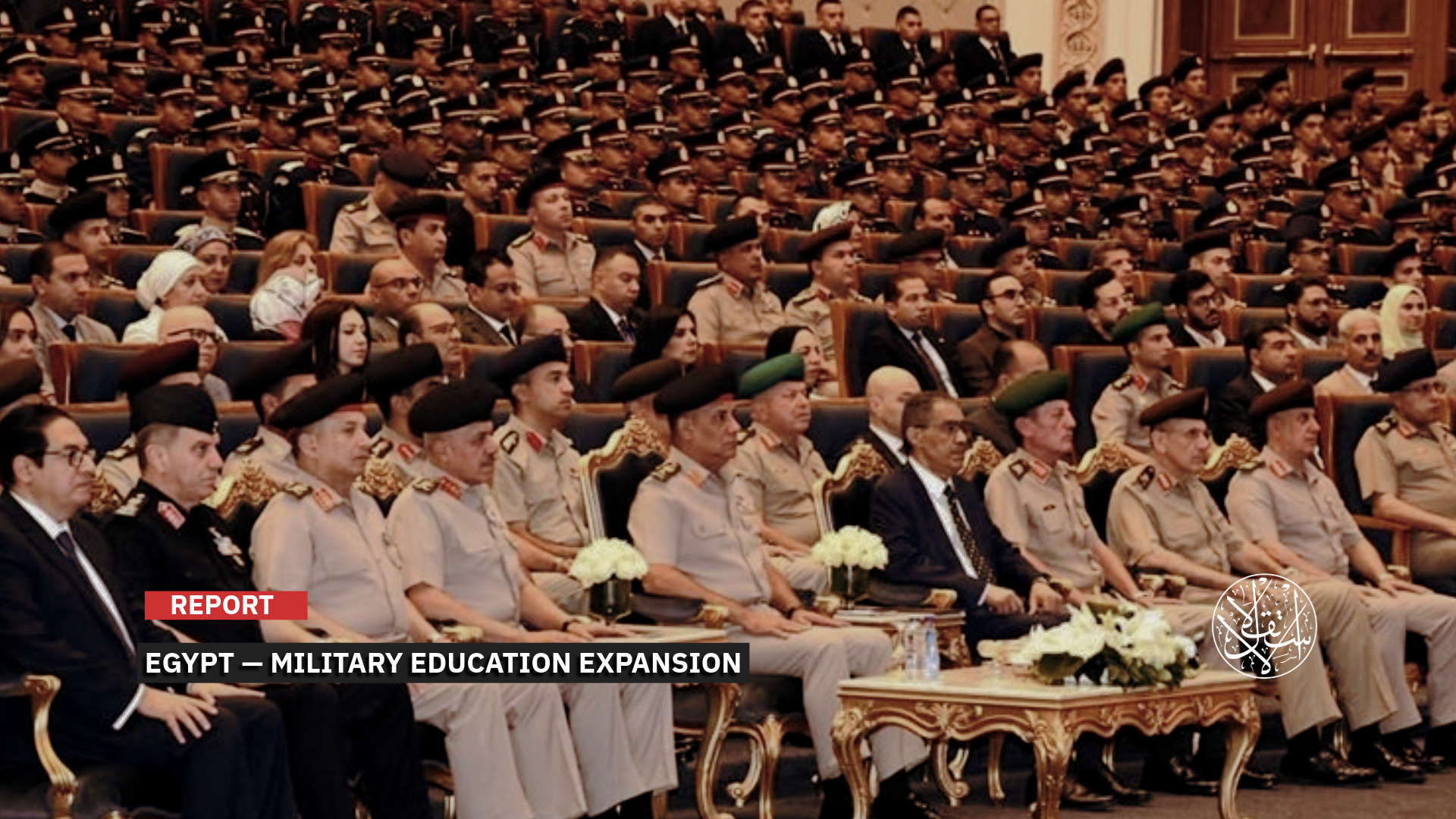
The decision represents a notable shift in the military establishment's role within the civilian education sector.
On July 10, the Egyptian Armed Forces announced, for the first time, the launch of Kayan University as a civilian university, opening applications for its inaugural class under a new admissions system that also includes the Military Academy, military colleges, health institutes, and military sports schools. The university is scheduled to begin classes in October 2026 at its campus in New Alamein City.
The decision marks a notable shift in the military establishment's role in the education sector. Rather than limiting its activities to training military officers and personnel, the Armed Forces have expanded into civilian higher education by establishing a university that will admit graduates of both general secondary schools and al-Azhar secondary schools to study civilian disciplines, including medicine, engineering, pharmacy, and artificial intelligence.
In doing so, the military has entered a sector that has historically fallen under the jurisdiction of universities affiliated with the Ministry of Higher Education, alongside public and private higher education institutions.
The announcement has also revived a longstanding debate over the limits of the military's role in civilian life, particularly as the Armed Forces have significantly expanded their presence over the past decade across sectors including the economy, housing, infrastructure, industry, and public services, and now into higher education.
It has also raised questions about whether Kayan University is simply another addition to Egypt's higher education system or whether it reflects a new phase in the redistribution of roles between the military establishment and civilian state institutions.
These questions become even more significant when viewed in their broader context. In recent years, the Military Academy has expanded its role to include training employees of the state's administrative apparatus.
However, the debate surrounding the new university has extended beyond its affiliation with the Armed Forces to encompass its name, location, admissions process, and the broader implications of the military's entry into the higher education market at a time when the sector is witnessing rapid growth in private and non-profit national universities, while criticism of the state of public higher education continues.

Why Kayan?
The announcement of Kayan University was not merely the unveiling of a new university project; it was accompanied by questions that emerged even before the institution had begun operating.
Beyond the fact that it is the first civilian university affiliated with the Egyptian Armed Forces, the announcement sparked debate over the nature of the new institution, the scope of its role, and even the name chosen for it.
The university is located in New Alamein City, on the Mediterranean coastal highway between Alexandria and Marsa Matrouh, adjacent to Alamein International University and the Arab Academy for Science, Technology and Maritime Transport.
The university comprises faculties of medicine, dentistry, physical therapy, pharmacy, engineering, computer science, and artificial intelligence, in addition to a university hospital and centers for simulation, scientific research, and professional training.
Despite the official announcement, key details remain undisclosed, including the project's total cost, the targeted student enrollment, tuition fees, and funding mechanism. The university's affiliation with the Armed Forces had also not been made explicit prior to the official announcement.
Government officials had previously spoken of plans to establish a private university in New Alamein City without identifying the body that would oversee its administration.
What attracted the greatest attention, however, was the university's name. In Arabic political discourse, the word Kayan (literally, "entity") carries political connotations because it has long been associated with the expression "the Zionist entity," a term widely used in reference to “Israel”.
This prompted extensive debate on social media platforms as well as among researchers and political observers.
Some argued that the name was simply a linguistic choice devoid of political significance, while others contended that it warranted closer scrutiny given the term's longstanding association with Arab political discourse.
The name, however, was only one aspect of the controversy. Critics of the project argue that the central issue is not the university's name but rather the institution behind its establishment.
In their view, Kayan University is more than just a new educational institution; it reflects the military establishment's entry into a domain that had, for decades, been the preserve of civilian universities.
They argue that this development raises broader questions about the nature of this shift and how the Egyptian military came to assume such a prominent role within the higher education sector.
The Higher Education Sector
Kayan University did not emerge as a sudden development; rather, it came as the culmination of a gradual expansion of the military establishment’s role in state sectors since the July 3, 2013 coup.
Over more than a decade, the military’s presence has extended beyond defense industries and traditional military duties to include housing projects, roads, agriculture, industry, and services, and now into the civilian higher education sector.
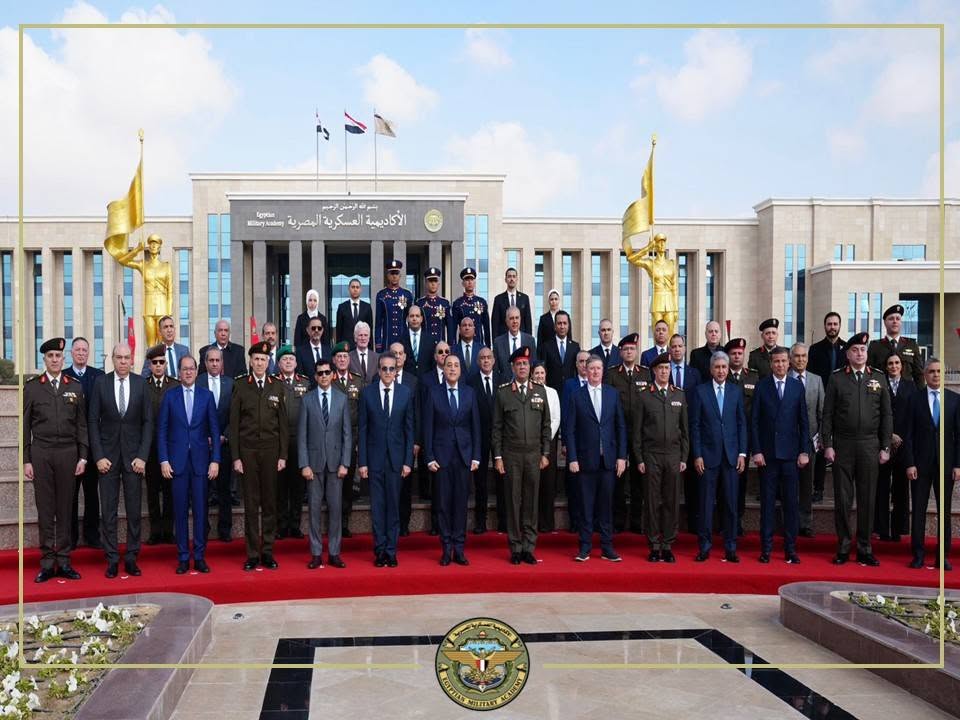
In the education sector specifically, signs of this shift appeared before the announcement of Kayan University. The Egyptian Military Academy was no longer limited to training officers; in recent years, its role expanded to include the training and qualification of newly appointed government employees, executive leaders, and personnel working in a number of ministries and government agencies.
Observers viewed this as an expansion of the military establishment’s presence within the state’s administrative apparatus.
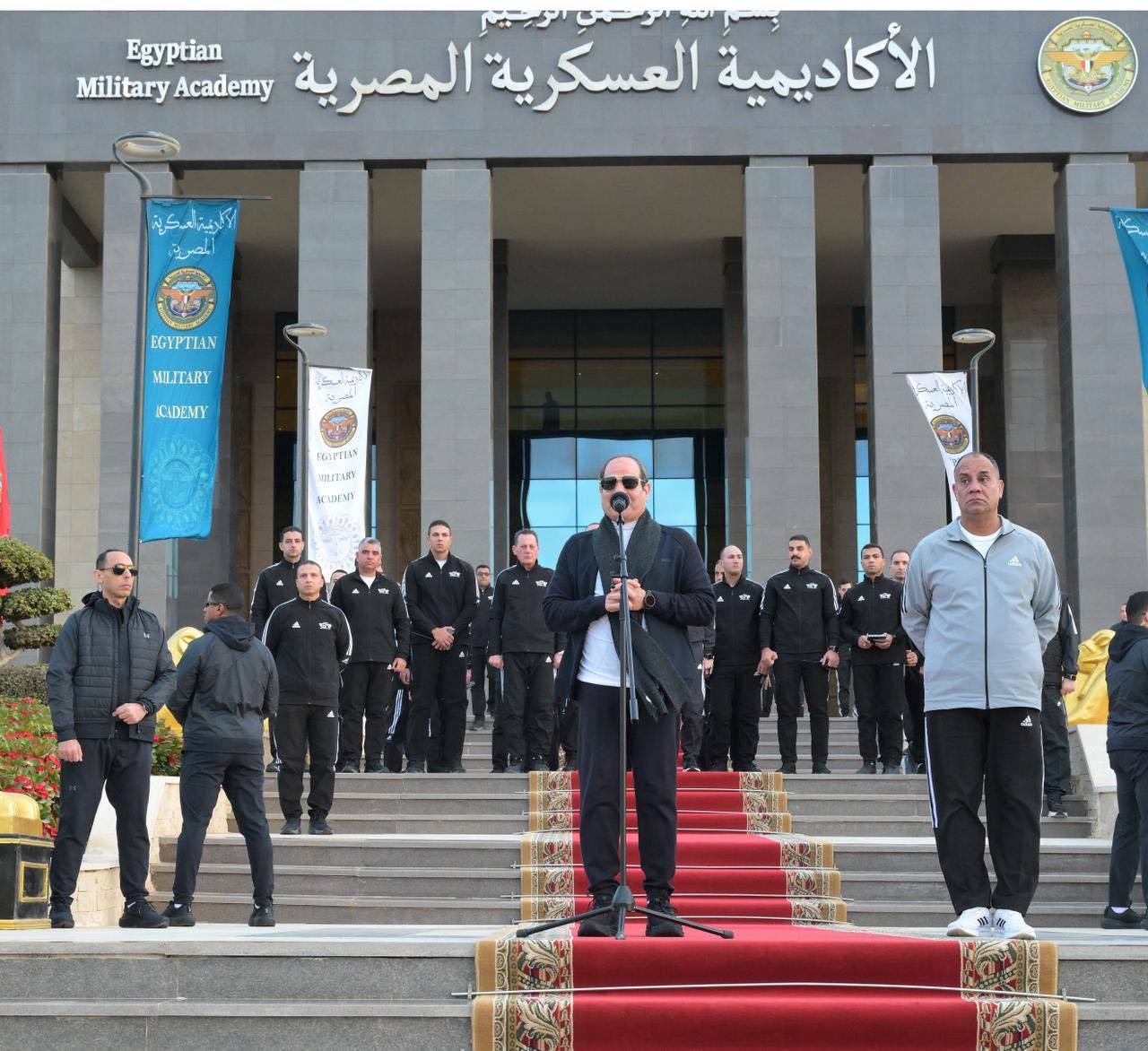
January 2026 represented a new milestone in this trajectory, when Egyptian President Abdel Fattah el-Sisi, during a visit to the Military Academy, announced the establishment of four military colleges specializing in medicine, engineering, software, and physical therapy.
He also announced plans to consider establishing additional colleges offering civilian disciplines, such as political science and economics, within the military education system, under military supervision and with curricula combining academic study and military training.
On the same occasion, el-Sisi described the education provided by the Military Academy as “the real education,” comments that sparked broad debate over the status of civilian education in Egypt.
Less than six months later, the announcement of Kayan University added a new dimension to this trajectory. Rather than simply introducing civilian fields of study into military institutions, the military establishment itself entered the civilian education system through a university that accepts general secondary school and al-Azhar secondary school graduates and competes with public and private universities in high-demand fields such as medicine, engineering, pharmacy, and artificial intelligence.
In this context, American researcher Robert Springborg, in his study “Rewarding Failure,” argues that this type of expansion is not limited to economic or security influence but represents an extension of what he describes as the military establishment’s “soft power”, through expanding its presence in sectors such as education, media, and public services, thereby strengthening the connection between broad segments of society and institutions managed by the armed forces.
Where Does Egypt’s Experiment Stand?
The existence of military educational institutions in several countries around the world is often cited to justify the Egyptian military’s entry into the education sector.
However, a comparison shows that the difference does not lie in the existence of military-affiliated universities, but rather in the nature of the role they perform.
The United States, for example, has long-established military institutions such as the United States Military Academy at West Point and the United States Naval Academy, while Britain has the Royal Military Academy Sandhurst, and France operates the Ecole Speciale Militaire de Saint-Cyr.
However, these institutions were established for a specific purpose: training officers and preparing military leaders. They do not operate as civilian universities competing with state-run or private higher education institutions.
The same applies, though in a different form, to China. Despite the broad role of the state and the military within its institutions, the People’s Liberation Army operates specialized universities and institutes in fields such as medicine, engineering, and military sciences.
These institutions serve the needs of the defense system and military research and do not admit students as civilian universities offering general higher education across a wide range of disciplines.
For this reason, a number of researchers argue that the distinctiveness of the Egyptian case is not related to the military’s ownership of educational institutions, but rather to its entry into the civilian education market itself.
Kayan University is not intended to train officers or military specialists; instead, it competes with public and private universities in attracting general secondary school graduates, making it closer to a civilian higher education institution despite being affiliated with the Armed Forces.
In this context, American researcher Robert Springborg argues that military professionalism is linked to focusing the armed forces’ human, financial, and organizational resources on their primary mission: protecting the state and defending its national security.
He warns that directing these resources toward managing civilian sectors, such as education, may lead to overlapping responsibilities and weaken the military institution’s focus on its defense role, even if the objective of such projects is to generate economic or developmental benefits.

A Deeper-Rooted Crisis
The establishment of Kayan University comes at a time when Egypt’s higher education sector is experiencing unprecedented expansion in the number of universities.
According to data from the Ministry of Higher Education and the Central Agency for Public Mobilization and Statistics (CAPMAS), the country has around 135 universities, including public, national (non-profit), private, and technological universities, as well as branches of foreign and international universities. These institutions enrolled nearly 4 million students during the 2024/2025 academic year.
The data shows that the majority of students still rely on public education. Around 59.2 percent of students are enrolled in public universities and al-Azhar University, compared with only 12.4 percent in private, national, and foreign university branches, while the remainder are distributed among higher institutes, technological institutions, and academies.
This reflects the continued reliance of Egyptian families on public universities, despite the significant expansion of fee-based educational institutions in recent years.
Within this context, the state has strongly promoted the establishment of national universities, which began in September 2020 as a model positioned between public and private universities.
The sector later expanded with the launch of additional institutions, most recently the decision to establish the International University of Sciences, Arts, and Technology in the New Administrative Capital in January 2026.
With Kayan University entering this landscape, the Armed Forces become a new player in a market that is already witnessing growing competition to attract students in the most sought-after fields, such as medicine, dentistry, pharmacy, engineering, and artificial intelligence.
However, the debate is not limited to the number of universities; it also extends to education spending priorities. While the Egyptian Constitution stipulates allocating a minimum of 4 percent of GDP to pre-university education and 2 percent to higher education, the Egyptian Initiative for Personal Rights (EIPR) argues that actual spending remains below these levels when measured as a share of GDP, despite increases in nominal allocations in the state budget.
Similarly, Human Rights Watch, in a report released in early 2026, stated that the Egyptian government does not allocate sufficient spending to the education and healthcare sectors in line with its constitutional and international obligations.
Against this backdrop, observers argue that the debate surrounding Kayan University goes beyond the establishment of a new educational institution.
It raises broader questions about the nature of the relationship between the military establishment and civilian state institutions, the limits of each side’s role, and the priorities for reforming Egypt’s education system.
While the government views the project as a new addition to the higher education system, critics see it as reflecting the continued expansion of the military establishment’s presence in traditionally civilian sectors.
This makes the controversy surrounding the university likely to continue as part of a wider debate over the future management of civilian sectors in the country.