How Women Buy Their ‘Honor’ for Few Dollars?

Virginity is part of Human existence in the world as it is part of his embodied sexual subjects. However, in most Middle Eastern countries, virginity is more than the presence of a hymen, it is actually the mirror reflecting the honor of many conservative families, and its loss is directly related to first vaginal intercourse.
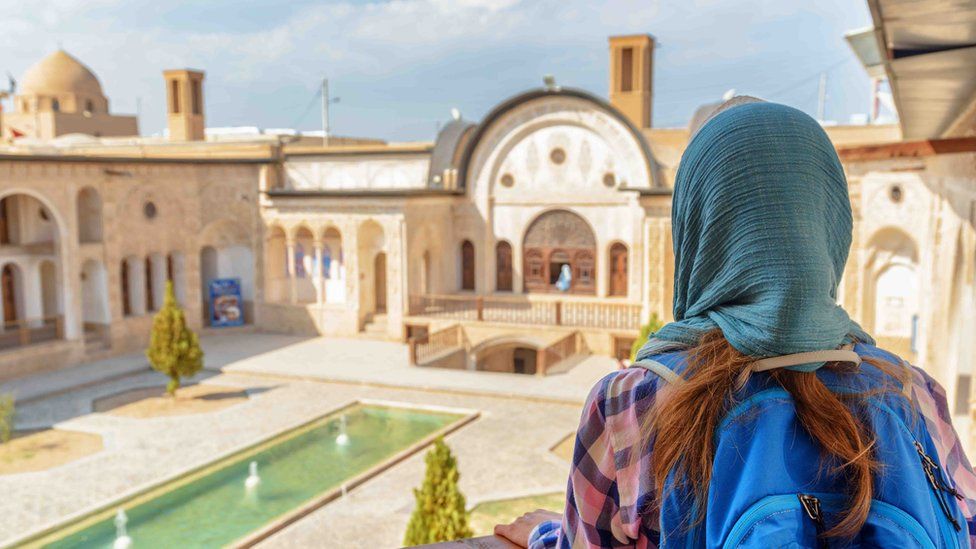
Fear of being killed by their families or rejected by society, they resort to faking their virginity through hymenoplasty.
This report will shed light on virginity as the product of social concepts that are not supported by biological truth and show how conservative societies still believe that "pure" women are only those who protect their hymen until they get married, pushing many to hymenoplasty.
Virginity Test First!
Across the Middle East and North Africa, virginity has been the pillar of a culture that puts considerable importance on female modesty and purity, sometimes to the point of ordering a virginity certificate before marrying to preserve a family's honor, a practice that the World Health Organization (WHO) considers to be against human rights.
After requesting anonymity, Zineb, as we named her, told Al-Estiklal that her marriage was a nightmare, saying that her husband had become crazy the moment he discovered she was not a virgin and threatened to kill her.
"It was our first night together, he was yelling, he was completely mad. I couldn't get what's wrong with him until I realized that there were no bloodstains; he said nobody would marry me if they knew the truth."
"I said I had never had intercourse before. But he didn't believe me and asked me to get a virginity certificate," she added.
"I went to the doctor just to prove to the whole world, especially my family, that I've never had sex before marriage, and the bloodstains won't define who I really am."
Zineb's certificate stated that her hymen was elastic, which means she might not bleed after sexual intercourse.
According to the United Nations definition, virginity testing "is a gynecological inspection of female genitalia carried out in the false belief that it can reliably determine whether a woman or girl has had vaginal intercourse."
Accordingly, these tests can take many forms, from physical examinations of the condition of the hymen to the wedding night ritual, in which a bloodstained cloth is expected to be shown to the bride and groom's families.
Although these supposed proofs lack scientific arguments, millions worldwide still believe that a woman's sexual history is written in an anatomical manner on her body, specifically on the membrane of her vagina and that absolutely all women bleed the first time they have sex.
False Assumptions
What does losing virginity mean? It is somehow created to talk about never having sex, but a gynecologist, refusing to mention her name, explained to Al-Estiklal that the concept itself is tricky since people define sex in different ways.
"A girl can be sexually active without losing virginity, and vice versa, so first of all, let's make things clear, losing virginity does not necessarily mean that the girl had previous sexual relationships before marriage. She can be a victim of rape, she may be born without a hymen, yes," she said.
"Second, the appearance of bloodstains after the first vaginal intercourse means that the hymen is torn, but this is not a medical condition or a reference to virginity. Women with elastic hymens, for example, don't bleed when having sexual intercourse."
The doctor continued to say that conservative societies, like most Arab countries, consider virginity as a measure of someone's worth or virtue.
"So, a non-intact or stretched hymen is not automatically an indication of past sexual activities nor is it a given that the hymen will bleed after first sexual intercourse; relatively few blood vessels are unlikely to cause significant bleeding."
The doctor stressed that women could easily lose their virginity without having sex through many activities like horse riding and other sports.
WHO also said on many occasions that bleeding is not a reliable indication of intercourse, stressing that virginity testing is "medically unnecessary, often times painful, humiliating and traumatic, and it is a form of violence against women and girls."
October 17, 2018, WHO, UN Human Rights, and UN Women issued a statement in which they called for the elimination of virginity tests that blight the lives of millions, emphasizing that there is no examination proving a girl or woman has had sex, and the presence of the hymen cannot confirm whether they are sexually active or not.
Virginity For Sale
Bleeding after sex on their wedding night is considered an essential sign to know whether the brides were virgins or not. In conservative cultures—like Iraq, Morocco, Iran, and Turkiye—girls who "lose their virginity" before marrying are afraid of being rejected by their society, and sometimes they are threatened to be killed to regain their families' honor. This form of honor-based abuse is pushing many girls to "repair" their hymen through hymenoplasty. A source close to Al-Estiklal confirmed that he was asked to buy 5000 artificial hymen kits for only $1 per piece and sell them to the Middle East markets. He said that "female virginity has controlled the lives of women for centuries, and a blood stain on the sheet is still the expectation in many cultures on wedding nights."

"From $1 in China to around $600 in Turkiye, girls can undergo a hymenoplasty surgery to reconstruct the hymen. I said Turkiye because I have an idea about the surgery cost there. This is nearly the average cost in many conservative countries."
Young women and girls have found a way to escape social laws and customs through "buying virginity."
The BBC interviewed Aleena, after changing her name, who said she was raped and then, as a teenager, faced years of pressure from her family to undergo surgery.
"It wasn't something I felt like I had a choice over, it was always put on me as if this was the only option and this is something you can do to fit back in," she said.
"I felt very, very alone. I felt guilty if I didn't do it. I felt it was a massive weight on my shoulders. I didn't feel like I had a choice."
Aleena refused to have the surgery, and to escape the situation she married someone "who did not care that her hymen was not intact."
She was proud of her courage not to go through with the procedure, but so many others couldn't resist.
Executive director at Iranian & Kurdish Women's Rights Organization, Diana Nammi, called for banning such surgeries saying: "Every woman and girl who faces this invasive surgery, it is under duress—direct or indirect—to present as a 'virgin' and in many cases, it is carried out to enable a forced marriage, organized by her family.
"Hymenoplasty causes trauma, and in around half of the cases, it fails to make the woman or girl bleed the next time she has intercourse, leaving her highly vulnerable to 'honor'-based abuse or even 'honor' killing."