How the Security Documents Scandals Led to Unprecedented Tensions in 'Israel'
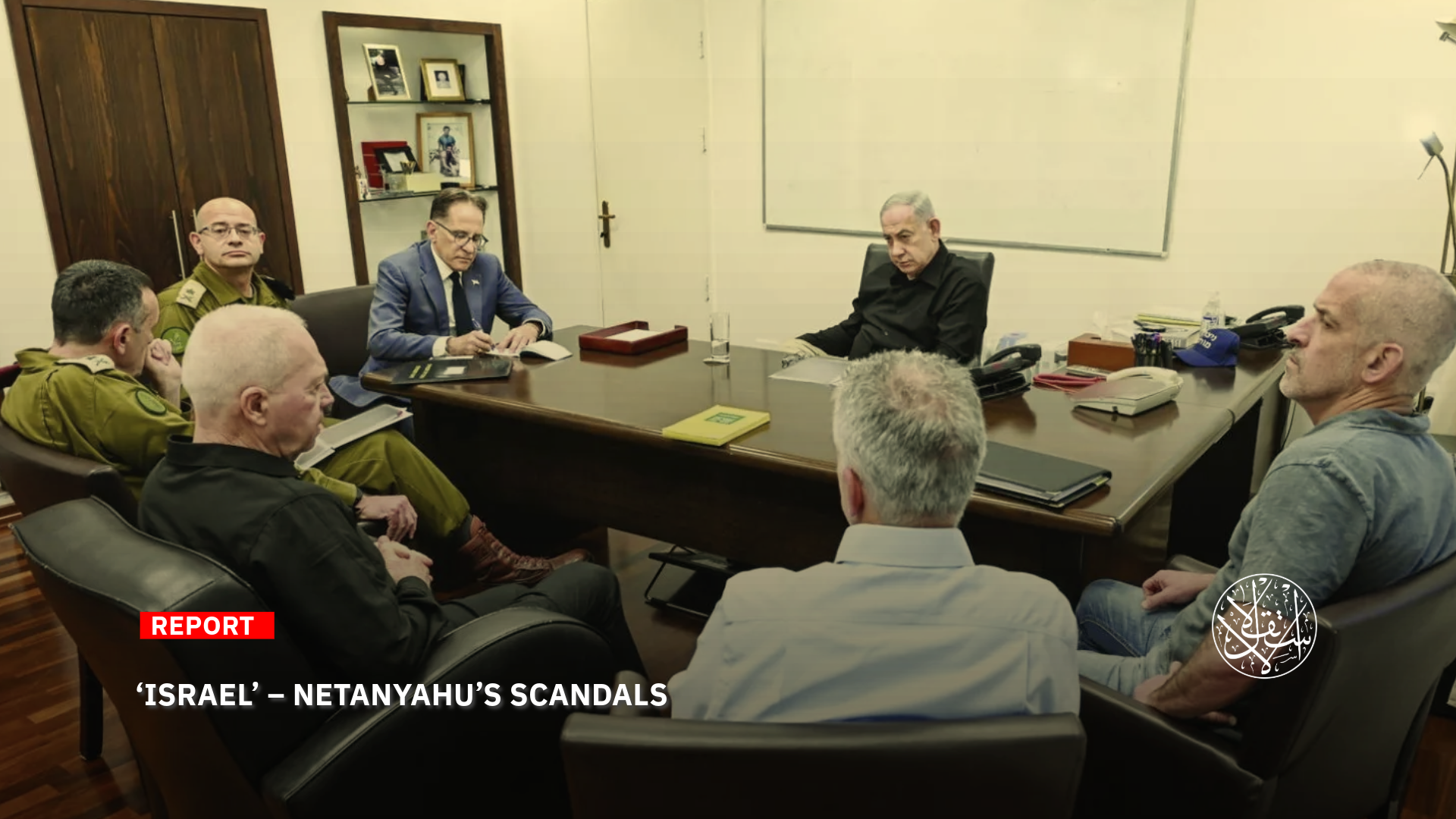
“Israeli analysts described Netanyahu as Israel’s biggest leaker.”
The repercussions of the leaks scandal that hit Israeli Prime Minister Benjamin Netanyahu’s office this month are still reverberating in the Israeli media, while American newspapers have described it as possibly the biggest scandal within the Israeli government.
Netanyahu, in turn, recently launched a scathing attack on the ongoing investigation into leaks that came out of his office, describing the investigation as part of a fierce campaign by the deep state aimed at tarnishing his reputation and policies.
According to Hebrew media, Netanyahu’s political career is replete with incidents related to theft, forgery, and leaking of documents and secret calls to Israeli and international media outlets to serve his political needs.
Major Scandals
“Israel” is experiencing a new scandal of both a security and criminal nature, in which several people from Prime Minister Benjamin Netanyahu’s office are involved, and perhaps even himself.
The recent scandal prompted Netanyahu to appear publicly to confirm his denial of all accusations directed at his office of leaking documents and secrets about the war in Gaza and Lebanon.
On November 21, the Israeli Attorney General filed official charges against Eli Feldstein, Netanyahu’s aide, for leaking secret documents with the intent to harm state security, which further complicated the tense domestic scene.
Feldstein was accused of illegally obtaining sensitive military information, then manipulating it to suit Netanyahu’s point of view, and then leaking it to the German daily, Bild, and London-based weekly newspaper, The Jewish Chronicle, with the aim of influencing Israeli public opinion.
According to Associated Press, the leak caused a scandal within The Jewish Chronicle, as prominent writers resigned last September in protest of the unreliable articles.
The weekly newspaper later deleted the aforementioned article, in addition to other articles written by an independent journalist, saying that it was not satisfied with some of its allegations.
The Attorney General believes that Feldstein's goal was to ease the mounting pressure on Netanyahu, who is facing severe criticism for demanding major concessions in exchange for the release of Israeli hostages held by Hamas in Gaza.
At the same time, Haaretz reported that Netanyahu had a conversation with Feldstein shortly before the leak, raising questions about the Israeli prime minister's involvement in the affair.
Netanyahu, in turn, claimed that internal and external parties leaked the sensitive information and contributed to undermining Israel's security, ruling out that his office aide was behind it.
Netanyahu pointed out that the leaked information came from within the security cabinet and the negotiating team, and even from sensitive Israeli bodies.
He added that these leaks provided Israel's enemies with valuable information, which poses a serious threat to state security, stressing that what was leaked includes strategic information about Israel's military capabilities.
Netanyahu also defended Feldstein, saying: “He is a patriot who cannot harm Israel's security.”
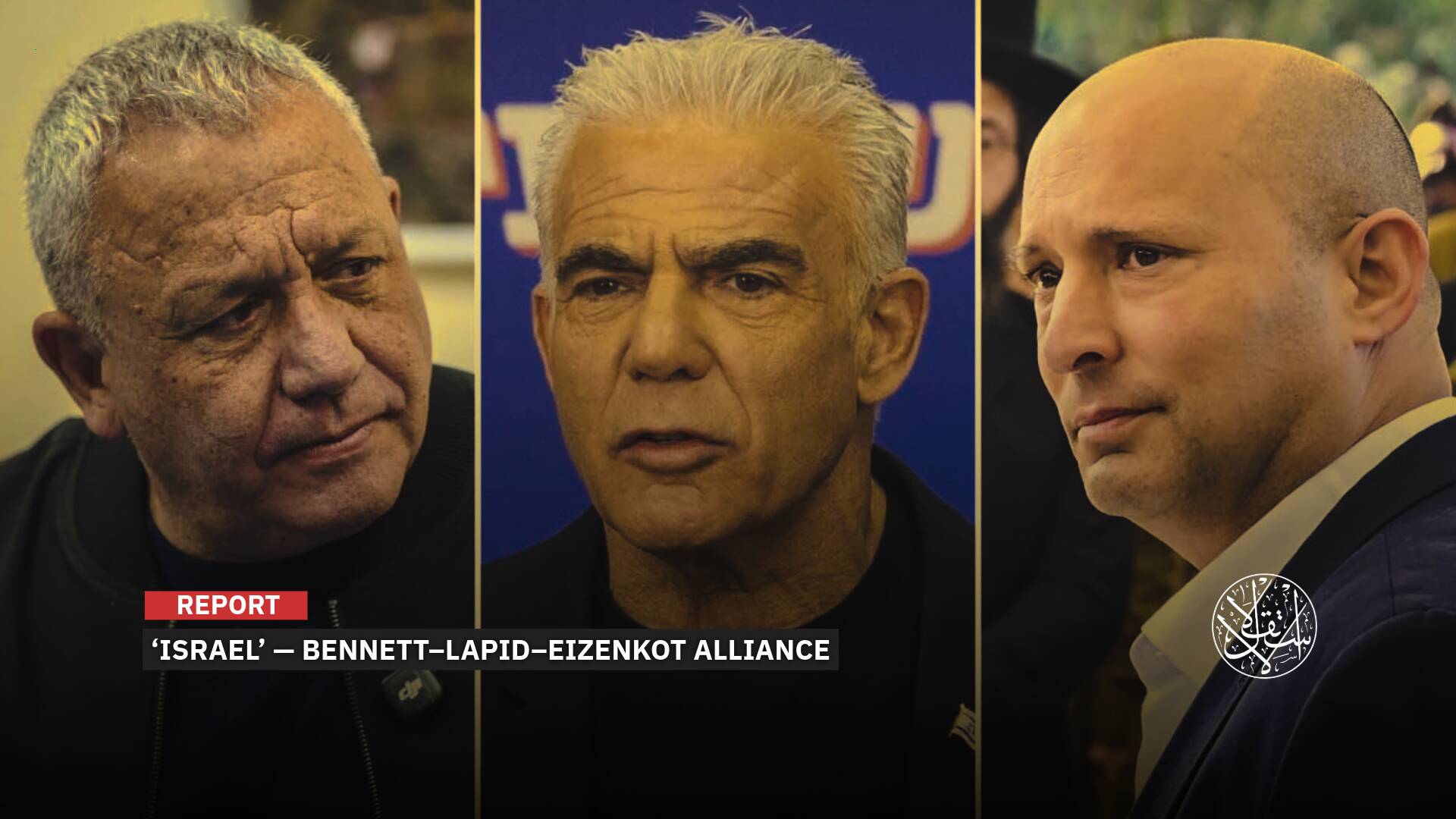
In contrast, Israeli opposition leader Yair Lapid criticised Netanyahu, calling him unfit to lead Israel and accusing him of exploiting state secrets for political and personal gains.
Former Army Minister, Benny Gantz, remarked that the issue is not merely a suspicion of a leak but rather the trading of state secrets for political purposes.
Meanwhile, Yair Golan, leader of the Democrats Party in Israel, accused Netanyahu of knowingly and deliberately harming the army and national security during wartime through his leaks.
In an article published in the newspaper Israel Hayom, political analyst Yoav Limor described Netanyahu as Israel's biggest leaker.

Security Leaks
The second case involving Netanyahu’s office is an attempt to alter documents regarding early warnings prior to October 7, 2023, in addition to attempts to alter protocols regarding the war on Gaza, in order to influence any official investigation into the security failures that occurred.
The third case raised against Netanyahu’s office relates to Tzachi Braverman, Netanyahu’s chief of staff, attempting to blackmail a senior army officer, using personal information and embarrassing photos about him, to obtain top-secret documents from the army.
The last case among the cases concerns a videotape of former Army Minister Yoav Gallant, in which he documents his being prevented by guards from entering Netanyahu’s office days after the outbreak of the war.
Additionally, Tzachi Hanegbi, the head of the Israeli National Security Council and a close associate of Netanyahu, is facing a separate investigation.
Hanegbi is being investigated on suspicion of accepting a bribe of 10,000 shekels (about $2,677) for a recommendation letter.
The scandal will likely deepen the mistrust and tension between Netanyahu and the Israeli army and intelligence services, which has been growing since the security failures following Operation Al-Aqsa Flood on October 7, 2023.
It also comes as Netanyahu battles Israel's legal system and the attorney general. In just a few weeks the prime minister is expected to take the stand for the first time in his corruption trial.
These scandals have dominated the conversation in Israeli society, to the point that they have overshadowed the news of the war.
While the right is attacking the judiciary for carrying out the arrests and investigations, and the army for leading this war against Netanyahu, the Hebrew media has highlighted the boundless corruption in Netanyahu’s government.
Yossi Verter wrote in Haaretz that “those in Netanyahu's inner circle are a crime organization that places him above the country and national security concerns.”
“Feldstein came from Ben-Gvir’s office to the prime minister’s office,” he noted.
Verter believes that Feldstein served Netanyahu in his deliberate and false behavior by using the system of spreading false news against the Israeli public and the families of the kidnapped.

Tyrannical Leader
In a controversial move, the Ministerial Committee for Legislative Affairs in Netanyahu’s government is set to discuss next week the Feldstein bill, which aims to provide immunity to members of the security establishment who transmit confidential information to the prime minister.
This bill, according to Yedioth Ahronoth, has raised questions about the balance between transparency and protecting national security, especially in light of the repercussions of the recent leaks cases.
While supporters of the bill promote its necessity in protecting national security, critics inside and outside the Knesset oppose it, and see it as an attempt to strengthen Netanyahu’s power at the expense of the security establishment, opening the door to exploiting legal loopholes to achieve political gains.
Recently, a film titled ‘The Bibi Files’ shed light on one of the most controversial issues in Israeli politics, linking the corruption scandals that haunt Netanyahu to his strategies to remain in power, even if the price is the continuation of the war in Gaza.
The documentary was based on leaked recordings of police interrogations of Netanyahu, portraying him as an authoritarian leader who sought by all means to protect himself from legal prosecution.
The documentary’s basic narrative highlighted that Netanyahu’s alliance with the far-right was not just a passing political move, but rather part of a broader plan to escape the bribery and fraud charges that have been brought against him since 2019, according to Variety.
The documentary also argued that the war in Gaza had become a tool for Netanyahu to use as a cover to continue in office and escape the possibility of his overthrow or imprisonment.

In turn, political analyst Ismail Masalmani explained in a statement to Al-Estiklal that “scandals have been haunting Netanyahu for a long time, which adds more doubts about his integrity and ability to maintain the confidentiality of sensitive documents related to Israel's national security.”
“These developments increase the intensity of political and popular pressure on Netanyahu, who is now facing increasing challenges both from within his government and from the opposition that seeks to exploit this scandal to bring down his government,” he said.
“It seems that these leaks will continue to cast a shadow over the political scene in Israel for a long time, as they are expected to lead to further investigations and possibly legal action against those involved,” he added.
Mr. Masalmani also concluded that “Netanyahu has no way out in the face of all these scandals and his political downfall will be resounding, and he will go down in history as one of the greatest war criminals in modern history.”
Sources
- A brief history of Netanyahu's leaks [Hebrew]
- Classified leaks by detained Netanyahu aide may have undermined hostage operations
- Israel investigates leaks that appear to have bolstered Netanyahu as Gaza truce talks stalled
- What’s New in the Case of the Document Leaks Roiling Israel
- 'PMO Affair' Proves Netanyahu's Office Draws Its Culture of Corruption From the Top
- The ministers will vote on the ‘Feldstein bill’: immunity for members of the security establishment who pass confidential information to the Prime Minister [Hebrew]
- ‘The Bibi Files’ Review