How Does the Israeli Occupation Force Palestinians to Demolish Their Homes?
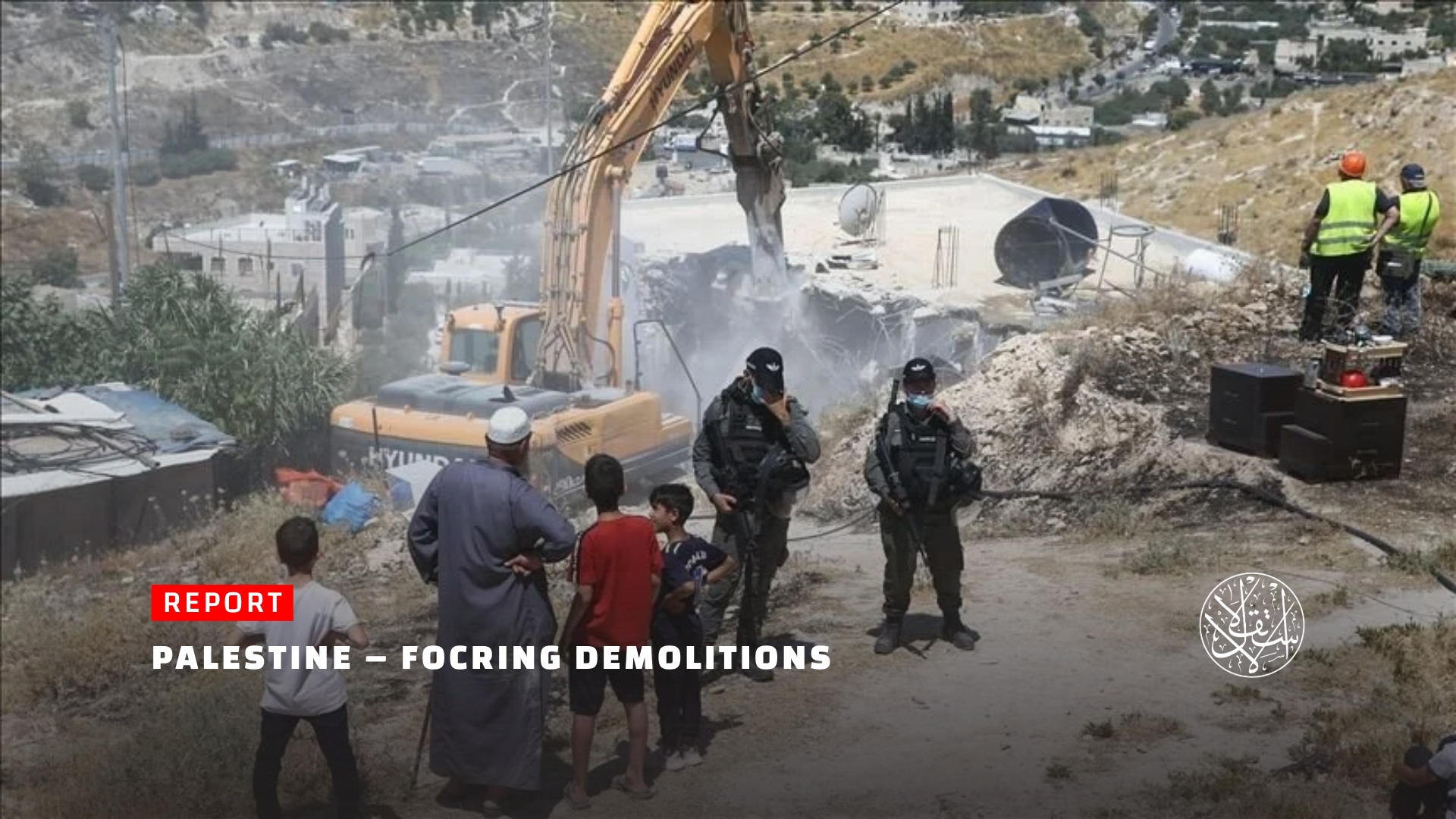
Israeli policies aim to diminish the Palestinian presence in Jerusalem through home demolitions.
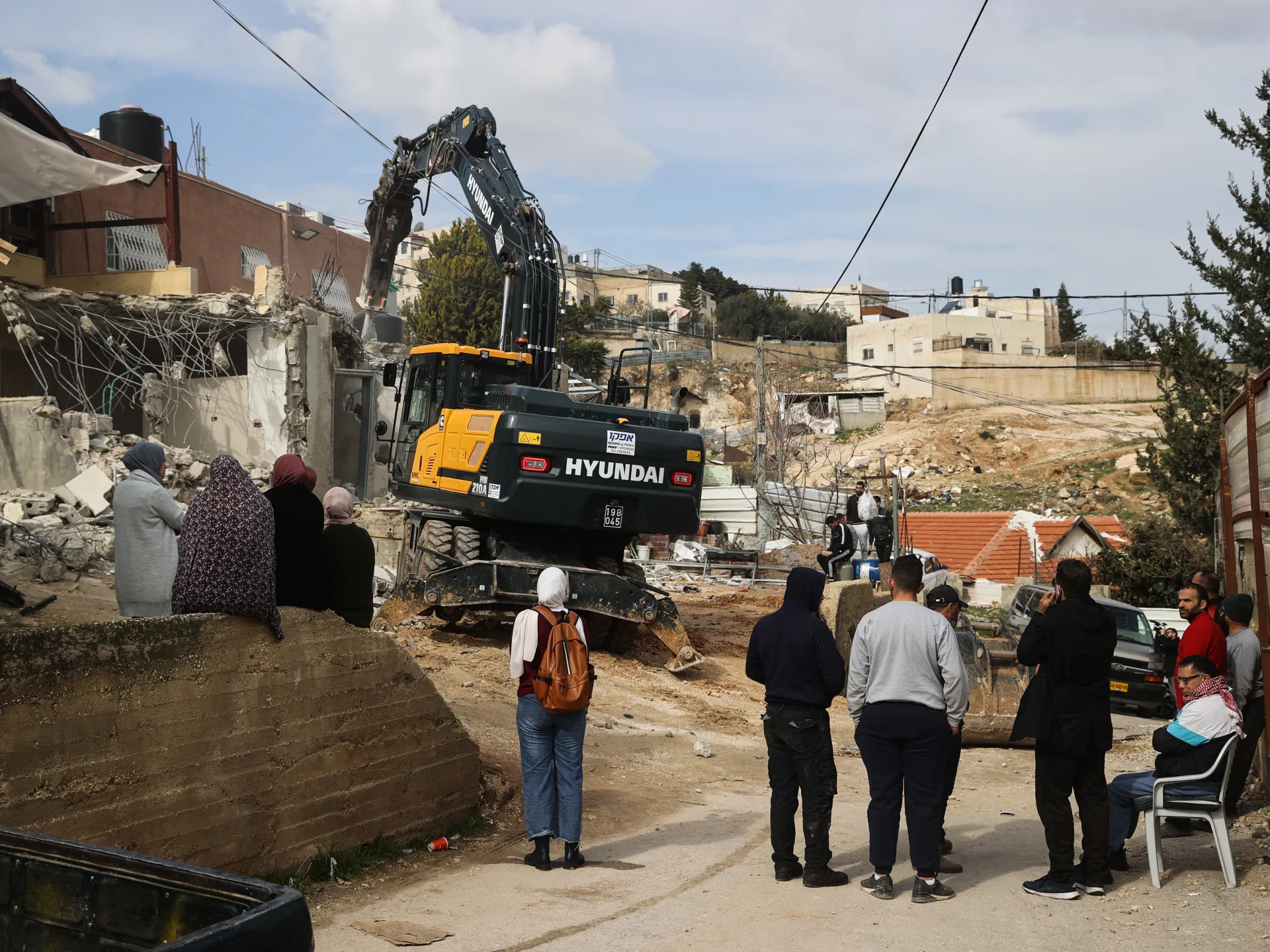
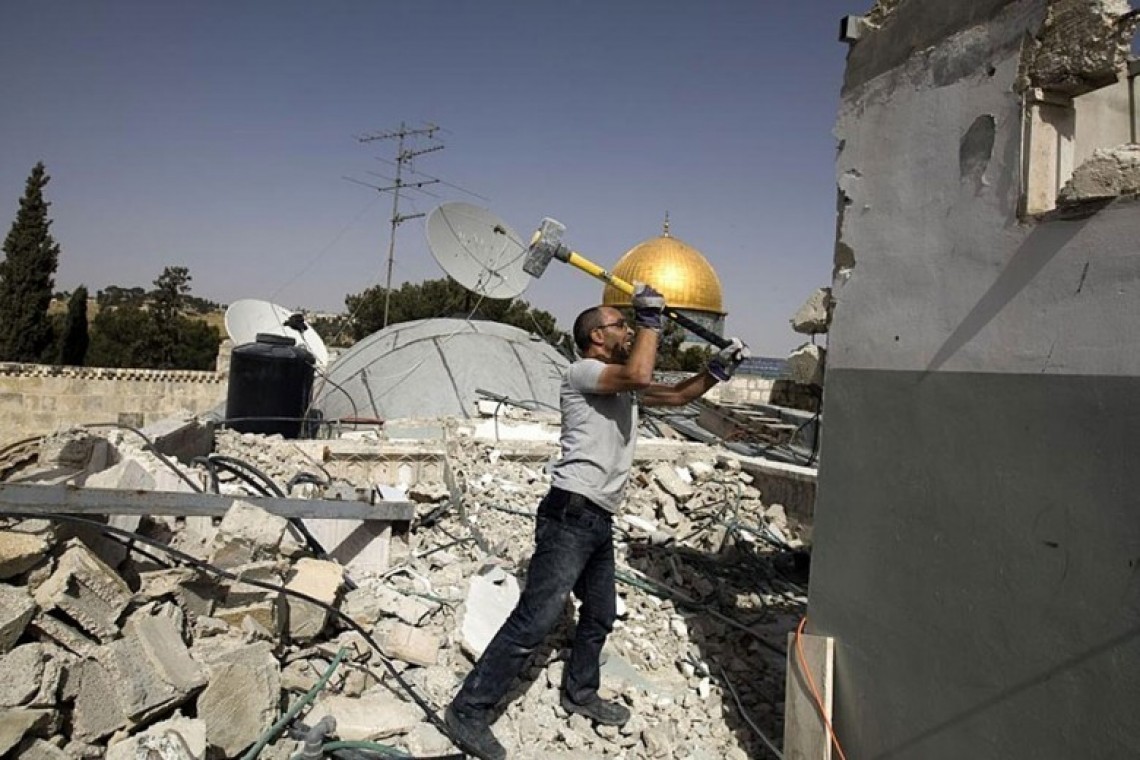
On February 17, Ali Odeh, a resident of Jerusalem’s Bir Ayoub neighborhood, was compelled by Israeli authorities to dismantle his own home, citing “unauthorized construction.”
This marked the second destruction of Odeh’s home, the first being in 2021 by the authorities, and this time by his own hands to evade the costs charged by municipal demolition teams.
Odeh, who has lost considerable financial resources, expressed that the repeated demolitions have shattered his aspirations for stability and family life.
Settlement Efforts
In the neighborhood known as “al-Aqsa’s neighbor,” continuous settlement efforts are underway to transform the area with new public and tourist facilities.
This neighborhood is part of Silwan, a town with 12 neighborhoods adjacent to the al-Aqsa Mosque, now facing aggressive settlement policies.
The Civil Coalition for Human Rights in Occupied Jerusalem (al-Quds) traces such home demolitions, including self-demolitions, to a policy initiated in 1973 aimed at altering the demographic balance in Jerusalem.
The recent rise in self-demolitions is attributed to the policies of an extreme right-wing Israeli government, particularly affecting areas like Silwan, Jabal Mukaber, Issawiya, and Beit Hanina.
Since October 7, 2023, Israeli forces have razed 94 homes, 41 by self-demolition, often enforcing the action before the expiration of a 21-day notice period.
The coalition deems this policy as a critical threat to the Palestinian presence in Jerusalem, part of a broader strategy to displace residents and encircle the city with settlements.
Silwan is specifically targeted as it lies within the Holy Basin settlement plan, with three associations actively funding settlement projects.
Currently, 3,000 settlers reside in Silwan. The Israeli strategy includes imposing exorbitant fees for building permits and providing settlers with substantial benefits, contributing to the economic hardships and high poverty rates among Jerusalem’s Palestinian population.
Psychological Warfare
Tariq Bodyafa, a Palestinian activist and researcher, describes the “self-demolition” policy of homes in Jerusalem (al-Quds) enforced by Israeli authorities as psychological warfare, deeply affecting the mental state of Jerusalemites (Maqdisiyyun).
In his interview with Al-Estiklal, Bodyafa elaborates that psychological warfare encompasses various tactics and strategies designed to undermine the resolve of those targeted.
“Historically, the Israeli Occupation has employed numerous psychological warfare tactics, including distributing leaflets, negatively depicting resistance fighters, spreading false information, and exposing citizens to degrading conditions, as seen in the current Gaza Strip conflict,” Bodyafa said, emphasizing that awareness is essential in countering such warfare.
The United Nations Office for the Coordination of Humanitarian Affairs (OCHA) links the rise in home demolitions, particularly self-demolitions, to changes in the 1965 Planning and Building Law, ratified by the Israeli Knesset on October 25, 2017. Palestinians fear hefty fines and potential arrest.
In East Jerusalem, unauthorized construction is a criminal act, incurring fines for illegal building activities. These fines often persist beyond the demolition of the property itself.
Judicial rulings on demolition orders typically mandate homeowners to demolish their property by a set date or face increased fines and demolition by authorities.
Israeli policies aim to diminish the Palestinian presence in Jerusalem through home demolitions, categorized into administrative, judicial, punitive, and military. Administrative demolition, the most prevalent, is justified by lack of permits or public interest.
The process is expedited by municipal engineers and mayoral approval despite similar permit issues in settlements.
The proliferation of unlicensed construction in East Jerusalem results from Israeli policies that exacerbate housing shortages while greenlighting numerous housing projects in Israeli settlements, contravening international laws and United Nations resolutions that recognize East Jerusalem, including the Old City, as occupied Palestinian territory.
International Violations
According to Bodyafa, the policy of self-demolition is part of an Israeli plan aimed at complicating the lives of Jerusalemites, starting with the issuance of building permits, which cost imaginary amounts paid in dollars in light of the already difficult economic conditions experienced by Jerusalemites.
“The poverty rate exceeded 60%, in exchange for unprecedented facilities provided to settlers, to not disclosing the nature of the classification of land according to the laws of the occupation municipality, whether it is suitable for construction or considered ‘green areas,’ while the occupation crews carry out aerial surveys periodically to start Pursue any new construction,” Bodyafa noted.
The year 2023 witnessed the implementation of demolitions of 150 residential buildings, 70 of which were self-demolitions, while in 2022 witnessed 143 house demolitions, 71 of which were self-demolitions, and in 2021, the occupation municipality carried out 181 house demolitions, 97 of which were self-demolitions.
In a recent analysis, the Palestinian Initiative for the Promotion of Global Dialogue and Democracy (MIFTAH) highlighted the issue of self-demolition, referencing Article 25/1 of the Universal Declaration of Human Rights and Article 11/1 of the International Covenant on Economic, Social and Cultural Rights from 1966. These articles assert that the act of demolishing homes is a blatant infringement of international human rights statutes and treaties that affirm an individual’s right to suitable housing.
The practice of home demolition is seen as a severe infraction and a type of arbitrary action that results in the illegal razing and seizure of property, absent any military imperative, as outlined by the Fourth Geneva Convention of 1949, which is dedicated to the protection of civilians during wartime.
According to Article 53 of the Convention, the occupying power is forbidden from destroying any personal or communal property, unless such destruction is imperative for military operations.
Furthermore, Article 33 outlaws collective penalties against civilian populations under protection, penalizing them for deeds they are innocent of or exacting vengeance upon them through their possessions.
Within the realm of international criminal law, the widespread demolition of houses is deemed an unlawful act and a contravention of international law. As per Article 8/2 of the Statute of the International Criminal Court, extensive property destruction, not justified by military necessity, is categorized as a war crime.